10 Record-breaking animals that rewrote biology books
From whales that dwarf dinosaurs to birds that defy the rules of reproduction, some creatures are so extreme that biologists have had to rethink what life can do. These 10 record-breaking animals have rewritten biology books by stretching size, speed, longevity and evolution itself to astonishing limits, turning abstract theories into living, breathing exceptions.
1. Blue whale, biggest animal ever known
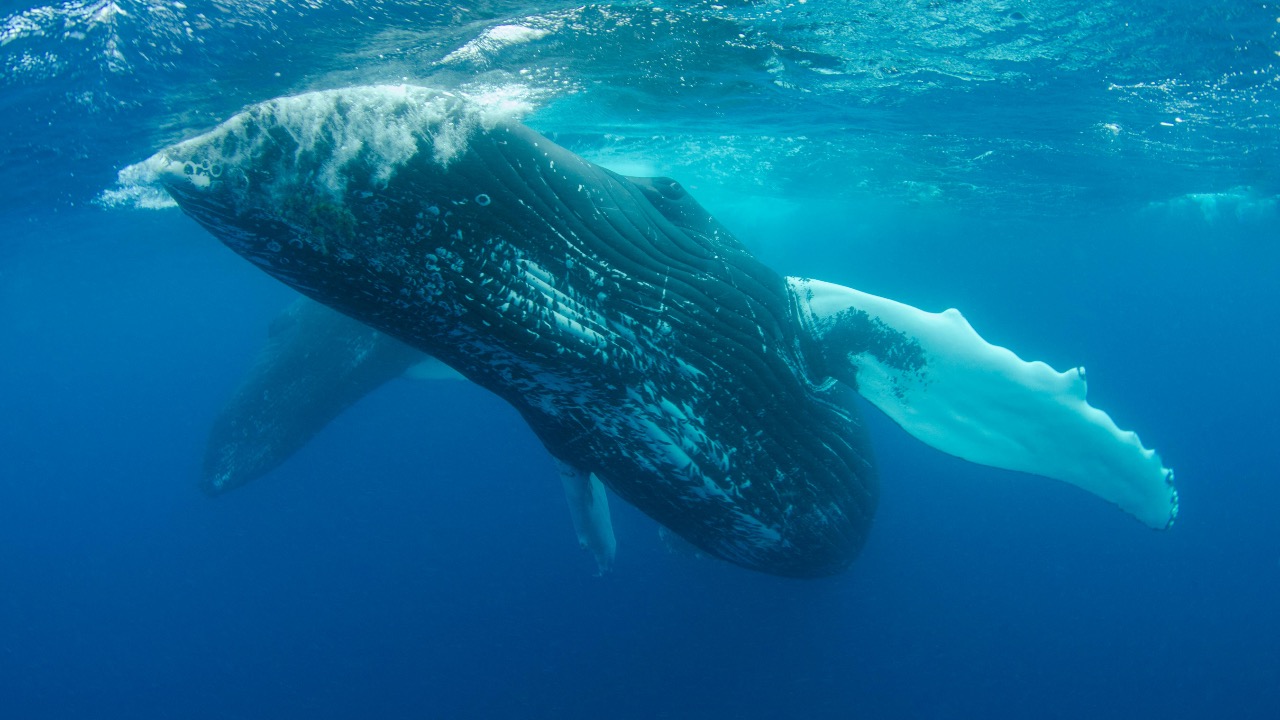
The Blue whale, Balaenoptera musculus, is the largest animal known to have lived on Earth, outscaling even the biggest dinosaurs. Reporting on how iconic traits evolved notes that Blue whales reached colossal size within the last 5.3 million years, helped by dense patches of prey in the oceans. Their sheer bulk forces scientists to refine models of metabolism, heart function and heat loss at extreme body scales.
Their size also reshapes marine ecosystems, because each feeding dive and each nutrient-rich fecal plume redistributes iron and nitrogen through the water column. When I look at Balaenoptera musculus, I see a living experiment in how far mammalian physiology can be pushed, informing everything from conservation thresholds to engineering ideas for efficient fluid transport.
2. Cheetah, fastest land mammal
The cheetah holds the record as the fastest land mammal, sprinting at highway speeds in short bursts. A round-up of record-breaking mammals explains that the fastest land mammal accelerates with explosive power, using a flexible spine and semi-retractable claws for traction. Known for this extreme speed, the cat forces biomechanists to rethink how muscles, tendons and lungs coordinate at the edge of vertebrate performance.
For conservationists, that record is a warning as much as a marvel. Cheetahs need vast, open landscapes to use their speed safely, so habitat fragmentation directly erodes the evolutionary advantage that made them famous. Studying their sprint mechanics also feeds into robotics and prosthetics, where engineers try to copy the cheetah’s efficient stride.
3. California condor, record-setting wingspan comeback
The California condor, with a wingspan of over nine feet, is one of the largest flying birds and a symbol of near-extinction and recovery. Coverage of unusual animal discoveries highlights how these California scavengers were reduced to a handful of individuals before intensive breeding programs began. Their survival has pushed genetics, captive-rearing techniques and reintroduction science into new territory.
Biologists now track every pedigree, egg and release, turning the species into a real-time experiment in how far conservation can reverse a collapse. The condor’s vast wingspan is not just a record, it is a test of whether humans can maintain soaring giants in a landscape dominated by power lines, lead ammunition and shrinking wild spaces.
4. Axolotl, Peter Pan of the Animal Kingdom
The axolotl is often called the Peter Pan of the Animal Kingdom because it reaches sexual maturity without losing its larval features, a process known as neoteny. A popular explainer on evolutionary rule-breakers describes how this salamander effectively “looked at the rule book of evolution and tossed it aside,” as one Peter Pan of segment puts it. By keeping gills and an aquatic lifestyle, it sidesteps the typical amphibian metamorphosis.
This developmental detour has huge implications for regenerative medicine. Axolotls can regrow limbs, spinal cord and parts of the heart, suggesting that neoteny preserves cellular programs that other vertebrates silence. Researchers probing its genome are rewriting assumptions about how flexible vertebrate development can be, and whether similar pathways might be reawakened in humans.
5. Coelacanth, Lazarus fish from deep time
The Coelacanth, classified within Coelacanthiformes, was thought extinct for tens of millions of years until a living specimen surfaced, earning the label of a Lazarus species. A survey of “living fossils” notes that the Coelacanth appears remarkably similar to its ancient relatives in the fossil record. That apparent stasis challenges the idea that evolution always proceeds through constant visible change.
Genetic and anatomical studies reveal that, beneath its archaic appearance, the fish still accumulates mutations and adapts subtly to deep-sea life. For evolutionary biologists, Coelacanthiformes show that stable environments can favor long-term conservation of body plans. The species has become a touchstone in debates about tempo and mode in evolution, and about how we interpret gaps in the fossil record.
6. Naked mole-rat, mammal that bends aging rules
The naked mole-rat stands out as a mammal that seems to slow aging to an extraordinary degree, with individuals living far longer than similar-sized rodents. Work on long-lived species points out that Centuries-long lifespans are found in some mammals, and that Centuries-scale survival is not limited to the sea. Although bowhead whales reach about 70 tons, naked mole-rats compress radical longevity into a tiny, subterranean body.
They show negligible increases in mortality with age, resist cancer and tolerate low oxygen, forcing gerontologists to revisit assumptions about mammalian senescence. By mapping how their cells repair DNA and manage protein damage, researchers hope to uncover pathways that could extend healthy human lifespan, turning this wrinkled rodent into a blueprint for aging research.
7. Bowhead whale, heavyweight of long life
The Bowhead whale combines massive size with extreme longevity, with individuals estimated to live for over two hundred years. Analyses of Arctic ecology emphasize that Bowhead whales dwarf the Greenland shark at about 70 tons, yet still maintain tissues and organs across centuries. They demonstrate that large body mass does not inevitably lead to high cancer rates or rapid decline.
For biologists, this combination of 70 tons and bicentennial lifespans reframes theories about metabolic wear and tear. Genes involved in DNA repair, cell-cycle control and fat metabolism appear tuned for Arctic survival. Understanding how They avoid age-related diseases could influence human medicine, especially as populations in polar regions face accelerating climate change and shifting food webs.
8. Hummingbird, smallest warm-blooded record breaker
The hummingbird family includes some of the smallest warm-blooded animals, with species that weigh less than a coin yet sustain blisteringly fast wingbeats. A feature on animal record breakers notes that the Most extreme examples push metabolic rates to levels that would be lethal in larger birds. To survive, they enter nightly torpor, dropping body temperature and heart rate in a controlled mini-hibernation.
This physiological tightrope forces scientists to refine models of energy budgets and oxygen delivery at tiny scales. Hummingbirds also drive plant evolution, because flowers adapt shapes and nectar chemistry to match their hovering visitors. For climate researchers, their sensitivity to temperature and bloom timing makes them early indicators of ecosystem disruption.
9. California sea turtle hatchlings, tiny ocean navigators
Small Sea Turtles Do More Than Catch the Drift, as marine biologists discovered when tracking hatchlings leaving nesting beaches. Instead of passively riding currents, these Small Sea Turtles actively swim to stay within favorable temperature and food zones. That behavior rewrites earlier textbook diagrams that portrayed young turtles as helpless passengers in ocean gyres.
Recognizing their active navigation changes how experts design marine protected areas and shipping regulations. If hatchlings target specific corridors, then conservation zones must align with those routes rather than just broad current systems. The finding also sharpens climate models, because turtle survival depends on how warming seas reshape these once-stable pathways.
10. Record-breaking dog, redefining lifespan limits
Among domestic animals, the world’s oldest dog has become a touchstone for debates about how far lifespan can stretch under human care. A compendium of 121 surprising facts notes that the world’s oldest dog lived far beyond typical expectations, prompting questions about genetics, diet and environment. Such outliers force veterinarians to revisit age categories and disease risk curves for companion animals.
For pet owners and researchers, this record is more than trivia. It suggests that, under certain conditions, canine biology can tolerate much longer wear than standard breed charts predict. Studying these exceptional dogs may reveal protective gene variants or lifestyle patterns that could improve healthspan for millions of animals sharing our homes.

Asher was raised in the woods and on the water, and it shows. He’s logged more hours behind a rifle and under a heavy pack than most men twice his age.