Cold War defections that still puzzle historians today
The Cold War turned defection into a geopolitical weapon, with individuals crossing the Iron Curtain in ways that reshaped intelligence services and public opinion. Some of those crossings are now well documented, yet a handful of cases remain so tangled in disinformation, ideology and bureaucratic failure that historians still argue over what really happened. I want to trace several of the most puzzling episodes, where the motives of defectors and the reactions of the states they left behind, or joined, continue to resist tidy explanations.
These mysteries matter because they sit at the intersection of personal choice and structural forces, from nuclear anxiety to ideological conviction. They also expose how agencies in both blocs struggled to interpret defections in real time, often projecting their own fears onto individuals whose stories were far more complicated than simple betrayal or heroism.
The Cold War’s ideological fault line and the lure of defection
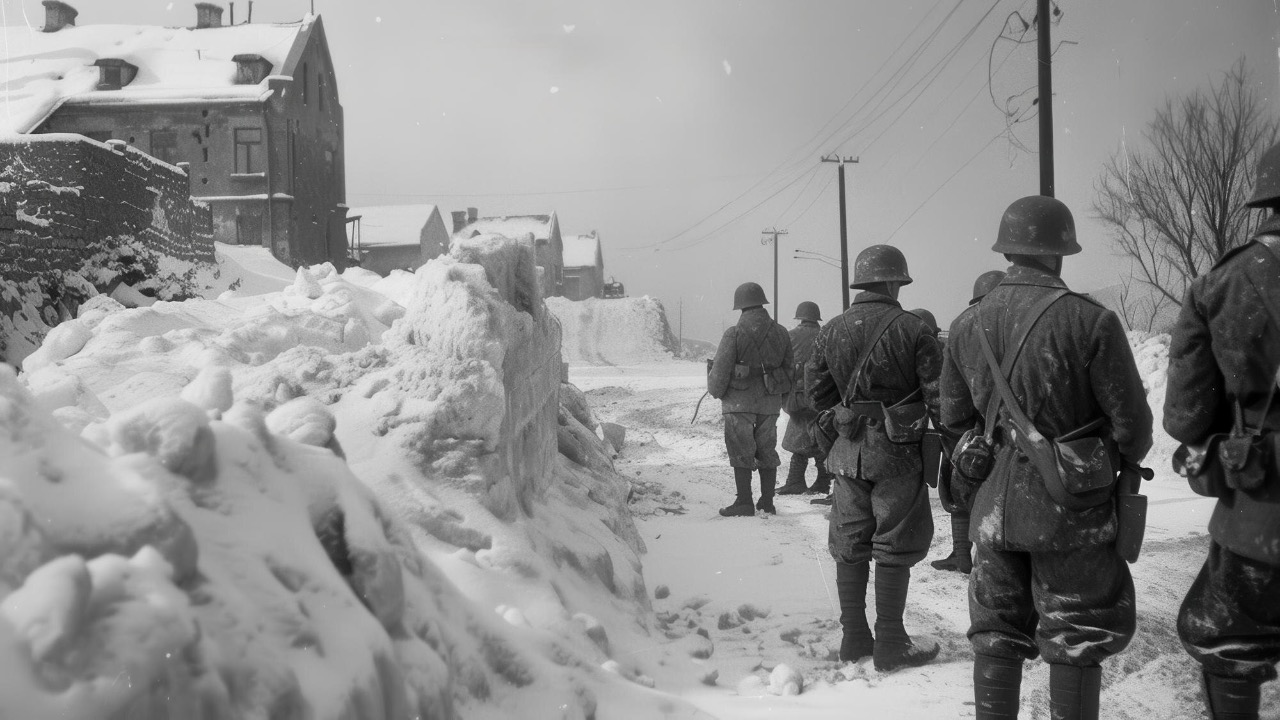
To understand why certain defections still baffle historians, I first need to sketch the ideological terrain that made such moves so explosive. The confrontation between the Soviet system and capitalism in the United States and its allies was not only military and economic, it was also a clash of ideas about how societies should be organized. One teaching resource bluntly notes that Ideology was treated as the main cause of the Cold conflict, with RUSSIA identified with communism and the United States with capitalism. In that context, a defector was not just a person changing employers or passports, but a living verdict on which system was winning.
At the same time, the nuclear arms race raised the stakes of every intelligence leak. The decision by The US government to pursue a hydrogen bomb committed the United States to an escalating competition that made secrets about warheads, delivery systems and early warning networks priceless. Studies of Atomic spies underline that some agents crossed sides for money, Others for blackmail or ideological zeal, and that the thrill of playing a role in world events may also have been appealing. Against that backdrop, each high profile defection became a test case for how robust the Soviet regime really was, a question that scholars still debate in work on what fueled the survival of the Soviet system.
Vitaly Yurchenko and the “un-defection” that broke CIA confidence
Few Cold War stories capture the uncertainty around defections as vividly as the case of Vitaly Yurchenko, a senior KGB officer who appeared to defect to the United States, then dramatically went back. Public records identify Vitaly Yurchenko as a high ranking Soviet intelligence figure, and accounts of his 1985 arrival in Washington describe how he was treated as a major prize by the CIA. One internal analysis notes that Most of the counterintelligence community believed Vitaly Yurchenko could identify any moles inside the agency, a tantalizing prospect at a time when Soviet penetration of Western services was a constant fear.
Then, in a move that stunned Washington, Yurchenko walked into the Soviet Embassy in Washington and announced that he was redefecting to the Soviets. He soon flew back to Moscow from Dulles Airport, telling reporters that he had been kidnapped and drugged by the United States. A contemporaneous account framed the central puzzle bluntly, asking, Was Vitaly Yurchenko a genuine defector who had second thoughts, a long term double agent, or some more complicated mutation of Cold War tradecraft Was Vitaly Yurchenko? Decades later, a declassified review still concedes that Yurchenko’s actual role remains controversial among intelligence professionals, and that for the KGB it may have been more useful to leave the CIA uncertain whether he could be trusted than to provide a clear answer Yurchenko.
Yurchenko, Aldrich Ames and the mole hunt that never quite adds up
The Yurchenko affair looks even stranger when set against the later unmasking of Aldrich Ames, the CIA officer who spied for Moscow for nearly a decade. In his debriefings, the Soviet defector told the American side that a high ranking mole was leaking intelligence to the KGB, a traitor who had operated undetected for nearly a decade. Yet the CIA failed to identify Ames until years later, despite the fact that Yurchenko had been handled inside the agency’s own counterintelligence branch for three months, a lapse that later reporting described as a major embarrassment for the CIA. Much of the debate over the damage he did turns on whether he was sincerely trying to help identify the mole or feeding a carefully calibrated mix of truth and misdirection.
Some former officers argued that the agency mishandled the case because it abandoned basic analytic logic in a rush to either embrace or discredit defectors. A later review of how the CIA evaluated another Soviet source, Yuri Nosenko, concluded that Doubt about his claims was fueled in part by what another alleged KGB defector, Anatoliy Golitsyn, had already told Western services Doubt. In that sense, Yurchenko’s story cannot be separated from a broader pattern in which competing defectors, each with their own agendas, shaped how agencies hunted for moles and sometimes blinded them to the real traitors in their midst.
Martin and Mitchell: NSA defectors and a scandal misread through prejudice
Long before Yurchenko, the National Security Agency faced its own defection crisis when two of its cryptologists vanished and reappeared in Moscow. In September 1960, In September, the National Security Agency employees William Hamilton Martin and Bernon F. Mitchell, both working as NSA cryptologists, defected to the Soviet Union and held a press conference denouncing U.S. surveillance. Their move was quickly labeled the worst internal scandal in NSA history, and early explanations inside the agency fixated on their sexuality, with some officials spinning tales of a traitorous homosexual network rather than grappling with the substance of their claims.
Newly obtained Pentagon and NSA documents, however, paint a more complex picture. According to those records, According to the Pentagon and NSA files, Martin and Mitchell had long expressed ideological objections to U.S. government policies and hinted at someday deserting, suggesting that their decision was driven more by politics than by personal life Pentagon and NSA. A separate account of The Worst Internal Scandal in NSA History Was Blamed on Cold War Defectors’ Homosexuality Growing up shows how that prejudice shaped the narrative, obscuring the fact that the two men were reacting to the broader climate of atomic fears and the arms race that had pushed the United States into ever more intrusive surveillance programs.
Anatoliy Golitsyn, the Cambridge Five and a theory of total deception
If Martin and Mitchell exposed how domestic prejudice could distort the reading of a defection, Anatoliy Golitsyn showed how a single defector could reshape Western counterintelligence thinking for decades. Public biographical entries describe Anatoliy Golitsyn as a KGB major who defected to the West in 1961, and his information helped confirm the existence of the Cambridge Five spy ring inside British intelligence. That success gave his later, more sweeping claims enormous weight. One scholarly chapter notes that Golitsyn even went on to argue that the political split between the USSR and China was itself a deep deception designed to undermine the West, a theory that many historians now see as increasingly less probable as the years went on Golitsyn.
Golitsyn’s warnings about a vast KGB Department of Disinformation also had a lasting impact. One detailed account recalls that Golitsyn warned that the KGB’s Department of Disinformation planned widespread operations to undermine Western culture and politics, and that much of what appeared to be liberalization in the Soviet bloc was actually fake to trick the West KGB. Another analysis, relying in large part on his testimony, argued that Western services had underestimated the scale of Soviet deception campaigns Relying. Yet the basic biographical entries on Golitsyn remind us how little independent corroboration exists for some of his most sweeping theories, leaving historians to weigh his early accurate tips against later claims that may have reflected his own ideological evolution as much as any KGB master plan.
Lee Harvey Oswald: defector, assassin and a trail of unanswered questions
No Cold War defector has generated more speculation than Lee Harvey Oswald, whose journey from Marine to Soviet resident to accused assassin of President John F. Kennedy still fuels arguments. Biographical summaries describe Lee Harvey Oswald as a former Marine sharpshooter who defected to the Soviet Union in 1959, lived in Minsk, married his wife Marina there, and then returned to the United States in 1962 Marine. A separate reference entry on Oswald confirms those basic milestones, but the motives behind his defection and return remain contested, with Some researchers arguing that his time in the USSR has never been fully explained by official investigations.
Declassified material also shows how U.S. agencies mishandled his case. An internal memo later acknowledged that The FBI had watched Oswald before the assassination but failed to track him adequately, a lapse that J. Edgar Hoover reportedly called asinine when reviewing how the bureau had handled the case The FBI. For historians, the unresolved puzzle is not only whether Oswald had deeper ties to Soviet or Cuban intelligence, which remains Unverified based on available sources, but also what his path says about the porousness of the Iron Curtain. The fact that a man could defect to the USSR, return to the United States and then kill a president without either side fully grasping his trajectory underscores how messy Cold War human flows could be.
Westerners who went East: the forgotten defectors
While Oswald became infamous, many Westerners who crossed into the Soviet bloc have largely vanished from public memory, even though their stories complicate simple narratives of one way traffic. Discussions among historians and enthusiasts point out that There were plenty of high profile Soviet defectors to the Western world, including cultural figures like Mikhail Baryshnikov, Boris Spassky and Svetlana Alliluyeva, but far fewer well known Americans who went the other way There. One detailed thread on AskHistorians notes that the imbalance itself shaped Western perceptions, reinforcing the idea that the Soviet system was something people fled, not joined.
Another community of researchers has tried to track what happened to Westerners who defected to the USSR or its satellites, often finding that their later lives were marked by disappointment, surveillance or quiet marginalization. Contributors on a separate forum dedicated to history have compiled cases where defectors struggled with language barriers, limited career options and suspicion from their new hosts, who feared they might be double agents. Those anecdotal reconstructions, while not official archives, highlight how little systematic work has been done on this group compared with the extensive literature on Soviet defectors to the Western side. The absence of comprehensive data keeps historians cautious, but it also means that the full social history of Cold War defections remains incomplete.
Nicholas Shadrin and Nikolai Artamonov: a double agent who vanished
Among the lesser known but deeply puzzling cases is that of Nicholas Shadrin, born Nikolai Artamonov, a Soviet naval officer who defected to the United States and later disappeared under mysterious circumstances. Reference entries identify Nicholas Shadrin as a former Soviet naval captain, and another listing notes that he had earlier served as Captain Nikolai Artamonov in the Soviet navy. A CIA summary later described him as A former Soviet naval captain who defected to the United States in 1959, who then worked as a double agent for American counterintelligence Soviet.

Asher was raised in the woods and on the water, and it shows. He’s logged more hours behind a rifle and under a heavy pack than most men twice his age.