How to Spot a Knife That’s Built to Last
A knife that truly earns its place on your counter or in your pocket is not the one with the flashiest marketing, but the one that still feels solid and sharp after years of daily use. The difference between a tool that becomes an heirloom and one that loosens, chips, or rusts out in a season comes down to a handful of design and construction choices you can see and feel before you buy. If I am assessing whether a blade is built to last, I start with how it is put together, what steel it uses, and how confidently it locks or anchors into the handle, long before I think about logos or gift boxes.
Durability is not guesswork. From the way a full tang runs through the handle to the Rockwell Hardness rating stamped on the spec sheet, there are objective clues that separate serious tools from disposable steel. Once you know how to read those clues, you can walk past the marketing language and pick up the knife that will quietly do its job for a decade or more.
Construction: the first tell of real quality

When I pick up a new knife, I look at construction before anything else, because poor build is almost impossible to fix later. A well made kitchen blade will have clean transitions where blade meets handle, no visible glue blobs, and no rattling parts when you tap it on a board. Several specialist makers stress that CONSTRUCTION is KEY, and that you should Keep an eye out for welded joints or decorative bolsters that hide weak spots where metal has been thinned or joined.
On a workhorse chef’s knife, I want the steel to run deep into the handle, with the scales pinned or riveted on rather than just glued. Guides to spotting a well made kitchen knife point out that a continuous spine and tang, with no gaps where food or moisture can creep in, is a strong sign of thoughtful engineering and long term hygiene, something echoed in detailed breakdowns of how to tell if a kitchen knife is well made. If the handle feels hollow, flexes under pressure, or shows misaligned rivets, I treat that as an early warning that the knife will age badly.
Full tang, bolster and balance: how the knife holds itself together
The hidden geometry inside the handle is one of the clearest predictors of lifespan. In hard use fields like bushcraft, makers are blunt that the durability of a knife is heavily influenced by its tang design, and they distinguish sharply between full tang and partial tang construction for survival work, noting that tang style is a critical factor in whether a blade survives batoning or prying in the field full tang. A full tang means the steel runs as a single piece through the handle, which spreads stress and makes catastrophic handle failures far less likely.
That same logic shows up in marketing for heavy duty kitchen blades, where brands highlight that the construction of some models, such as Huusk Handmade Knives, follows a full tang design specifically to avoid the common failure point of cheaper partial tang handles. Outdoor gear retailers explain that a full tang survival knife, where blade and handle are one solid piece of metal, greatly increases strength for tasks like batoning wood or prying, compared with stick tang or rat tail designs that can bend or snap under torque full tang design. In the kitchen, a prominent bolster between handle and blade often signals a forged knife, and detailed buyer guides note that such bolsters, when combined with a solid tang, help with balance and hand protection while also hinting at more robust manufacturing They.
Steel, hardness and edge life
Even the best construction cannot save a knife made from soft or poorly treated steel. When I evaluate a blade, I look for clear information on the alloy and its hardness, because that tells me how long the edge is likely to last between sharpenings and how resistant it will be to warping. Technical explainers on knife metallurgy describe Hardness as a measure of how resistant a Knife is to deforming, and they point to standardized tests that quantify this so buyers can compare steels on more than just marketing claims Hardness.
For many everyday and carving knives, makers and reviewers use Rockwell Hardness, abbreviated HRC, as the benchmark. One detailed guide to whittling tools notes that, for reference, it will be using Rockwell Hardness (HRC) to judge steel, and that Ideally you want a knife hard enough to hold an edge without becoming too brittle to carve safely Rockwell Hardness. Professional kitchen suppliers add that a quality knife used in a commercial kitchen can last anywhere from 2 to 15 years, and they tie that range directly to Blade material, noting that Forged high carbon alloys tend to outlast stamped or softer steels under constant service Blade.
Handle ergonomics and materials that age well
A knife that feels great on day one but turns slick, cracked, or loose after a year is not built to last, no matter how good the steel is. When I wrap my hand around a handle, I am looking for a secure, neutral grip with no hot spots, and I check how the scales are attached. High end makers point out that with premium chef’s knives, the steel is often sandwiched tightly between specially shaped handle scales, which increases comfort and also signals that the handle is not just an afterthought but part of a thoughtful construction that resists gaps and wobble over time sandwiched.
Material choice matters just as much as shape. Some modern guides to spotting quality knives advise buyers to look closely at whether the handle material is suited to the environment, noting that certain woods and composites are prized because of their lightness and stability, while cheap plastics can warp or discolor under heat and detergent, a point that sits alongside the reminder that handles should be inspected as carefully as blades. Broader knife guides add that Tang, blade thickness, bolster and handle material all tie into the overall weight and feel of the knife, and that while preference plays a role, a heavier forged knife with a dense, well fitted handle often signals more robust construction than a flimsy stamped alternative Tang.
Lockup, mechanics and the feel of precision
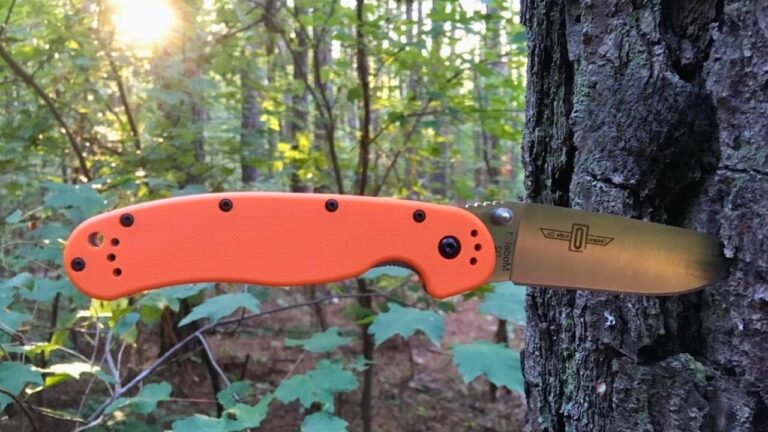
For folding knives, the lock and pivot are the heart of long term safety. When I open a new folder, I check whether the blade centers properly, whether there is any side to side play, and how the lock engages. Detailed inspection lists for buyers emphasize Lockup as a critical checkpoint, noting that Most modern folding knives lock and that the lock should function securely when received, because a weak or slipping lock can range from irritating to downright dangerous in real use Lockup.
Traditional slipjoint designs have their own mechanical tells. Makers of classic Laguiole patterns, for instance, explain that You should feel a slight elasticity when opening and closing the blade, which is proof of a correctly balanced tension between blade and locking mechanism, and that when you look at the liners and backspring you should see a true work of art rather than gaps or rough machining You. Enthusiasts on knife forums echo this focus on precision, with one discussion of a suspected counterfeit Benchmade noting that even when bought from Certified Dealers and similar sources, buyers scrutinize details like how the Omega springs appear to be showing to judge whether the internal mechanics match the brand’s usual standard Benchmade.
Real world lifespan: how long a good knife should last
Durability is not just a feeling in the hand, it is measured in years of service. Professional kitchen suppliers are candid that in a high demand environment, a quality knife can last anywhere from 2 to 15 years, and they tie that spread to how often it is used, how it is sharpened, and whether it is a Forged high carbon blade or a thinner stamped model that may wear faster under constant prep Forged. At the premium end, an executive chef for a major German brand has said that, Despite the higher starting price, a well made quality knife will last beyond a decade with regular sharpening and blade straightening, provided you are careful not to over sharpen and grind away too much steel Despite the.
In enthusiast circles, the expectation is often even longer. A discussion on r/knifeclub about what is a knife that will just last points to models from Spyderco, with one commenter recommending most any Spyderco with a compression lock as a less expensive option that will still hold up over time, while acknowledging that some steels are a bit tougher to sharpen Spyderco. In a separate video discussion titled KNIVES talk, a maker named Jared, speaking alongside his wife Cara, frames longevity in terms of realistic expectations, arguing that how long a knife should last depends on whether you treat it as a cutting tool or abuse it as a pry bar, and that even the toughest designs have limits if misused Knives.
Maintenance, sharpening and the role of the user
Even the best built knife will fail early if it is neglected, and many of the most durable blades in circulation owe their lifespan as much to owners as to makers. On r/cookingforbeginners, one Feb thread about factors to look our for when finding a good knife quickly pivots to care, with users advising newcomers to Keep their knives sharp and dry, and to avoid dishwashers that can pit or loosen handles over time Feb. Another r/knifeclub exchange about an old, rusted blade shows how even neglected tools can be revived, with one commenter recommending Whink rust stain remover and warning others to Wear gloves and goggles, then to Soak the blade while keeping an eye on it, a reminder that restoration is possible but requires care and respect for the chemicals involved Sep.
Professional voices reinforce that sharpening is both essential and a potential risk to longevity if done badly. The same executive chef who notes that a premium knife can last beyond a decade stresses that owners must be careful not to over sharpen, since grinding away too much metal shortens the life of even the best forged blade quality. In a short video aimed at home cooks, a chef known as cheffinwithzach contrasts classic and gourmet series blades and notes that Another key difference is that classic knives feature a bolster while gourmet knives do not, using that detail to explain why some knives tolerate repeated sharpening and thinning better than others because the bolster and thicker spine give more steel to work with over time Another.
Supporting sources: Working on a.

Leo’s been tracking game and tuning gear since he could stand upright. He’s sharp, driven, and knows how to keep things running when conditions turn.