How modern wars revived Cold War-era weapons systems
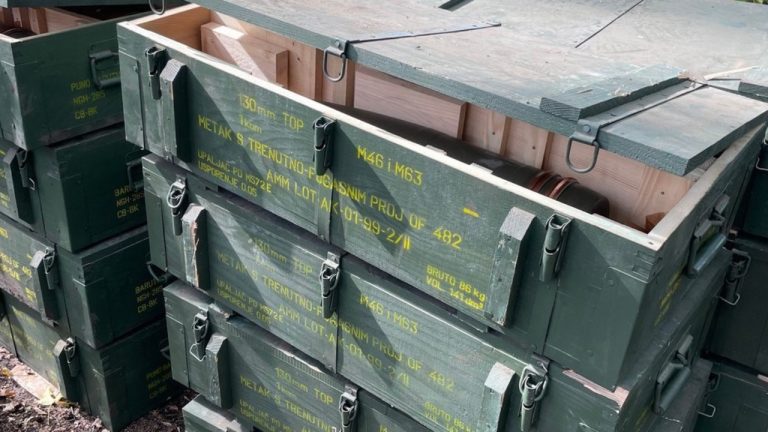
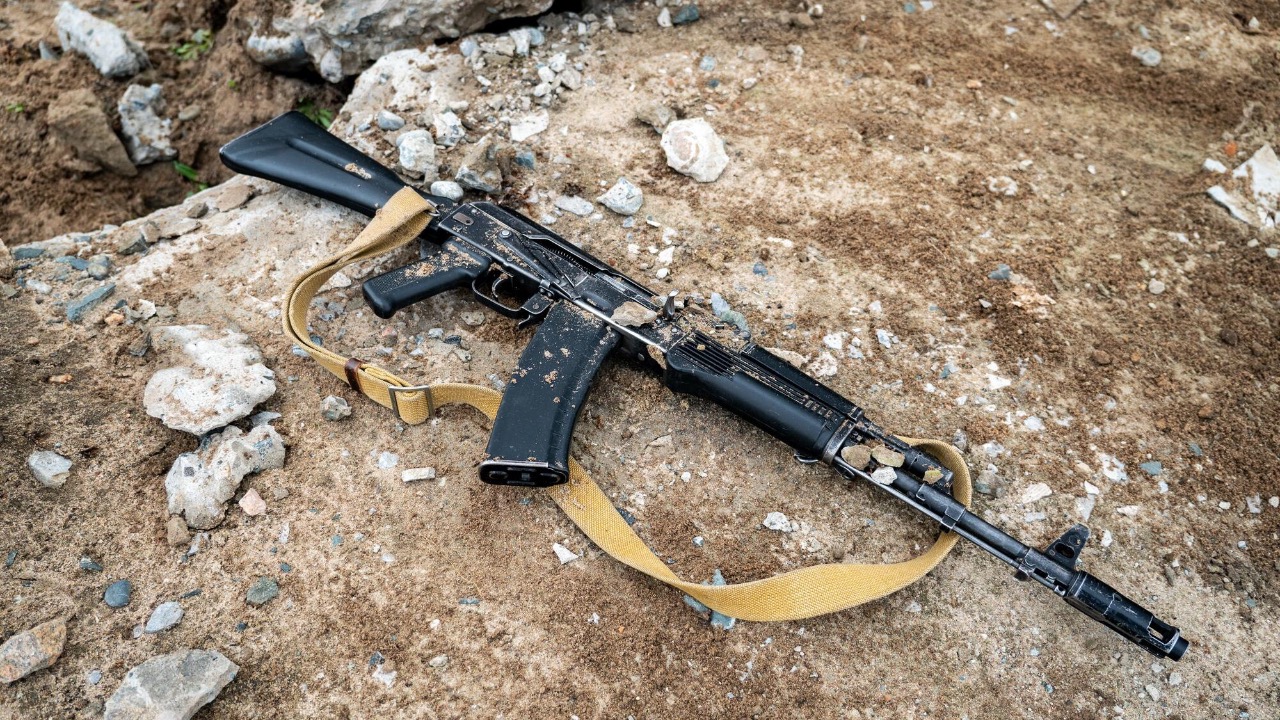
From Ukraine’s trench-scarred front lines to the deserts of the Middle East, weapons designed for a showdown between superpowers are back in circulation. Instead of gathering dust in depots, Cold War-era systems are being refurbished, networked and pushed into battles that blend drones, cyber tools and satellite targeting. The result is a paradox of modern conflict: cutting-edge wars fought with hardware whose blueprints predate the internet.
I see this revival less as nostalgia than as a hard-nosed response to industrial limits, political risk and battlefield reality. Old platforms are cheap to field, familiar to train on and rugged enough to survive in brutal conditions, especially once they are upgraded with modern sensors and munitions. The story of how these systems returned to relevance reveals as much about today’s fractured security order as it does about the arsenals of the past.
The return of Cold War stockpiles
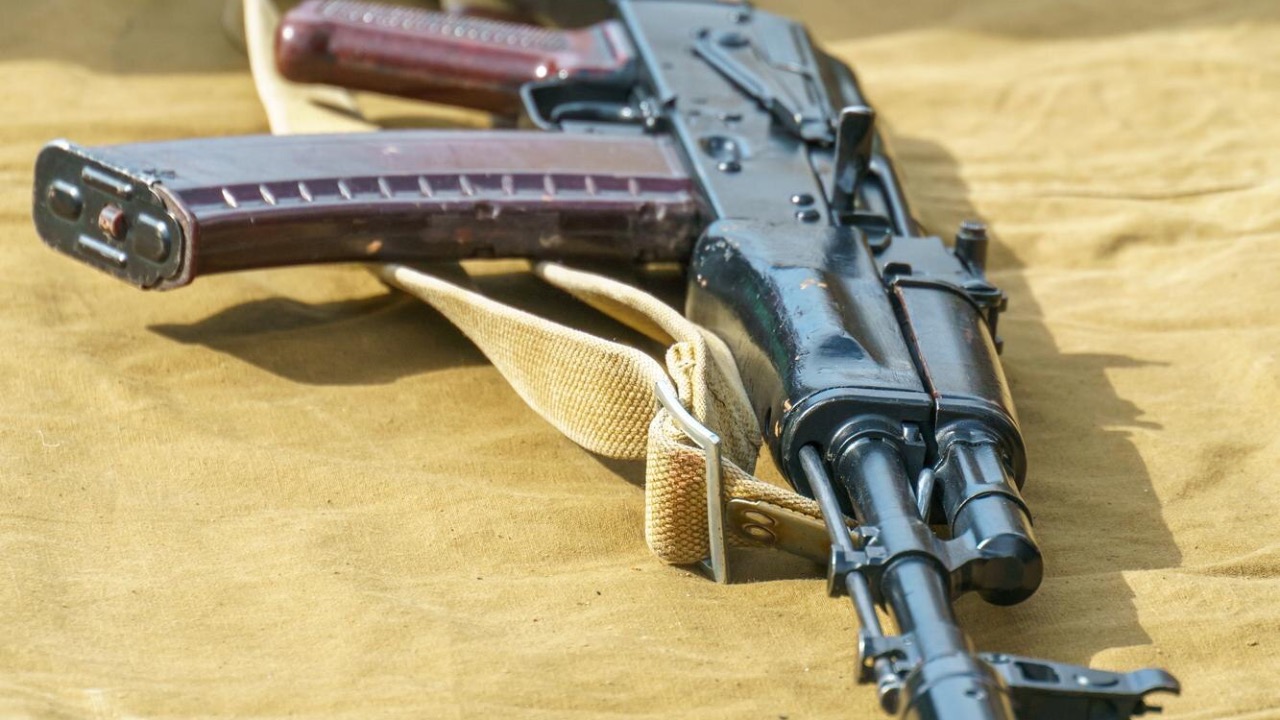
When Russia’s full-scale invasion of Ukraine turned into a grinding artillery duel, Western capitals discovered that their sleek, post–Cold War forces were not built for sustained high-intensity combat. Ammunition stockpiles shrank, production lines struggled to keep pace and governments began raiding long-term storage for anything that could fire, track or intercept. The United States in particular started pulling equipment from Cold War-era depots, sending refurbished systems that had originally been designed to stop the Red Army in Europe. What had once been contingency reserves for a hypothetical World War III suddenly became the backbone of a real, ongoing war.
Ukraine’s own defense has leaned heavily on this mix of legacy and modern gear. Alongside newer systems, its forces employ older anti-armor and air-defense platforms that Western militaries had long since relegated to training ranges or museums. Analysts tracking the conflict note that Ukraine has relied on systems like the Javelins anti-armor weapon and the High Mobility Artillery Rocket launcher, but the sheer volume of combat has also pushed U.S. defense production to the brink, making it logical to recondition older stocks rather than wait for brand-new equipment to roll off the line.
Why “obsolete” weapons still win battles
On paper, many of these platforms are outdated, yet on the battlefield they keep proving their worth. The key is adaptation. Militaries have learned that a rugged chassis or proven gun can be repurposed with new armor, electronics and roles. In one classic example, Sweden’s Stridsvagn m/41 were transformed into Pbv 301 armored personnel carriers, turning a dated tank into a useful troop carrier. The specific figures, 41 and 301, capture how a single family of vehicles can be stretched across generations of warfare with the right engineering.
Israel has taken a similar approach, converting captured Soviet-era T‑55s into heavily armored Achzari personnel carriers that are still relevant in urban combat. These examples show why commanders are reluctant to discard older platforms outright. A vehicle or missile that might be outclassed in a head-on duel with the latest adversary tank can still be decisive in secondary roles, from infantry support to logistics protection. In a world where industrial capacity is finite and wars are longer than planners expected, “obsolete” often just means “awaiting an upgrade.”
Russia’s revival of its own Cold War “beasts”
Moscow has drawn similar lessons, but with a more aggressive twist. As its forces burned through modern armor and precision munitions in Ukraine, Russia began pulling heavy equipment from deep storage, including older tanks and artillery that had not seen front-line service for decades. One detailed assessment describes how Russia is reviving a Cold War “beast” for 21st century warfare, pairing legacy platforms with updated sensors and communications to keep them viable in a more networked battlespace. The goal is not elegance but mass: enough steel and firepower to grind down Ukrainian positions even if individual vehicles are vulnerable.
This rearmament has strategic consequences far beyond the Donbas. Analysts warn that the renewed emphasis on heavy armor and long-range fires risks triggering a broader arms race, particularly if NATO states respond in kind. One report notes that, in Oct, observers argued that, Ultimately, the responsibility for this renewed arms race does not lie solely with Moscow, since the United States has steadily dismantled the verification regimes that once kept the peace. In other words, the resurrection of old hardware is both a symptom and a driver of a less regulated, more volatile security environment.
HAWK missiles and the layered air-defense comeback
Few systems capture the current trend as clearly as the HAWK surface-to-air missile. Designed in the early Cold War to protect ground forces from aircraft, it was gradually retired from U.S. service as newer interceptors came online. Yet as cruise missiles and drones began saturating Ukrainian skies, Washington revisited that decision. The United States is now refurbishing HAWK batteries for transfer abroad, betting that a modernized radar and missile package can still plug critical gaps in Ukraine’s air defenses.
Other countries never gave up on the system. Israel still uses the HAWK system, as does Iran, which acquired it during the Iran–Contra Affair, and Norway. Their continued reliance on HAWK underscores a broader reality: air defense is inherently layered, and older medium-range systems can still play a vital role when paired with newer interceptors and sensors. Rather than a clean break between generations, modern air defense looks more like a palimpsest, with Cold War designs still visible beneath the latest software updates.
Ukraine’s hybrid arsenal and the strain on U.S. industry
On the ground, Ukraine’s forces have become experts at mixing legacy and modern systems into a single, if improvised, architecture. Infantry units might use Soviet-era rifles alongside Western-supplied Javelins, while artillery crews coordinate salvos from Cold War howitzers with precision strikes from the High Mobility Artillery Rocket system. This patchwork arsenal is not elegant, but it is effective, especially when backed by Western intelligence and targeting support. It also highlights a key advantage of older platforms: they are familiar to Ukrainian crews who trained on similar Soviet designs, which shortens the learning curve.
For the United States, however, this support has exposed uncomfortable limits. Analysts warn that the scale of assistance to Kyiv has pushed U.S. defense close to the edge, forcing policymakers to choose between replenishing domestic stocks and sustaining Ukraine’s war effort. That tension is one reason older systems are so attractive: they can be pulled from storage, refurbished relatively quickly and shipped abroad without immediately depleting the most advanced capabilities that Washington wants to retain for its own contingencies in the Indo-Pacific or elsewhere.
Digital-age war, analog-age hardware
The paradox of today’s conflicts is that they are both highly digital and stubbornly physical. In Ukraine, commanders rely on satellite communications, commercial drones and real-time mapping apps, yet much of the killing power still comes from artillery, tanks and missiles whose core designs date back decades. One detailed study of the war notes that the conflict’s complexity shows that while Ukraine possesses extensive digitally supported capabilities, it still depends heavily on traditional firepower, including long-range systems like sea-strike Tomahawk missiles provided by its partners.
This blend of old and new is not accidental. Modern militaries have discovered that pairing legacy platforms with contemporary targeting and communications can produce outsized effects. A Cold War artillery piece becomes far more lethal when guided by drone spotters and encrypted radios. A vintage surface-to-air missile battery can still threaten modern aircraft if it is cued by networked sensors. Video explainers on Cold War technology now routinely highlight how these systems, once seen as relics, are being wired into 21st century kill chains. The hardware may be analog, but the way it is used is anything but.
Lessons from past conversions and upgrades
The current wave of refurbishments builds on a long history of creative reuse. Long before Ukraine’s war, smaller states learned to stretch their arsenals by converting tanks and guns into new roles. The Swedish decision to turn Stridsvagn m/41 hulls into Pbv 301 carriers is one example, but there are many others. In Nov, analysts highlighted how such conversions allowed countries to field armored personnel carriers, engineering vehicles and self-propelled guns without paying for entirely new fleets. The numbers, 41 and 301, are more than designations; they are shorthand for a philosophy of making every chassis count.
Israel’s Achzari program, which turned captured T‑55s into heavily armored troop carriers, shows how even adversary equipment can be repurposed. Other states have followed suit, upgrading old airframes with new avionics or fitting legacy ships with modern anti-ship missiles. A survey of classic platforms, from submarines to the Mi‑24 Hind helicopter, notes that some Cold War designs were so robust that they could be kept in service for decades with incremental improvements. One account of “best of” technologies points out that in 1982, after building 31 boats of a particular submarine class, designers implemented a minor redesign for the next eight that formed a second “flight,” a pattern of iterative upgrade that also applied to aircraft like the Mi‑24 Hind. The same logic now underpins the decision to keep refurbishing Cold War-era systems instead of scrapping them.
Risks: proliferation, black markets and control
Reactivating old arsenals is not without danger. Every shipment of refurbished weapons into an active war zone raises questions about where those systems will end up when the fighting stops. One detailed review of post-Soviet arms flows warns that Ukraine has a long history as a nexus of the illicit arms trade. After the Cold War, criminal entrepreneurs capitalized on poorly guarded depots, moving large quantities of military equipment between 1992 and 1998. That legacy haunts current debates about Western aid, especially when the systems involved are portable, lethal and in high demand among non-state actors.
There is also the risk of escalation. As more states pour older but still potent weapons into proxy conflicts, adversaries may respond by loosening their own export controls or by transferring advanced systems to partners they previously kept at arm’s length. The revival of Cold War stockpiles can therefore feed a feedback loop in which each side justifies its actions by pointing to the other’s moves. Analysts who argue that, After the Cold War, arms control regimes were allowed to atrophy see today’s refurbishments as both a symptom and a cause of that erosion. Without stronger tracking, end-use monitoring and diplomatic guardrails, the same weapons that help stabilize one front could destabilize another years later.
What this revival means for future wars
Looking ahead, I expect the line between “old” and “new” weapons to blur even further. As conflicts stretch on and budgets tighten, governments will keep searching their warehouses for systems that can be upgraded rather than replaced. Video explainers released in Dec already frame the Cold War as a kind of design laboratory whose products are still shaping today’s battles. The lesson is not that innovation has stalled, but that the most sustainable form of innovation often involves reimagining what is already on hand.
For defense planners, the challenge is to integrate these legacy systems without becoming trapped by them. That means investing in modular upgrades, digital backbones and training regimes that allow old platforms to plug into new command networks. It also means recognizing the political and ethical stakes of flooding fragile regions with refurbished firepower. As one assessment of strategic adaptation argues, the changing face of war in the 21st century demands both technological agility and institutional reform, from procurement to doctrine. If modern wars have revived Cold War-era weapons systems, the next step is to ensure that the thinking behind their use is not equally stuck in the past.

Leo’s been tracking game and tuning gear since he could stand upright. He’s sharp, driven, and knows how to keep things running when conditions turn.