The most misunderstood phrases in the Bill of Rights
The Bill of Rights is only ten amendments long, yet some of its most quoted phrases are also the most distorted in public debate. From “freedom of speech” to “states’ rights,” Americans routinely invoke language that means something narrower, or broader, than they assume. Understanding what those words actually do in law, and what they do not, is essential to making sense of modern fights over guns, religion, policing, and federal power.
I want to walk through the phrases that generate the loudest arguments and the quietest misunderstandings, using the historical record and modern commentary as a guide. The goal is not to settle every controversy, but to show how the text, context, and later interpretation often diverge from the slogans that dominate social media and stump speeches.
Why the Bill of Rights invites so much confusion

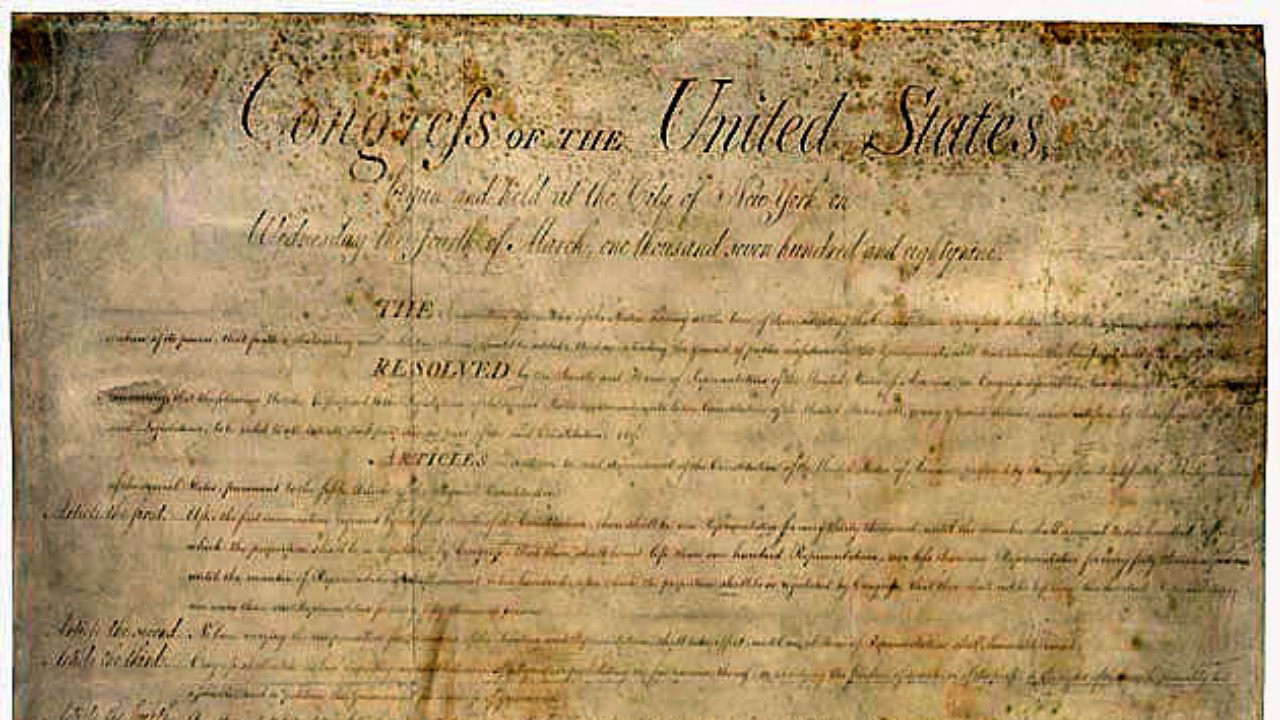
Misunderstandings start with the basic purpose of the Bill of Rights. Many people talk as if the document created rights out of thin air, when in fact it was drafted to limit the new federal government and to recognize liberties that the framers believed already existed. Historical overviews of the first ten amendments stress that they were added in 1791 as a political compromise, meant to reassure skeptics that the new Constitution would not swallow individual and state autonomy, and that the amendments would operate as a check on federal power rather than a grant of new authority to Washington in America. That framing matters, because it means the text is written in the language of prohibitions and reservations, not in the style of a modern civil-rights statute that spells out entitlements in detail.
The language is also spare and eighteenth century, which invites twenty‑first‑century readers to project their own expectations onto phrases like “the press,” “the people,” or “cruel and unusual.” A detailed study of the original amendments notes how the Bill of Rights grew out of English legal traditions and colonial grievances, then evolved through later court decisions into a national charter of liberties that now binds states as well as the federal government, a process that has only deepened the gap between original wording and modern application in the Bill of Rights.
“Congress shall make no law”: what the First Amendment really targets
Few phrases are thrown around more casually than “First Amendment rights,” yet the opening words of that amendment are often ignored. The text begins, “Congress shall make no law,” which signals that the protections for speech, religion, press, assembly, and petition are limits on government, not commands to private actors. Civil-liberties explainers emphasize that the First Amendment restrains Congress from passing laws that favor or punish religion, censor speech, or block peaceful protest, but it does not require a private employer, a social‑media platform, or a newspaper to host every viewpoint, because those entities are not Congress and are not wielding state power in the constitutional sense as Amendment 1 makes clear.
That distinction fuels a recurring misconception that any moderation of content is “censorship” in the constitutional sense. Commentators who field questions about the Bill of Rights point out that “freedom of speech really just means freedom from government censorship,” and that a company like Facebook has no constitutional duty to carry a user’s posts, because the First Amendment is a shield against state action, not a sword to force private publication, a point that surfaces repeatedly in discussions of freedom of expression online.
“Freedom of speech”: not a license to say anything, anywhere
Another deeply rooted myth is that “freedom of speech” means the government can never punish expression, no matter how harmful. In reality, the Supreme Court has long treated the First Amendment as robust but not absolute, carving out categories like true threats, incitement, and certain forms of obscenity that can be regulated. Legal guides on profanity explain that at times profanity is treated as a non‑protected speech category, and that vulgar language can be restricted in specific contexts, such as broadcast media or schools, so long as the rules are consistent with broader First Amendment doctrine on profanity.
At the same time, courts have protected speech that many Americans assume would be banned, which only adds to the confusion. Historical examples of expressive conduct, such as flag burning, show that even deeply offensive political gestures can fall within the First Amendment’s shield when they are aimed at conveying a message, a point underscored in surveys that invite readers to discover how acts like desecrating a Flag became protected expression in modern doctrine on freedom of speech.
“The press”: more than newspapers, less than social media thinks
When people argue about “the media,” they often forget that the First Amendment protects “the freedom of the press,” a phrase that predates cable news and TikTok. In the eighteenth century, “press” referred literally to the printing press and, by extension, to the news media and the products of writers and journalists who used that technology to circulate ideas. Modern textual analysis of the Bill of Rights notes that the noun “press” in this context covers the institutional and professional channels through which information is published, and that the same amendment also protects the right of individuals to express ideas without fear of incrimination, which is why the clause is read to shield both reporters and pamphleteers in discussions of the vocabulary of the press.
That history undercuts two opposite misconceptions. One is that only large, legacy outlets enjoy press freedom, which is not how courts have treated bloggers, independent journalists, or small publishers who engage in news gathering and commentary. The other is that every user of a platform is automatically “the press” in the constitutional sense, which blurs the line between individual speech rights and the distinct protections for newsgathering, source confidentiality, and editorial judgment that attach to press activity as such, a distinction that becomes crucial when governments try to compel disclosure or control access to information in cases involving the Constitution.
“A well regulated Militia”: the Second Amendment’s most contested words
No phrase in the Bill of Rights has generated more modern litigation than “a well regulated Militia, being necessary to the security of a free State.” For years, gun‑control advocates argued that this prefatory language tied the right “to keep and bear Arms” to organized military service, while gun‑rights supporters insisted that the operative clause protected an individual right regardless of militia membership. Popular writing on constitutional “mistakes” notes that the Second Amendment’s reference to militia service has been read in sharply different ways, with some readers treating it as a collective guarantee and others as a personal safeguard, a divide that shows up alongside other debated provisions like Article III, Section 1, which vests “the judicial Power of the United States” in one Supreme Court in discussions of Article III.
The Supreme Court stepped into that fight in a landmark 2008 decision, holding that the Second Amendment guarantees an individual’s right to possess firearms in America for lawful purposes, including self‑defense within the home. Educational summaries of that case stress that the Court treated the militia clause as a statement of purpose that does not limit the core right, which it located in the operative language protecting the right of “the people” to keep and bear arms, a reading that now anchors modern gun‑rights doctrine and is widely cited in overviews of the Second Amendment.
“Separation of church and state”: a phrase that is not in the text
“Separation of church and state” is one of the most quoted slogans in American politics, yet it appears nowhere in the Constitution or the Bill of Rights. The First Amendment instead provides that “Congress shall make no law respecting an establishment of religion, or prohibiting the free exercise thereof,” language that was originally aimed at preventing a national church and protecting religious practice. Historical commentary traces the now‑famous “wall of separation” metaphor to a letter from Thomas Jefferson to an assembly of Baptists in Connecticut, explaining his view of the Establishment Clause, a phrase that later generations have treated as if it were part of the constitutional text itself in discussions of the wall of separation.
That history helps explain why modern fights over school prayer, religious displays, and public funding for faith‑based organizations often turn on how strictly courts should police the boundary between government and religion. Some scholars argue that the Establishment Clause was designed solely to protect individual rights of conscience, while others see it as a structural limit that keeps the state from endorsing or entangling itself with any faith, a debate that surfaces in academic work on why the Supreme Court initially incorporated the clause against the states and how assumptions about its purpose shaped that decision in analyses of the Establishment Clause.
“Unreasonable searches and seizures”: the Fourth Amendment’s blurry line
Ask someone what the Fourth Amendment does and you will often hear that it requires police to get a warrant for any search. The text, however, prohibits “unreasonable searches and seizures” and specifies that warrants must be supported by probable cause, which is not the same as a blanket warrant requirement. Commentators who catalog common misconceptions about the Bill of Rights note that people tend to assume the Fourth Amendment always shields them from government intrusion, when in fact courts have upheld many warrantless searches as reasonable, from traffic stops to certain border inspections, a nuance that is central to understanding how the Fourth Amendment actually operates.
Basic explainers on the Bill of Rights try to correct this by emphasizing that the government must have a “good reason” for a search, and that the key question is whether the intrusion is reasonable under the circumstances, not whether a judge signed a piece of paper in every case. That standard has become even more contested in the digital age, as courts wrestle with how to apply eighteenth‑century language to smartphone data, location tracking, and other technologies that the framers could not have imagined, a tension that shows why the simplified summaries of each Amendment, including the rule that the government needs a good reason for the search, only scratch the surface of modern Fourth Amendmentdoctrine.
“Rights retained by the people”: the Ninth Amendment’s quiet warning
Compared with the First or Second Amendments, the Ninth is rarely quoted in everyday argument, which may be why it is so widely misunderstood. Its text declares that the enumeration of certain rights in the Constitution “shall not be construed to deny or disparage others retained by the people,” a sentence that reads more like a rule of interpretation than a concrete guarantee. Scholars such as Thomas B. McAffee, whose work is collected under the title “Powers Reserved for the People and the States: A History of the Ninth and Tenth Amendments,” have treated the Ninth as a reminder that the framers did not intend the listed rights to be exhaustive, and that unenumerated liberties could still exist in the constitutional order, a point that anchors historical studies of the History of the.
Public discussion, by contrast, often swings between treating the Ninth as a blank check for any claimed right and dismissing it as meaningless surplusage. Commenters who answer questions about overlooked or misinterpreted parts of the Bill of Rights point out that the Ninth is frequently ignored in case law and civic education, even though it signals that the people’s liberties are broader than the specific items listed in the first eight amendments, a reminder that becomes especially relevant in debates over privacy, bodily autonomy, and other interests that are not named explicitly but are argued to be among the rights retained by the people in the Bill of Rights.

Leo’s been tracking game and tuning gear since he could stand upright. He’s sharp, driven, and knows how to keep things running when conditions turn.