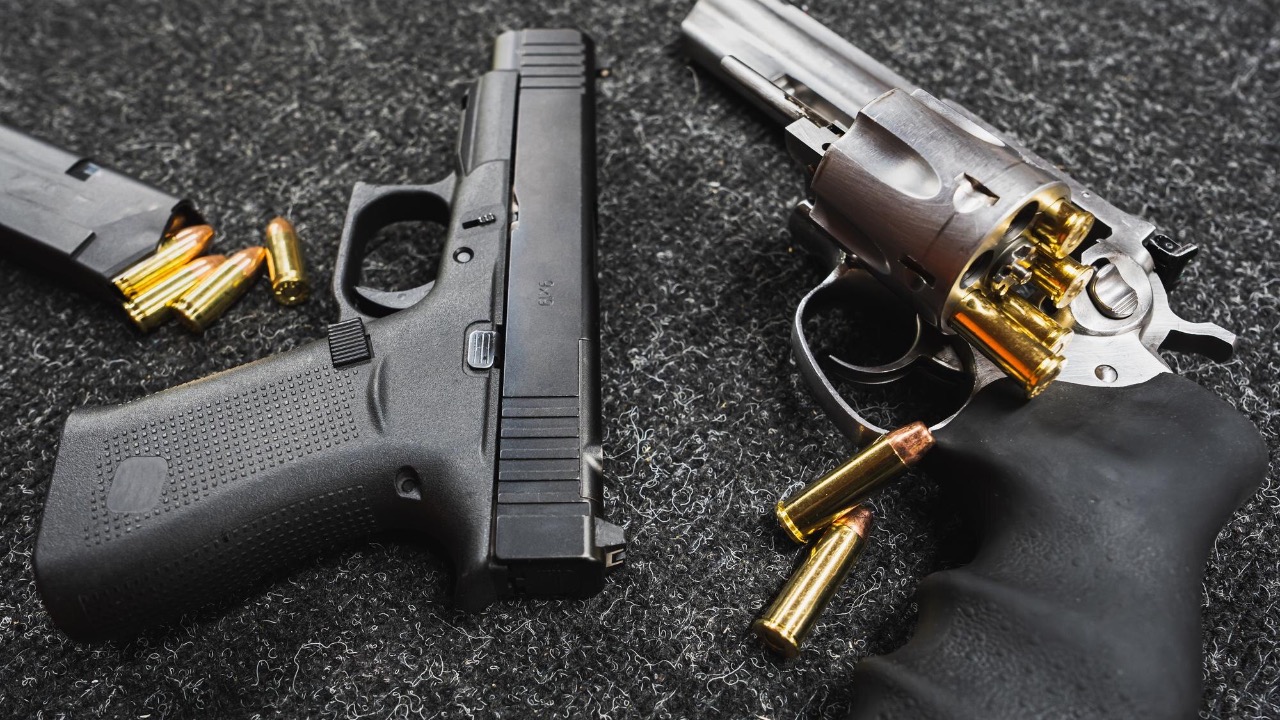
Firearms that show why reliability still matters
Modern shooters are spoiled for choice, but the core requirement has not changed since the first metallic cartridges: when the trigger is pressed, the gun must fire. In a world of optics-ready slides, modular frames, and boutique calibers, the firearms that matter most are still the ones that run every time, in any weather, with no drama.
Reliability is not a marketing slogan, it is a life-or-death standard that separates trusted tools from risky toys. From military workhorses to humble carry pistols, certain designs have earned reputations as benchmarks of dependability, while others have become cautionary tales that show what happens when reliability is treated as an afterthought.
Why reliability is the first feature that matters

When people talk about choosing a defensive handgun, they often start with caliber, capacity, or ergonomics, but experienced instructors put reliability at the top of the list. One guide to choosing a carry gun states flatly that Reliabilityis “undoubtedly the single most important factor,” and adds that, regardless of what else a pistol offers, it must function every time. A separate breakdown of self defense features reinforces the same point, noting that One of the most important traits in a handgun is the ability to fire every shot without a jam or misfire. I see this echoed across training circles, where malfunctions are treated not as quirks but as unacceptable risks in a weapon meant to protect life.
That standard becomes stark when things go wrong. A detailed rundown of pistols with known problems warns that “gun that doesn’t when you need it most is not only frustrating it is dangerous,” a blunt reminder that malfunctions in a fight are not theoretical inconveniences. Another analysis of the same list repeats that line, underscoring how this adage has become part of the modern reliability conversation among shooters. In that light, the firearms that have earned reputations for running under any conditions are not just popular, they are proof that reliability still defines what a serious gun is.
What actually makes a gun reliable
Reliability is often treated as a mystical quality, but manufacturing engineers break it down into design and execution. A technical overview of Firearm Manufacturing Quality argues that a gun’s design and manufacture are perhaps the most crucial components of reliability, and that a poorly designed firearm will require frequent maintenance and replacement of parts. A companion piece on the same topic stresses that Firearm Manufacturing Quality is the foundation on which everything else rests, from heat treatment of small components to the tolerances that determine how smoothly parts interact.
In practice, that means the most trusted guns tend to share certain traits. They use robust operating systems, generous clearances where fouling accumulates, and proven materials in high stress areas. When a video on “never buy” guns warns that some models fail after exposure to heat, fouling, or rough handling, it is really describing the absence of that engineering discipline, pointing to documented problems that appear only after real-world use. Another reliability focused video makes the same point from the opposite angle, highlighting “20 guns so reliable you will never regret owning them” and emphasizing that Whether a shooter is a beginner or a professional, the guns that matter are the ones that keep working when conditions are far from ideal.
The AK‑47 and the logic of overbuilt reliability
Few rifles symbolize reliability like The AK. The standard reference notes that The AK uses a long stroke gas system generally associated with high reliability in adverse conditions, combining a large gas piston, generous clearances, and a tapered cartridge case that tolerates fouling without failing to cycle. A more detailed technical passage on the same rifle explains that the 47 pattern was deliberately engineered to keep running in mud, sand, and ice, even if that meant accepting looser accuracy standards than some Western designs.
That tradeoff has shaped conflicts and civilian markets alike. Militaries and insurgent groups have gravitated toward the platform precisely because it will function with minimal maintenance and questionable ammunition, a real world validation of the idea that reliability outranks refinement. Civilian shooters who prize ruggedness often cite the same traits, pointing to the long stroke system and loose tolerances as proof that the rifle will keep working after neglect that would sideline more delicate designs. In a landscape where some modern rifles chase tight tolerances and match grade precision, the enduring popularity of the AK family is a reminder that, for many users, a gun that always goes bang is still the ultimate feature.
Mauser bolt actions and the benchmark idea
Long before polymer pistols, bolt action rifles set the standard for mechanical dependability, and Mauser designs still anchor that reputation. Enthusiasts discussing misfire resistant guns often single out The Mauser 98 in all its variations as an example of near legendary dependability against misfires. A separate collector focused analysis describes how Mauser, The Mauser 98, or Gewehr 98, a German bolt action rifle, became the blueprint for many modern bolt action rifles, cementing its place as a military mainstay since the late nineteenth century.
Collectors and historians have borrowed the language of quality control to describe such guns. One auction house notes that Rock Island Auction that have earned the label “benchmark” are used as standards against which other collector arms are judged. That concept applies neatly to the Mauser lineage: the controlled round feed, massive claw extractor, and robust locking lugs of the 98 action have become reference points for what a reliable bolt gun should look like. When modern rifles are praised for feeding smoothly or extracting stubborn cases, they are often being compared, implicitly or explicitly, to the Mauser pattern that proved how much reliability matters in a manually operated weapon.
Glock, Walter PPQ and the modern duty pistol
In the handgun world, polymer framed striker fired pistols have become the default partly because of their track record for running under stress. A survey of iconic designs notes that among the Greatest Firearms in History is the GLOCK 17, created by Gaston Glock as what has become an iconic sporting and self defense weapon. A deeper dive into the platform points out that Glock pistols are often praised for durability, and that Cost is one of the features that frequently comes up, since, When durability is factored in, there is a lot to be said for a pistol that runs for tens of thousands of rounds without major parts replacement.
Other modern pistols have built similar reputations. A video roundup of “handguns that never jam” concludes that if you want a pistol that will serve you for life the Walter PPQ is the one, praising its ability to keep running without flinching when conditions deteriorate. The same video, in a separate upload, repeats that the Walter PPQ belongs on a short list of pistols that will not flinch when exposed to heavy use. Together, these examples show how the market now treats reliability as a defining trait of serious duty pistols, not a bonus feature, and how designs that prove themselves in high round count environments become default choices for law enforcement and concealed carriers alike.
Revolvers, Smith and Wesson snubs and the limits of “it always works”
Revolvers have long enjoyed a reputation for near absolute reliability, but experienced shooters are quick to point out that they are not immune to failure. A detailed answer to a question about the most reliable handgun notes that Revolvers can have issues with going out of time and cartridges catching on the firing pin bushing, and that Transfer bars can malfunction. A follow up discussion on the same thread reiterates that, in spite of their reputation, revolvers are mechanical devices with their own failure modes, especially when neglected or fed ammunition outside their design envelope in real use.
Even with those caveats, certain small frame revolvers have become trusted defensive tools, particularly for new shooters and those with limited hand strength. A guide aimed at female shooters highlights that the two Smith and Wessonrevolvers, 642 and 640 Pro, are excellent all around defensive handguns, praising their simplicity and track record. A more detailed passage on the same models repeats that the Smith and Wesson 642 and 640 Pro are excellent all around defensive handguns, underscoring how, in compact carry roles, a well executed revolver can still be a compelling answer to the reliability question.
Rifles that never quit: The Ruger M77 and beyond
On the hunting and general purpose side, bolt action rifles continue to be judged first on whether they will fire every time in bad weather far from help. A reliability focused overview of home and self defense long guns notes that The RugerM77 is among the best choices for all around reliability today, a nod to its controlled round feed action and robust construction. A more specific passage on the same rifle emphasizes that The Ruger M77 is among the best choices for all around reliability today for shooters who want a rifle that will function in harsh environments without constant attention.
These traits echo the Mauser lineage but are updated for modern materials and manufacturing. Hunters who trek into remote terrain often choose such rifles not because they are the newest design, but because decades of field use have shown that they feed, fire, and extract under mud, snow, and dust. When combined with controlled round feed and strong extractors, these features create a class of rifles that, like the AK family, embody a simple principle: if a gun is meant to protect life or put food on the table, its first job is to work every single time.
When reliability fails: pistols to avoid and hard lessons
Not every firearm clears that bar, and the guns that fall short illustrate why reliability still dominates serious conversations. A widely shared video on “never buy” guns opens with the warning that a lot of shooters still believe reliability is something you find out at the range on a calm Saturday morning, then counters that the truth is, most defensive uses happen when conditions are far from ideal, so gun has to without excuses. A second upload of the same content reiterates that many shooters still treat reliability as something to be discovered on a relaxed Saturday, even though real world defensive shootings rarely offer that luxury.
Another video focused on handgun brands that should be avoided argues that gun counters rarely mention documented reliability problems that show up after exposure to heat, fouling, or rough handling, warning viewers about brands with issues that only appear after serious use. A companion upload repeats that these are not internet rumors or brand wars, but documented problems that emerge when guns are pushed beyond a few casual magazines. Together with the list of pistols that have reliability issues every shooter should know, these cautionary stories underline a simple lesson: a firearm that runs fine in a clean indoor lane can still fail catastrophically when dirt, sweat, or poor maintenance enter the picture.
How experts and collectors separate myths from proven performers
Sorting myth from reality requires more than brand loyalty, and both engineers and collectors have developed methods to do it. Technical writers emphasize that Firearm Manufacturing Quality is measurable, from material selection to machining tolerances, and that designs which ignore these fundamentals inevitably show higher failure rates. Reliability focused commentators echo that view, arguing that the guns worth owning are those that have been vetted through high round count testing and harsh conditions, not just clever marketing, a point driven home in a video that highlights 20 gunsso reliable you will never regret buying them.

Leo’s been tracking game and tuning gear since he could stand upright. He’s sharp, driven, and knows how to keep things running when conditions turn.