Ancient bison-hunting site abandoned 1,100 years ago due to climate shifts
Archaeologists have traced a dramatic turning point at a bison-hunting site in central Montana, where Indigenous hunters walked away from a reliable source of meat and hides about 1,100 years ago. New research links that decision to a shift in climate that changed how bison moved across the American Great Plains and how people could safely and efficiently hunt them.
The story of this abandoned site, known as Bergstrom, shows how Native communities read their environment and adjusted when old strategies stopped working. It also offers a deep-time case study of climate adaptation, one that feels strikingly current as modern societies face rapid warming of their own.
The Bergstrom site and its long bison-hunting history
The Bergstrom site sits near GARNEILL, MONTANA, in a stretch of central prairie shaped by coulees, ridges, and rock formations that once helped hunters guide animals into tight spaces. For around 700 years, Native people of the American Great Plains returned to this same place, using the terrain to steer herds of bison toward kill zones where they could be dispatched with relative safety and efficiency. Archaeologists see that long span of repeated use in dense layers of bone, stone tools, and fire-cracked rock that built up over centuries of butchering and cooking.
Researchers describe Bergstrom as a kind of seasonal engine for food security, a place where families could count on large kills that produced meat, fat, and hides in surplus. That surplus supported trade networks and winter storage, so the site’s reliability mattered for far more than a single feast. Excavations and environmental sampling at GARNEILL, MONTANA now show how tightly that system was tied to local climate, plant growth, and the behavior of bison themselves.
Evidence that hunters walked away about 1,100 years ago
Despite that long history, the archaeological record shows a sharp break. After centuries of heavy use, activity at Bergstrom drops off and then stops about 1,100 years ago. Radiocarbon dates from bison bone and other materials cluster in earlier layers and then thin out, signaling that people no longer gathered there for large communal hunts. The suddenness of this change stands out, given how stable the site’s use had been during the previous 700 years.
That clear cutoff has allowed researchers to tie the abandonment to broader environmental shifts rather than to slow cultural drift. One analysis of the site’s layers, highlighted in a study of how Humans Abandoned this place around 1,100 years ago, links the timing of that break to a period of regional drying and changing temperatures across the northern plains.
How climate shifts reshaped the Montana grasslands
To understand why hunters left Bergstrom, it helps to start with the grass under the bison’s hooves. Climate models and sediment cores from the region point to a shift toward drier, more variable conditions around the time the site was abandoned. Less reliable rainfall meant more stress on the grasses that fed large herds, and even small changes in plant growth can push grazing animals to move differently across the landscape. The Montana grasslands around Bergstrom appear to have become patchier and less predictable during this period.
Those changes did not happen in isolation. The same climate forces that dried local soils also affected snowpack, stream flow, and the timing of plant green-up across the American Great Plains. Researchers who reconstructed past ecosystems around the Bergstrom area argue that the combined effect was a less stable home range for bison, which in turn made any single kill site a riskier bet for hunters.
What shifting climate meant for bison behavior
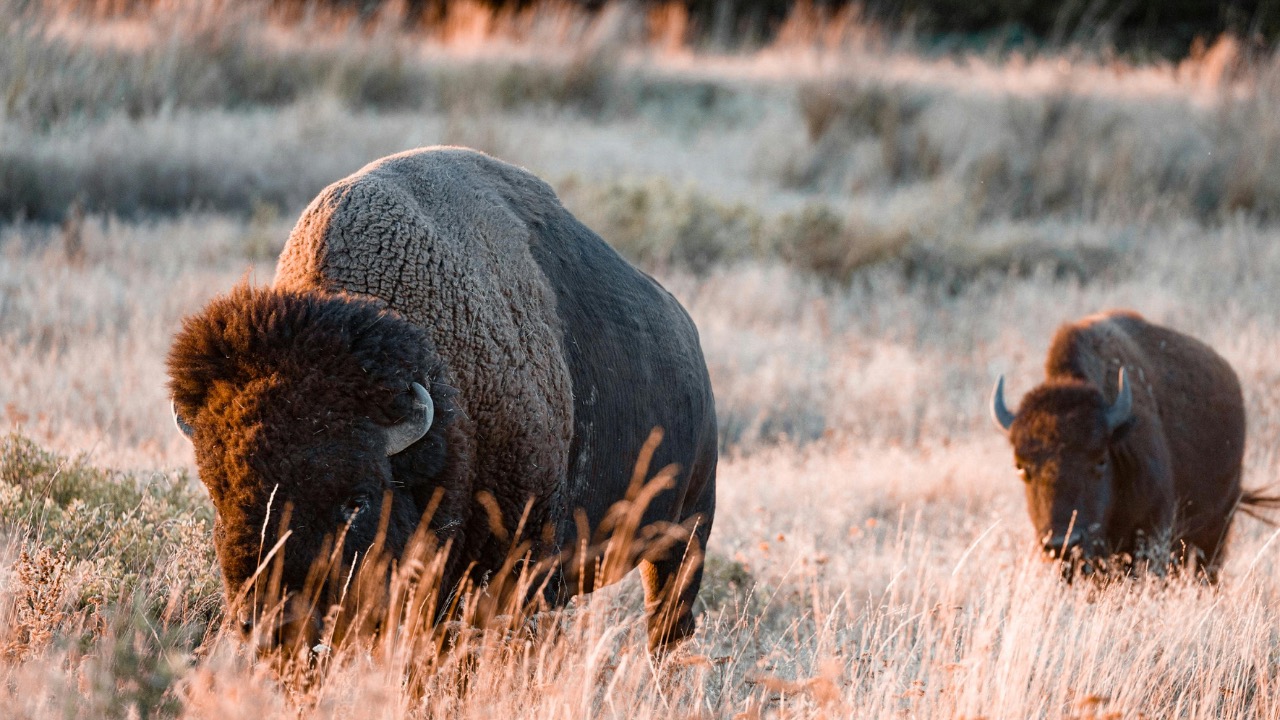
Bison are highly tuned to water and forage, so when climate patterns change, their movements change as well. In a wetter, more stable period, herds may follow regular routes that bring them past the same cliffs, coulees, or constrictions year after year. Drying conditions can break up that pattern, as animals spread out in search of new grazing patches or linger longer in some valleys while skipping others entirely. For hunters who relied on predicting those routes, even a modest shift in herd behavior could upend long-standing strategies.
Evidence from Bergstrom suggests that bison were no longer funneling through the site in the large, predictable numbers that had made mass kills possible. Bone layers thin out in the uppermost deposits, and there are fewer signs of the large-scale butchering events that once defined the site. This pattern matches broader findings that Bison hunters had to adapt to a changing climate about 1,100 years ago, as the animals’ seasonal paths shifted away from once dependable kill spots.
How hunters used the landscape to guide herds
For centuries, Native hunters at Bergstrom took advantage of the local topography to control bison movements. Ridges and rock outcrops near GARNEILL, MONTANA created natural lanes, while narrow draws and breaks in the terrain served as choke points where animals could be slowed or trapped. People added drive lines, brush, and human presence to steer herds, turning the landscape into a kind of living corral. This deep knowledge of landforms and animal behavior was at the heart of the site’s success.
The strategy depended on more than geography, though. It required accurate expectations about when and how often herds would pass through. If climate shifts altered the timing of migrations or scattered herds into smaller groups, those carefully planned drives would have become less efficient and more dangerous. Archaeologists who studied the Nativeuse of these formations argue that once the herds’ behavior changed, the same terrain that once guaranteed success could no longer support large communal hunts.
Inside the new study of Bergstrom’s past climate
The recent work at Bergstrom combines archaeology with paleoecology to rebuild the site’s environmental story. Study lead author John Wendt is a paleoecologist and assistant professor of rangeland ecosystem management at New Mexico State Uni, and he and his colleagues used plant remains, charcoal, and soil chemistry to track how vegetation and fire regimes shifted over time. Those records show a move toward drier-adapted plants and more variable burning, both signs of a climate that was becoming less stable for large grazing herds.
By comparing these environmental signals with the timing of hunting activity, the team could link the drop in use at Bergstrom to the onset of those drier conditions. Their work on Study samples from the site shows that the most intense hunting coincided with periods of more reliable grass growth, while the final layers reflect a landscape under stress. In my view, that tight match between climate signals and human behavior is what makes Bergstrom such a powerful case of long-term adaptation.
Why large communal kills stopped making sense
At its peak, Bergstrom supported large communal operations that produced significant surplus. Dr. Wendt has explained that these larger operations were based on large kills and could produce surplus for trade and winter storage, but the economics of that model depended on predictable herds and stable weather. When climate change made both less reliable, the costs of organizing big drives likely began to outweigh the rewards. A failed mass hunt would have meant not only wasted effort but also serious risk of injury or death for participants.
Over time, smaller and more flexible strategies probably looked safer. Hunters could target scattered groups of bison across a wider area instead of concentrating effort at one site where success was no longer assured. The decision to shift away from Bergstrom fits this logic. Researchers who examined how Wendt describes these operations emphasize that climate stress did not end bison hunting, but it did push people to reorganize how and where they hunted.
What the abandonment reveals about Native adaptation
The choice to leave a fruitful site after around 700 years of use reflects flexibility rather than failure. Native communities of the American Great Plains were not locked into one way of hunting or living; they watched the land, read the behavior of bison, and adjusted their strategies when conditions changed. Walking away from Bergstrom meant giving up a familiar and once reliable place, but it also opened the door to new hunting grounds and tactics better suited to the emerging climate.
I see this as a reminder that long-term resilience often depends on a willingness to let go of even successful systems when the environment shifts. Archaeological evidence from Bison hunting sites across the region suggests that communities experimented with more dispersed hunting, diversified food sources, and different forms of storage as conditions evolved. Bergstrom is one clear example of that broader pattern of adaptation.
Lessons from Bergstrom for a warming world
Looking at Bergstrom from the present, it is hard not to see echoes of current climate challenges. A community that relied on a key resource hub faced a shift in climate that made that hub less dependable, then chose to change course rather than cling to a failing model. The decision was likely difficult, given the deep cultural and practical ties to the site, but it helped people keep pace with a changing environment. Today, many towns, industries, and food systems face similar choices as warming reshapes water, crops, and wildlife.
For me, the Bergstrom story highlights two linked lessons. First, climate can reshape even the most established human traditions in a matter of generations. Second, early, proactive adaptation can soften the blow. The hunters who abandoned Bergstrom about 1,100 years ago did not wait for total collapse. They read the signs in bison behavior and grassland health, then moved on. As modern societies confront rapid warming, that mix of close observation and willingness to change may be as valuable as any new technology.

Leo’s been tracking game and tuning gear since he could stand upright. He’s sharp, driven, and knows how to keep things running when conditions turn.