More Americans report carrying firearms at public political events
Americans are increasingly bringing guns with them when they attend rallies, marches, and other public political events, and they are more likely to say those firearms are for personal protection rather than for advancing a cause. At the same time, support for using weapons for offensive political purposes has fallen, even as anxiety about intimidation and violence around elections has grown. That tension is now reshaping research, law, and security planning around protests and voting.
New survey work suggests that more gun owners view a firearm as standard gear when they step into a crowd that is talking about politics. Lawmakers, courts, and advocacy groups are racing to catch up, arguing over where weapons can legally be carried, what counts as intimidation, and how far the government can go in designating certain places off limits.
Survey evidence that more people bring guns to political events
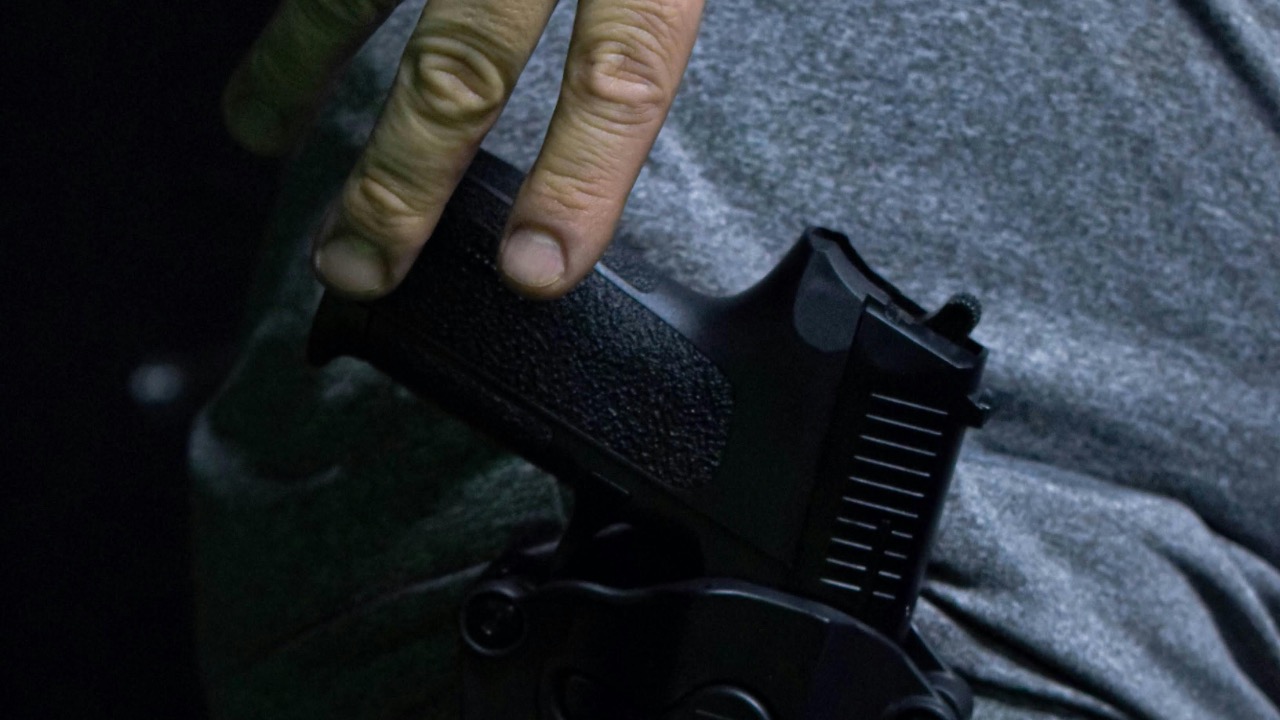
Recent research on political violence and firearms finds that a growing share of Americans who own guns say they bring them to public political events, and that self defense is now the dominant explanation. One study highlighted by PsyPost reported that respondents were more likely to describe carrying at rallies or demonstrations as a way to protect themselves, their families, or their property, rather than to threaten opponents or force political change. The same polling work found a notable decline in people who admitted owning guns for offensive political purposes, with the figure dropping to roughly 35 percent from higher levels in earlier years, even as more respondents reported carrying at public political events overall.
That pattern is echoed in a separate summary of the same work shared on social media, which described a new study in Injury Epidemiology that tracked attitudes among gun owners following the 2024 election. According to that description, fewer Americans said they owned guns to advance political goals after the presidential contest, while more reported carrying firearms for protection at public political events. Taken together, the findings suggest that political spaces are becoming more heavily armed even as explicit support for using guns as tools of partisan confrontation recedes.
Why protection, not politics, is the new justification
The shift from offensive to defensive framing reflects a broader story about fear and risk in American public life. Survey respondents increasingly describe crowded political settings as places where they worry about being attacked by extremists, harassed by opponents, or caught in unrest, and they frame a visible firearm as a way to avoid becoming a victim. In online discussions of the same research, one Reddit user with the handle TheGrappler summarized the trend by saying that the biggest takeaway was a major shift from people owning guns to threaten or coerce others to people who say they carry because they are afraid of what might happen around them, a reaction that tracks with the study’s emphasis on protection as the primary reason for bringing weapons to public political gatherings.
Public comment threads about the findings show how quickly that protective framing can harden into a cultural script. In one Edited discussion, supporters argued that carrying at rallies is a rational response to rising political tension, while critics insisted that more guns only increase the odds that an argument will turn deadly. In a related Comments Section, the user Fearless-Feature-830 wrote that “They are scared of literally everything,” capturing the view that fear is driving defensive gun culture at public political events more than any specific tactical calculation.
Legal gray zones around guns at protests
As more people arrive armed at political gatherings, confusion about what is allowed has become a story in its own right. In a recent televised fact check, a segment on Minneapolis examined claims about whether guns are barred at protests after a deadly shooting at a demonstration in that city. The program walked through how rules differ between public streets, permitted marches, and government property, and it highlighted that there is no single nationwide standard that clearly tells protesters where they can legally carry. That ambiguity has fueled both misstatements by officials and mistrust among activists who worry that rules will be enforced unevenly.
A separate broadcast conversation with a constitutional attorney, prompted by questions about Alex Prey being in possession of a firearm at a protest, underscored how much depends on context. The lawyer explained that the First and Second Amendments intersect in complicated ways when a person like Alex Prey brings a gun to a rally, and that local restrictions, permit conditions, or special security zones can all change what is legal. In that discussion, the attorney also referenced comments from press secretary Caroline about expectations for armed demonstrators, illustrating how political messaging, law, and on-the-ground enforcement often pull in different directions.
How courts and “sensitive places” doctrine shape the rules
Federal courts have become central to the fight over where guns can be carried in public, including at political events. A key reference point is the Supreme Court’s decision in New York State Rifle and Pistol Association v. Bruen, available through an official Supreme Court document, which reshaped how judges evaluate gun restrictions. In that ruling, the Court limited states’ ability to require special justifications for carrying handguns in public, while also affirming that some locations can be treated as “sensitive places” where firearms are restricted. That framework has become the lens through which new rules on guns at protests and near polling places are being tested.
Advocates and litigators now argue over which political spaces qualify as sensitive. One detailed analysis of state gun laws around elections quotes Morales-Doyle, who examined how Bruen affects efforts to keep weapons away from polling sites. Morales-Doyle connected the Supreme Court’s sensitive places language to concrete questions about voting locations, arguing that legislatures must now show historical analogues for any new restrictions. That requirement has made it harder to enact blanket bans on guns at modern political events that do not have obvious historical counterparts.
Patchwork rules at polling places and political venues
Nowhere is the patchwork of rules more visible than at polling places and election offices. A detailed overview of election-related gun laws notes in its Summary of Federal that Currently there are no federal laws that prohibit the carrying of firearms at or near polling locations, outside of existing bans that apply in federal buildings or on federal property. Instead, states and localities decide whether voters can bring guns with them when they cast a ballot, which means a polling place in one jurisdiction might be a gun free zone while a similar site in a neighboring state allows concealed carry.
Some state legislatures have responded by trying to draw clearer lines. A report on efforts to protect election workers explains that The Supreme Court has ruled that polling locations can fall within the category of sensitive places, such as legislative assemblies or courthouses, where gun prohibitions are considered constitutional. That recognition has encouraged more states to move bills that restrict guns at polling sites, but the absence of a federal baseline means that voters still face a confusing mix of signs, security protocols, and expectations as they move between different political venues.
State efforts to keep guns away from capitols and demonstrations
Beyond polling places, a growing number of states are rethinking whether people should be able to bring firearms into capitol buildings or onto the grounds during protests. An initiative described in a policy brief on No Guns at State Capitols and Demonstrations highlights how White supremacists and anti-government extremists have used armed protests to try to undermine institutions. The Impact section of that work cites an 18 month study of armed demonstrations that linked visible firearms to a higher likelihood of violence in America, reinforcing arguments that capitol complexes and organized rallies should be treated as sensitive places.
Those findings have spurred advocacy groups that focus on gun safety and democracy to push for more consistent restrictions. Organizations connected to the Everytown Support Fund, for example, have elevated campaigns that call for bans on open carry at statehouses and for clearer rules about weapons at permitted marches. Related efforts by partners such as Moms Demand Action frame armed demonstrations as a form of intimidation that chills participation, especially for communities that already feel targeted by extremist groups. Together, these campaigns argue that the right to protest peacefully is compromised when public spaces around capitols and demonstrations are saturated with firearms.
Federal law’s limits and the push for new protections
The gap between rising gun carrying at political events and limited federal rules has prompted a flurry of policy proposals. Legal analysts who track election security point out that Congress has not created a nationwide standard for weapons at polling locations, rallies, or campaign events, leaving most decisions to states and localities. The Protecting Democracyadvocacy network, connected to the Giffords organization, has used that vacuum to argue for new federal guidance that would define political sites where firearms are inappropriate, while still respecting the Second Amendment framework laid out by the Supreme Court.
At the same time, the Giffords Law Center’s broader work on guns in public, which is accessible through resources such as the Giffords policy and legal hub, emphasizes that any new protections must be carefully tailored to survive court scrutiny under Bruen. That means grounding restrictions on guns at protests and polling places in historical practices, such as longstanding bans on weapons inside courthouses or legislative chambers. Advocates argue that this history supports modern rules that keep firearms away from spaces where citizens gather to debate and decide public questions, even as individual gun owners increasingly treat those same spaces as appropriate places to carry for self defense.
Law enforcement messaging and public confusion
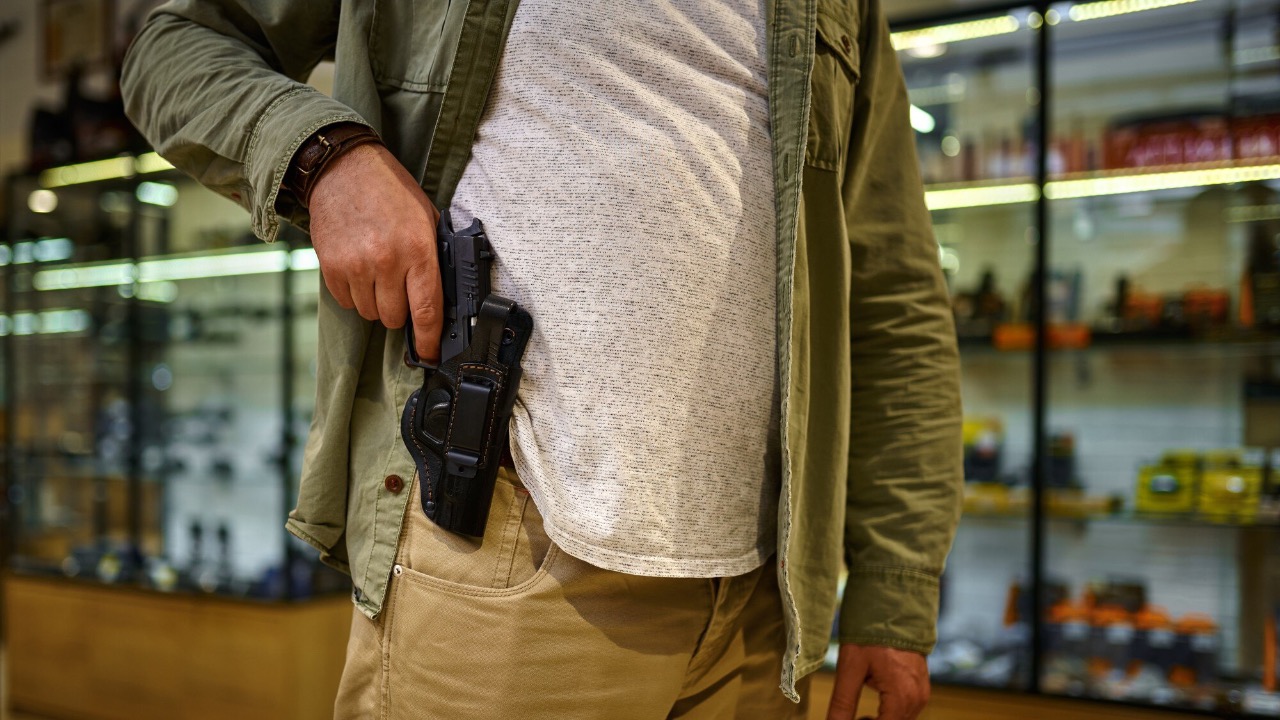
Law enforcement leaders have sometimes added to the confusion about guns at protests. In one widely discussed example, a fact check scrutinized FBI Director Patel’s suggestion that firearms were broadly barred at protests, then reported that The FBI later declined to clarify the legal details. Patel attempted to refine his stance in a Jan interview, but the episode highlighted how even senior officials can misstate the patchwork of laws that govern armed political activity. That kind of mixed messaging leaves protesters, counterprotesters, and bystanders unsure of what to expect when they see people carrying rifles or holstered pistols in a crowd.
Media segments that promise to Educate viewers on the rules around guns at protests have tried to fill the gap, often by walking through specific incidents such as the shooting in Minneapolis or an armed demonstration at the state capitol in Lansing. These explainers typically stress that, in many jurisdictions, open carry at a political event is legal unless a specific statute or emergency order says otherwise. Yet the very need for such programming underlines how far the law lags behind public expectations, as more Americans report carrying at political events while assuming, correctly or not, that others around them are doing the same.
What rising defensive carry means for political life
The combination of rising defensive carry and fragmented regulation is changing how people experience public political life. When a voter walks past a line of armed observers on the way into a polling place, or when a family at a march notices pistols on the hips of fellow demonstrators, the presence of firearms can subtly, or not so subtly, shape who feels safe speaking, chanting, or even showing up. Research on armed demonstrations cited by groups like the No Gunscoalition suggests that visible weapons increase the risk of violence and can suppress turnout among those who feel targeted, which in turn affects whose voices are heard in the public square.

Leo’s been tracking game and tuning gear since he could stand upright. He’s sharp, driven, and knows how to keep things running when conditions turn.