From Tommy guns to pistols: the firearms that defined Scarface’s criminal empire
Al Capone’s rise from Brooklyn street tough to Chicago crime boss unfolded alongside a revolution in firearms. The weapons that armed his crews, from roaring submachine guns to concealable pistols, did more than win turf wars; they shaped how the public imagined organized crime itself. From Tommy guns to pistols, the arsenal linked to “Scarface” created a visual and ballistic language that later echoed through Hollywood, culminating in the stylized firepower of Tony Montana.
Following those guns over time reveals a shift from battlefield technology adapted for bootlegging to sleek sidearms that signaled status as much as lethality. The same Thompson that rattled inside a North Side garage would become pop culture shorthand for gangland power, while a single .45-caliber pistol, cherished as a “sweetheart,” offers a more intimate look at how one man carried his empire on his hip.
Tommy guns in a Prohibition war
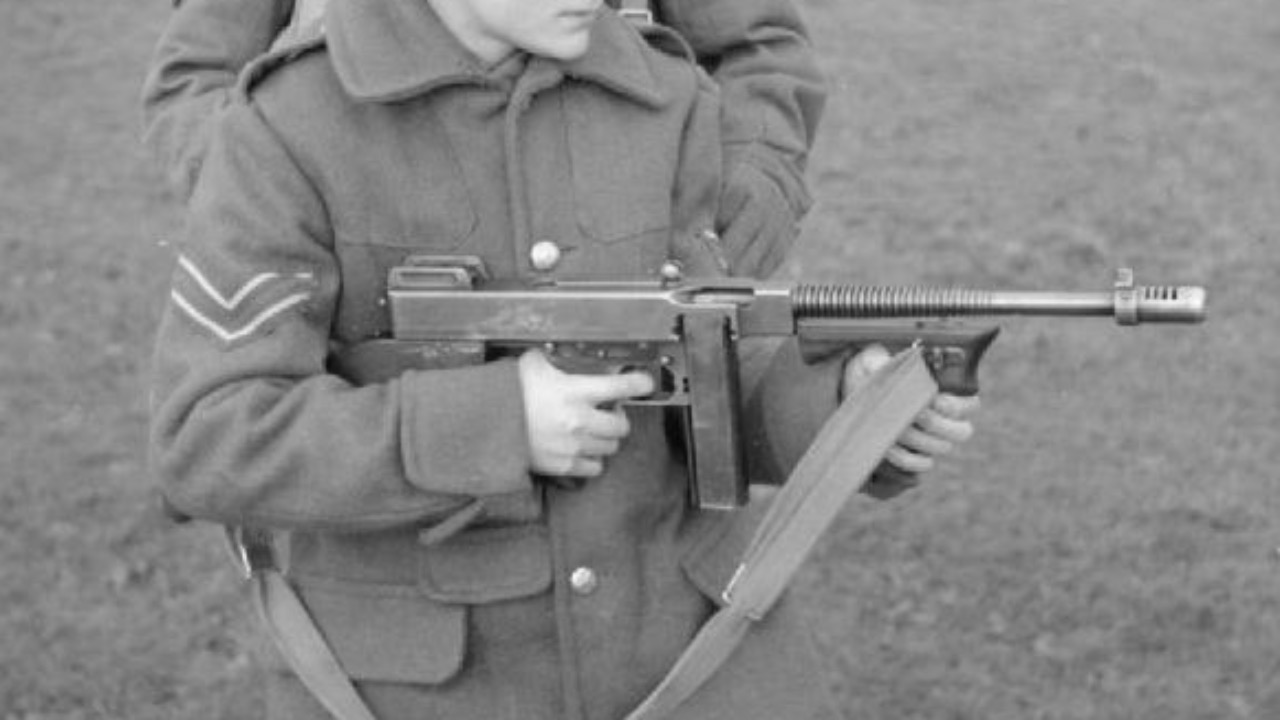
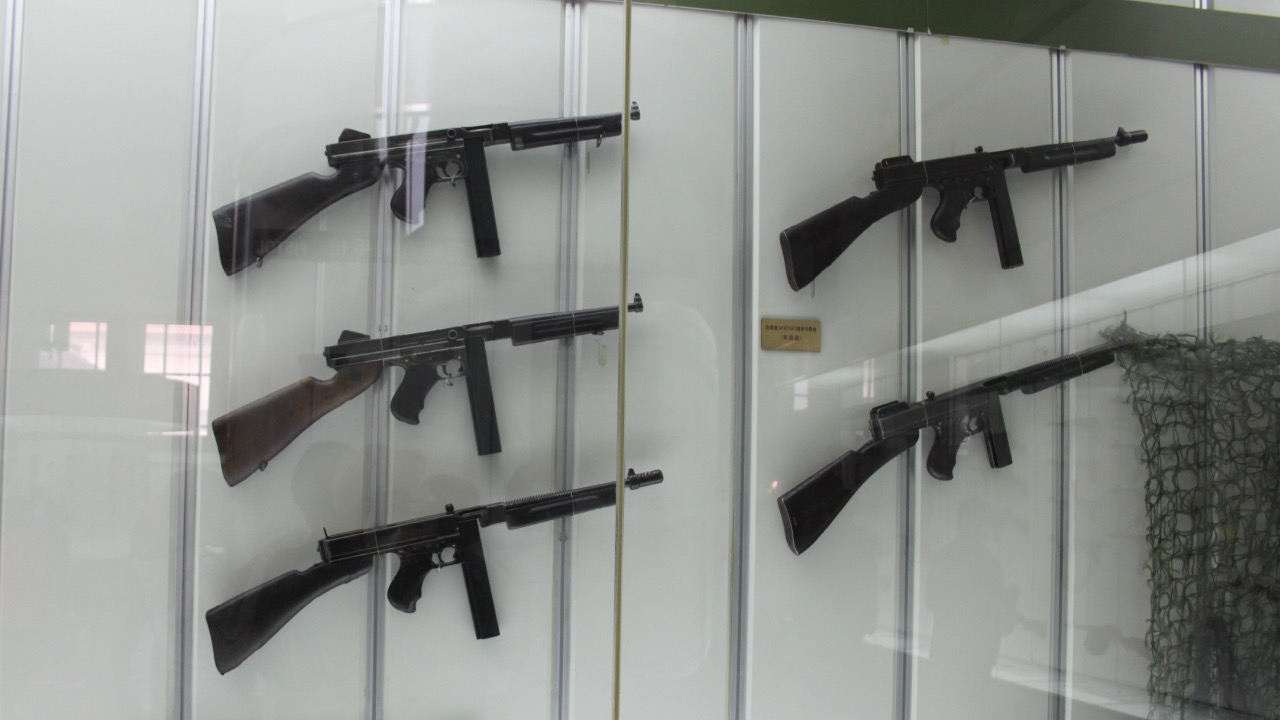
The Thompson submachine gun, better known as the Tommy gun, arrived just as Prohibition turned Chicago into a battlefield. Originally designed in 1918 for soldiers, the compact automatic weapon promised trench-clearing firepower, but peacetime gangsters quickly realized it could shred rival crews and armored sedans alike. A contemporary account notes that When the Thompson appeared, it was meant for the military, yet its portability and high rate of fire made it a natural fit for bootleggers who needed overwhelming force during drive-by attacks and warehouse ambushes.
The St. Valentine’s Day Massacre crystallized that image. According to research on the Historical Context of event, the slaughter of seven men in a Chicago garage was widely linked to Capone’s Chicago Outfit, even though he was not on the scene. Ballistic evidence and later analysis tie the killings to two Thompson submachine guns, identified as Model 1921 or Model 1928 variants, a detail that shows how a specific firearm could define an entire crime. A separate breakdown of Thompson Model usage in the massacre highlights how those guns, firing .45 ACP cartridges in rapid bursts, came to symbolize the industrial scale of Prohibition-era killing.
Capone’s “sweetheart” pistols and the quiet side of violence
For all the spectacle of drum-fed Thompsons, Capone’s day-to-day power rested on more discreet weapons. A .45-caliber Colt 1911 pistol, carried close to his body, served as both last resort and constant reassurance. Family members later recalled that One of the most treasured heirlooms was this Colt 1911, described as a 45-caliber pistol that had once saved his life. Relatives said Capone called it his “sweetheart,” a nickname that underscored the emotional weight he placed on a single sidearm in a world otherwise defined by massed fire.
The pistol’s journey did not end with his death. Collectors and historians have tracked the gun as it moved from private hands to public display, turning a personal weapon into a museum piece. A recent acquisition announcement described how a major Las Vegas institution secured Capone’s sweetheart Colt 1911 for its collection, presenting it as both artifact and storytelling device. Video from an auction preview further emphasizes that this was Al Capone’s Colt 1911 45 semi-auto pistol, presented as his concealed carry weapon and Colt of choice. Taken together, these accounts show how a single handgun, rather than a rack of Thompsons, can become the most intimate symbol of a criminal empire.
Standard-issue firepower for gangsters
Capone’s arsenal did not exist in a vacuum. Across the United States, gangsters of the early 20th century gravitated toward a common toolkit of revolvers, pistols, and carbines that balanced concealability with punch. A survey of Guns of the highlights how figures like Al Capone relied heavily on the M1911 platform, treating it as a trusted sidearm even as they experimented with more exotic hardware. The same review points to the Smith & Wesson Model 10, commonly chambered in .38 Special, as a workhorse revolver of the era, a reminder that not every mob hit required automatic fire; sometimes a six-shot wheelgun in a coat pocket did the job with less attention.
Behind those choices sat a mix of practicality and prestige. Another overview of Colt 1911 usage in organized crime notes that the pistol’s .45 ACP chambering, combined with its military pedigree, gave it a status all its own among mobsters. The same report catalogs the Auto Ordnance Thompson .45 ACP 50-Round Drum Magazine, advertised at $369.99, discounted to $289.99, with a claimed Save $80.00, a modern retail echo of the firepower that once roared in Chicago alleys. A separate historical feature on 20th Century Gangsters reinforces this pattern, noting that as violence escalated, gang leaders felt they needed extra firepower for protection, which in turn normalized military-grade weapons in street crime.
From Scarface Capone to Scarface Montana
The nickname “Scarface” did not retire with Al Capone. Half a century later, it resurfaced on the big screen in the form of Tony Montana, a fictional Miami drug lord whose arsenal borrowed heavily from real-world gangster iconography. Promotional material recalls that Released in 1983, Scarface reimagined the rise-and-fall mob tale through Tony Montana, a ruthless Miami cocaine kingpin whose story drew from real cocaine-fueled criminal empires of the 1980s. The film’s climactic shootout, with Montana on a staircase roaring “say hello to my little friend,” turned his rifle and grenade launcher into instant cultural shorthand for cartel-style excess.
Modern firearms analysts have broken down that cinematic arsenal in detail. One examination of Guns of Scarface points to the Colt Python as one of the standout handguns in the movie, a high-end .357 Magnum revolver that signaled Montana’s taste for expensive, powerful hardware. The same breakdown notes that Tony Montana also carries a compact Beretta Cheetah, part of the Series 81 line, a blowback operated pistol that balances concealability with respectable firepower, as described in a profile of The Beretta Cheetah. A separate video analysis of the film’s arsenal explains that the production starts its overview with the guns used by Alpaccino’s character Tony Montana, then tracks how Tony’s preferred weapons escalate in step with his empire, a structure reflected in a breakdown of Alpaccino screen-used firearms.
Grenade launchers, museums, and a lasting gun mythology
If Capone’s era was defined by Tommy guns and 1911 pistols, Tony Montana’s climactic stand added military hardware that would have been unthinkable in a 1920s Chicago garage. A detailed catalog of screen-used props describes an M203 GRENADE LAUNCHER GUN, noting that the Grenade Launcher used by Al Pacino as Tony Montana in the 1983 classic Scarface was attached under his rifle as he fought a full-scale assault, as shown in the listing for the GRENADEaccessory. That setup, with a rifle and launcher combined, visually updated the Tommy gun’s role as the ultimate expression of criminal firepower for a late 20th century audience.
Back in the world of real crime history, institutions continue to collect and interpret the weapons that made Capone famous. A behind-the-scenes blog on Capone gun curation explains how curators use his firearms to tell broader stories about Prohibition, policing, and public fear. Social media posts invite visitors to mark the anniversary of the St. Valentine’s Day killings, describing how, to any passerby, the raid looked routine until the gunfire turned it into a bloody Valentine from Scarface himself, language preserved in an event invite that asks guests to join us for commemorations. Video coverage of the institution’s latest acquisitions even refers to a “sweetheart of an acquisition” as staff show off a cult 1911 pistol and explain why the Mob Museum is thrilled to have it on display. Together, these modern touchpoints show how the guns of Scarface, from Tommy guns to pistols and grenade launchers, continue to shape how audiences understand both real and fictional criminal empires.

Leo’s been tracking game and tuning gear since he could stand upright. He’s sharp, driven, and knows how to keep things running when conditions turn.