Global research shows grasslands disappearing faster than forests
Grass-rich plains once stretched across continents, yet scientists now warn that these open ecosystems are vanishing faster than the forests that dominate conservation headlines. From temperate prairies to dry savannas, grasslands are being plowed, paved and planted over at a pace that is quietly transforming the face of Earth. The loss is not only rapid, it is also largely invisible to the global public, even as research shows that the stakes for biodiversity, climate and food security are immense.
Deforestation in places like the Amazon rightly alarms governments and activists, but comparable scrutiny rarely falls on the disappearance of grasslands. Global studies now show that these treeless expanses are the most altered and least protected of the major terrestrial biomes, with some regions having already lost the vast majority of their native grasses. The result is a conservation blind spot that risks sacrificing one of the planet’s most productive and carbon rich systems in the name of progress, and sometimes even in the name of forest protection.
Grasslands: the overlooked third of Earth’s land
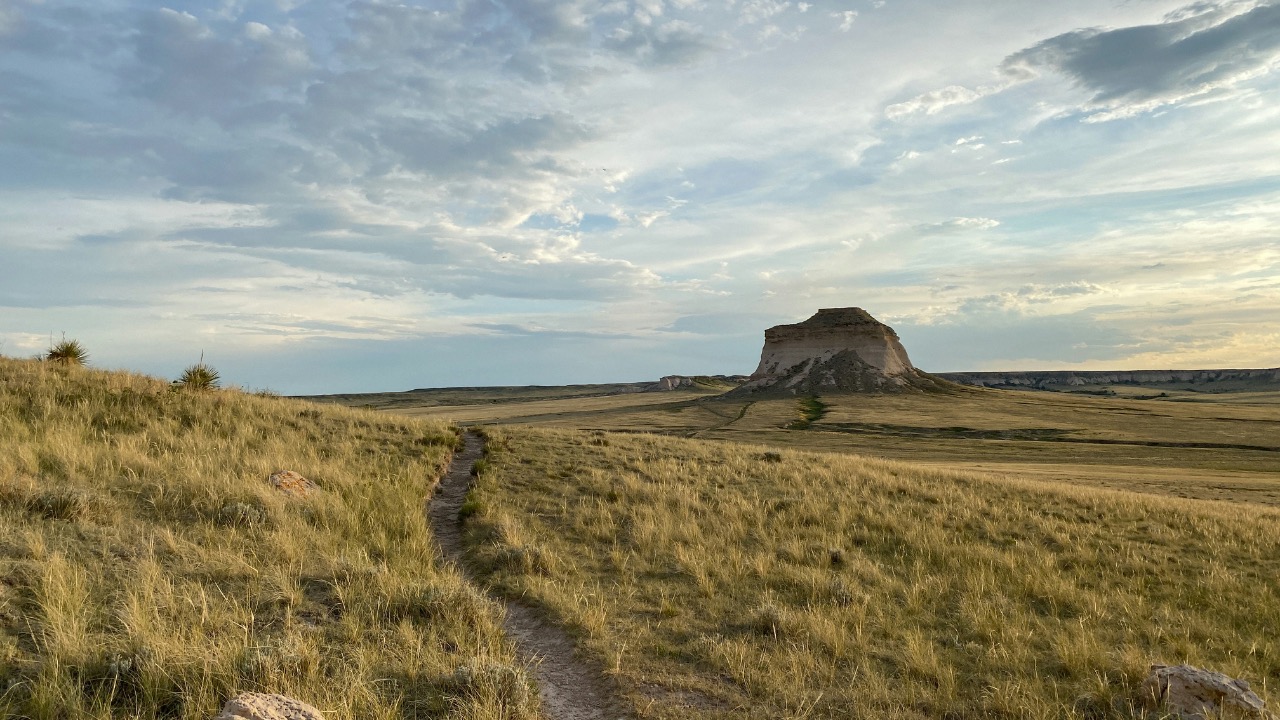
To understand the scale of what is being lost, it helps to start with geography. A quarter of Earth’s land surface is covered with grasslands, from North American prairies and Eurasian steppes to African savannas and high Alpine meadows. These open systems host a spectacular array of plants, insects and large herbivores, yet they are often treated as empty space that waits to be farmed, fenced or planted with trees. Global conservation narratives tend to orbit around tropical forests, even though Earth is home to many other ecosystems that carry comparable ecological weight.
Ecologists have long warned that this imbalance in attention has consequences. One influential analysis argued that the conservation community has focussed on the destruction of tropical rainforests while other ecosystems are disappearing at a similar or faster rate, and that these non forest systems are being destroyed with no mourners. That warning, published more than three decades ago, reads as an early diagnosis of the current predicament in which grasslands are treated as secondary to forests, even as they are cleared, plowed or overgrazed at industrial scale, often with little formal protection or monitoring.
Disappearing faster than forests
Global research now backs the claim that grasslands are vanishing more quickly than many forests. One synthesis notes that Globally, about half of all temperate grasslands have already vanished, compared with less than 20 percent of the Amazon. In North America, the same research describes native grasslands as the most endangered ecosystem in the world, a stark reversal for regions once defined by vast bison herds and continuous prairie. The numbers show that, hectare for hectare, grass-dominated regions have been converted or fragmented more aggressively than many iconic forests.
On the ground, those global trends translate into near total erasure in some places. In the central United States, environmental journalists Dave and others who document prairie history report that Today less than 1 percent of the original tallgrass prairie in states like Missouri and Illinois remains, disappearing even faster than the Amazon rainforest. In the Pacific Northwest, scientists studying a threatened Bunchgrass Prairie note that Grasslands are the, and that they are endangered on most continents including North America. Together, these findings paint a picture of a biome in retreat at a speed that outpaces many forest losses.
Why grasslands matter for climate, water and sound
The rapid loss of grasslands would be alarming even if these systems were biologically ordinary, but they are anything but. Global carbon cycle research estimates that Grassland ecosystems store 306 to 330 petagrams of carbon, which accounts for roughly one third of the global terrestrial carbon pool, with much of that stock locked in deep root systems and soils rather than in trunks or branches. That underground storage means that when fire or drought hits, more carbon tends to remain below ground compared with forests that hold their carbon in wood products and stems that can quickly release it back into the atmosphere when they burn or decay. In climate terms, intact grasslands act as massive, distributed carbon banks that are difficult to rebuild once plowed or paved.
Grasslands also shape hydrology and sound in ways that are only starting to be quantified. Studies of natural soundscapes report that the Silence of the natural world signals a biodiversity crisis, with grassland birds and insects among the voices going quiet as habitats shrink. At the same time, work on dryland forests in Sudan shows that the fallout of degradation has ramifications beyond forest borders, impacting food security, biodiversity and water resources, a pattern that mirrors what happens when grass cover is stripped from dry soils. As shrubs, crops or plantations replace native grasses, water infiltration, stream flow and local cooling all shift, sometimes reducing underground water storage in ways similar to what has been documented when large scale afforestation increases local transpiration in drylands.
How agriculture and even forest policy drive grassland loss
The primary drivers of grassland conversion are familiar: agriculture, infrastructure and poorly managed grazing. Conservation groups that track these trends report that the biggest threat to open rangelands worldwide is conversion into farmland, either to grow crops directly for people or to produce feed like soya for farm animals. The same pattern shows up in global supply chains, where policy papers on tropical deforestation describe how When cattle pasture, the biggest driver of rainforest destruction in some regions, is converted into soy fields, new pastures are then carved out of remaining native vegetation, a cycle that also pushes into savannas and grass dominated frontiers. In North America, authors like Richard Manning have chronicled how More of the original short grass ecosystem has survived on the High Plains, but much of it has been replaced with wheat, a domesticated short grass that supports agriculture but erases countless species of flora and fauna.
Grasslands are also shaped by how they are grazed. Permanent grasslands are described as semi natural anthropogenic ecosystems that require human intervention, preferably extensive use, to maintain their floristic diversity and animal welfare. Research from mountainous regions shows that different types of use, from intensive mowing to rotational grazing, can either support diverse plant communities or simplify them. When grassland is removed, most commonly through overgrazing and the conversion of grassland to cropland, perennial vegetation can be replaced by bare soil or shrubs, which makes it difficult for grasses to recover. In some dry regions, even efforts to protect nature can backfire, as forest conservation campaigns encourage tree planting on historical grasslands, a trend that one group of scientists described as good intentions with collateral damage.
Afforestation, misdirected conservation and the need for new designations
Afforestation has become a favored climate solution, but research warns that planting trees in the wrong places can undermine both biodiversity and water security. One recent study notes that Afforestation has been reported to increase local transpiration, leading to the depletion of underground water storage in drylands and to an overall reduction in water resources as a result of vegetation greening. Work on artificial forest patterns in the hilly Loess Plateau adds that However this approach presents a paradox, because plantations that aim to enhance ecological functions can, at large scale, reduce multi biodiversity and alter local climate. In prairie regions, Grassland researchers push back against afforestation efforts that replace functional, historical grasslands with forests, arguing that such conversions reduce grassland biodiversity and fundamentally alter ecosystem services like water cycling.

Leo’s been tracking game and tuning gear since he could stand upright. He’s sharp, driven, and knows how to keep things running when conditions turn.