Why U.S. Aircraft Carriers Are Built to Survive Massive Attacks
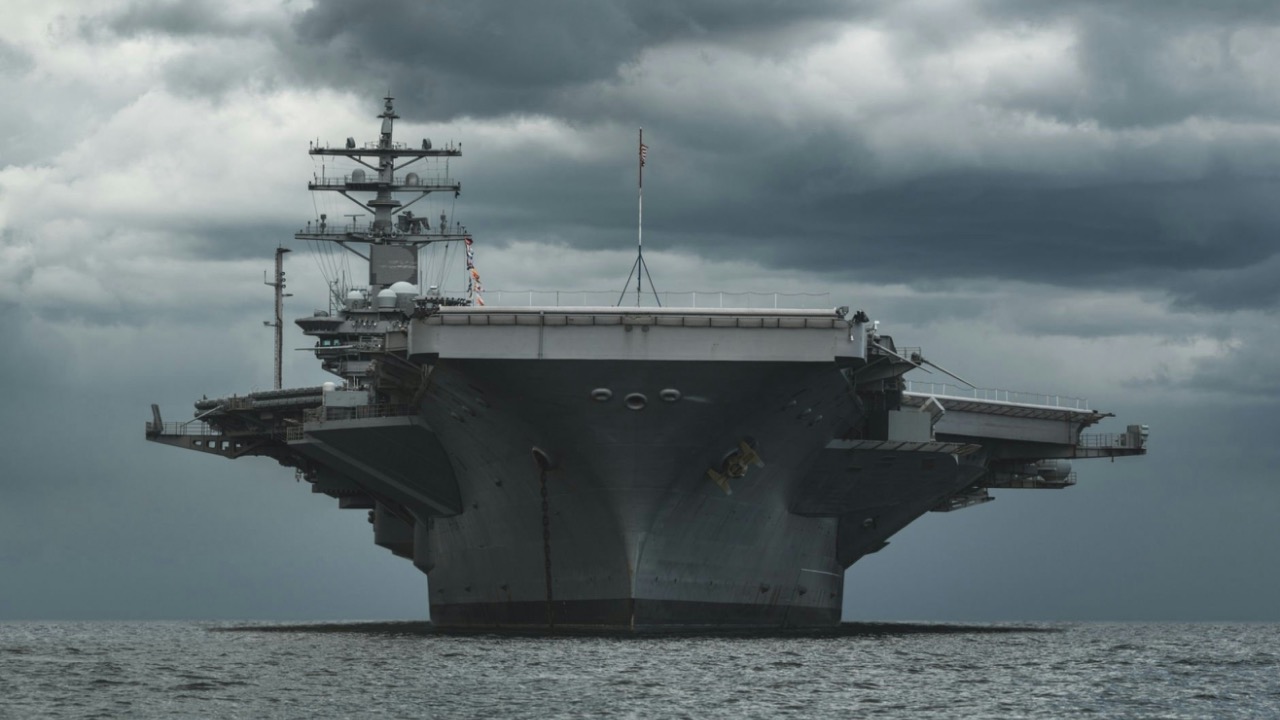
U.S. aircraft carriers are built on the assumption that they will be hunted by the most sophisticated weapons on earth and may have to keep fighting even after absorbing severe damage. Their survival is not treated as a given; it is engineered as a layered problem that starts with design and extends to how the Navy trains, sails, and protects these ships.
From the hull form to the carrier strike group that surrounds it, every element is intended to keep a 100,000-ton vessel in the fight under massive attack. The result is a class of ships that are not invincible but are intentionally hard to find, hard to hit, and very hard to finish off.
Floating fortresses by design
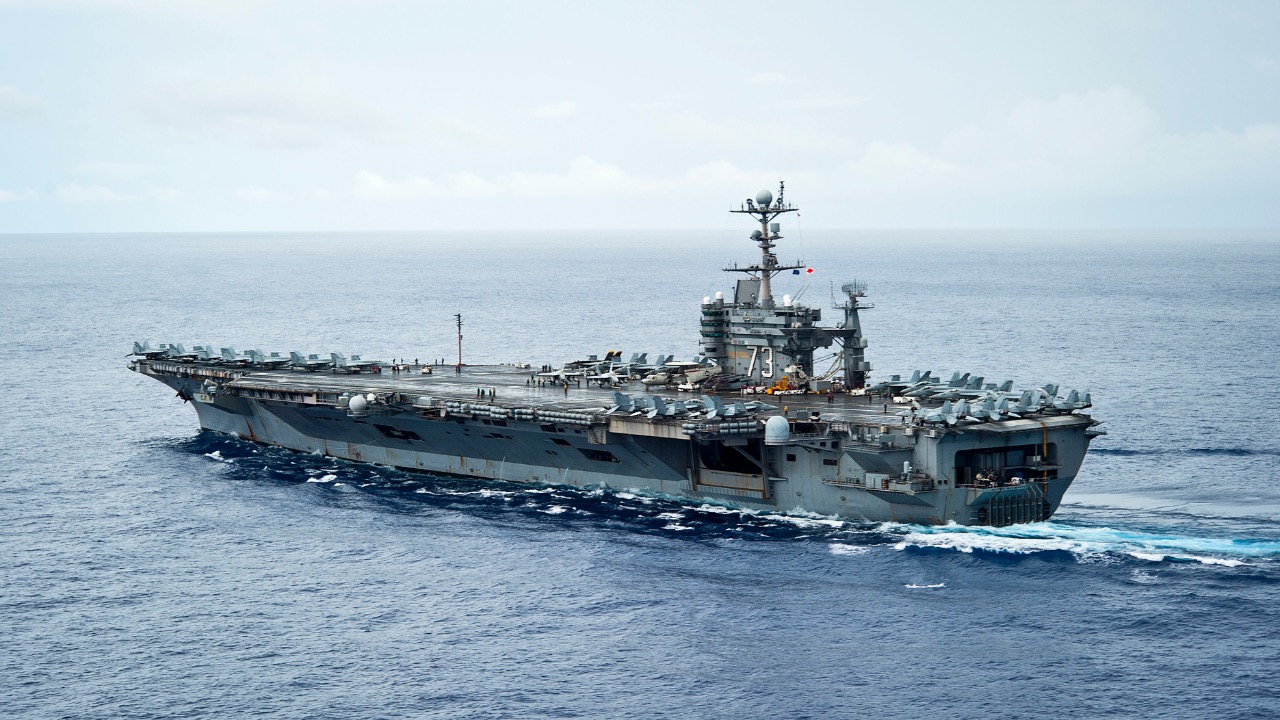
The first line of survival is the ship itself. Modern U.S. Navy supercarriers such as the Nimitz class are enormous, with flight decks roughly the size of four football fields, and that sheer volume gives designers room for deep armor, redundant systems, and hundreds of watertight compartments that slow flooding and keep buoyancy intact. Analyses of Nimitz class survivability stress that these ships are built to absorb hits that would cripple smaller warships and still launch aircraft.
Research on American Carriers’ Extraordinary describes how compartmentalization, armored magazines, and separated power and propulsion lines are arranged so that a single missile or torpedo is unlikely to trigger a cascading kill. It highlights that in U.S. practice, a warship is not considered out of the fight until it can no longer move, generate power, or operate aircraft, which sets a higher bar for what counts as a mission kill and pushes designers toward extreme redundancy.
Lessons from trying to sink one
The Navy does not treat survivability as an abstract theory. It has deliberately attacked its own carriers to understand how they fail, including a major test against the USS America, a Kitty Hawk class ship designated USS America (CV 66). During that controlled trial, The USS America absorbed weeks of underwater explosions and structural damage before finally going under, offering a rare real-world look at how long a supercarrier can remain afloat while suffering repeated blows.
A separate account of the same test noted that it took four weeks and multiple attack methods to send the Kitty Hawk class USS America (CV to the bottom, even without a defending crew fighting fires and floods. The Navy has also showcased controlled blast trials in which it set off large charges near a carrier hull, as seen in a widely shared Nov Navy test, to validate shock hardening of equipment and structure. Together, these experiments give engineers detailed data on how the hull flexes, how compartments flood, and which systems fail first, and they feed directly into newer designs.
Layered defenses and constant motion
Survivability is not only about staying afloat after a hit; it is also about avoiding that hit in the first place. Operational concepts emphasize that deployed carriers are always moving at high speed, changing course and location so quickly that targeting data can go stale before an enemy weapon arrives. One analysis of Here carrier defenses describes this as the outermost defensive layer, where speed and maneuver complicate the firing solution for submarines and long-range missiles before any interceptor is launched.
Closer in, U.S. doctrine relies on a carrier strike group rather than a single ship. A carrier rarely travels alone; it is screened by cruisers, destroyers, submarines, and its own air wing, a pattern echoed in a comparison that noted that, similarly, Similarly aircraft carriers are protected by patrol aircraft and a host of surface ships. Within this formation, escorts provide long-range radar, anti-air and anti-submarine weapons, and electronic warfare, creating a multilayer shield that an incoming threat must penetrate before it can even approach the carrier hull.
Missile age threats and evolving countermeasures
Critics often point to the rise of anti-ship ballistic and cruise missiles as a direct challenge to carrier survivability. A detailed study of Air Threats to the Aircraft Carrier catalogs Anti Ship Missiles and other systems that combine long-range sensors with high-speed weapons designed to overwhelm defenses in the terminal phase. These weapons aim to exploit the carrier’s size and strategic value, attempting to achieve either a mission kill on the flight deck or a structural kill on the hull.
In response, the Navy has invested in networked fire control, better interceptors, and more capable aircraft to detect and engage threats at longer ranges. A short explanatory video on Jan carrier strength stresses that the real power of a U.S. carrier lies in how it is designed to operate and recover, not in any claim of indestructibility. Modern concepts such as Naval Integrated Fire Control Counter Air tie together radar from escorts, fighters, and other platforms so that a missile can be tracked and engaged across the group, rather than relying on a single ship’s sensors at the last moment.
From CIWS to Reddit explainers: the close fight
If a missile or aircraft penetrates the outer layers, the carrier and its escorts still have point defenses. Enthusiasts and veterans often describe this in simple terms, as in an Aug Comments Section explanation that framed the best defense as the surrounding cruisers and destroyers, backed up by a CIWS missile defense system on the carrier itself. Close-in weapon systems fire rapid bursts of projectiles to shred incoming missiles within seconds of impact, while short-range missiles and decoys try to divert or destroy threats slightly farther out.
These last-ditch systems sit on top of the deeper structural protections already described. A separate look at why Carriers Because of their vast size are nearly impossible to sink notes that even if some missiles get through and cause topside damage, the hull’s compartmentalization and damage control training give the crew a fighting chance to contain fires and flooding. Firsthand accounts such as an Oct answer by Philip and Charles, who Philip Served Charles, echo that view, arguing that while no ship is unsinkable, the combination of design, crew readiness, and layered defenses makes a modern U.S. carrier a uniquely tough target.

Leo’s been tracking game and tuning gear since he could stand upright. He’s sharp, driven, and knows how to keep things running when conditions turn.