These ammunition types look acceptable but perform poorly for self-defense
At a glance, most modern cartridges look equally capable, lined up in glossy boxes that promise “defense” or “tactical” performance. In reality, some of the most common loads on store shelves are optimized for cost, recoil or hunting, not for stopping a violent threat quickly and safely. The result is a quiet problem in American gun culture: ammunition that appears acceptable for self-defense but performs poorly when lives are on the line.
To separate marketing from meaningful performance, I focus on how bullets behave in real tissue, how reliably they feed, and how much risk they pose to everyone beyond the target. Across rimfire, birdshot, lightweight pistol loads and ubiquitous full metal jacket rounds, the pattern is consistent. When ammunition is designed around convenience or tradition instead of terminal effect, it can fail at the one job that matters in a defensive shooting.
Why “good enough” ammo is often not good enough
Most new gun owners assume that if a cartridge fits the chamber and fires, it is suitable for protection. That assumption ignores how dramatically bullet construction, weight and velocity change what happens after impact. Defensive ammunition needs to penetrate deeply enough to reach vital organs, expand or otherwise disrupt tissue, and stop inside or shortly beyond the attacker. Range loads, hunting shells and ultra‑light novelty rounds may look similar on the shelf, but they are engineered around very different priorities.
Training ammunition is usually built to be cheap, soft recoiling and reliable in high volume, which is why so many shooters default to it for daily carry. Yet the primary issue with typical range ammo lies in its behavior on impact. Unlike purpose built self-defense loads, these bullets tend to over‑penetrate, exiting the body with significant energy and creating a hazard in urban or suburban environments. When a round is optimized for paper and steel instead of people, “good enough” on the firing line can be dangerously inadequate in a hallway or parking lot.
Rimfire comfort vs centerfire reality
Small rimfire cartridges are often the first rounds new shooters encounter, and their mild report and low recoil make them feel unintimidating. The .22 Long Rifle and .22 Magnum were designed for small game, from animals you can hold in your hand up to slightly larger critters, not for stopping determined human attackers. As one detailed overview of Rimfire Cartridges notes, these rounds are built around thin cases and heel based bullets that can be damaged during the feed cycle, which undermines reliability in semi‑automatic pistols.
Ballistically, .22 LR and similar rimfires carry limited energy, reduced penetration and minimal stopping power. A dedicated review of .22 LR concludes that Its drawbacks make it generally not ideal for self-defense, even though a .22 round can certainly stop an attacker under the right circumstances. A separate analysis of 9 mm versus .22 emphasizes that 9 mm is Known for higher stopping power, significant penetration and expansion, while .22’s effectiveness in real defensive scenarios is inconsistent. For beginners, that softer shooting profile is appealing, but one guide flags the Drawbacks bluntly: Not ideal for self‑defense due to limited stopping power.
Birdshot’s deceptive promise in the shotgun aisle
Shotguns have a deserved reputation as formidable defensive tools, which is why birdshot’s shortcomings are so often overlooked. On the shelf, light bird loads promise low recoil and reduced wall penetration, and the idea of a wide pattern that is “hard to miss with” is deeply ingrained. In reality, birdshot is engineered to humanely kill small, fragile animals, not to break through bone and reach vital organs in a human torso.
Pattern testing shows that Once you hit 10 yards and beyond, a typical birdshot load has spread out so much that it is really unlikely to stop a threat, especially through clothing, which is why one analysis stresses that these pellets are tuned for Once fragile bodies, not humans. A separate breakdown of shotgun shell types notes that Most experts will say no, birdshot is not a good choice for home defense or protection from large animals, summing it up with the blunt line “Birdshot is for birds.” Experienced shooters echo that verdict in forums, pointing out that Additionally birdshot is notoriously soft, with too little antimony to harden the pellets enough to penetrate human bodies reliably. Even video series like the one hosted by Stephen Caleb of Stephen Caleb at Brown in their Smithbusters segment, where Caleb walks through real‑world tests, reinforce that birdshot’s reputation as a “safe” home defense choice is built more on myth than on terminal performance.
FMJ: the range workhorse that falters in the street
Full metal jacket bullets are the default choice for practice, and for good reason. A copper jacket around a lead core makes them cheap to manufacture, easy to feed and durable enough to survive repeated chambering. Many shooters carry the same loads they train with, assuming that reliability at the range translates to effectiveness in a fight. That assumption breaks down once you look at how FMJ behaves in tissue.
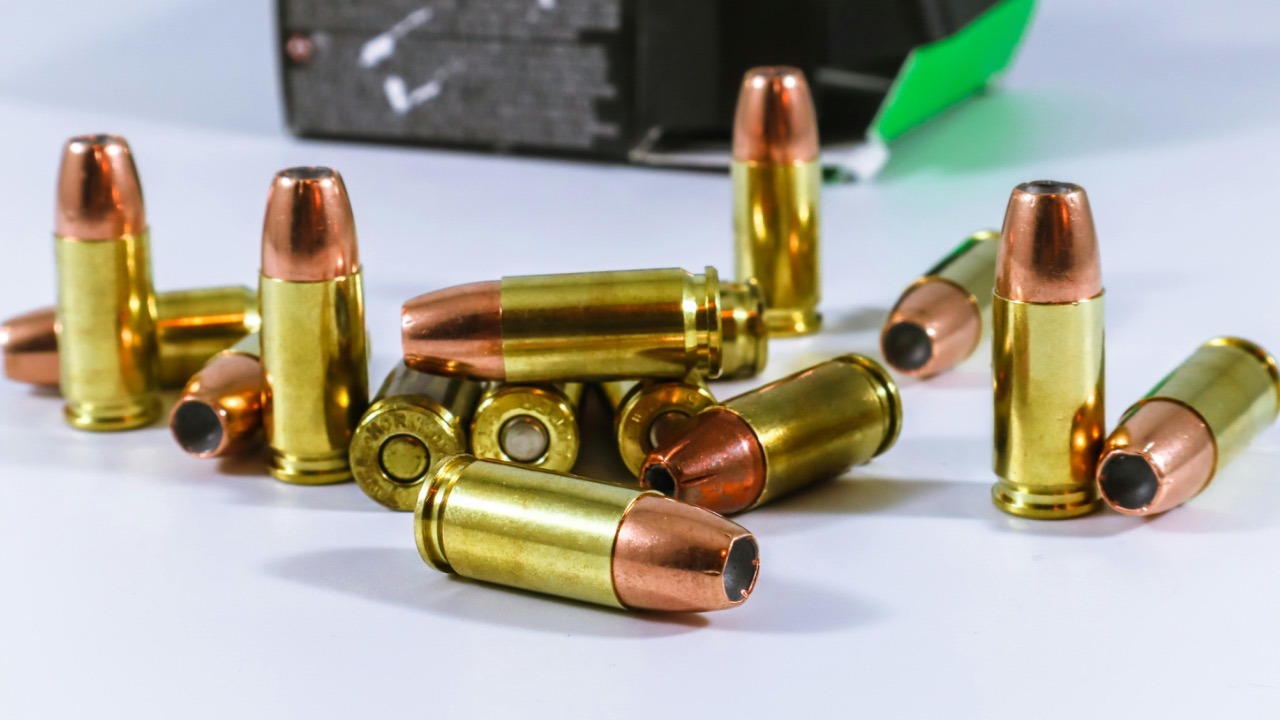
By design, FMJ bullets do not expand. One detailed explanation of What Is Full Ammo notes that FMJ bullets have no exposed lead on the nose, so unlike hollow points, which are engineered to expand and dump energy, FMJ tends to stay intact and keep going. That same source highlights FMJ FMJ Over Penetration Issues, explaining that one of the main drawbacks is a tendency to exit the body and threaten bystanders. A separate breakdown of the Full Metal Jacket concept reinforces that FMJ, often referred to as ball ammo, is typically used for target practice and training because it is the most economical option, not because it is optimized for stopping threats.
Real world concerns go beyond theory. One retailer’s FAQ titled Will FMJ Go frames Over penetration as a central concern, noting that FMJ rounds, due to their penetration, can travel through interior walls and pose a significant risk to bystanders. A separate analysis of Over penetration in home defense settings reaches the same conclusion. Another breakdown of While FMJ notes that while FMJ ammunition offers advantages in penetration and reliability, its limited stopping power and potential for overpenetration make it a poor primary choice for self-defense. Even enthusiasts on forums concede that FMJ is at best a temporary solution when a pistol like the PF9 has not yet been broken in with hollow points.
Light 9 mm bullets that look fast but hit soft
Within the popular 9 mm cartridge, bullet weight is one of the most misunderstood variables. On the shelf, lighter loads promise higher velocity and softer recoil, and they are often cheaper, which makes them attractive to new carriers. Yet the same characteristics that make these rounds pleasant on the range can undermine their performance in a defensive shooting, especially when they are paired with FMJ construction.
A detailed breakdown of 9 mm bullet weights explains that Lighter bullets like 115 g are great for practice, while heavier loads like 124 g or 147 g offer better performance for self-defense if your gun runs them well. A second pass at the same data reinforces that 115 g, 124 g and 147 g loads behave differently in gel and on the street. Another technical note on grain ratings concludes that self-defense situations demand heavier bullets, specifically 124 and 147 g in 9 mm, which deliver superior penetration and stopping power by reaching essential organs, a point underscored in the line that 124 and 147 g bullets are better for neutralizing threats.
When those light bullets are also FMJ, the compromise becomes more severe. One training guide notes that for instance, your training ammunition might be a 115gr FMJ, cheap and easy to shoot, but your defensive ammunition is 124gr jacketed hollow point, and the point of impact can shift between the two. Bulk 9 mm NATO loads illustrate the same divide. Each round in one common offering is crowned with a 124 g projectile with a full metal jacket for reliable function in semi‑autos and revolvers, and the manufacturer notes that Each is designed to punch through targets before they pose a risk of overpenetration. That is ideal for steel plates, not for crowded apartment hallways.
Exotic lightweight handgun rounds that underperform
Beyond mainstream FMJ and conventional hollow points, the market is full of exotic handgun loads that promise extreme velocity, reduced recoil or spectacular fragmentation. These cartridges often use very light bullets for caliber, betting that speed will compensate for low mass. In practice, they can fail to penetrate deeply enough, especially when they encounter bone, heavy clothing or intermediate barriers.
One retrospective on self-defense calibers singles out a .45 ACP load as a cautionary tale. In a section on poor performers, it notes that There are choices that perform very poorly when it comes to self-defense, highlighting The Liberty 78-grain (yes, a 78-grain . Nov 45 ACP) as an example of a round that looks impressive on paper but struggles in gel. The same source contrasts that with The Federal HST and HST +P, where Federal HST and loads achieve Expansion averages of 0.85-inch and 0.79-inch with consistent penetration, showing what well tuned bullet design can do even at standard weights.
These ultra light offerings are not limited to .45 ACP. In the 9 mm world, some boutique makers push sub‑100 grain bullets at very high velocities, trading mass for speed. A separate comparison of 9 mm and .40 S&W notes that Ammunition Choice The 9mm round has been innovated so many times that it is a far superior round than it used to be, but it also warns that .40 S&W, especially in 180 grain, is not the best self-defense cartridge when recoil and capacity are factored in, a point captured in the line about Ammunition Choice The 9mm round. The lesson is consistent. When bullet weight is pushed to extremes in either direction, the result often looks innovative but performs poorly once it meets real tissue.
When “range ammo” sneaks into the nightstand
One of the most common ways underperforming ammunition ends up in defensive guns is simple inertia. Shooters buy cases of inexpensive range ammo, load a few magazines for practice, and then leave those same magazines in a nightstand or glove box. Over time, the distinction between training and carry loads blurs, especially for owners who do not shoot often or who are wary of cycling expensive hollow points.
A detailed comparison of range and defensive ammunition notes that the primary issue lies in the behavior of range ammo upon impact. Unlike self-defense ammunition, range rounds tend to over-penetrate, exiting the target and continuing with enough energy to be dangerous in Unlike urban or suburban environments. Another training focused guide illustrates the split with a concrete example: For instance, your training ammunition is a 115gr FMJ, cheap and easy to shoot, But your defensive ammunition is 124gr jacketed hollow point, and the point of impact on the target can differ, a nuance captured in the line that But your defensive ammunition behaves differently.
Even in rifle calibers like 300 Blackout, the same pattern appears. One manufacturer markets a 125gr 300 BLACKOUT FMJ as a dedicated range and training load, emphasizing that it is built to the highest standards of Defiant Munitions ammo but clearly labeling it as FMJ range/training ammunition. In the same caliber, experienced users on a dedicated forum point out that On the contrary, certain manufacturers make ammo specifically to avoid overpenetration, citing G2 Rip ammo, Lehigh Defense, Underwood and Critical Defense as examples of 300 BLK loads tuned for home defense, a distinction spelled out in the line that On the contrary, some manufacturers design ammo that does not over penetrate. The takeaway is simple. If the box says “range” or “training,” it probably belongs on the firing line, not in the gun you rely on when a door is kicked in at 3 a.m.

Leo’s been tracking game and tuning gear since he could stand upright. He’s sharp, driven, and knows how to keep things running when conditions turn.