The Legal Fight Over Public Lands in Alaska Explained
Public lands in Alaska have become the stage for some of the most consequential legal battles over conservation, Indigenous rights, and resource extraction in the United States. At stake are tens of millions of acres, subsistence hunting and fishing traditions, and competing visions of how the state’s vast territory should be managed. Rather than a single case, the legal fight over public lands in Alaska is an overlapping web of lawsuits, statutes, and administrative decisions that will shape the region for decades.
To understand that conflict, it helps to look at how federal laws like the Alaska National Interest Lands Conservation Act and the Alaska Native Claims Settlement Act intersect with state sovereignty claims and energy policy. From protections on 28 million acres of so‑called D‑1 lands to battles over rural subsistence rights and Arctic drilling, each dispute turns on who controls which lands and waters, and for whose benefit.
Why Alaska’s public lands matter so much
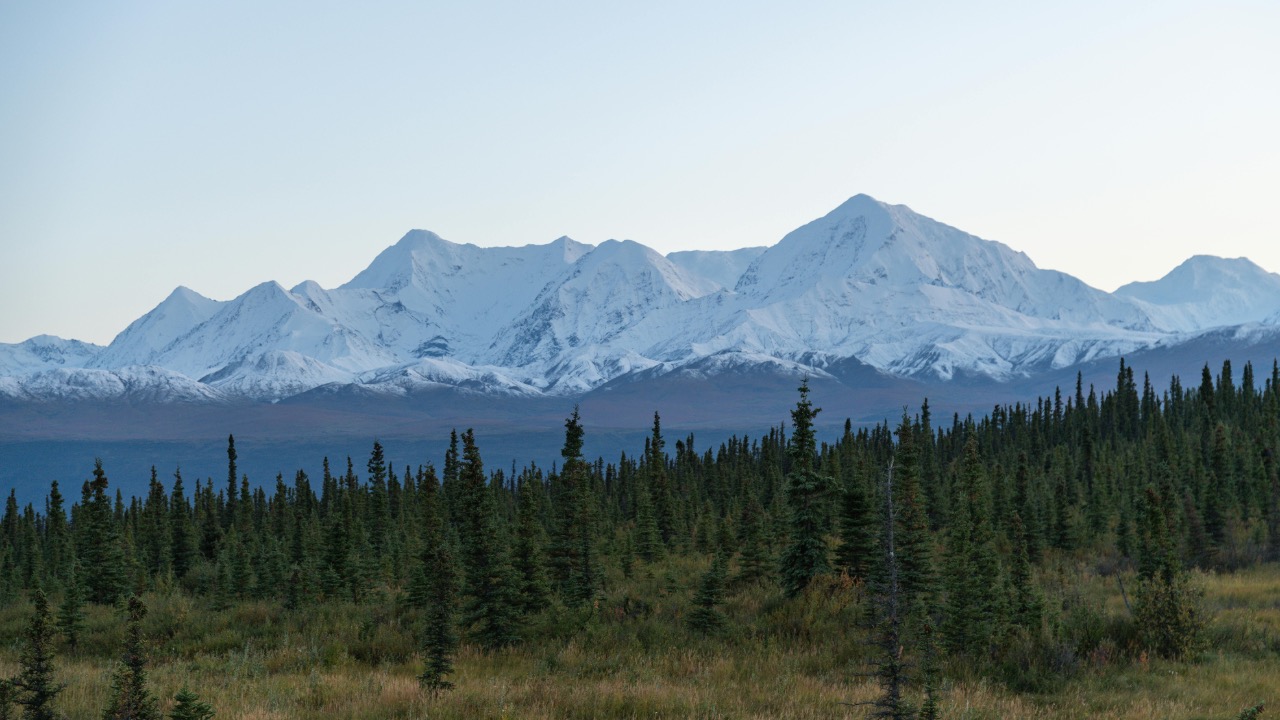
Alaska covers a landmass so vast that it reshapes any national debate about public lands. The state contains huge stretches of federal territory, from national parks and wildlife refuges to Bureau of Land Management holdings, and roughly 76 million acres are described as being managed by the U.S. Fish and Wildlife Service in a video featuring a Senator discussing federal oversight. These lands include remote mountain ranges, tundra, wetlands, and coastal ecosystems that support salmon runs, migratory birds, caribou herds, and marine mammals.
They are also home to Alaska Native communities whose cultures and economies are tied to subsistence hunting and fishing, as well as to oil, gas, and mining interests that see enormous economic potential. The state’s sheer scale and low population density mean that decisions about federal acreage have outsized effects on local livelihoods and on global climate and biodiversity. Basic reference tools such as a general Alaska profile capture the geographic scope, but the political stakes are defined by how different laws carve up authority over that map.
The legal architecture: ANCSA, ANILCA and “public lands”
The modern legal structure for Alaska’s public lands rests on two statutes that still generate litigation. When the Alaska Native Claims Settlement Act was passed, it created Alaska Native corporations and transferred land and money in exchange for resolving Indigenous land claims, while also setting aside large areas for potential future decisions. Section 17(d)(1) of ANCSA led to the designation of so‑called D‑1 lands, and those areas later became a flashpoint as federal agencies weighed whether to open them to development or keep them protected. One analysis of how Trump era executive actions would affect Alaska notes that the phrase “Protection Removal from 28 Million Acres” was tied directly to these D‑1 withdrawals and to the history of When the Alaska was implemented.
The Alaska National Interest Lands Conservation Act, usually shortened to ANILCA, added another layer by designating vast conservation units and embedding protections for subsistence uses. ANILCA uses the term “public lands” repeatedly, and a press release from the Alaska Department of Law stresses that Congress used the term “public lands” more than 200 times and, in the state’s view, gave it a single, clear meaning that excludes state owned submerged lands. That seemingly technical argument over definitions now drives high stakes litigation about navigable waters, subsistence jurisdiction, and how far federal conservation authority extends inside Alaska’s borders.
Federal protections on 28 million acres of D‑1 lands
One of the most significant recent developments involves the 28 million acres of D‑1 lands that were originally withdrawn from development under section 17(d)(1) of ANCSA. The Department of the Interior announced that Secretary of the Interior Deb Haaland had finalized a decision to retain protections on these lands after an extensive public process, describing them as public lands that hold important natural and cultural values for Alaska Native communities and the broader public. An advocacy group that had pushed for this outcome celebrated the agency’s move and explained that the D‑1 label comes directly from ANCSA, with the decision framed as a victory in upholding these protections.
The Biden administration presented the same decision in a formal statement that highlighted both the acreage and the political symbolism. In that announcement, issued from WASHINGTON, officials said that, Following an extensive public process, Secretary of the Interior Deb Haaland had affirmed protection of 28 million acres of public lands in Alaska and emphasized consultation with the public and Alaska Native communities. The administration cast the move as part of a broader commitment to conservation and Indigenous engagement, and the underlying press release is accessible through a linked Interior statement. At the same time, critics aligned with resource extraction interests have argued that keeping such a large footprint off limits constrains economic growth and state revenues.
State sovereignty, ANILCA, and the Supreme Court
Alaska’s government has mounted a sustained campaign to narrow federal control over lands and waters inside the state, with ANILCA at the center of that fight. In its press release asking the U.S. Supreme Court to intervene on navigable waters, the state argued that ANILCA “says what it says,” insisted that Congress gave “public lands” a single meaning, and claimed that state owned submerged lands and waters are not subject to federal control. That position builds on earlier litigation over who regulates activities like hovercraft use and hunting in national preserves, including the Sturgeon and Sturgeon 2 cases that a Senator referenced while criticizing federal land management.
The conflict has now moved into a new phase as Alaska and the federal government file briefs with the Supreme Court over subsistence fishing rules on navigable waters. A report on that dispute describes how federal rules give rural residents preferential treatment for subsistence fishing, which has created a two tiered system in Alaska where rural residents receive priority access and urban residents do not on waters that the state views as its own. The same report notes that Alaska and the U.S. government have submitted arguments in a case that could reshape how ANILCA’s subsistence provisions apply to navigable waters in, and the outcome will define the balance between state sovereignty and federal conservation mandates.
Subsistence rights and Alaska Native communities
For Alaska Native communities, the legal meaning of “public lands” and “navigable waters” is inseparable from the right to continue traditional hunting and fishing practices. ANILCA explicitly protects rural subsistence uses, and Alaska Natives have fought to ensure that those protections are not eroded by state regulations or commercial pressures. One report describes how Alaska Natives’ fight for fishing rights found an ally in the Trump team when the solicitor general told the Supreme Court there was no federal jurisdiction over subsistence fishing in Alaska, even as the Trump administration pursued other policies that favored development. In that account, Alaska Natives were navigating a complex alliance with Trump officials while also confronting the broader implications of the Supreme Court case.
Subsistence debates are not limited to fishing. They also surface in controversies over land swaps and roads that could open remote areas to traffic. A detailed look at a proposed land exchange in Alaska warns that the deal could undermine 40 years of conservation and subsistence practices, describing how One of the country’s largest land protection laws is under threat. The same piece explains that the law under scrutiny has safeguarded hunting and fishing practices of Alaska Natives for 40 years, and that the proposed swap would trade conservation land to facilitate infrastructure at the expense of those traditions. The framing in that discussion of How a land could unravel protections shows how subsistence rights sit at the center of many legal and political fights.
Arctic drilling, Izembek, and the Gwich’in front line
Beyond subsistence fishing, some of the most high profile conflicts involve oil and gas development in ecologically sensitive regions. The Arctic National Wildlife Refuge has become a symbol of that struggle, as federal agencies invite fossil fuel companies to consider drilling projects on public lands that the Gwich’in people call “the sacred place where life begins.” A social media post shared by the Gwich’in Steering Committee describes how the refuge is home to the Porcupine caribou herd, polar bears, and migratory birds, and warns that drilling on these public lands is a threat to the rights and livelihoods of the Gwich’in Nation. That Photo shared by Gwich’in Steering Committee on January 14, 2026, explicitly calls for opposition to leasing and development in the Arctic Refuge.
Elsewhere on Alaska’s coast, the Izembek National Wildlife Refuge has become another flashpoint because of a proposed road intended to connect communities for medical evacuations and transport. Conservation groups argue that Alternatives like improved helicopter service or a ferry would better address safety concerns without cutting through designated wilderness, and they pressed that case when the Ninth Circuit requested that lawyers respond to a rehearing appeal in litigation over the road. The federal refuge itself is described by the U.S. Fish and Wildlife Service as a critical habitat for migratory birds and marine species, and the agency’s description of the Izembek refuge highlights its global ecological importance. The dispute illustrates how humanitarian arguments, subsistence access, and conservation law collide on Alaska’s public lands.
Project 2025, reconciliation bills, and the Trump era push
Legal fights in Alaska are shaped not only by court decisions but also by shifting federal policy agendas. During the Trump administration, a detailed policy blueprint known as Project 2025 has been linked to rapid efforts to expand resource extraction on public lands. One analysis of that implementation explains that an order directed agencies to exploit emergency provisions under the ESA to identify endangered species that prevent logging and to make more land available to logging companies. That description of how the order would use the ESA to expand logging illustrates the broader strategy described as the Trump administration’s rapid implementation of Project 2025 on public lands, with Alaska’s forests and roadless areas among the potential targets.
Parallel to executive actions, congressional proposals have raised alarms among conservation and community groups. A statement from advocates in Washington, D.C. criticizes a House Natural Resource budget reconciliation bill as a billionaire land grab that sacrifices Alaska and silences the public, arguing that the bill’s provisions would weaken environmental review and limit public input on land management decisions. Another campaign from Alaska based organizations asks what public lands will be left once Trump is through with them, recounting a meeting During a government shutdown where Department of the Interior leaders, including DOI Secretary Burgum and the Alaska Delegation, reportedly discussed a record of decision with the fewest protections in place. Those accounts show how legislative and administrative moves, such as the Washington reconciliation bill, can set the stage for future legal clashes over Alaska’s lands.
Tribal land into trust and the meaning of “Indian country”
Another legal front involves whether Alaska Native tribes can place land into trust status, which would create pockets of “Indian country” with distinct jurisdictional rules. A federal judge in Anchorage ruled that the Department of the Interior may take land into trust on behalf of Alaska Native tribes, a decision that challenges long standing assumptions that the Alaska Native Claims Settlement Act prevented such trust acquisitions. The ruling describes ANCSA as a 53 year old statute and concludes that nothing in it categorically bars the Department of the Interior from creating trust parcels for Alaska Native communities.
For tribes, the ability to place land into trust can strengthen sovereignty, support tribal courts, and give communities more control over local resources and development. For the state of Alaska, it raises concerns about fragmented jurisdiction and potential limits on state regulatory authority. The decision therefore adds another layer to the broader debate over who governs Alaska’s lands, complementing ongoing disputes over federal conservation units, state submerged lands, and Native corporation holdings.

Asher was raised in the woods and on the water, and it shows. He’s logged more hours behind a rifle and under a heavy pack than most men twice his age.