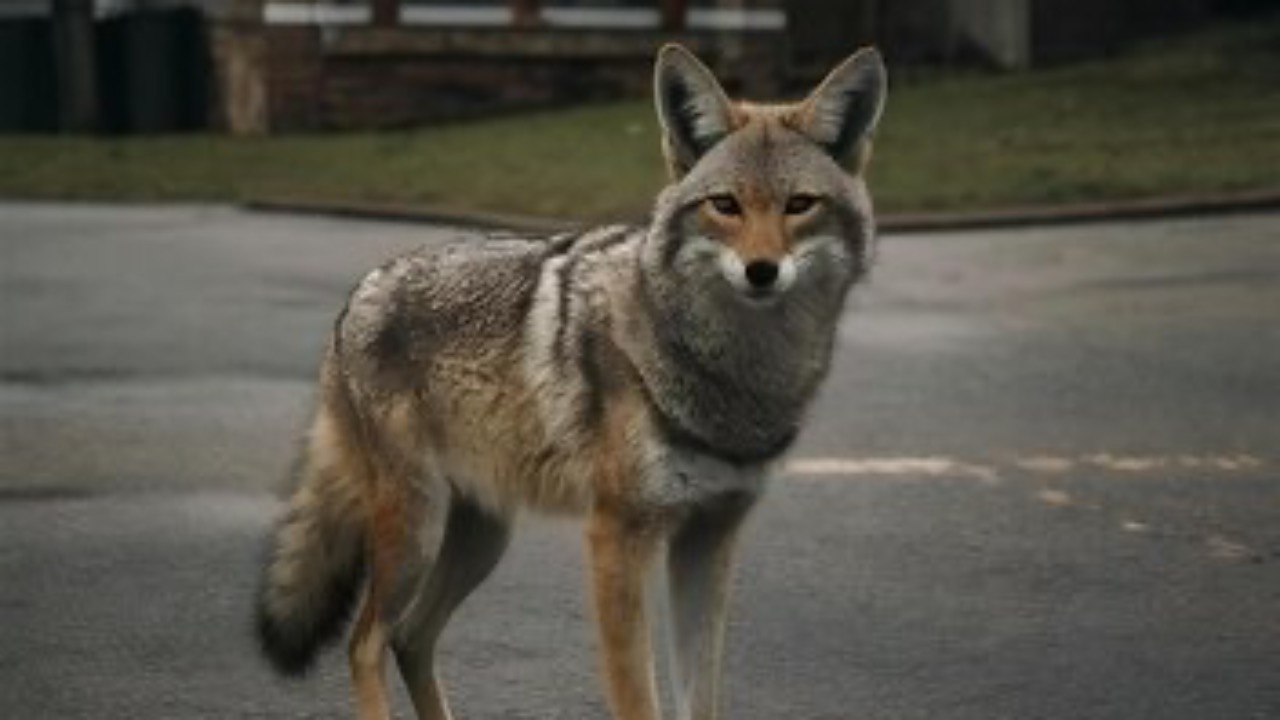
Why Coyote Behavior Is Changing in Suburban Areas
Coyote sightings in cul-de-sacs, along school fields, and on late-night doorbell cameras are no longer rare surprises. As suburbs expand and green spaces fragment, these adaptable predators are changing how they move, hunt, and react to people. Understanding why coyote behavior is shifting in these built environments has become essential for communities that want safety without resorting to panic or eradication campaigns.
Researchers tracking coyotes from rural edges into dense neighborhoods are finding that the same traits that once kept the species alive on open rangeland now help it navigate traffic, lawns, and trash days. Those behavioral shifts are not random; they reflect a mix of food availability, breeding cycles, chronic stress, and human habits that either reinforce coyotes’ natural wariness or slowly erode it.
From shy scavenger to backyard regular

In their original habitats, coyotes evolved as wary, mostly nocturnal hunters that avoided close contact with people whenever possible. Wildlife advocates describe them as generally reclusive animals that naturally steer clear of humans unless they are cornered or injured. That baseline temperament means a healthy coyote will usually slip away from view long before a person ever realizes it is nearby, especially when no easy food source is on offer.
Suburbs change that equation. As residential development spreads, coyotes find a patchwork of lawns, golf courses, and drainage corridors that mimic the open edges they prefer but offer far more accessible calories. Open compost, pet food left on porches, unsecured garbage, and even fallen birdseed or spilled grill grease can draw a coyote closer to homes than it would normally venture, a pattern highlighted in guidance on what keeps coyotes. Once they discover that these areas provide predictable meals with little immediate risk, some individuals start appearing in yards and on sidewalks with increasing regularity.
Urban boldness and what the experiments show
Biologists have long suspected that coyotes living in dense neighborhoods behave differently from their rural counterparts, but only recently have large experimental projects begun to quantify that shift. One extensive assessment tested how coyotes reacted to controlled disturbances and human presence in different settings, part of a large research effort that treated the animals’ responses as measurable traits rather than anecdotes. The work, described as a broad behavioral assessment, found that individuals in heavily modified environments often displayed greater boldness, especially when food rewards were involved, than those in less developed areas.
That pattern aligns with a national project led by Julie Young at Utah State University’s Department of Wildland Resources, which characterized coyotes as “natural scaredy cats” that still tend to avoid direct confrontation. Yet the same study reported increased boldness in urban animals that had more frequent contact with people, suggesting that repeated exposure can recalibrate their risk calculations. In other words, city and suburban coyotes are not inherently more aggressive, but they are learning that sidewalks, parking lots, and park paths are part of their hunting grounds, a conclusion echoed in the Utah State University summary of increased boldness in.
Movement, home ranges, and the suburban maze
Tracking collars and GPS data have revealed that coyotes are not simply wandering into suburbs by accident; they are building stable territories that incorporate streets, rail corridors, and backyard easements. One detailed study of behavioral responses by an apex predator to urbanization used a Hidden Markov modeling approach to separate encamped, foraging, and traveling movements, then compared those behaviors in different parts of a metropolitan region. The researchers concluded that coyotes were using the urbanized landscape more intensively than previously thought, with some individuals maintaining surprisingly small but complex home ranges filled with short, frequent movements rather than long rural treks, a pattern outlined in the Behavioral responses by analysis.
Fieldwork in Cook County, Illinois, has provided a vivid picture of how this plays out on the ground. Researchers with the Urban Coyote Research Project have documented activity patterns in urban environments where some collared animals use more than 20 square kilometers while others compress their lives into pockets of only a few square kilometers, depending on how much natural land sits within their home ranges. Locations of collared coyotes still cluster around remnant green spaces such as forest preserves and river corridors, yet the same maps show regular forays into residential blocks and commercial strips that provide cover and food. That mix of wild and built habitat, described in detail in the group’s work on home ranges of, helps explain why suburban residents may see the same animals repeatedly over months or years.
Stress, survival, and the hidden cost of city life
To a casual observer, a coyote trotting along a bike path may look unbothered by traffic and leaf blowers. Physiological data tell a more complicated story. A research team led by Stanley Gehrt and his colleagues examined cortisol levels in urban coyotes by sampling hair from the animals’ rumps, a method that integrates stress over weeks rather than capturing a single moment. Their work found that city living exposes coyotes to chronic pressures that can elevate stress hormones, from constant noise to unpredictable human encounters, a pattern described in coverage of how Coyotes face the.
Those stressors do not simply make coyotes nervous; they can influence behavior in ways that matter for public safety. Animals under chronic strain may shift to more nocturnal activity to avoid people, or they may become more opportunistic in their foraging, targeting easy food that reduces the need for risky hunts. At the same time, individuals that repeatedly succeed at finding food around homes without negative consequences can become habituated, losing some of their instinctive caution. The result is a spectrum of behaviors, from hyper-vigilant coyotes that vanish at the sight of a jogger to bolder animals that linger near playgrounds or cross busy streets in daylight.
Seasonal surges: mating, pups, and protective parents
Even in the most built-up suburbs, coyote biology still runs on a seasonal clock. Breeding season typically falls in the heart of winter, with coyote mating season generally taking place during January and February in many regions. During this period, coyotes may expand their home ranges, travel more frequently, and vocalize loudly as they search for partners and reinforce territorial boundaries, behaviors that help explain why sightings spike around this time, as described in a Quick Take on why urban coyotes.
Social media posts and neighborhood alerts often warn that coyotes become more aggressive during mating season, but advocates with Project Coyote stress that this is misleading. They emphasize that coyotes often mate for life, live as mated pairs or in family groups, and do not suddenly become more violent; instead, they will protect their family and homes if they perceive a threat. One widely shared message notes that they are especially bold and aggressive in late February and early March around dens, and that gestation for coyotes lasts between 58 and 63 days, which means protective behavior can extend into spring as pups emerge. That context, highlighted in the Facebook explanation of coyote mating season, suggests that what looks like a sudden behavioral shift is often a predictable, temporary response to family responsibilities.
Food, garbage, and the suburban buffet
While breeding cycles shape when coyotes move, food availability shapes where they go. Suburban yards offer a buffet that rural landscapes rarely match: unsecured trash, compost piles, outdoor pet bowls, fallen fruit, and concentrations of rodents attracted to bird feeders or dense landscaping. Wildlife guidance on Why Coyotes Living in the City points out that residential areas provide year-round habitat that covers food, water, shelter, and space, making them ideal for opportunistic omnivores. When a coyote learns that a particular block consistently delivers calories with little effort, it will fold that route into its nightly circuit and may start to appear more frequently at dusk or even in daylight.
Warm winters can amplify this effect by boosting rodent and rabbit populations, which in turn draw more predators into neighborhoods. In Illinois, the Illinois Department of Natural Resources has warned that mild seasons can produce a big boost in the suburban coyote population, a pattern that leaves residents in places like west Columbus and other growing metros reporting more frequent sightings. Coverage from Columbus, where neighbors like Halley Hayes describe coyotes trotting past fences and parking lots, illustrates how quickly a few adaptable animals can become a regular presence once food and cover line up. These dynamics mirror broader ecological observations that it is hardly surprising that the species which are doing well in cities are those with omnivorous diets that are learning to survive alongside humans, a point made in a Facebook post about urban parakeets adapting.
Habituation: when coyotes stop acting afraid
One of the clearest behavioral shifts in suburban coyotes is habituation, the gradual loss of fear toward people after repeated neutral or positive encounters. Guidance on Urban Coyotes: Conflict and Management defines habituation as a process that develops when coyotes regularly receive food near homes or encounter people who ignore them or treat them as curiosities. Habituation is not an all-or-nothing state; some animals may simply tolerate closer proximity, while others begin to approach porches or follow joggers at a distance, behaviors that can unsettle residents even if no attack occurs.
Local governments have started to respond by promoting active hazing, a set of techniques meant to restore the natural fear that coyotes have for humans. The Humane Society and state agencies in places like San Diego recommend residents focus on “humanely deterring coyotes from homes and residential areas” through loud noises, waving arms, and coordinated neighborhood responses that make yards feel unsafe for lingering animals. The City of College Park in Maryland echoes this approach, advising that in the unlikely event that a person encounters a coyote that does not appear fearful, they should follow Humane Society of the United States guidance to shout, clap, and use noisemakers until the animal retreats. These strategies, detailed in College Park’s alert on understanding coyotes and, are designed to reverse habituation before it escalates into conflict.
Suburbs as permanent habitat, not temporary stopovers
For decades, planners treated coyotes in cities as occasional visitors passing through on their way to somewhere wilder. Research on activity patterns in urban environments now suggests the opposite: many individuals are permanent residents that conduct all their vital activities, such as mating, nesting, and raising young, inside metropolitan green spaces. A study of raptors in urban parks framed this idea more broadly, noting that many of these species are permanent residents of urban settings, which means that the habitat is certainly suitable for fundamental activities like breeding and foraging. Coyotes appear to be following a similar path, using park strips, stormwater basins, and golf course roughs as core territory rather than temporary refuges.
Personal accounts from places like southern California and the canyons around Los Angeles reinforce this picture. One narrative about a city coyote that moves to the suburbs describes how coyotes are territorial and how there used to be another bonded pair already living in a canyon before a new individual settled in, suggesting that these spaces can support multiple family groups over time. As more animals stake out overlapping home ranges in these fragmented habitats, residents are more likely to spot them near trailheads, schoolyards, and even big-box store parking lots. The pattern fits broader observations that however adaptable species, including coyotes, are increasingly using backyards and neighborhoods as primary sources of food and shelter, a trend summarized in a list of states with the.

Asher was raised in the woods and on the water, and it shows. He’s logged more hours behind a rifle and under a heavy pack than most men twice his age.