Woman drives through active SWAT scene to prove a point
In a residential pocket of White Center, a woman steered a van straight through an active SWAT perimeter, nearly hit a sergeant, and later told deputies she had done it to “make a point.” The incident unfolded around a domestic violence shooting investigation that already had neighbors on edge and officers stretched thin. What followed was a collision of ego, public safety and the fragile trust that holds together a chaotic crime scene.
Her decision to cross police tape, ignore shouted commands and return again and again in the same van turned a tense standoff into something closer to a case study in defiance. It also raised a blunt question for everyone who watched the video or read the court documents: what happens when one driver decides the rules that keep a SWAT team and a neighborhood safe no longer apply to her?
The domestic violence shooting that set the stage

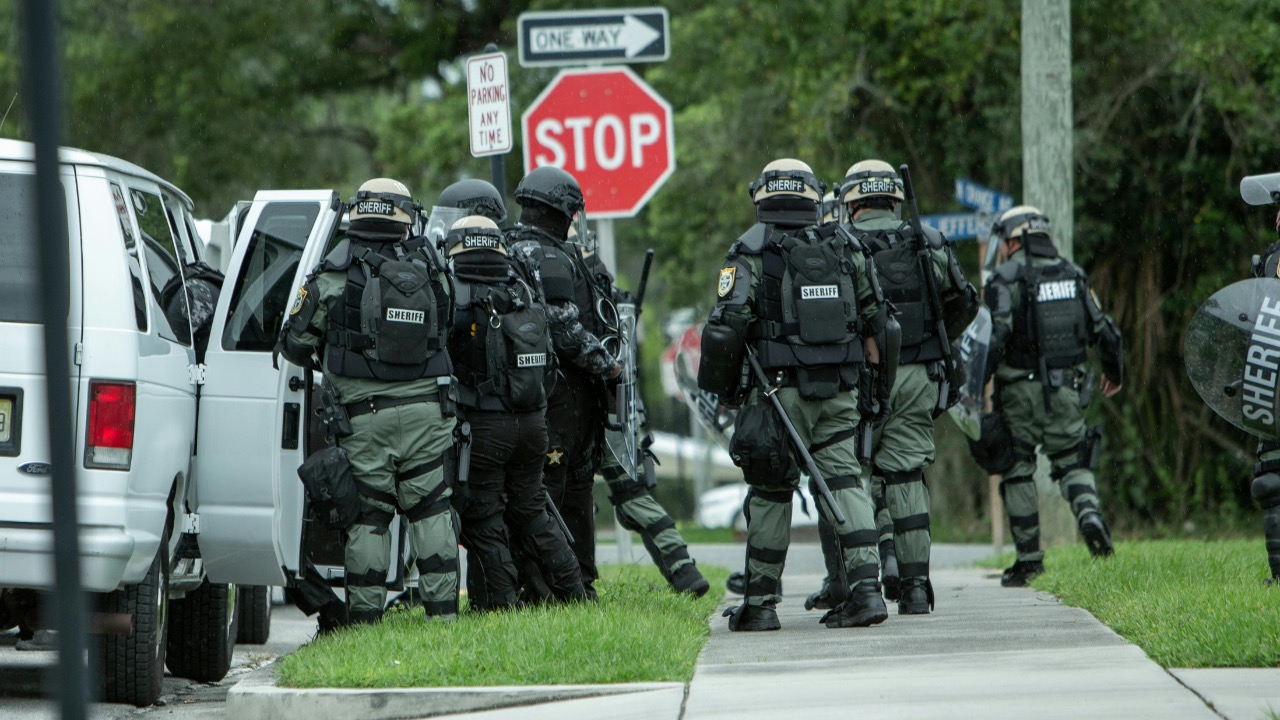
The confrontation in White Center did not start with the van. It began with a domestic violence shooting that drew a heavy response from the King County Sheriff’s Office and a SWAT team to a residential block. According to reports from SEATTLE Friday, the shooting involved a barricaded person and turned a quiet street into a tactical zone lined with patrol cars and armored vehicles.
SWAT operators and deputies moved into position around the home where the suspect was believed to be hiding. The standoff prompted street closures and a clear perimeter, since a domestic violence shooting can escalate quickly if the suspect decides to fire again or flee. The barricaded suspect was eventually arrested after the standoff ended, according to a later summary that described how the person was taken into custody and the immediate threat inside the home was contained.
For neighbors, the sight of SWAT vehicles, long guns and tactical gear in the middle of a residential block was jarring but familiar enough in a region that has seen its share of high-risk arrests. Residents watched from windows and porches as the operation unfolded. The street closures and flashing lights signaled that this was not a routine traffic stop but a scene that required distance and patience from anyone nearby.
A crime scene marked from every angle
By the time the woman in the van arrived, the area around the domestic violence shooting investigation was anything but subtle. The King County Sheriff’s Office had marked off the street with bright yellow police tape that read “Sheriff’s Line Do Not Cross.” Several patrol vehicles sat across the roadway with emergency lights activated, creating both a visual barrier and a warning to anyone approaching. A later briefing described how the area was clearly marked as closed, with tape and vehicles blocking the street in both directions.
Authorities emphasized that the perimeter had been established to protect both the public and the officers working the scene. According to a detailed account of the clearly marked area, the closure extended along a block of Delridge Way SW, with tape strung between poles and vehicles forming a physical barricade. The goal was simple: keep civilians out of the line of fire and give SWAT space to work.
Neighbors later described the atmosphere as tense but orderly. Deputies directed residents away from the tape and told drivers to turn around well before they reached the flashing lights. The message was consistent: stay back, stay safe, let the SWAT team handle the domestic violence suspect. It is in this context that the woman’s decision to push past the barriers becomes more than a traffic violation and instead a direct challenge to the structure of the scene.
The van enters the SWAT perimeter
Into this controlled environment came a van that did not slow down. Video captured by a KOMO News photojournalist, later shared widely online, shows a van driving straight through the active SWAT scene on Friday evening in White Center. The clip, labeled with the numbers 400 and 82, shows the vehicle moving past patrol cars and into the heart of the restricted zone, even as deputies shout and gesture for the driver to stop.
Witnesses said the van crossed the police tape and continued forward, forcing deputies to move out of the way. According to a detailed account from Authorities, the driver barreled through the blocked off area and came close enough to deputies that they had to jump aside. No deputies or pedestrians were hit, but the margin for error was measured in feet, not yards.
From the perspective of the SWAT team and patrol deputies, the van’s sudden arrival introduced a new and unpredictable threat into a scene already focused on a potentially armed suspect. Officers who had been watching windows and doors for signs of movement now had to split their attention between the home and a driver who appeared willing to ignore both tape and commands. In a matter of seconds, the crime scene went from controlled to chaotic.
Confrontation at the tape and a near miss
Deputies quickly moved to confront the driver as the van pushed deeper into the perimeter. According to reports, a sergeant approached the vehicle and ordered the woman to stop. At one point, the van nearly struck the sergeant, an allegation later echoed in a social media post that recounted how close the vehicle came to hitting him. The sergeant told the driver she was under arrest and instructed her to stay put.
Instead of complying, the woman accelerated. Witnesses described her speeding off, leaving the immediate area even as deputies tried to stop her. A detailed recap on Mar recounted that she nearly struck the sergeant and then fled after being told she was under arrest.
For deputies, that near miss turned what might have been a trespass or obstruction case into something far more serious. A vehicle that nearly hits a uniformed sergeant inside a SWAT perimeter is treated as a potential assault, not a misunderstanding at a roadblock. The decision to flee after being told she was under arrest added another layer of risk as the van reentered public streets with officers now actively looking for it.
Not once, not twice, but three times
The story did not end with the van’s first escape. According to court documents summarized in a detailed report, the woman did not just drive through the crime scene once. She came back. Officials later said she returned to the scene a third time before driving away again. That pattern of repeated incursions is one of the most striking details in the case, and it is cited explicitly in a report that notes how Officials said the woman returned multiple times.
Each time she came back, deputies had to shift resources away from the domestic violence suspect and back toward the van. They repositioned patrol cars, adjusted the tape and tried again to block her path. The repeated returns suggested intent, not confusion. This was not a lost driver who took a wrong turn and immediately backed out. This was someone who seemed determined to challenge the perimeter and the authority of the deputies enforcing it.
The third return appears to have been the breaking point. By then, deputies were prepared to take her into custody as soon as she entered the area again. The repeated intrusions raised the risk for everyone on scene, including the barricaded suspect, who could have used the distraction as an opportunity to escape or attack.
“Make a point” and “didn’t respect” the scene
When deputies finally detained the driver, they asked the obvious question: why. According to court documents summarized in a widely shared post on social media, the woman said she had driven through the scene to “make a point.” She also reportedly told a deputy that she “didn’t respect” the crime scene. That stark explanation is quoted directly in a post that notes how When asked why she drove through, she gave that answer.
Those two phrases, “make a point” and “didn’t respect,” cut through any ambiguity about her mindset. She was not confused about whether the street was closed. She was not unaware that SWAT officers and deputies were working a domestic violence shooting. She simply did not accept that the perimeter applied to her, and she wanted to show it.
For law enforcement, that kind of stated motive is chilling. Crime scene perimeters rely on a shared understanding that tape and flashing lights are not suggestions. They are non-negotiable boundaries that keep everyone alive. When a driver openly rejects that idea, it raises concerns about copycat behavior and the broader erosion of respect for basic safety protocols.
The arrest and the $300,000 bond
The woman’s repeated incursions and near collision with a sergeant eventually led to her arrest early Saturday. A detailed account from Mar Seattle describes how she was taken into custody after returning to the scene and facing multiple allegations tied to her driving and refusal to comply.
According to a related report that focuses on the aftermath, she was booked into jail and a judge later set her bond at $300,000. A separate segment on the same case notes that a court kept the woman in custody on $300,000 bond, reflecting the seriousness with which the system treated her actions. The high bond amount signaled that the court viewed her as a significant risk, either to public safety or to return to court, or both.
At about 12:45 a.m. Saturday, Seattle police became involved as the case shifted from a chaotic scene on the street to a formal criminal process. The timing meant that deputies and officers had been dealing with the fallout from the domestic violence shooting and the van’s repeated incursions late into the night. The arrest capped a long and exhausting operation that had started with a barricaded suspect and ended with two separate but intertwined cases moving through the system.
Inside the active scene: neighbors and SWAT
For people who live in White Center, the night will be remembered not only for the domestic violence shooting and the SWAT presence, but also for the van that refused to stay out. Neighbors later described the chaos after the driver barreled through the blocked off area, with some recounting how deputies shouted and scrambled to avoid being hit. The sense of shock was amplified by the fact that the perimeter had been so clearly marked and the warnings so obvious.
From the SWAT team’s vantage point, the van’s intrusion was more than a nuisance. It forced tactical officers to divert attention from the house where a potentially armed suspect was believed to be barricaded. Every second spent dealing with an uncooperative driver was a second not spent watching for movement inside the home or coordinating with negotiators. In a SWAT operation, distraction can be dangerous.
Video of the incident, including the short clip labeled with the numbers 400 and 82, spread quickly online. Viewers watched the van roll through the scene and listened to the audio of deputies reacting in real time. The footage gave the public a rare, unfiltered look at the kind of split-second decisions officers have to make when a civilian intrudes on a high-risk operation. It also gave context to the later court filings that described the woman’s actions as reckless and deliberate.
How a perimeter is supposed to work
To understand why the woman’s decision to drive through the SWAT scene drew such a strong reaction, it helps to look at how a perimeter is supposed to function. When deputies arrive at a serious incident like a domestic violence shooting, they establish an inner and outer perimeter. The inner perimeter is closest to the threat and is usually limited to tactical officers. The outer perimeter extends further out and is where patrol deputies block streets, string up tape and interact with the public.
In White Center, the outer perimeter included police tape that read “Sheriff’s Line Do Not Cross,” patrol vehicles with emergency lights, and deputies stationed at key intersections. The idea is to create multiple layers of visual and physical cues that tell drivers to stop. A driver approaching such a scene is expected to slow down, follow directions and, if necessary, turn around and find another route.
When someone ignores those cues and pushes through, it undermines the entire structure. Vehicles can block lines of fire, obscure sightlines and create cover for suspects who might try to escape. They also introduce the risk of accidental collisions with officers or bystanders. In the White Center case, the woman’s van did all of those things at once, which is why deputies described her actions as putting themselves and others at serious risk.
Legal stakes: beyond a traffic ticket
The woman’s actions are not being treated as a simple traffic violation. According to the reporting on her arrest, she faces allegations that go well beyond running a barricade. The near collision with the sergeant, the repeated returns to the scene and the admission that she wanted to “make a point” all factor into potential charges that could include assault, reckless endangerment and obstruction.
In Washington state, assault on a law enforcement officer can carry significant penalties, especially when a vehicle is involved. Even if no one is physically struck, prosecutors can argue that driving a van at a sergeant inside a SWAT perimeter constitutes an attempt to inflict harm. Reckless endangerment charges can also apply when someone creates a substantial risk of serious injury to others through their actions.
The $300,000 bond set by the court reflects that legal landscape. Judges do not assign such a high figure for a misunderstanding at a roadblock. They reserve it for cases where the alleged conduct suggests a disregard for safety and a likelihood of continued risky behavior. The woman’s own statements about not respecting the scene and wanting to make a point will likely feature prominently in any future hearings.
Public reaction and online commentary
As video of the van driving through the SWAT scene circulated, so did commentary. On social media, users shared clips and screenshots, often with sharp criticism of the driver’s behavior. One widely shared post recounted the near miss with the sergeant and highlighted the phrase “make a point” from the court documents. Others focused on the broader question of how someone could be so dismissive of a clearly marked, high-risk crime scene.
Some comments veered into broader critiques of attitudes toward law enforcement in the region, with users drawing links between the woman’s defiance and what they saw as a culture of disrespect. Others pushed back, arguing that while her actions were dangerous, they did not justify sweeping generalizations about an entire city or state. The debate reflected a larger tension in public discourse about policing, accountability and personal responsibility.
What united most observers, however, was a sense of disbelief that anyone would choose to drive through tape, past SWAT vehicles and into the middle of an active domestic violence investigation just to make a point. The phrase itself became a shorthand in comment threads, a way of capturing the perceived arrogance of the act.
Lessons for drivers and bystanders
For drivers who encounter flashing lights and police tape, the White Center case offers a blunt lesson. When a street is blocked by patrol cars and marked with tape that reads “Sheriff’s Line Do Not Cross,” the correct response is to stop and follow instructions. That holds true even if the closure is inconvenient, confusing or seems excessive. The alternative can be far more costly, both in legal terms and in risk to life.
Authorities involved in the case have emphasized that the woman’s actions put deputies and others at serious risk. That phrase, echoed in the report that detailed how officials viewed the incident, captures the core concern. A single driver’s decision to ignore a perimeter can turn a controlled scene into a potential disaster. It forces officers to make split-second choices about whether to prioritize the original threat or the new one created by the vehicle.
For bystanders on foot, the lesson is similar. Staying behind the tape, avoiding distractions like filming from too close a distance and following deputies’ directions are not just about compliance. They are about survival in environments where weapons may be drawn, suspects may be desperate and officers are operating under intense pressure.
Why “making a point” is so dangerous
The woman’s explanation that she wanted to “make a point” speaks to a broader phenomenon in public life: the impulse to turn everyday interactions with authority into personal tests or statements. In some contexts, that impulse might lead to a heated argument at a city council meeting or a pointed email to a supervisor. In a SWAT perimeter, it can lead to tragedy.
Crime scenes are not debates. They are fluid, high-risk environments where officers are balancing incomplete information, potential threats and the safety of everyone present. When a driver decides to use that setting as a stage for a personal statement, the stakes are not rhetorical. They are physical and immediate.
The phrase “didn’t respect” the scene is telling. Respect, in this context, is not about deference to authority for its own sake. It is about recognizing that certain boundaries exist to protect people from harm. Ignoring those boundaries to prove a point does not challenge power in a meaningful way. It simply adds another layer of danger to an already volatile situation.

Leo’s been tracking game and tuning gear since he could stand upright. He’s sharp, driven, and knows how to keep things running when conditions turn.