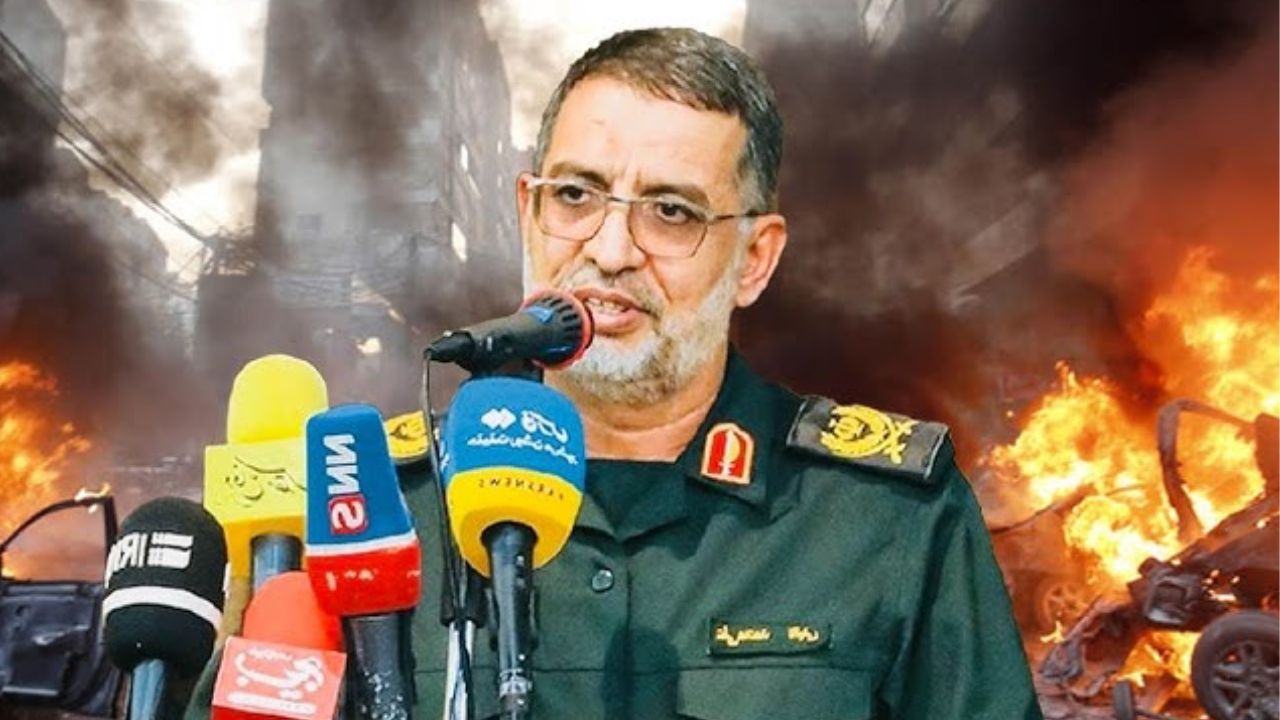
Israel reports top Iranian spokesperson killed
Israel says its forces have killed Brigadier General Ali Mohammad Naini, the senior spokesperson for Iran’s Islamic Revolutionary Guard Corps, in a new round of airstrikes that are already reshaping the confrontation between Tehran and its adversaries. His reported death comes amid a broader campaign of Israeli and United States attacks on Iran’s leadership following the assassination of Ayatollah Ali Khamenei and has raised fresh questions about escalation, deterrence and succession inside the Islamic Republic.
Iran’s Islamic Revolutionary Guard Corps, or IRGC, has also acknowledged that its spokesman was killed in what it describes as a joint United States and Israeli strike, confirming that the information war around Iran’s military and missile programs has lost one of its most visible figures. The removal of such a central communicator is more than a symbolic blow, since Naini had become a key public face of the state in a period of crisis and transition.
Who Ali Mohammad Naini was inside Iran’s power structure
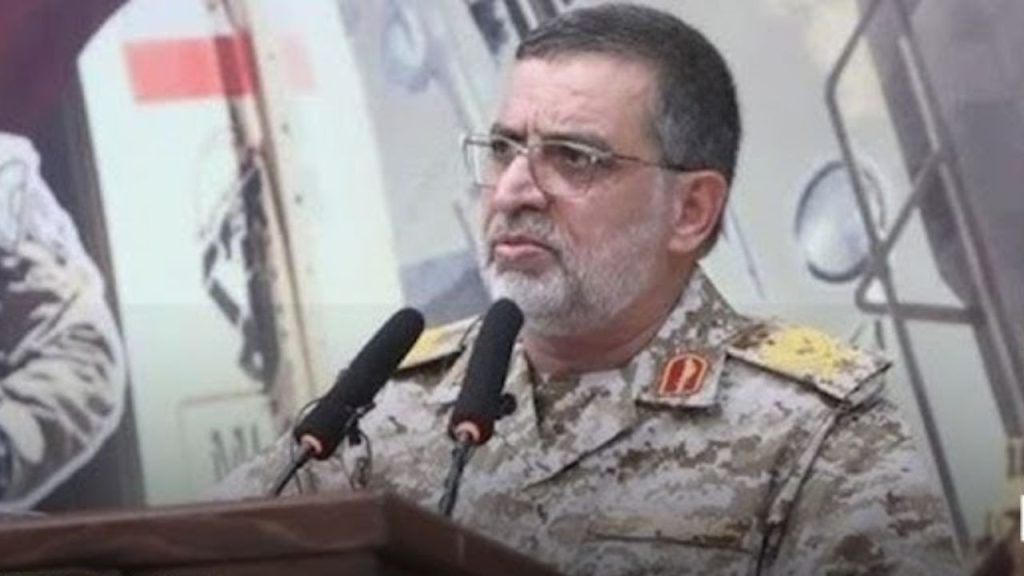
Brigadier General Ali Mohammad Naini served as the official spokesperson for the Islamic Revolutionary Guard Corps, the elite force that anchors Iran’s external operations and much of its internal security. As IRGC spokesman, he routinely briefed state media on missile tests, regional operations and responses to Western sanctions, and his name, Ali Mohammad Naini, became closely associated with the regime’s defiant posture toward Israel and the United States.
Within Iran’s military hierarchy, he held the rank of Brigadier General in the IRGC, a status that signaled both operational experience and political trust. In his role as spokesperson, he was responsible not only for relaying battlefield narratives, but also for defending the IRGC’s domestic role against critics who accuse the corps of dominating Iran’s economy and politics. References to Naini in Iranian and foreign coverage often noted his proximity to senior commanders and his role in articulating the leadership’s red lines.
In the hours before his death, Naini appeared on national television to insist that Iran retained full capacity to manufacture missiles and drones despite repeated strikes on its industrial sites. That appearance was intended to project continuity in Iran’s deterrent capabilities at a time when the country’s leadership had already been shaken by the killing of Ayatollah Ali Khamenei and the uncertainty surrounding the succession process.
The strike that killed the IRGC spokesman
Iran’s IRGC says that Ali Mohammad Naini was killed in a joint United States and Israeli air attack that targeted Iranian military facilities. The corps described the incident as part of a wider pattern of Israeli and US air attacks that have pounded Iran in recent days, striking command centers, air defense sites and communications hubs.
Visuals from Tehran showed smoke rising over key infrastructure after overnight airstrikes on oil depots in the capital, TEHRAN, IRAN, in early March, an image that captured how the confrontation has moved from covert operations to open bombardment of strategic targets. One widely circulated photograph depicted smoke billowing over industrial facilities as The United States and Israel intensified their campaign, a scene referenced in coverage that described how Smoke rose after the attacks.
Israeli officials say that Naini was killed when Israeli Defense Forces aircraft struck an IRGC facility used for command and control. In that account, the strike was part of a series of operations aimed at degrading Iran’s ability to coordinate regional proxy groups and to retaliate for earlier assassinations. Iran, for its part, has framed the attack as an act of aggression that violated its sovereignty and demanded an international response.
Reports from Iran describe the strike that killed Naini as one in a chain of coordinated hits that also targeted air defense batteries and underground bunkers. The IRGC statement on his death framed him as a martyr and pledged that the corps would continue its mission without interruption, even as it acknowledged the loss of a prominent public voice.
Israel’s message and strategic goals
Israel has presented the killing of Ali Mohammad Naini as proof that it can reach deep into Iran’s security apparatus. Officials argue that eliminating the IRGC’s spokesperson sends a warning to other senior figures who appear on state television to defend missile launches or threaten retaliation. In their view, the strike reinforces a broader campaign designed to weaken the Iranian system from within.
Prime Minister Benjamin Netanyahu has suggested that Israel and the United States are creating conditions in which the Iranian people could topple the regime, while adding that citizens inside Iran will ultimately decide their own path. His comments came as Israeli Defense Forces highlighted the airstrikes that killed the IRGC spokesperson and described them as part of a sustained effort by Israel and the United States to reshape the strategic balance.
From Israel’s perspective, removing figures like Naini serves both operational and psychological goals. Operationally, it can disrupt the IRGC’s media strategy and slow coordinated messaging to allied militias. Psychologically, it signals that high-profile roles, even those that are primarily communicative, carry personal risk if they are tied to threats against Israel or United States forces.
Israeli messaging around the strike has also been aimed at the Iranian public. By emphasizing that the campaign is focused on the IRGC and senior leaders, Israeli officials seek to separate the regime from ordinary Iranians and to argue that the path to stability runs through political change in Tehran rather than continued confrontation.
Iran’s confirmation and internal response
Iran’s Islamic Revolutionary Guard Corps has publicly confirmed that its spokesperson was killed, referring to him as a martyr and vowing revenge. The announcement from the IRGC described the strike as part of a coordinated attempt by foreign enemies to decapitate Iran’s leadership and undermine its deterrence.
Iranian officials have linked the killing of Naini to what they call an ongoing assassination campaign that began with the death of Ayatollah Ali Khamenei. According to detailed accounts of the Assassination of Ali, his death was confirmed by state media, and the attack left the whereabouts of several leaders uncertain. In that context, the loss of the IRGC’s spokesperson is seen in Tehran as part of a larger attempt to exploit the leadership vacuum and pressure the system during a sensitive succession process.
Iranian state media have portrayed Naini as a loyal defender of the revolution who continued to work despite repeated threats. Commentators have argued that his killing will galvanize support for the IRGC and harden public opinion against Israel and the United States, although independent assessments of public sentiment remain difficult to verify.
Inside the security establishment, the immediate priority has been to maintain continuity. The IRGC has pledged that its media operations will continue without interruption, and potential successors are already being discussed in Tehran. Figures such as Mojtaba Khamenei, the son of Ayatollah Ali Khamenei, and senior officials like Ali Larijani, Esmail Khatib and Gholam Reza Soleimani are being scrutinized for how they position themselves in the new power configuration, as reflected in profiles of Mojtaba Khamenei, Ali Larijani, Esmail Khatib and Gholam Reza Soleimani.
Part of a broader campaign against Iran’s leadership
The strike on Naini did not occur in isolation. It is one episode in a broader pattern of attacks on Iran’s leadership and security apparatus that intensified after Ayatollah Ali Khamenei was killed. The assassination of the supreme leader, detailed in accounts of the Ayatollah Ali Khamenei killing, removed the central figure in Iran’s political system and triggered an emergency process to maintain control.
Since then, Iranian and foreign sources have described a series of strikes that targeted senior IRGC commanders, intelligence officials and key infrastructure. Coverage of the campaign notes that His death came just hours after he appeared on television, highlighting how quickly the situation on the ground can shift and how exposed Iranian officials have become.
Israel has framed these operations as necessary to prevent Iran from rebuilding its command structure and to deter further attacks by allied militias across the region. Iranian officials, by contrast, argue that the strikes are intended to destabilize the country and interfere with the succession process, particularly any role that Mojtaba Khamenei might play in shaping the future leadership.
Regional observers note that the campaign has also affected Iran’s relationships with its proxies in Lebanon, Iraq, Syria and Yemen. With senior IRGC figures under threat, the coordination of support to groups such as Hezbollah and various Iraqi militias has become more complicated, even if the underlying alliances remain intact.
Regional and international reactions
Reactions across the region have reflected deepening polarization. Some Arab governments that view Iran as a destabilizing force have privately welcomed the weakening of the IRGC’s command structure, while publicly calling for restraint to avoid a wider war. Others, particularly those reliant on Iranian support, have condemned the killing of Naini and framed it as an attack on the so-called axis of resistance.
Internationally, the strike has fed into a debate over the legality and wisdom of targeted killings. Human rights advocates question whether assassinating a spokesperson, even one with a military rank, meets the threshold of necessity under international law. Supporters of the campaign argue that senior IRGC figures, including communicators like Naini, are part of a military chain of command and therefore legitimate targets.
Within Iran, the timing of the strike has intersected with cultural and political calendars. As Iranians marked Nowruz, the Persian New Year, Israel’s president sent a message that expressed hope that the two peoples could one day celebrate Nowruz together again, a sentiment reported in coverage that highlighted outreach to Iranians even as the military confrontation continued.
The United States has not offered a detailed public description of its role in the strike, but officials have emphasized ongoing coordination with Israel on Iran policy. Washington’s position has balanced support for Israeli security with concern about triggering a broader regional war that could draw in Gulf allies and disrupt global energy markets.
What Naini’s death means for Iran’s information war
Beyond the immediate shock, the killing of Ali Mohammad Naini carries long term implications for how Iran manages information in wartime. As IRGC spokesperson, he served as the main conduit between the military and both domestic and foreign audiences. His briefings shaped how Iranians understood missile tests, drone operations and clashes with Israel and the United States.
Removing such a figure creates a temporary vacuum. The IRGC will likely appoint a successor quickly, but the new spokesperson will operate under the shadow of Naini’s fate and may adjust public appearances and media strategies accordingly. That could mean fewer live television interviews, more pre-recorded statements, or a shift toward anonymous briefings that reduce personal exposure.
At the same time, Iran’s opponents will interpret his death as evidence that targeted information operations can be combined with kinetic strikes to disrupt an adversary’s narrative. The message to other hostile states and non-state actors is clear: high profile communicators who serve in military roles are no longer shielded by their status as spokespeople.

Leo’s been tracking game and tuning gear since he could stand upright. He’s sharp, driven, and knows how to keep things running when conditions turn.