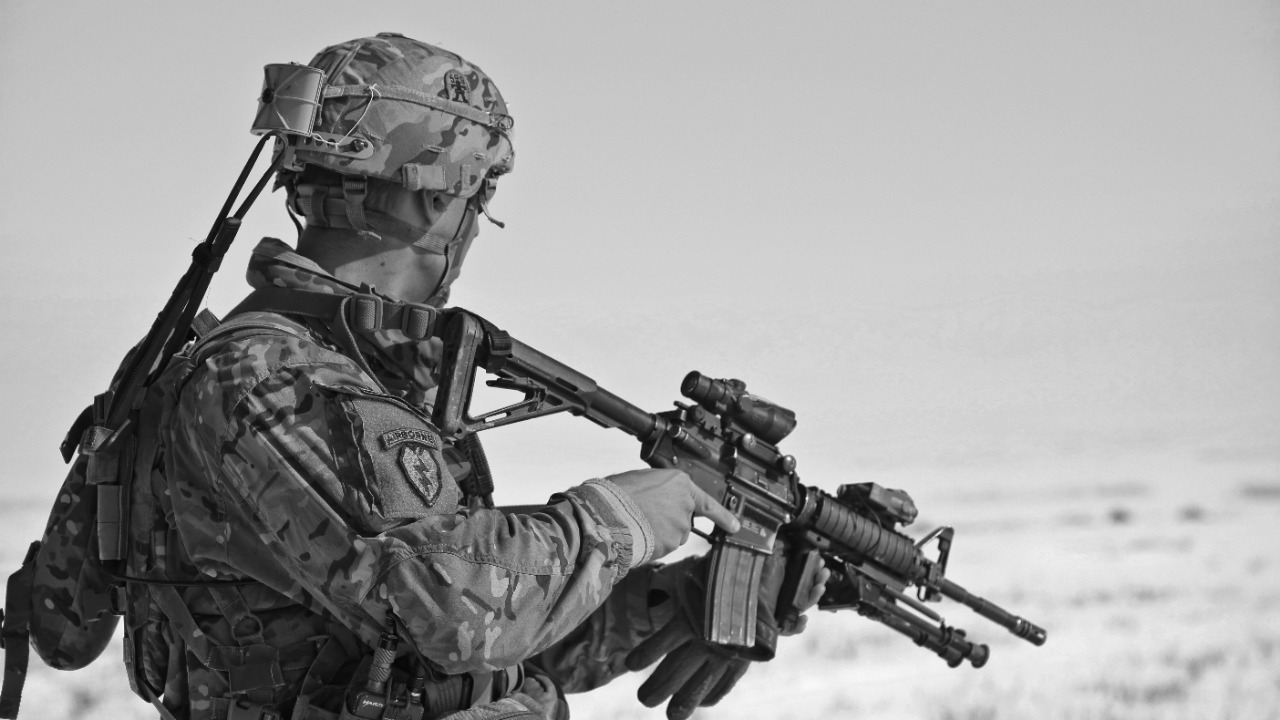
Combat stories that shaped modern military doctrine
Modern military doctrine is not written in a vacuum, it is carved out of specific battles, raids and campaigns where ideas were tested under fire. The most influential combat stories tend to be those where commanders broke with convention, exposed a fatal weakness or proved a new way of fighting that others could copy. I want to trace several of those moments, from ancient battlefields to remote outposts in Afghanistan, to show how they still shape the way forces plan, train and fight today.
Across eras, the pattern repeats: a vivid operational success or failure forces generals and politicians to rethink assumptions, reorganize units and codify new tactics. Some of these stories are legendary, others are buried in specialist histories or unit memoirs, but together they explain why today’s doctrines emphasize speed, joint operations, special operations forces, electronic warfare and the brutal realities of small-unit combat.
From Julius Caesar to Napoleon: ancient maneuvers with modern echoes

Long before staff colleges and field manuals, commanders like From Julius Cesar and Napoleon Bonaparte were already experimenting with repeatable methods that look surprisingly modern. Their campaigns showed how disciplined formations, flexible reserves and coordinated strikes could turn raw manpower into a system, not just a mob with weapons. Accounts of how Julius Caesar used concentrated force at decisive points, then rapidly shifted units to exploit a breach, read like early case studies in operational art, the bridge between tactics and grand strategy that modern doctrine now formalizes.
Those same principles of maneuver and concentration still underpin how contemporary forces think about combined arms and tempo. Modern analysts often point to the way Napoleon Bonaparte massed artillery and infantry on a narrow front, then used cavalry to pursue, as a template for integrating different arms into a single, coherent blow. The continuity is clear in modern discussions of ancient tactics that track how commanders from Mar, From Julius Cesar and Napoleon Bonaparte refined a core set of battlefield ideas that later armies adapted to industrial firepower and mechanized forces, a lineage that is still visible in current maneuver doctrine built around speed, shock and decisive points of attack, as explored in detail in ancient tactics.
Blitzkrieg and the age of rapid, integrated offense
In the twentieth century, the most famous leap in offensive doctrine came when Germany used fast, coordinated attacks to overrun much of Europe and shatter older assumptions about static defense. The idea that armored units, motorized infantry and close air support could be concentrated along a narrow front to punch through, then race deep into the rear, turned the concept of attritional trench warfare on its head. Instead of grinding forward yard by yard, the new approach sought to collapse an opponent’s system by dislocating command, logistics and morale in a matter of days.
Modern doctrine still studies how Germany combined tanks, aircraft and artillery in what became known as Blitz, not as a mystical formula but as a practical lesson in integration and tempo. The key insight was that technology only mattered when paired with a coherent concept of operations and a command structure that could exploit speed. Contemporary manuals on offensive operations, air–land integration and mission command all carry the imprint of those early campaigns in Europe and the way they demonstrated that rapid, synchronized thrusts along a narrow axis could achieve strategic results far beyond the size of the attacking force, a pattern documented in detail in analyses of how Germany quickly overran Europe and relied on Blitz operations.
Jedburgh teams and the birth of modern special operations
As industrial war raged, another, quieter revolution unfolded in the form of small, elite teams operating behind enemy lines. During War II, the creation of the OSS and the Jedburgh teams showed that a handful of well trained operators, working with local resistance, could have outsized impact on enemy logistics and morale. These missions were not just daring raids, they were experiments in how to blend intelligence, unconventional warfare and political liaison into a single package that could support larger campaigns.
The legacy of those Jedburgh teams is visible in the way modern special operations forces are organized and tasked. Under President Kennedy, Cold War pressures led to the formal shaping of the Green Berets as a force designed to train, advise and fight alongside partners, echoing the wartime model of small teams embedded with local fighters. The story of how War II spawned the OSS, how Jedburgh units operated and how Cold War demands shaped the Green Berets under President Kennedy is now a foundational narrative for today’s special operations doctrine, which treats these units as strategic tools rather than mere raiders, a lineage traced in depth in accounts of elite warfighters.
Operation Eagle Claw and the hard lessons of failure
Not every doctrinal shift comes from success, and few failures were as influential as Operation Eagle Claw, the aborted attempt to rescue American hostages in Iran. The mission exposed deep flaws in how the services planned and executed complex operations together, from incompatible equipment to fragmented command and control. The images of burned aircraft in the desert became a symbol of what happens when brave operators are sent into a mission without a coherent joint framework behind them.
The aftermath of Operation Eagle Claw forced the United States to rethink how it organized special operations and joint planning. Prior to Eagle Claw, there was little institutional structure for integrating different services in high risk missions, but the failure led directly to the creation of SOCOM and specialized aviation units like the 160th, which focused on the low level night flying required for such raids. Modern doctrine on joint special operations, interservice command relationships and mission rehearsal all trace back to that single failed mission and the recognition that courage alone could not compensate for systemic flaws, a connection that practitioners and historians still highlight when they discuss how Operation Eagle Claw reshaped U.S. doctrine.
Electronic warfare and the codification of invisible battles
As radios, radars and digital networks became central to military operations, a new domain of combat emerged in the electromagnetic spectrum. Early improvisations in jamming, deception and signals intelligence gradually evolved into a structured field of electronic warfare, but the doctrinal shift lagged behind the technology. For years, units treated electronic tools as add ons rather than core elements of planning, which left them vulnerable when adversaries targeted their communications and sensors.
Over time, practitioners argued that doctrine had to catch up, not by predicting technology but by capturing hard won experience. One influential formulation put it bluntly, Doctrine does not precede technology or experience, it formally documents it, and Military doctrine is predominantly the outgrowth of what operators learn in the field. That perspective helped push armed forces to treat electronic warfare as a central pillar of operations, integrating it into planning cycles, training and command structures rather than leaving it to specialists on the margins, a shift reflected in detailed discussions of how Doctrine adapts to new forms of conflict.
Battle of Keating and the reality of outpost defense
In Afghanistan, the Battle of Keating became a grim case study in the risks of remote outposts and the resilience of small units under siege. A handful of soldiers at Combat Outpost Keating found themselves surrounded by a much larger attacking force, fighting a fourteen hour firefight that pushed every aspect of their training and leadership. The engagement highlighted how terrain, force protection and support arrangements could turn a small base into a death trap, even when the troops on the ground performed with extraordinary courage.
Firsthand accounts of the Battle of Keating, including the narrative that became a THE NEW YORK TIMES bestseller, have since been mined by officers and analysts for lessons on outpost siting, quick reaction forces and air support. The story underscores that doctrine on counterinsurgency and remote presence must grapple with the practicalities of resupply, overwatch and local alliances, not just abstract population centric theories. By tracing the decisions that led to the base’s location and the way the defenders adapted under fire, these accounts have shaped how planners think about risk, resilience and the limits of what small units can be asked to hold, a process captured vividly in the detailed retelling of the Battle of Keating.
USAF Special Tactics and the evolution of precision support
While infantry battles like Keating draw attention to ground combat, another quiet revolution has unfolded in how airpower is integrated with small units. The development of the USAF Special Tactics Unit created a cadre of airmen trained to bring precision air support, reconnaissance and airfield operations directly to the front line. Their work turned airpower from a distant asset into a responsive tool that could be called in by operators who understood both the ground fight and the complexities of aviation.
Personalities mattered in this evolution, and figures like John Carney played an outsized role in shaping the culture and capabilities of these units. Described by LT. COL. L. H. BUCKY BURRUSS, USA, Ret as one of the few heroes he had, Carney’s story illustrates how individual innovators can push institutions to accept new roles and missions. The narrative of how Special Tactics grew from ad hoc experiments into a formalized capability, with leaders like John Carney driving change, has become a touchstone for understanding how doctrine on air–ground integration and special operations support matured, as chronicled in detailed histories of the USAF Special Tactics.
Books, memory and how doctrine absorbs combat stories
Combat stories do not shape doctrine automatically, they have to be recorded, debated and absorbed into professional memory. Military reading lists and unit libraries are full of works that translate battlefield experience into broader arguments about culture, tactics and strategy. One example often cited by enthusiasts is Carnage & Culture by Hanson, which argues that specific social and institutional traits explain Western battlefield performance across centuries, a thesis that invites officers to think about how values and organization influence doctrine as much as technology does.
Online communities of practitioners and historians help surface and discuss these works, turning individual reading into a collective conversation about lessons learned. When readers on forums trade recommendations like Carnage & Culture by Hanson and describe it as great advise, they are participating in the informal side of doctrinal development, where ideas are tested in debate long before they appear in official manuals. That process shows how books, memoirs and analytical studies serve as a bridge between raw combat stories and the structured concepts that guide training and planning, a dynamic visible in discussions among military history readers.
From battlefield to field manual: how experience becomes doctrine
Across these examples, a common pattern emerges in how combat stories eventually reshape formal guidance. First, a battle or campaign exposes a gap, whether in joint coordination, electronic protection, outpost design or special operations support. Then, individuals and small communities capture those experiences in after action reports, memoirs and analytical studies, which circulate through schools, units and informal networks. Over time, as patterns repeat and evidence accumulates, those insights are distilled into doctrine that tells future commanders what to expect and how to prepare.
I see this process in the way Operation Eagle Claw led to SOCOM, how War II Jedburgh missions informed the Green Berets, how the Battle of Keating reframed outpost defense, and how electronic warfare practitioners pushed Military doctrine to recognize the electromagnetic spectrum as a battlefield. Even the stories of Julius Caesar, Napoleon Bonaparte and Germany’s Blitz campaigns continue to inform modern thinking about maneuver and integration. The feedback loop runs in both directions, with doctrine guiding training and operations, and new combat experiences forcing revisions, a cycle that is also reflected in how bestselling accounts like THE NEW YORK TIMES narratives of Keating and detailed histories of John Carney’s career are cataloged, debated and republished in updated editions, as seen in product listings for the Keating account and the companion volume on the Special Tactics story.

Leo’s been tracking game and tuning gear since he could stand upright. He’s sharp, driven, and knows how to keep things running when conditions turn.