The Glock story sounds unbelievable — but it reshaped the gun world
You’ve handled pistols long enough to know most “overnight success” stories are anything but. Then you look at Gaston Glock—a guy with no background in firearms—who walks into a military trial and walks out having changed the handgun world for good.
It sounds made up the first time you hear it. But the more you look at how Glock pistols came to be, the more you realize it wasn’t luck. It was timing, smart design choices, and a willingness to ignore how things had always been done. That combination reshaped what you carry, what cops carry, and what sits in gun cases across the country.
He Wasn’t a Gun Guy—And That Was the Advantage

When Glock started working on a pistol in the early 1980s, he wasn’t part of the firearms industry. He was building military equipment like knives and entrenching tools. No baggage, no loyalty to old designs.
That gave him a clean slate. While established gunmakers were refining steel frames and external safeties, Glock approached the problem like an engineer solving a contract. He studied what the Austrian military wanted, then built around those requirements without worrying about tradition. That outsider perspective is what let him strip the concept down and rebuild it in a way most gunmakers wouldn’t have risked.
The Austrian Military Trial Changed Everything
The turning point came during the Austrian Army’s search for a new service pistol. They wanted higher capacity, lighter weight, and better reliability than what they had.
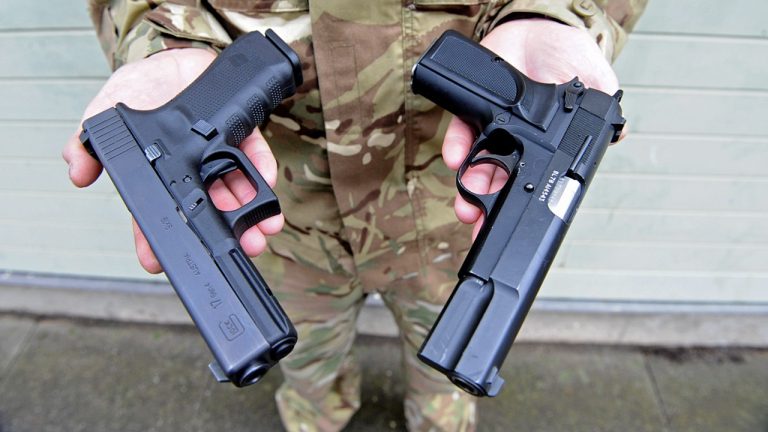
Glock entered the trial with a design that checked every box. It held more rounds than most competitors, weighed less, and ran under conditions that choked other guns. When it won the contract in 1982, it didn’t just give Glock credibility—it opened the door to police and military adoption worldwide. That single contract is where the company stopped being an experiment and started becoming a force.
Polymer Frames Were a Hard Sell at First
You’ve got to remember how radical a polymer-framed pistol sounded back then. Most shooters trusted steel and aluminum. Plastic had no place in a “serious” handgun.
There were rumors early on that Glock pistols could slip through airport security or wouldn’t hold up under stress. None of that held water, but it shows how skeptical people were. Over time, real-world use proved the design. The frame held up, resisted corrosion, and shaved weight without sacrificing strength. What started as a concern became one of the biggest reasons people switched.
The “Safe Action” System Simplified Everything
Instead of external safeties and decockers, Glock built a system that relied on internal safeties and a consistent trigger pull. It was a different approach, and it took some getting used to.
But once you ran it, the benefits were clear. Same trigger every shot, fewer controls to think about under stress, and less that could go wrong. Law enforcement agencies took notice because it reduced training complexity. For the average shooter, it meant a pistol that was straightforward to operate. That design choice became one of the defining traits of the brand.
Capacity Gave Shooters a Real Advantage
When Glock pistols hit the market, capacity mattered more than ever. Many service pistols at the time were still limited compared to what Glock offered.
The standard magazine held significantly more rounds without making the gun overly bulky. That mattered for both law enforcement and civilian carry. More rounds on board meant fewer reloads and more confidence in a defensive situation. Once shooters experienced that advantage, it was hard to go back. Other manufacturers eventually followed, but Glock set the pace.
Reliability Built Its Reputation the Hard Way
A pistol can look good on paper, but it earns its place through use. Glock pistols built their reputation by running when conditions weren’t ideal.
Mud, sand, poor maintenance—Glocks developed a track record for continuing to function. That wasn’t marketing talk. It came from law enforcement use, military testing, and civilian shooters putting rounds through them without babying the gun. That reliability became the standard people compared everything else against. When you hear someone ask if a pistol will “run like a Glock,” that reputation is what they’re referring to.
Law Enforcement Adoption Sealed the Deal
Once police departments started adopting Glock pistols in large numbers, everything shifted. Departments needed reliable, easy-to-train platforms, and Glock fit that need.
That widespread adoption did two things. It validated the design and put the pistols in front of the public. Civilians tend to trust what law enforcement carries, whether they admit it or not. As more agencies switched, Glock’s presence grew. It wasn’t long before the brand became a default choice for duty use and personal defense alike.
The Design Stayed Consistent While Others Changed
One thing you notice with Glock is how little the core design has changed. There have been generations and refinements, but the basic system remains the same.
That consistency matters. It means parts compatibility, familiar handling, and a platform you don’t have to relearn every few years. While other companies chased trends or overcomplicated designs, Glock stayed close to its original formula. That steady approach helped build long-term trust with shooters who value predictability over constant reinvention.
It Changed What Shooters Expect in a Handgun
Before Glock, many shooters expected weight, manual safeties, and more complicated controls. After Glock, expectations shifted.
Now you see polymer frames everywhere. Higher capacity is standard. Striker-fired systems dominate the market. Whether someone carries a Glock or not, they’re benefiting from the shift it created. The company didn’t just introduce a successful pistol—it reset the baseline for what a modern handgun should be.
When you step back and look at it, the story does sound hard to believe. A non-gunmaker builds a pistol that beats established brands and reshapes the market. But once you understand how it happened, it makes sense.
Gaston Glock didn’t follow the industry—he stepped around it. And because of that, you’re still seeing the ripple effects every time you pick up a modern handgun.

Asher was raised in the woods and on the water, and it shows. He’s logged more hours behind a rifle and under a heavy pack than most men twice his age.