Gun owner says a private sale felt wrong when the buyer refused paperwork
A gun owner who had arranged a simple private sale found himself backing away when the buyer flatly refused any paperwork. The uneasy encounter captures a growing tension for private sellers who are trying to follow the law, protect themselves if a firearm is later misused, and still respect a culture that often prizes anonymity.
Across online forums, training videos and official guidance, experienced owners describe that moment of hesitation as a red flag rather than paranoia. The law may not always require a bill of sale, yet a rising number of gun owners now treat documentation and background checks as basic self‑protection.
What federal law actually says about private gun transfers
Federal law draws a sharp line between licensed dealers and private individuals. The Federal Gun Control Act regulates who must hold a Federal Firearms License, run background checks and keep formal records. According to guidance on federal firearm transfers, a person who sells guns as a business must be licensed and must process sales through the National Instant Criminal Background Check System.
When a transfer takes place between unlicensed residents of the same state, the Federal Gun Control does not require a background check. Those transactions still carry federal restrictions: a private seller may not knowingly transfer a firearm to a prohibited person or ship a gun directly to an unlicensed buyer in another state. The Bureau of Alcohol, Tobacco, Firearms and Explosives explains those limits in its broader public guidance on firearms rules.
That legal framework creates a large gray zone. A private owner can often sell a firearm face to face without contacting an FFL or the government, yet remains responsible for not arming someone who is barred from possession. For many individual sellers, that tension is exactly why the absence of paperwork feels like a problem, even when the law does not demand it.
Inside the sale that made a gun owner walk away
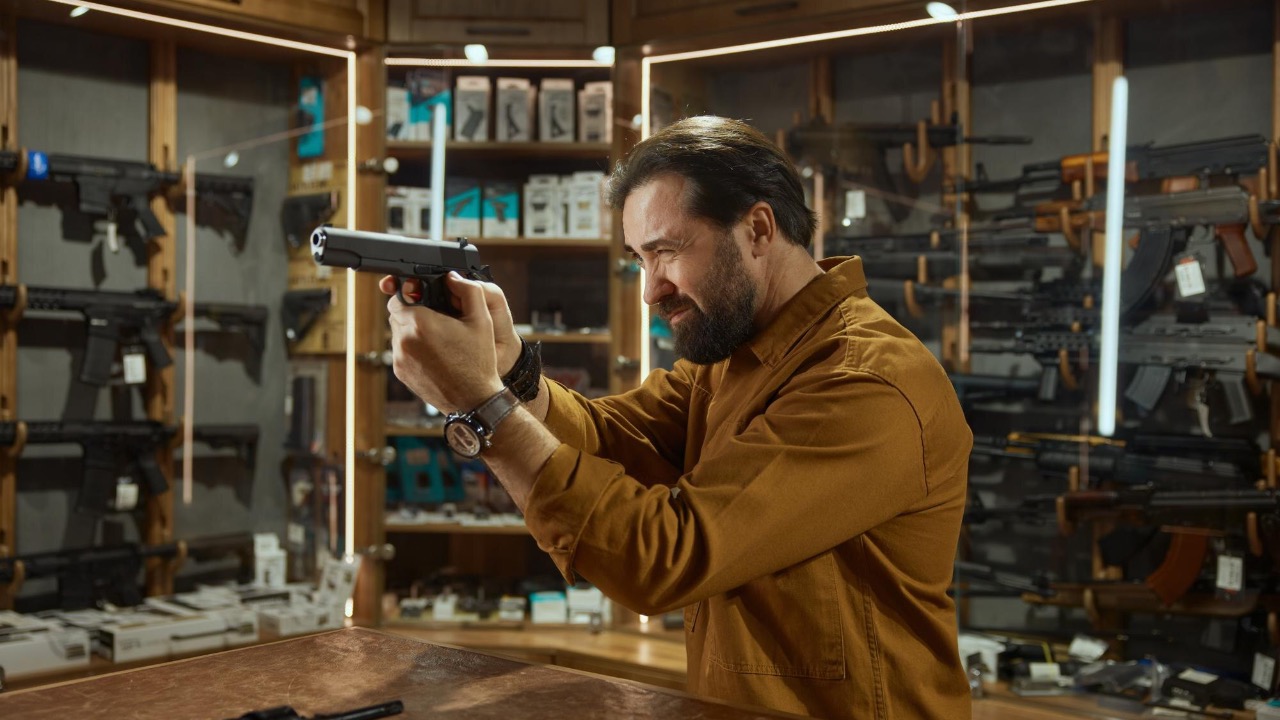
The scenario that keeps surfacing in online communities is simple. A seller meets a buyer in a parking lot or at a gun range, agrees on a price, then suggests a short bill of sale or a quick trip to a local shop for a background check. The buyer refuses, sometimes angrily, and insists that no one needs to know about the transaction.
On a Pennsylvania firearms forum, one thread describes a “WV guy” who resisted any formal transfer and raised immediate suspicion. Commenters argued that such resistance is a warning sign, with one user writing that the buyer “is sending up some flags” and that they would “personally just back off.” Another poster summed up the mood in a blunt rule of thumb: if the buyer refuses a background check, that “means either fed or felon,” a phrase captured in the Mar discussion.
That kind of reaction is what many gun owners now describe when they say a private deal suddenly “felt wrong.” The buyer’s refusal is not just about skipping a form. It suggests a deeper desire to avoid any trace of the transfer, which collides with the seller’s fear of being tied to a gun that later turns up in a crime.
Why some gun owners insist on paperwork even when it is optional
In a Facebook post aimed at gun owners, one instructor began, “Now let’s talk about the private transfer of firearms from person to person.” The writer stressed that such transfers are not against federal law “as I know it,” but warned that private firearm sales lack buyer verification and can leave the original owner exposed if the gun is later recovered by police. That warning comes through clearly in the Feb post on private transfers.
Some gun owners frame the issue in personal liability terms rather than pure legal risk. An article aimed at women shooters lays out a familiar scenario: “If you bought the gun new, that’s you. You might have sold that gun 10 years ago to a buddy who then sold it to his cousin who later sold it again, and the last buyer used it in a crime.” The piece asks how the original purchaser will explain that chain when the gun “end up in police custody,” a concern highlighted in the Sep analysis of used gun sales.
In that view, a short bill of sale is less about government oversight and more about self‑defense in a future investigation. A simple document that records the date, serial number and the buyer’s name can help an owner show that the gun left their possession years earlier. For sellers who think in those terms, a buyer’s hostility to any record at all is a direct threat to their own peace of mind.
What experienced trainers and shop owners recommend
Online instructors and gun store employees increasingly advise private sellers to treat their own comfort as the final test. In a video on private transfers, one host tells viewers that in many parts of the United States, private gun sales are legal but still require judgment. The clip on LEGAL PRIVATE GUN stresses that local law may allow a face‑to‑face sale without a background check, yet the seller is never required to go through with a deal that feels off.
Another video, in which a viewer named Peter asks, “If I want to sell one of my firearms to another private party and my state doesn’t require me to,” walks through practical steps for a safer transaction. The instructor suggests using a local dealer, even if state law does not demand it, so the licensed shop can handle the transfer and keep a record. That advice is laid out in the segment where Peter asks about and the host explains how to sell and buy a gun safely.
Gun store owners on question‑and‑answer forums describe a similar philosophy when they talk about refusing sales. One shop employee explained that he is comfortable denying a sale that later turns out to be legal, for two reasons. First, he does not want to arm someone who should not have a gun. Second, he trusts his judgment and sees no repercussion for walking away from a suspicious buyer, a view captured in a Dec response about mistaken denials.
In a separate discussion, a gun store worker listed red flags that had caused him to deny sales, including a customer who muttered, “That motherf***er is done now!” while looking at a firearm. That example, shared in an Aug account, shows how experienced sellers rely on behavior as much as paperwork. Private sellers who read those accounts often adopt the same rule: if a stranger’s reaction to basic documentation feels hostile, the safest answer is no.
Community debates over bills of sale and “paranoia”
Not every gun owner agrees that refusing a sale over paperwork is necessary. In one Reddit thread titled as a question about whether it is a red flag if a private seller does not want a bill of sale, a commenter under the name sadoproject argued that if a bill of sale is not required and the buyer is the one asking for it, the seller’s reluctance is not automatically suspicious. The Dec comments Section reflects a split between those who see paperwork as protection and those who see it as unnecessary hassle.
Another Reddit user, writing in a thread about private sale advice and liability concerns, said he had never heard of a private seller being successfully sued after a lawful transfer, in contrast with high‑profile cases involving manufacturers such as Bushmaster. That poster suggested that personal comfort should guide the decision and that some owners only sell to people they know “VERY well,” a perspective found in the Apr discussion.
That debate exposes a cultural divide. Some gun owners argue that insisting on documentation feeds a mentality of government tracking and undermines the privacy that private sales are supposed to protect. Others counter that a simple bill of sale kept in a home file cabinet is not a registration system and may never be seen by anyone unless a gun is stolen or misused.
How a simple form can protect both sides
Legal advisers who field questions from gun owners often propose a middle path. In one detailed answer about how to sell a firearm and have proof that the seller no longer owns it, a writer began with the caution, “Don’t take this as legal advice.” The response explained that, while specifics vary by state, one of the easiest ways to protect both parties is to contact a local gun shop and let it handle the transfer. The shop is “likely familiar” with state law and can provide a receipt or other documentation, according to the Apr guidance.
For purely private transactions, that same answer described a simple written agreement that lists the firearm, the price, the date and a statement that the buyer affirms he or she is not prohibited from owning a gun. The idea is less about creating a complex contract and more about documenting that the seller took reasonable steps to avoid an illegal transfer.
Many gun owners borrow similar templates from online communities. Some include the make, model and serial number, along with driver’s license numbers for both parties. Others prefer a stripped‑down version that records only the basics. In every version, the paperwork is meant to stay private, tucked away until the day a detective calls with questions about a recovered Glock or Remington.
Where ethics and legality meet when a buyer refuses
For the gun owner who walked away from a buyer that refused paperwork, the decision sat at the intersection of law, ethics and gut instinct. Federal rules did not require a bill of sale for an in‑state, face‑to‑face transfer. State law in many jurisdictions would have allowed the sale without an FFL. Yet the seller had listened to instructors who urged caution, read stories of guns that “end up in police custody,” and watched other owners describe that sick feeling when a stranger bristled at the idea of even a basic receipt.
Videos that ask whether private gun sales are “good or bad,” such as the clip introduced in late Aug that questions if it is the right thing to do or the wrong thing to do, reflect how unsettled many owners feel. One such segment on QUESTIONS ABOUT PRIVATE frames the issue as a balance between legal rights and personal responsibility.
For some, the ethical answer is to limit private transfers to close friends or family, where trust replaces formal documentation. For others, the answer is to normalize bills of sale and background checks even in casual deals, so that refusing paperwork becomes as telling as slurred speech or angry outbursts at a gun counter.
What unites these perspectives is a shared recognition that the seller is not powerless. A private owner can propose a written agreement, insist on meeting at a licensed dealer, or simply decline to sell. In a culture that often emphasizes the right to own firearms, more gun owners are starting to talk about the right to say no when a deal does not feel safe.

Leo’s been tracking game and tuning gear since he could stand upright. He’s sharp, driven, and knows how to keep things running when conditions turn.