The firearms mistakes that never show up at the range
Most gun owners judge their habits by what happens on the firing line: tight groups, smooth reloads, a clean range report. The real trouble often starts in the quiet moments before and after the shooting stops, in the routines that never show up on a score sheet. The most costly firearms mistakes are usually invisible at the range, but they shape every shot that follows.
From how a pistol is carried in a restroom stall to whether a rifle is actually unloaded on the workbench, the gaps between formal safety rules and daily behavior are where accidents and legal problems grow. I want to walk through the blind spots that experienced shooters and new owners alike tend to ignore, and how the best available guidance suggests closing them.
When “range rules” never make it home

On a supervised firing line, most shooters can recite the basics: keep the muzzle pointed in a safe direction, finger off the trigger, obey commands. The trouble is that many people mentally clock out the moment they leave the bay, treating safety as a set of range-specific rituals instead of habits that follow the gun everywhere. Instructors who track the most common errors describe a pattern of safety violations that start with complacency, especially around handling pistols between strings of fire or while reholstering.
National guidance on responsible ownership is blunt that the core rules do not change just because the gun is in a bedroom, a truck, or a cleaning vise. The principle that Firearms Should Be in use is written as a lifestyle standard, not a range-only suggestion. When I look at incident reports, the pattern is clear: people who treat those rules as universal tend to avoid the “off-stage” mishaps that never make it into a match score but can define a life.
The invisible danger of sloppy reholstering
One of the most serious errors that rarely shows up on paper targets is what happens in the second or two after a drill ends. Many shooters focus on speed draws and split times, then casually jam the pistol back into the holster without looking or clearing clothing. Detailed breakdowns of range incidents highlight Unsafe Reholstering as a recurring cause of negligent discharges, especially when a cover garment or drawstring gets inside the trigger guard.
In my experience, the shooters most at risk are often the ones who feel the most confident, because they treat reholstering as an afterthought instead of a separate skill. The safest instructors I have watched treat the holster as a “danger zone” where nothing should move quickly, insisting on a deliberate pause, a visual check, and a straight, controlled insertion. That approach lines up with broader firearms safety advice that warns against rushing any motion that brings the muzzle close to the body, even if the gun just fired flawlessly a moment earlier.
Carrying habits that never show on a target
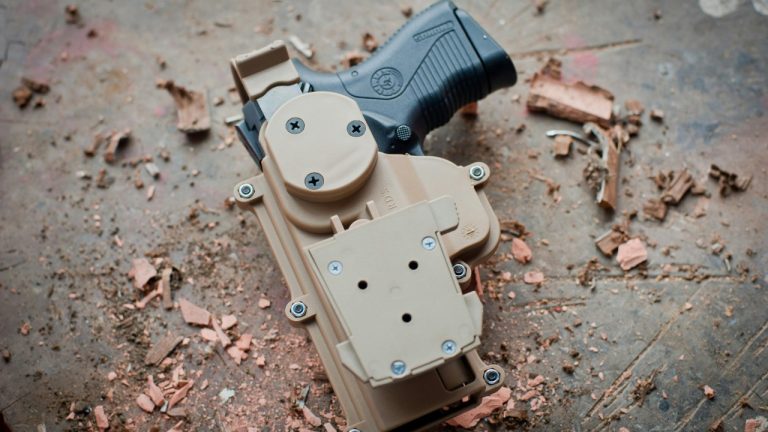
How a handgun is carried during the other 23 hours of the day rarely gets the same scrutiny as how it is shot. Yet the way a pistol rides in a waistband, purse, or glove box often determines whether it is available when needed or becomes a liability. Detailed guidance on everyday carry stresses that Carrying Right Means, which includes choosing a holster that fully covers the trigger, maintains consistent orientation, and stays attached to the body even during routine movements.
Problems multiply in transitional spaces that never appear in training drills, like public restrooms or crowded parking lots. Instructors warn that unholstering a pistol and setting it on a toilet paper dispenser or bathroom hook, instead of keeping it secured on the body, is a classic example of a mistake that will never show up on a qualification course but can lead to a forgotten or mishandled gun. The same source that emphasizes smart Carrying practices also points out that adjusting or removing a holster should happen only in a secure, private space, not in public where a single fumble can turn into a viral video and a criminal charge.
Training shortcuts that never get recorded
Another quiet mistake is treating formal instruction as optional, especially after a first purchase. Many new owners rely on friends, social media clips, or video games to fill in the gaps, then assume that a few decent groups at seven yards prove they are competent. Financial advice aimed at gun buyers has flagged Skipping proper training as a choice that can hurt both safety and the wallet, because poor technique often leads to buying the wrong firearm or unnecessary accessories instead of fixing fundamentals.
Professional safety programs describe Neglecting Safety Basics as the first and most common error, especially among people who have “been around guns” for years but never had structured coaching. Each gun has its own manual of operation, and learning to run it correctly, from loading to malfunction clearing, takes more than casual exposure. I have seen shooters who can ring steel all afternoon but still flag others while moving or fail to verify an empty chamber, because no one ever forced them to build those checks into muscle memory.
Storage mistakes that never echo like a gunshot
Improper storage is the classic firearms error that rarely appears in range conversations yet dominates real-world tragedies and legal cases. The safest guidance is unambiguous that owners should Store guns unloaded, locked, and out of reach of children, with ammunition secured separately. State-level campaigns spell this out in simple language, urging people to “Lock It Up If” they own a gun, and to keep keys or combinations away from curious hands.
National safety rules echo the same principle, stating that Lock It Up you own a firearm and keep your ammunition locked up too, not just hidden in a drawer. In my reporting, the most heartbreaking incidents often involve guns that were “just for a minute” left on a nightstand or in a vehicle console. Those decisions never show up in a marksmanship score, but they are the difference between a quiet household and a preventable shooting.
Cleaning and maintenance errors that build in silence
Mechanical neglect is another category of mistake that hides in plain sight. Many owners assume that modern firearms can run indefinitely without attention, or they clean only when a gun visibly looks dirty. Detailed breakdowns of maintenance habits list Gun Cleaning Mistakes that start with simply not cleaning often enough, especially after exposure to moisture, sweat, or corrosive ammunition.
Even when people do clean, they often focus on the barrel and slide while ignoring magazines, which are critical to reliability. One guide singles out Forgetting Magazines as a common oversight, warning that dirt and worn springs can cause feeding issues that appear at the worst possible moment. Another maintenance resource cautions that a Cautionwith the Amount of Oil is essential, because too much lubricant attracts grit and can gum up actions, while some aggressive solvents are unsuitable for barrel maintenance. None of these errors will be obvious during a single smooth range trip, but over time they quietly erode reliability.
Handling shortcuts that never get called out
Outside formal classes, many shooters develop casual handling habits that would never pass a safety check. Passing a pistol to a friend with the slide forward, resting a finger on the trigger while chatting, or leaning a loaded shotgun in a corner are all examples of shortcuts that feel normal until something goes wrong. Comprehensive safety lists describe common mistakes such as failing to verify the condition of a firearm every time it is picked up, or assuming that a familiar gun behaves like every other model.
National standards emphasize that when in doubt, the safest move is to unload, visually and physically check the chamber, and treat every gun as if it is loaded until proven otherwise. The detailed rule that Never cross a, climb, or perform other awkward movements with a loaded firearm, and that if in doubt, unload your gun, is a reminder that the riskiest moments often happen far from a benchrest. I have watched experienced hunters and competitors alike relax these standards in informal settings, not out of malice but out of habit, and that is precisely where unseen risk accumulates.
The etiquette problem: guns as props, not tools
There is also a cultural mistake that rarely gets discussed in technical manuals: treating firearms as props for social media or bravado. On the golf driving range, etiquette guides remind players that the purpose of the facility is to practice fundamentals, not to show off or engage in stunts. One such guide notes that the purpose of a driving range is to refine swing, accuracy, and distance control, and that Targeting ball retrievers or ignoring basic courtesies undermines that goal.
The same principle applies on a firing line. When shooters pose with muzzles sweeping others, stage “funny” videos of unsafe behavior, or treat loaded guns as fashion accessories, they normalize conduct that contradicts every formal safety rule. Organizations that publish rules of safe gun handling are not just listing legal obligations, they are trying to shape a culture where the firearm is always treated as a serious tool. In my view, the gap between that culture and the influencer mindset is one of the most significant unseen risks in modern gun ownership.
Bringing the unseen mistakes into the light
What ties all of these issues together is that they happen in the margins: in living rooms, bathrooms, truck cabs, and cleaning rooms, not under the watchful eye of a range officer. Safety specialists who catalog the top mistakesconsistently point back to the same root causes, complacency, lack of training, and a failure to apply simple rules in every context. Financial and legal analysts who look at Common errors also warn that the cost of these oversights is not just measured in injuries, but in lawsuits, insurance problems, and lost employment.
For me, the most useful mental shift is to treat every interaction with a firearm, from unlocking a safe to wiping down a slide, as part of the same discipline that governs a cold range. That means following the guidance that gun safety is a 24 hour responsibility, not a hobby that starts and ends with a buzzer. The mistakes that never show up at the range are exactly the ones that matter most, because they are the ones no one else is there to catch.

Leo’s been tracking game and tuning gear since he could stand upright. He’s sharp, driven, and knows how to keep things running when conditions turn.