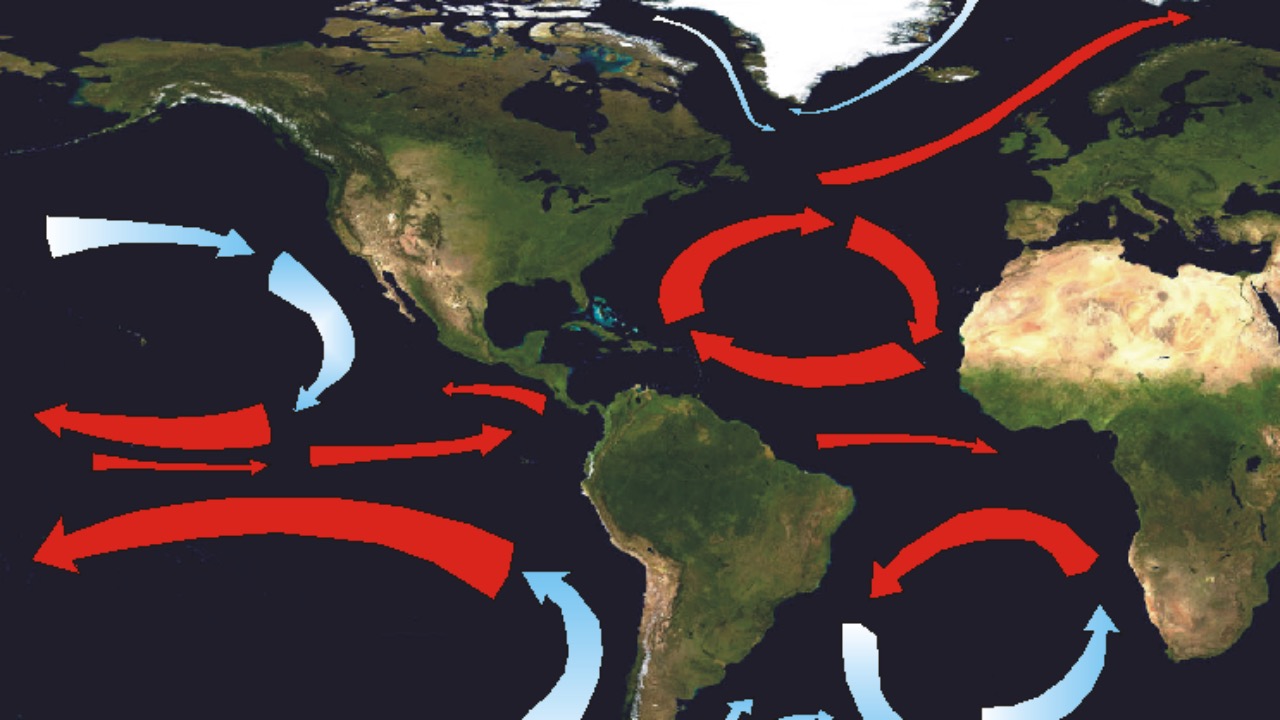
Scientists warn key ocean currents are shifting — what it could mean
Scientists are increasingly focused on signs that some of the planet’s most powerful ocean currents are changing course. From the Atlantic to the waters around Antarctica, new research suggests that systems that help regulate heat, rainfall and sea level are weakening or shifting in ways that could reshape weather, food security and coastlines.
The warnings are not uniform. Some teams project limited weakening, while others see a real risk of collapse within decades. Taken together, the findings point to a future in which the stability of these currents, long taken for granted, can no longer be assumed.
What the Atlantic conveyor does for the climate
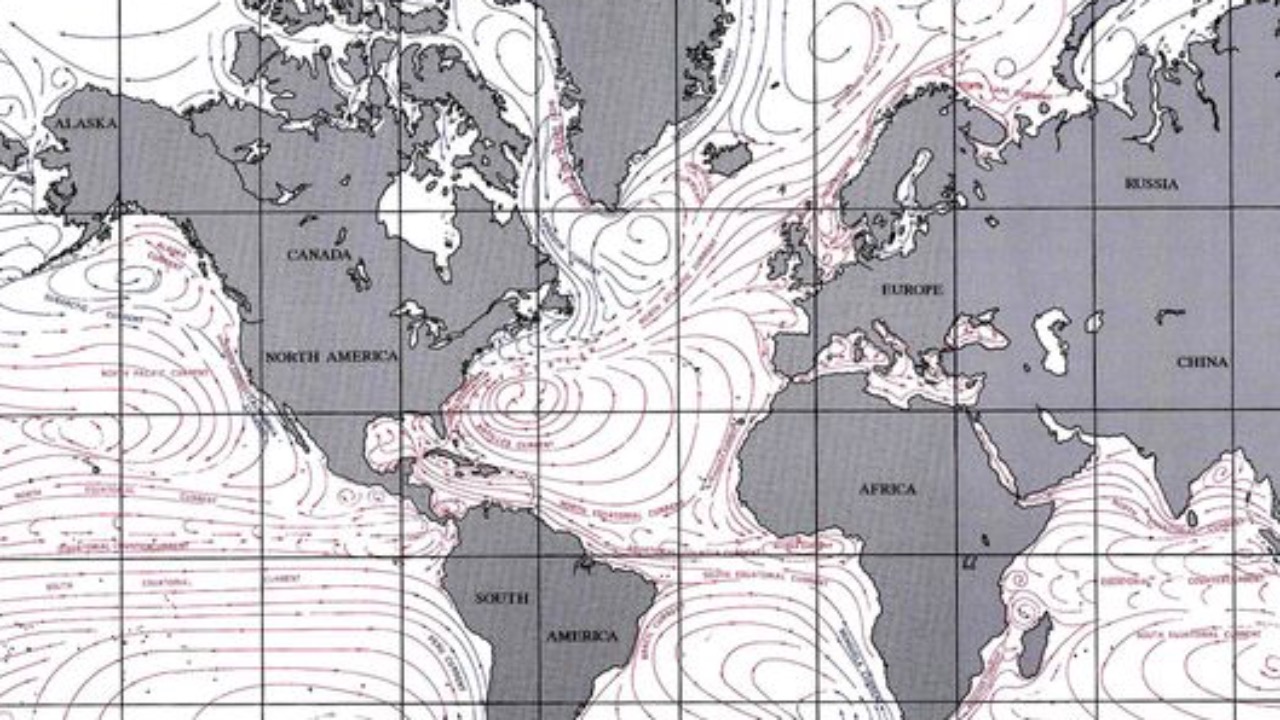
At the center of the current debate is the Atlantic Meridional Overturning Circulation, or AMOC. This system of currents moves warm surface water northward, where it cools, becomes saltier and denser, then sinks and flows back toward the tropics at depth. That overturning helps keep northern and western Europe far milder than its latitude would suggest and shapes storm tracks across the North Atlantic.
Researchers describe the AMOC as a kind of planetary heat conveyor that also influences rainfall belts in the tropics and helps control regional sea levels. When the circulation is strong, cold deep water forms in the North Atlantic and pulls surface water northward. When it weakens, less cold deep water is produced, which, as one group of 44 experts warned, can mean rising sea levels and growing instability in global weather patterns.
Evidence that the AMOC is weakening
Multiple lines of evidence now suggest that the AMOC is not as vigorous as it was in the twentieth century. Scientists have warned that human-caused climate change is likely causing AMOC to weaken and that continued warming could push it toward a tipping point, a concern highlighted in assessments that link greenhouse gas emissions to changes in the North Atlantic circulation.
As Arctic ice melts, fresh water enters the North Atlantic, making the ocean water less dense and less likely to sink. That process can slow the formation of deep water and ease the pull that drives the overturning. Researchers point to this freshening of the surface as one reason the system may be more fragile than historic records alone would suggest.
Some teams have gone further. Researchers warn the Atlantic Meridional Overturning Circulation, or AMOC, could collapse within 20 to 30 years if current trends in polar ice melt and warming continue, raising the possibility of a profound shift in climate conditions within a single human lifetime. A separate analysis, using a climate model in a novel way, projected that an AMOC collapse could come as early as mid century, assuming global warming continues at its current rate.
From slowdown to tipping point
The idea of a tipping point has moved from theoretical discussion into mainstream climate risk assessments. The potential collapse of the AMOC presents a catastrophic threat, with some climate models suggesting a 70% risk of reaching a tipping point if carbon emissions are not significantly reduced. That would transform the AMOC from a gradually weakening system into one that flips into a very different state.
Historical records from ice cores and sediments show that during the warm Dansgaard Oesc events of the past, rapid shifts in North Atlantic conditions were linked to abrupt changes in tropical rainfall belts that result from the rising motion of warm air above the thermal equator. Scientists now worry that a similar reorganization could occur in a warming world if the overturning circulation crosses a threshold.
Modeling work has tried to capture these dynamics more precisely. A recent study, using a climate model in a novel way, projected that an AMOC collapse could come as early as mid century if emissions remain high, which would lock in changes that play out over centuries even if human pollution later declines.
What a collapse could mean for weather, seas and food
The physical consequences of a sharp weakening or collapse would be felt across continents. Scientists have warned that northern and western Europe would lose their source of warm water from the tropics, leading to more storms and severely cold winters in these areas, even as global average temperatures continue to rise.
Climate simulations indicate that many of these climatic shifts would have profound implications for global agricultural production and food and water security, potentially threatening the livelihoods of millions of people who depend on stable monsoon rains and predictable seasons. A weakened AMOC could lead to up to a 40% reduction in annual rainfall in parts of the Amazon rainforest and significant decreases in precipitation over Central America, which would stress ecosystems and farming alike.
Sea level is another concern. One analysis found that an AMOC collapse could lead to a lot of dynamic sea level rise, up to a meter in the North Atlantic under an AMOC collapse, which would amplify coastal flooding around the basin. Additionally, disruptions to the AMOC could lead to sea level rise of approximately 1 meter, or 3.3 feet, further exacerbating coastal flooding and erosion in low-lying regions.
Closer to shore, sea level could rise by a foot or more along the U.S. East Coast if it collapsed, a scenario that would compound the impact of tides and storms on cities from Miami to Boston. Scientists have typically used data that indirectly hints at the current’s movement to track these risks, but they are increasingly focused on direct measurements.
Antarctic currents and Southern Ocean warning signs
The Atlantic is not the only basin sending up flares. Marine scientists are also tracking changes in the circulation around Antarctica. New research on Southern Ocean overturning suggests that marine ecosystems could collapse. This would not happen instantly; it might take centuries, but once in train could not be prevented, which raises the stakes for decisions made in the coming decades.
Today, scientists believe this invisible giant, the Antarctic Circumpolar Current, is changing, and that shift could disrupt global climate patterns and marine ecosystems that depend on the steady upwelling of nutrients. A disruption in its circulation could weaken this function, creating a feedback loop where warming leads to more warming as less heat is carried into the deep ocean.
Studies focused on Antarctica describe how changes in winds, sea ice and freshwater input from melting glaciers can rearrange the Southern Ocean circulation. That in turn affects how much carbon the ocean absorbs and how quickly heat stored in the deep ocean can resurface to influence weather far from the poles.
Not all scientists see imminent collapse
Despite the stark warnings, there is no single consensus on how fast the Atlantic system will change. A new study from Caltech finds that although the AMOC will weaken under global warming, it is likely to do so to a much lesser extent than current projections suggest. The Caltech team concluded that the AMOC is more likely to experience a limited decline over the twenty first century, still some weakening, but not the full shutdown envisioned in the most extreme scenarios.
Other researchers, drawing on long-term mooring data and paleoclimate reconstructions, argue that the system has natural variability that can mask or exaggerate trends over a few decades. They caution that model-based projections of collapse depend on assumptions about how quickly Greenland and Arctic ice will melt and how sensitive the circulation is to fresh water input.
This scientific split does not remove the risk. Instead, it frames the debate as one of probabilities and timeframes rather than certainty. On one side are warnings that collapse could occur within 20 to 30 years. On the other are studies that see a more gradual weakening that still alters weather and sea level but stops short of a tipping point this century.

Asher was raised in the woods and on the water, and it shows. He’s logged more hours behind a rifle and under a heavy pack than most men twice his age.