First Lady’s security detail shaken by unexpected firearm incident
A routine day of protection work for the First Lady’s security team turned suddenly dangerous when a Secret Service agent suffered a self-inflicted gunshot wound while on duty. The incident rattled an agency trained to prevent exactly this kind of lapse, even as officials stressed that Jill Biden was never in harm’s way and that the agent’s injuries were not life threatening.
The episode near a major travel hub has revived questions about firearms discipline inside the Secret Service, the pressures on those assigned to protect high-profile figures, and how an organization built on quiet precision responds when the threat comes from within its own ranks.
What investigators say happened at the airport
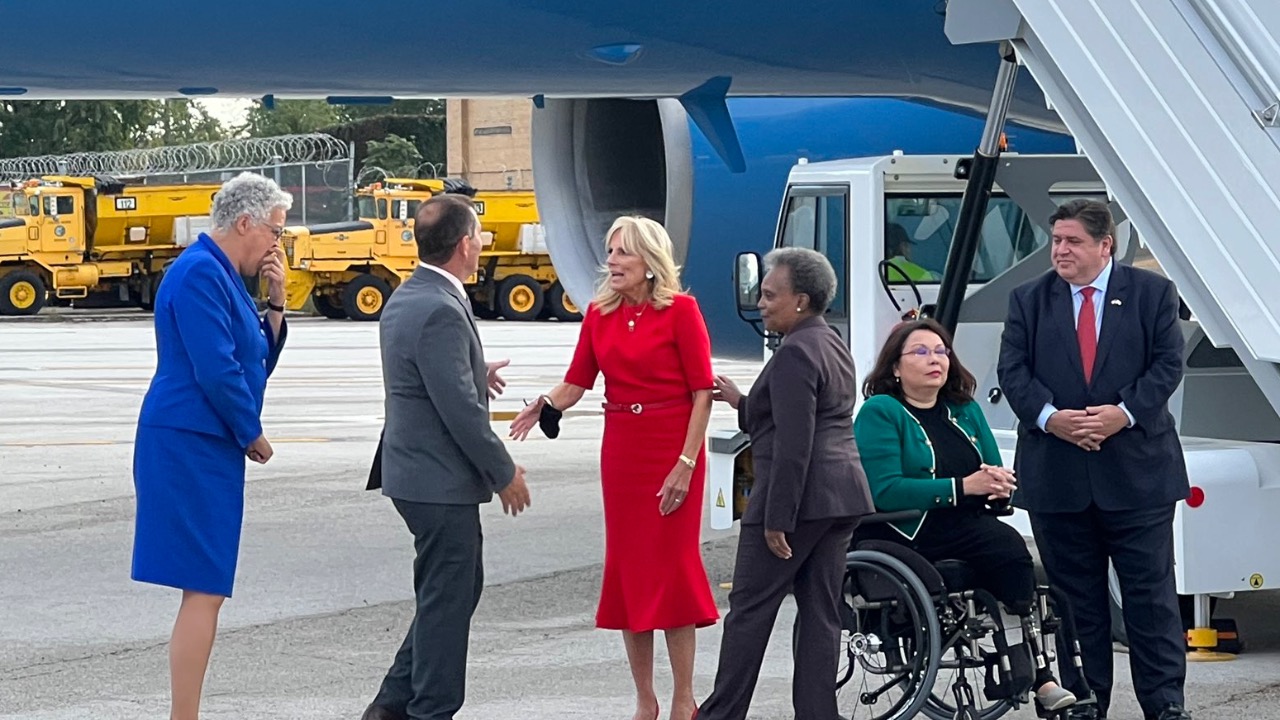
Investigators have said the accidental discharge occurred just before 9 a.m. near the 1 PIA Way access point and the Pennsylvania Tower at Philadelphia International Airport, a location that sits at the edge of secure airport operations but still within a sensitive perimeter for federal protection details. According to Investigators, the shot was self-inflicted and no other person was struck.
Initial accounts describe a single round fired from the agent’s service weapon. A separate report stated that a Secret Service agent assigned to the First Lady shot himself in the leg, with the incident framed as a negligent discharge rather than an intentional act. That description aligns with the early assessment from airport police that the wound was accidental and that there was no active threat to bystanders or airport staff.
Authorities have not publicly detailed whether the gun fired while being holstered, unholstered, or handled in some other way. Unverified based on available sources. What is clear from the location and timing is that the discharge occurred while the agent was working in a live operational environment, not in a training facility or off-duty setting.
Impact on Jill Biden and airport operations
The Secret Service has been explicit that Jill Biden was not present when the gun went off and that her movements were not disrupted. In a statement referenced in one account, the agency said, “There was no impact to the protectee’s movement and they were not present at the time of the incident,” a reassurance that the First Lady’s security bubble remained intact. That message was relayed through a report that quoted the agency’s clarification that There was no on the protectee.
Philadelphia police said no one else was injured and that there were no disruptions to operations at the airport. Flights continued to move, and the area around 1 PIA Way and the Pennsylvania Tower did not require a prolonged shutdown. A detailed account noted that the agent was transported to Penn Presbyterian Medical Center and placed in stable condition, while airport activity carried on without interruption, according to Penn Presbyterian Medical police.
For an airport that regularly handles motorcades and high-security arrivals, the ability to contain the scene quickly mattered. The response avoided the cascading delays and evacuations that typically follow any report of gunfire in a commercial terminal, which in turn helped keep public anxiety in check.
The agent’s condition and immediate response
After the shot was fired, fellow agents and local officers moved rapidly to secure the weapon, render aid, and coordinate medical evacuation. Multiple reports agree that the injured Secret Service agent was taken to a hospital and listed in stable condition, a status that eased early fears of a more serious outcome. One summary of the incident noted that agent was taken and that the Secret Service quickly opened an internal review.
Another account, citing police, specified that the agent was transported to Penn Presbyterian Medical Center and placed in stable condition, which is consistent with the broader characterization that the injury was minor relative to what could have occurred in a misfire. Local law enforcement emphasized that no one else was injured, reinforcing that the bullet did not ricochet into a crowded area or strike another member of the detail.
The agency has not released the agent’s name. However, the description of the wound and the swift move to a major trauma-capable facility suggest standard protocol rather than a sign of life-threatening harm. The references to a leg wound and to “minor injury” in some reporting point to a scenario in which the round remained confined to the agent’s own body, which likely simplified the medical and investigative response.
Secret Service review and accountability process
The Secret Service has said that its Office of Professional Responsibility will review the incident in detail, a signal that the agency is treating the negligent discharge as a matter of internal discipline and training, not just a medical mishap. In a statement described in one report, the agency thanked officers and partners who offered medical assistance and confirmed that the Office of Professional would examine what went wrong.
That internal review runs alongside the initial work by airport police and other local agencies that responded to the scene. One summary of the event explained that the Secret Service had opened an internal process to “review the circumstances surrounding the accidental discharge,” language that typically covers weapon handling, adherence to safety protocols, and the agent’s fitness for duty at the time of the incident. The reference to the accidental discharge underscores that the agency is focused on how a preventable event occurred inside a highly trained unit.
Historically, such reviews can lead to retraining, temporary removal from field assignments, or formal discipline, depending on the findings. Unverified based on available sources. In the context of a protective detail for someone as visible as Jill Biden, any lapse involving a firearm is likely to draw heightened scrutiny from leadership and from congressional overseers who monitor the agency’s performance.
Why the incident raises broader security questions
The fact that the gunshot came from within the protective detail itself has intensified public debate about firearms safety and stress management among agents. A report that framed the incident as an accidental gunshot near Jill Biden’s security detail noted that a Secret Service agent assigned to her was injured after firing his weapon at Philadelphia International Airport, an episode that immediately raised security questions about training and oversight.
Protective details operate under intense pressure, often on tight schedules and in crowded, unpredictable environments. Even a momentary lapse in weapon discipline can have outsized consequences, particularly in a setting like an airport where a single shot can trigger panic and large-scale security responses. The fact that this round did not hit a bystander or disrupt operations does not erase that it breached the expectation of zero tolerance for negligent discharges among elite protective units.
The incident also feeds into a broader conversation about how the Secret Service manages risk across a wide portfolio of protectees, from the president and vice president to former presidents and their families. In one account, the agent was described as assigned to a former first lady, which reflects the complex and sometimes overlapping nature of assignments within the agency. That characterization appeared in a report that linked a Secret Service agent to a former first lady, while other accounts tied the same event directly to Jill Biden’s current detail. The discrepancy highlights how quickly narratives can diverge when information moves through multiple channels.
Digital echoes and the modern information trail
Beyond the immediate security implications, the incident generated a digital footprint that stretched across platforms far removed from the airport tarmac. One short video summary circulated on Instagram, which sits within a broader ecosystem of Meta services that are described on about.meta.com. That ecosystem also includes tools like Meta AI and social conversation hubs such as Threads, where discussions about public safety and political figures often unfold in real time.

Asher was raised in the woods and on the water, and it shows. He’s logged more hours behind a rifle and under a heavy pack than most men twice his age.