Iran’s army chief orders forces to prepare for possible conflict
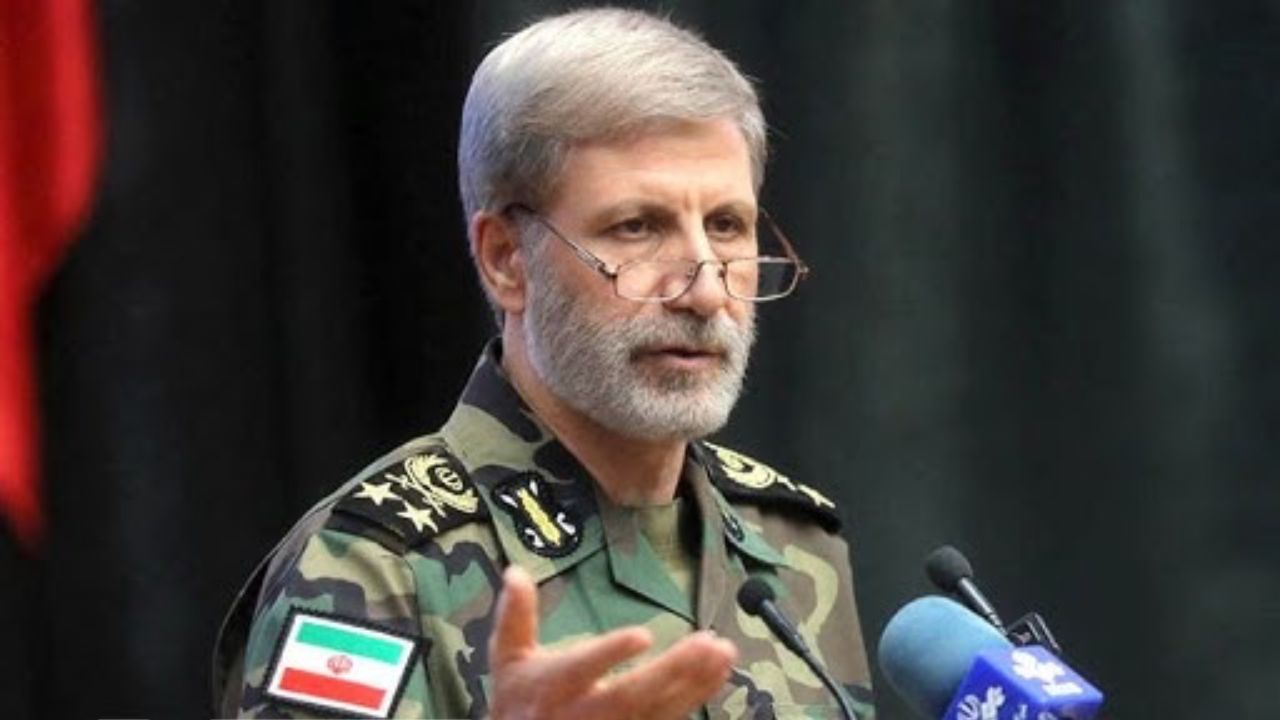
The order from Iran’s top army commander to prepare for a possible conflict comes as the country is already under sustained attack from the United States and Israel and firing its own missiles in response. The directive signals that Tehran is treating the current confrontation not as a passing flare-up but as a war that could widen further and move onto Iranian soil.
Set against a backdrop of missile salvos, air strikes on strategic sites and attacks on shipping, the army’s new posture points to a military establishment bracing for direct clashes with U.S. forces and Israel while trying to deter any ground incursion.
Army chief’s warning and what “prepare for any attack” means
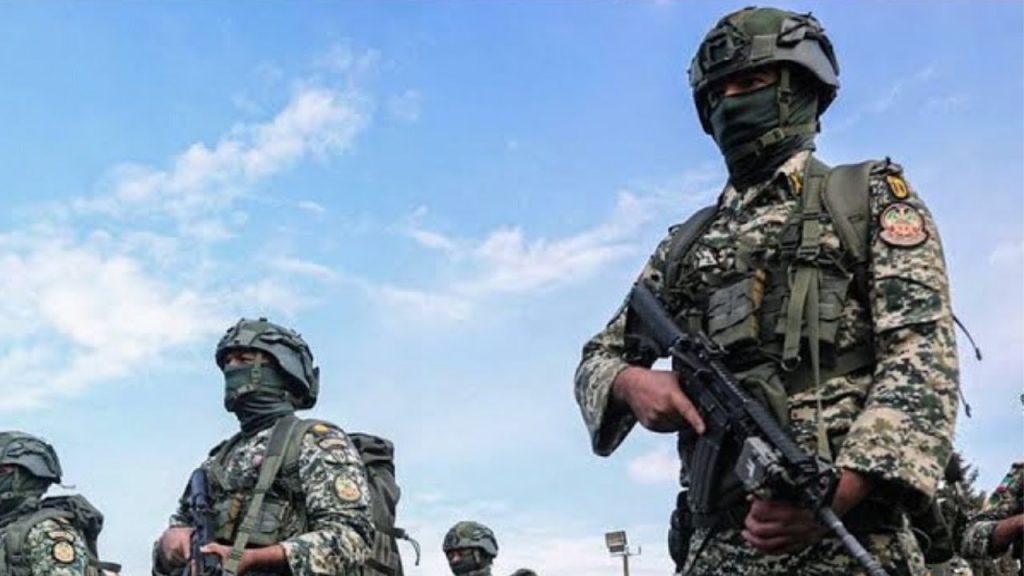
Iran’s army chief, identified in multiple reports as Amir Hatami, has instructed senior commanders to be ready for “any attack” and to maintain constant surveillance of U.S. forces. In a short video clip, Amir Hatami is described as Iran’s army chief who ordered continuous monitoring of U.S. deployments and warned of decisive retaliation against any ground operation on Iranian territory.
State media accounts, relayed through regional reporting, say that the commander-in-chief of the Iranian Army, identified as Commander Amir Hatami, held an online meeting with the heads of the ground forces, air force, navy and air defense. During that meeting he reportedly ordered all units to raise readiness levels, review contingency plans and coordinate closely with the Islamic Revolutionary Guard Corps, which operates in parallel to the regular army.
Another brief clip of the same directive, shared under the title “Be Ready for Any Attack,” describes Iran’s commander-in-chief telling officers that the armed forces must be prepared for sudden strikes from multiple directions and that any assault on Iranian soil would be met with a rapid and forceful response. The video, which invites viewers to Join a channel for more coverage, attributes the directive to state media reports that were broadcast after a new wave of attacks on Iran.
A separate short report shows that earlier, Major General Hatami, described there as “Major General Hatami the commanderin-chief of Iran’s army,” held an online meeting with commanders of the ground forces and other branches. In that clip, Major General Hatami is said to have stressed the need for full coordination between units and for the army to anticipate both missile strikes and potential incursions.
A war already in its fifth week
The directive does not come in a vacuum. Iran is already under heavy fire from the United States and Israel after a confrontation that has stretched into its fifth week. One detailed account from Tehran describes how, on day 33 of the conflict, U.S. and Israeli attacks had struck targets in and around the capital, with a plume of smoke rising over Tehran after a strike on March 2 that photographers such as Mohsen Ganji captured from inside Iran. That report describes the confrontation as a war between Iran, the United States and Israel, with Iranian officials vowing that foreign troops would not be allowed to return to bases inside the country.
An English-language summary of the same narrative notes that the Iran war is now deep into its second month and that the combined U.S. and Israeli campaign has targeted infrastructure, military facilities and suspected weapons depots in multiple cities. The description of a plume of smoke over Tehran, Iran, attributed to Mohsen Ganji, has become a shorthand image for the intensity of the bombardment that Iranian residents have faced.
U.S. Central Command has released its own footage of air strikes inside Iran, showing what it describes as the targeting of drones, tanks and missile launchers. In a video package, Central Command presents these strikes as part of a broader effort to degrade Iran’s ability to fire missiles at Israel and U.S. bases.
Explosions in central Iran and the battle for the skies
While Tehran has been under attack, central Iran has also seen dramatic strikes. Video footage shared by European broadcasters shows massive explosions and thick plumes of smoke rising over the Esfahan region after a new wave of strikes. One clip describes how, on a Wednesday in early April, Video Iran was hit by a powerful series of blasts in the Esfahan region of central Iran, with residents filming the impact from multiple angles.
Companion clips in French, German, Italian, Spanish and Portuguese repeat the same basic scene. Each describes how Videos show explosions in the center of Iran as the conflict with Israel intensifies, how Videos zeigen explosions in central Iran, how video mostrano blasts in central Iran, how videos muestran explosions in Iran central and how videos mostram explosions in the center of the country as the conflict with Israel intensifies.
These strikes in Esfahan are significant because the region hosts sensitive military and nuclear related infrastructure that Israel has long viewed as a strategic threat. The fact that explosions and smoke were visible over such sites suggests that Israel is trying to damage Iran’s missile and drone capabilities at their source, not only intercept them in the air.
Missile salvos, U.S. bases and the USS Abraham Lincoln
Iran has not been a passive target. It has launched its own missiles at Israel and at U.S. bases, and it has claimed direct hits on American naval assets. In a Pakistani news update, a segment titled Iran Launches Massive describes how Iran fired a large number of missiles at Israel and at U.S. bases, presenting the salvo as a major escalation in response to earlier strikes on Iranian territory.
A second broadcast from the same network focuses on a specific claim that Iranian missiles struck the aircraft carrier USS Abraham Lincoln. The clip, headlined Iran Claims Missile, reports that Iranian sources say they targeted the USS Abraham Lincoln and that this assertion was featured in a midday News Update on SAMAA TV. While U.S. officials have not publicly confirmed such a hit, the very act of broadcasting the claim is part of Tehran’s effort to project strength to domestic and regional audiences.
On the Israeli side, video segments from Europe describe how Israel’s military reported a new missile salvo from Iran on a Friday, with air defenses working to intercept the incoming projectiles. One clip notes that Video Israel reported a new missile salvo from Iran and that there were no immediate reports of casualties, while former U.S. President Donald Trump warned that the United States had not yet started destroying what is left in Iran.
The exchange of missile fire highlights the risk that any miscalculation could drag the United States and Israel into even deeper conflict with Tehran, especially if an Iranian strike were to cause significant casualties or if U.S. forces were to hit high profile Iranian leaders or symbols in response.
Attacks on shipping and the contest over the strait
Beyond direct strikes on land targets, Iran has also turned to the sea. A detailed assessment of the conflict notes that Iran has continued attacks on shipping amid discussions in Tehran about its leverage over the Strait of Hormuz. According to that report, Iran has continued on commercial vessels while Iranian leaders debate how far to go in using the strait to pressure the United States and its partners.
The same assessment describes how Iranian forces attacked the Panaman, a ship that was sailing near key maritime chokepoints, and how they have targeted infrastructure that Western intelligence agencies say is used to store advanced weapons. By striking shipping and logistics hubs, Iran is signaling that it can disrupt global trade and energy flows if the war intensifies further.
Social media links tied to that analysis show how the conflict has been amplified online. One Iran Update Special link is formatted for LinkedIn, another Iran Update Special link is prepared for Twitter, and a third Iran Update Special link is configured for Facebook, reflecting how analysts and commentators are sharing real time assessments of the war’s maritime dimension.
Escalating rhetoric and the pattern of preemptive threats
Amir Hatami’s latest directive fits into a longer pattern of Iranian military leaders threatening preemptive action when they feel their country is under rhetorical or military pressure. Earlier this year, he warned that Iran could strike first if hostile rhetoric continued. One report from Dubai states that, in the United Arab Emirates, observers heard how Iran army chief threatened preemptive military action over the “rhetoric” targeting the country after comments by Donald Trump.
A separate account explains that Hatami delivered that warning while speaking to military academy students. The story notes that he had recently taken over as commander in chief of Iran’s army, known by the Farsi name that begins with Far, and that his comments were aimed at signaling resolve to both domestic and foreign audiences.
In the latest round of statements, a Reuters dispatch from Dubai, shared through a financial news portal, reports that Iran’s operational army chief told commanders to prepare for any attack and that state media carried his remarks widely. The summary notes that the directive from Iran army chief was framed as a response to U.S. and Israeli threats and as a warning that any aggression would be met with decisive retaliation.
Diplomatic track: Abbas Araghchi and the search for leverage
While the guns are firing, Iranian diplomats are still trying to shape the political environment. Abbas Araghchi, a veteran negotiator who has long been involved in nuclear and regional talks, remains a key figure in Tehran’s external messaging. A search profile for abbas araghchi highlights his role in past negotiations over Iran’s nuclear program and his position within the foreign policy establishment.
Although the current sources do not detail his latest statements, his presence in the conversation suggests that Tehran is still weighing diplomatic options alongside military moves. Figures like Araghchi are likely involved in backchannel discussions about ceasefire terms, sanctions relief or security guarantees, even as the army chief orders units to prepare for a wider clash.
Domestic pressure and the cost to Iranian civilians
The army’s readiness order also reflects deep domestic pressure. Iranian civilians have endured weeks of air raids, missile alerts and economic disruption. The short report that features Amir Hatami mentions the impact of sanctions and conflict on Iranian civilians, suggesting that the army chief is sensitive to the social strain and wants to project an image of control and preparedness.
Images from Tehran show residents watching smoke plumes and listening to air defense fire, while people in Esfahan and other central regions film explosions from their rooftops. The shared experience of bombardment can rally public opinion behind the leadership in the short term, but it also raises expectations that the military will defend the country effectively and deter future strikes.
Iranian media coverage of missile launches at Israel and claims of hits on the USS Abraham Lincoln serves a similar purpose. By highlighting these actions, broadcasters aim to reassure viewers that Iran is not simply absorbing punishment but is capable of striking back at its adversaries.

Leo’s been tracking game and tuning gear since he could stand upright. He’s sharp, driven, and knows how to keep things running when conditions turn.