Can you outrun a moose? What experts say might surprise you
Every year, hikers, runners and dog walkers in moose country learn the hard way that the biggest animal in the forest can also be one of the fastest. The idea of simply sprinting away from a charging moose sounds intuitive, yet expert guidance suggests the reality is more complicated than a straight speed contest. Whether a person can outrun a moose depends less on athletic ability and more on distance, terrain and how the animal is behaving in the first place.
Understanding how fast moose can move, how they signal aggression and what safety agencies recommend gives anyone who spends time outdoors a better chance of staying out of trouble. The surprising twist is that in some situations running is exactly what professionals advise, but only if a person reads the signs early and uses obstacles and cover instead of betting on raw speed.
How fast a moose really is
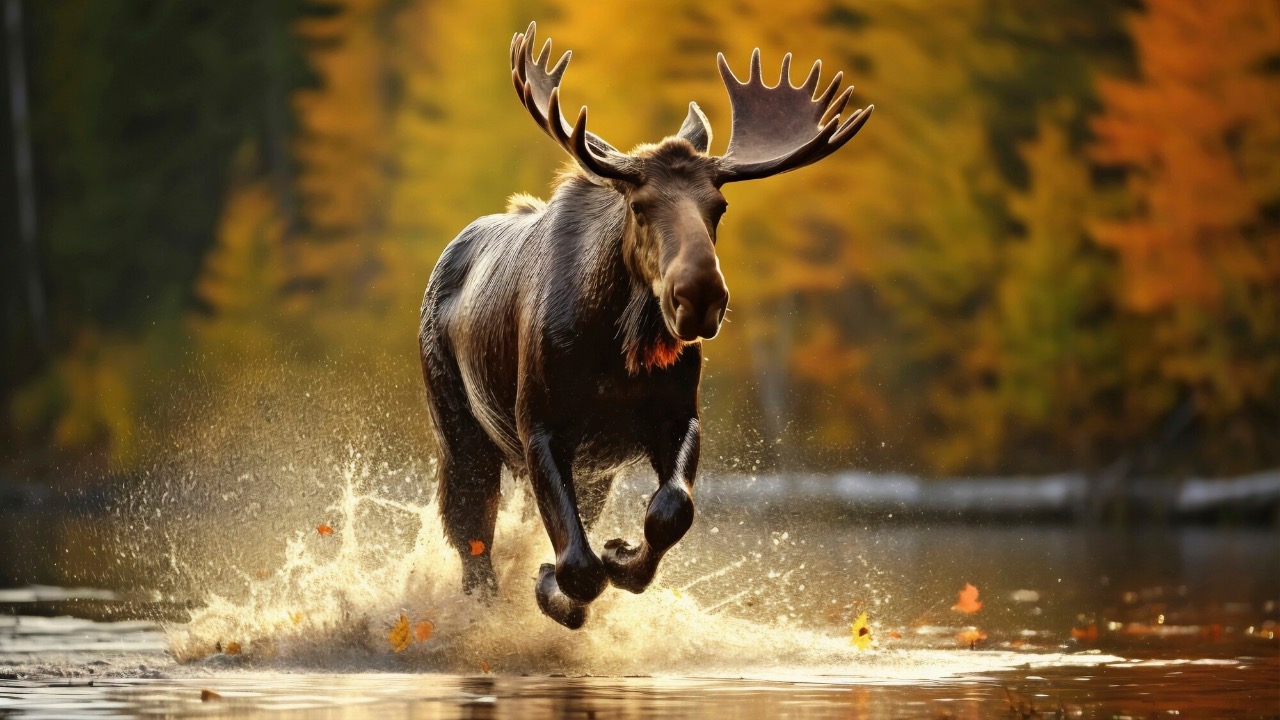
On paper, the speed matchup is brutally lopsided. Wildlife educators in Alaska have highlighted that a moose can run up to 35 miles per, while the fastest human speed on record, set by Usain Bolt, is 28 miles per hour. That comparison already assumes an Olympic sprinter in perfect conditions, not an average hiker in boots on a rocky trail.
Other educators who focus on moose tourism in Maine echo that range, stating that moose can travel at speeds up to 35 mand can maintain a steady trot for long distances. A short wildlife clip aimed at hikers notes that a large bull can weigh up to 1,800 pounds and still run at speeds of 35 miles per hour in short bursts, figures that appear in a Sep video titled “Hiker finds a HUGE moose” that stresses how quickly a calm viewing moment can turn dangerous.
General wildlife speed tables support this picture. A reference on Animals and Their lists moose in the 30 to 35 miles per hour band, placing them alongside horses and well above domestic dogs or most people. The same table reminds readers that these are “possible speeds,” meaning animals can hit them when motivated, such as during a chase or when defending calves.
Even at a walk, moose cover ground quickly. Social media posts from wildlife projects at Isle Royale describe how they can run at speeds of up to 35 to 40 miles per hour and note that their running motion resembles that of a horse, which helps explain how such a tall, seemingly awkward animal can suddenly close distance on a trail user who misjudges the gap.
How human runners compare
The raw numbers make clear that no ordinary person will win a straight-line sprint against a moose. World-class sprinters like Usain Bolt have hit 28 miles per hour only for a few seconds on a track. Recreational runners are far slower, especially on uneven terrain, in heavy clothing or while carrying a pack.
One Quora response that tackles the question directly puts it bluntly, stating that almost any four-footed animal can outrun a bipedal animal, then drives the point home with the aside that even a mouse can outrun a person in a dash. The same answer adds a qualifier with the word But, explaining that humans do have one advantage: brain power and the ability to use terrain and obstacles.
Moose also have a different kind of stamina. While they can maintain a steady trot for many miles, people tend to slow sharply after an initial sprint, especially at altitude or in deep snow. Anyone who tries to simply “run it out” on an open road or frozen lake is betting against both physics and biology.
That mismatch is why wildlife educators keep returning to the same core message. The question is not whether a person can run faster in a straight line, because the numbers are already settled. The real question is how to use the head start and the environment to avoid being in a moose’s path at all.
Size, power and why moose attacks are so dangerous
Speed is only part of the danger. In a Jun segment on how to survive an encounter with an aggressive moose, an expert notes that they can be up to 6 feet tall at the shoulder and 1,000 pounds, then adds that this alone means “we’re talking about a big animal.” The same explanation emphasizes that the combination of mass, long legs and speed turns even a short charge into a serious threat.
Other wildlife clips aimed at hikers and campers go higher, citing bulls that can weigh up to 1,800 pounds. An animal that size moving at 35 miles per hour carries enough momentum to trample a person, stomp repeatedly or kick with hooves designed to punch through snow and brush. Advice columns that teach people How to Avoid and Survive a Moose Attack stress this point directly with lines such as Don’t fight back, you will not win, and Keep dogs away from moose because a barking pet can trigger that power against the handler.
Unlike predators, moose usually attack for defensive reasons. They may charge if they feel trapped, if a person or dog gets between a cow and her calf, or if they are already stressed by deep snow, traffic or harassment. A wildlife safety piece that surveys encounters with dangerous animals notes that Running, whether it is a human or an off leash pet dog, often triggers a chase instinct in large predators as well as moose. That means a person who panics and bolts from close range can turn a tense standoff into a full pursuit.
Urban encounters add another layer of risk. A Utah wildlife agency post that begins with the line Moose are fun to watch, but urban areas aren’t good places for them to wander explains that they appear docile, and that can lead to people getting too close for a selfie or trying to herd an animal off a lawn. In tight city spaces with fences and parked cars, a startled moose has fewer escape options and is more likely to lash out.
What the National Park Service says about running
Guidance from the National Park Service offers one of the clearest answers to the headline question. A moose safety page for Kobuk Valley National Park tells visitors to watch for signs that the animal is upset, including laid back ears and raised hairs on the hump, and then adds a crucial line: unlike with bears, it is okay to run from a moose. The same advice explains that they usually will not chase very far and that if a person can get behind a tree or other solid object, the animal may lose interest.
That message appears in two linked versions of the same resource. One image-based link routes through a Google redirect to the moose safety page for Kobuk Valley, while a second text anchor highlights the specific passage that says it is okay to run. That second link notes that if the moose knocks a person down, the safest move is to curl up, protect the head with the arms and keep still until the animal leaves.
The Alaska Department of Fish and Game offers similar guidance through a resource discovered via that same citation trail. The Moose Safety advice explains that people should move quickly behind cover such as a tree, car or building, and avoid standing in the open where a charge can connect cleanly. It reinforces that running in a straight line on open ground is a poor choice, but that short, fast movements to reach cover can be life saving.
The key nuance is distance. NPS advice assumes a person spots the warning signs early enough to back away or jog to safety before the animal commits to a full charge. If someone is already within a few yards of an angry bull, there may not be time to pivot and sprint, which is why the same guidance stresses prevention and awareness first.
Reading the warning signs before a charge
Recognizing when a moose is about to run makes the difference between a safe retreat and a desperate scramble. The Kobuk Valley guidance tells visitors to watch for the classic signals: ears laid back, the long hairs on the hump raised and a head that swings side to side. If the moose’s ears are laid back and the long hairs on its hump are raised, it is likely already upset and may move toward the perceived threat.
Other safety explainers echo these cues. A short video on what to do if you encounter a moose describes how, if you see the hair on its neck or its shoulders raising up, that is a sign the animal is getting mad and the person needs to back away. Another educational clip that opens with the line “here’s an animal riddle” goes on to explain the terms bull, cow and calf, then uses that as a springboard to describe how both male and female moose will defend babies aggressively if they feel crowded.
Firsthand accounts show how subtle the early signs can be. In a Feb story titled “I Had an Unexpected Moose Encounter on the Trail,” a runner describes hearing strange sounds, slowing down to listen, then realizing the noises repeated several times before the animal finally appeared. That delay between sound and sight illustrates why wearing headphones or moving quickly around blind corners in moose country can be risky.
Urban wildlife officers face similar patterns. The Utah post that begins with Moose are fun to watch, but urban areas aren’t good places for them to wander notes that people often misread relaxed behavior as permission to approach. They may not notice a shift in ear position or hair until the animal is already charging, which is why the same outreach campaign links to more detailed moose tips that stress distance and respect.
When experts say to run, and how
Several modern survival explainers converge on a counterintuitive rule: your best defense in an attack by a moose is to run, but only in a specific way. A Feb short on surviving encounters with dangerous wildlife states that in the case of moose, your best defense in an attack in this case is to run, then immediately clarifies that both moose and other large animals are really fast. The advice is not to challenge them to a race, but to sprint for cover.
That matches the NPS line that unlike with bears, it is okay to run from a moose. The linked Kobuk Valley passage spells out that the goal is to reach a tree, rock or car that can break the animal’s line of travel. Moose have long legs and can step over small obstacles, but they cannot pivot tightly around a thick trunk or squeeze through narrow gaps as easily as a person.
Practical tips from backcountry educators expand on this strategy. The Stone Age Man guide that asks How to Survive a Moose Attack advises people to find cover quickly, not to stand in the open and not to try to intimidate the animal. It repeats the warning Don’t fight back and adds that if a person falls, they should curl into a ball and protect vital areas until the moose stops stomping.
Video breakdowns of real encounters help illustrate what this looks like. A Jul news segment about a Montana man who met a moose while camping shows how he used trees and distance instead of bravado, a choice that the reporter Jolie Sully highlights as the reason he escaped without injury. Another short clip that asks “what would you do if you saw this moose while hiking” uses the 1,800 pound and 35 mile per hour figures to drive home why hiding behind a boulder beats trying to out sprint the animal on an open slope.
Why moose behavior differs from predators
One reason safety advice for moose diverges from bear or cougar guidance is that moose are not hunting people. A predator may interpret a running human as prey and chase for a long distance. The Spokesman Review piece on surviving encounters with dangerous wildlife notes that Running, whether it is the cougar’s human target or an off leash dog, often triggers a chase instinct in large predators as well as moose, but the motivations differ.
For a moose, the chase is usually about driving a threat away from calves or from a resting spot. Once the person is behind a solid object or far enough away, the animal often stops. That is why NPS and Alaska agencies are comfortable telling visitors to run for cover from moose but rarely give that advice for bears or mountain lions.
There are still exceptions. If a moose is already in full charge at close range, turning and running can expose a person’s back and make it easier for the animal to trample them. In those rare moments, some experts suggest sidestepping at the last second or diving behind any available object. The consistent theme is that people should think in terms of angles and obstacles, not straight lines.
Practical tips for anyone in moose country
- Keep distance from all moose, even if they appear relaxed. The Utah outreach that starts with Moose are fun to watch emphasizes that they can turn aggressive quickly in tight spaces.
- Watch for early warning signs: laid back ears, raised hairs on the neck and hump, head swaying and lip licking. The Kobuk Valley guidance treats these as clear signs to back away.
- Keep dogs leashed and under control. Guides that focus on How to Survive a Moose Attack repeat the warning Don’t let pets harass moose and Keep dogs away from moose, since barking can trigger a defensive charge.
- Avoid crowding a moose on roads or trails. Give it an escape route so it does not feel trapped between people and obstacles.
- If a moose charges from a distance, run hard for the nearest solid object and use it as a barrier. NPS and Alaska agencies, along with Feb and Jun survival videos, all treat this as the best available option.
- If knocked down, curl into a ball, protect the head and neck with the arms and wait. The Jun segment on aggressive moose and the Kobuk Valley advice both frame this as the safest response once contact happens.
Leo’s been tracking game and tuning gear since he could stand upright. He’s sharp, driven, and knows how to keep things running when conditions turn.