How aircraft incidents quickly turn into international flashpoints
Modern airspace is crowded with military jets, surveillance planes, drones, and civilian airliners that often operate in the same contested regions. When something goes wrong near a political fault line, a technical mishap can very quickly turn into a test of national pride, deterrence, and alliance credibility. Aircraft incidents have become some of the fastest ways for regional tensions to spill over into wider confrontations, especially where great powers already face each other at close range.
From the South China Sea to the Persian Gulf and Eastern Europe, governments now treat every close intercept, radar lock, or disputed shootdown as a signal about power and resolve. Understanding how these episodes move from cockpit to crisis table helps explain why the risk of miscalculation looms so large in an era that already looks like a new cold war in everything but name.
What happened
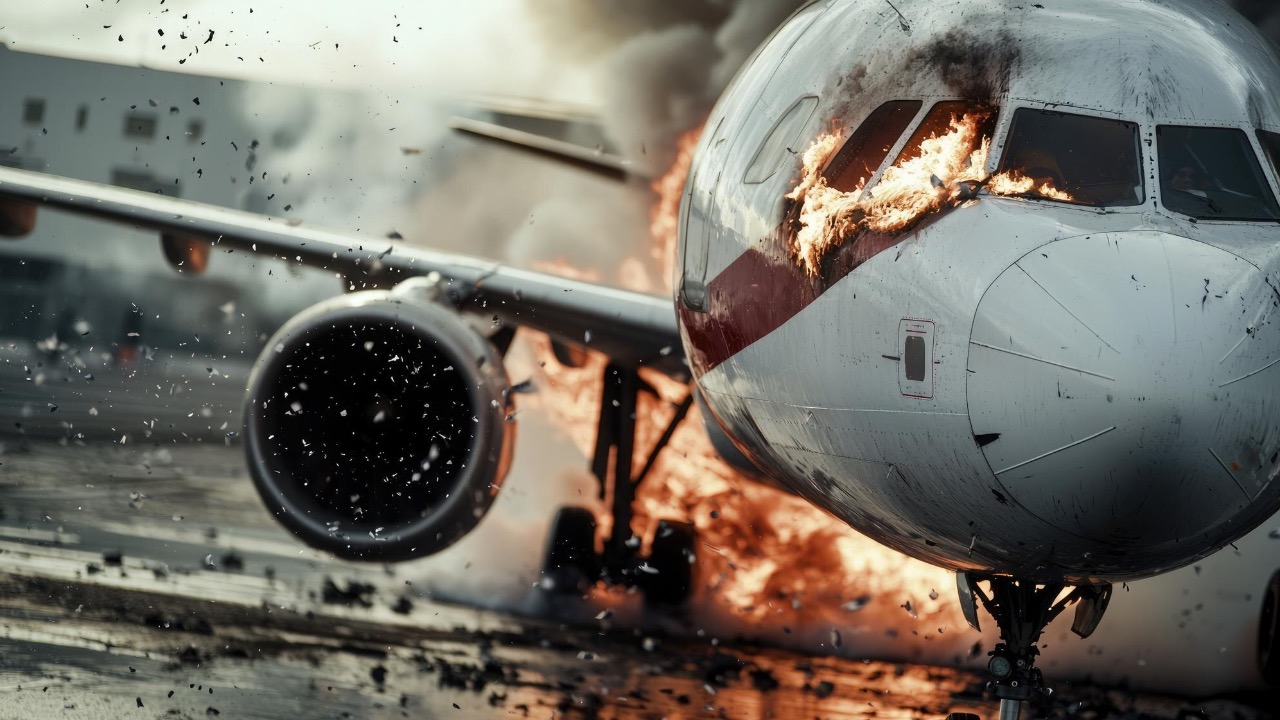
The most volatile air incidents tend to share a few core features. They occur in contested airspace, involve militaries that already distrust each other, and unfold in seconds, long before diplomats can intervene. The South China Sea illustrates this pattern clearly. Chinese and United States aircraft regularly operate in close proximity there, as both sides seek to demonstrate control over key sea lanes and air corridors. Analysts have warned that a single collision or misjudged intercept between a Chinese fighter and a United States reconnaissance plane could trigger a serious crisis, particularly around sensitive zones such as the Taiwan Strait and the Spratly Islands, which have been identified as major flashpointsin the bilateral rivalry.
In practical terms, these confrontations often begin with routine patrols. A surveillance aircraft flies along what its operators consider an international route, while a rival state, convinced that its sovereignty or security is being challenged, scrambles fighters to intercept. Pilots on both sides operate under national rules of engagement that may be secret, rigid, or poorly understood by the other side. Close passes, aggressive maneuvers, or radar locks can quickly escalate the encounter. When aircraft close to within a few dozen meters at high speed, even a minor miscalculation or mechanical failure can lead to a collision or near miss.
History offers stark examples of how quickly such encounters can deteriorate. In one widely studied episode, a reconnaissance aircraft and a fighter jet collided during an intercept over disputed waters. The fighter was lost and the damaged surveillance plane made an emergency landing at a nearby airfield controlled by the intercepting state. The crew was detained and interrogated, and both governments issued conflicting public statements about who was at fault. What began as a standard patrol flight ended as a full diplomatic standoff, with negotiations over access to the aircraft, treatment of the crew, and the language of any apology or expression of regret.
Similar dynamics play out when air defenses are involved. In several cases over the past two decades, surface to air missile batteries have engaged aircraft that operators believed to be hostile intruders. In some incidents, military jets were shot down near borders after brief incursions or disputed radar tracks. In others, civilian airliners became tragic victims of misidentification during periods of heightened alert. Operators working with incomplete information and under time pressure made lethal decisions, while political leaders later struggled to explain how their command and control systems had failed.
Unmanned aircraft have added another layer of complexity. Drones are often used for surveillance or targeted strikes in or near another state’s airspace, sometimes without public acknowledgment. When they are shot down, governments must decide whether to admit ownership, protest the attack, or quietly absorb the loss. In several regions, including the Gulf and along key maritime chokepoints, the downing of a drone has triggered rapid military signaling, with additional deployments, new air defense postures, and public warnings that any further incidents could be met with force.
What turns these operational episodes into political crises is not only the loss of an aircraft, but the context in which it occurs. Many of the most dangerous incidents happen in areas that are already central to national narratives about sovereignty. Over the Taiwan Strait, for example, both sides conduct regular air patrols to reinforce their respective claims. In the East China Sea, rival air defense identification zones overlap above disputed islands. In Eastern Europe, NATO and Russian aircraft shadow each other along alliance borders. Each intercept or radar contact is interpreted through a strategic lens that assumes hostile intent, even when crews on the scene may be focused on immediate safety rather than long term signaling.
Once an incident occurs, the first public information often comes from military spokespeople who must balance operational security with the need to shape the narrative. They may release cockpit videos, radar plots, or photos of intercepted aircraft to support their version of events, while the other side responds with its own imagery and claims. Social media amplifies these competing stories, and domestic audiences quickly take sides. Within hours, what began as a technical mishap or ambiguous encounter is reframed as a deliberate provocation or act of aggression, locking governments into hardened positions.
Why it matters
Aircraft incidents matter because they compress strategic rivalry into a single, highly visible moment. They force governments to make rapid choices about escalation, deterrence, and reputation, often before all the facts are known. In a period when major powers already treat each other as long term competitors, any sign of weakness or overreaction can have lasting consequences for alliances and regional balances of power.
For the United States and China, the stakes are particularly high. Their militaries now interact frequently in the Western Pacific, and both sides have invested heavily in long range precision weapons, advanced fighters, and integrated air defenses. Analysts warn that a crisis triggered by an air incident over the Taiwan Strait, the South China Sea, or the East China Sea could serve as the spark that turns a strategic competition into open conflict. Each of these theaters combines intense military activity with deep political symbolism, which is why they are often described as the main flashpoints in the relationship.
Domestic politics amplify the danger. When an incident occurs, leaders must respond not only to a foreign government but also to their own public, legislatures, and security establishments. A perceived failure to defend national airspace or protect military personnel can quickly become a political liability. Opposition parties, media commentators, and military officials may all demand a firm response. That pressure can narrow the range of options, making it harder for leaders to accept compromise solutions such as joint investigations or carefully worded statements of regret.
National narratives about sovereignty and historical grievance further constrain diplomacy. In regions where past conflicts still shape identity, such as the Western Pacific and Eastern Europe, airspace is not just a technical matter of navigation charts. It is tied to memories of war, occupation, or colonial rule. When a foreign aircraft is seen as violating that space, the reaction taps into deeper emotions. Governments then feel compelled to defend not only current borders but also the symbolic integrity of the nation, which makes de escalation more politically costly.
There are also hard military reasons why these incidents matter. Air forces and air defense units watch how rivals behave in crises and update their assumptions about readiness, capability, and resolve. If one side responds to an aircraft loss with restraint, the other may conclude that it has more room to push boundaries in future intercepts or patrols. If the response is aggressive, with rapid deployments or new rules of engagement, the message may deter some actions but also increase the baseline risk of future confrontations. Over time, this feedback loop shapes operational habits on both sides.
Allies and partners closely track these episodes. States around the South China Sea and Western Pacific, for example, watch how Washington reacts to close encounters with Chinese aircraft to gauge the reliability of United States security commitments. If they perceive hesitation or inconsistency, they may hedge by deepening ties with other powers or by accommodating Beijing’s preferences. Conversely, a very forceful response by Washington could reassure some partners but alarm others who fear being caught in the middle of a great power clash. Aircraft incidents therefore influence not only the immediate adversaries but also the wider regional order.
Economic and commercial aviation interests are also at stake. When tensions rise after a military air incident, civilian airlines may reroute flights to avoid contested corridors, which increases fuel costs and travel times. Insurance premiums can rise for carriers that operate near conflict zones. In extreme cases, regulators may restrict or ban commercial flights over certain regions, as happened in previous crises when airliners were shot down or narrowly avoided conflict zones. These decisions ripple through global supply chains, tourism, and business travel.
Legal and normative questions add another layer. International law provides some guidance on airspace rights, freedom of navigation, and the use of force, but many of the most contested areas involve overlapping claims or ambiguous status. States interpret the United Nations Convention on the Law of the Sea and other agreements in different ways when it comes to military flights near their coasts or over disputed islands. When an incident occurs, each side argues that its actions were lawful and that the other violated international norms. Because there is no universally accepted arbiter for many of these disputes, the legal debate often becomes another front in the political struggle.
Technology is accelerating these dynamics. Modern aircraft carry high resolution sensors and data links that can capture and transmit detailed records of encounters in real time. Governments can selectively release this material to support their narrative, but they also face the risk that leaked or hacked data will contradict official statements. At the same time, automation in air defenses and cockpit systems can shorten decision cycles, leaving less room for human judgment in ambiguous situations. As artificial intelligence and autonomous systems spread into surveillance and air defense, the risk grows that machines will play a larger role in the early stages of a crisis, before diplomats even know something has gone wrong.
The psychological dimension should not be underestimated. Pilots involved in close intercepts or dangerous maneuvers often experience intense stress and may feel personally targeted by the other side’s actions. Their accounts can shape how military organizations interpret incidents and train for future encounters. If crews believe that rivals are consistently acting recklessly, they may adopt more defensive, hair trigger postures. That mindset can make subsequent incidents more volatile, as both sides approach each other expecting hostility.
Finally, aircraft incidents reveal how fragile crisis communication channels can be. Many rival states maintain hotlines or military to military contacts intended to manage emergencies. Yet in practice, these channels may be underused, mistrusted, or constrained by bureaucratic rules. When an incident occurs, it may take hours before senior officers speak directly, and even then they may stick to scripted talking points. Misunderstandings can persist long after the aircraft have left the scene, especially if both sides are already inclined to see the other as an adversary rather than a partner in risk reduction.
What to watch next
The risk that aircraft incidents will ignite broader crises is unlikely to fade, but several developments will shape how dangerous these encounters become. The most immediate factor is the trajectory of great power competition. As strategic rivalry deepens, especially between the United States and China, both sides are likely to increase air patrols, reconnaissance flights, and presence missions in contested regions. The more aircraft share crowded skies near disputed boundaries, the higher the probability of close calls or collisions.
Observers should watch how both militaries adjust their rules of engagement and safety protocols. After past incidents, governments have sometimes agreed on basic guidelines for air and maritime encounters, such as minimum separation distances, communication procedures, and avoidance of certain maneuvers. The effectiveness of these agreements depends on consistent implementation at the squadron level and on political will to keep them updated. If new types of aircraft, such as advanced drones or hypersonic platforms, enter contested airspace without clear safety rules, the risk of miscalculation will grow.
The development of crisis communication mechanisms will also be critical. States that face each other regularly in the air need reliable, direct channels between their air force commands and political leaders. Hotlines that connect only top leaders may be too slow for fast moving incidents. More granular links between operational centers, backed by agreed procedures for information sharing after an encounter, could help prevent tactical problems from becoming strategic shocks. The extent to which rivals invest in such mechanisms, and actually use them when tensions rise, will be a key indicator of how seriously they take crisis management.
Regional actors will play an increasingly prominent role. In the Western Pacific, for example, Japan, Taiwan, the Philippines, and other states are expanding their own air patrols and air defense networks. Their aircraft interact not only with Chinese and United States forces but also with each other. As these states modernize their fleets and assert their own claims, the web of potential encounters grows more complex. How they coordinate with allies, share information, and respond to incidents will influence whether a local mishap remains contained or draws in larger powers.
Legal and diplomatic initiatives around airspace and maritime disputes bear close watching. Efforts to clarify boundaries, define acceptable military activities, or create joint monitoring mechanisms could reduce ambiguity, though they require significant political compromise. Conversely, unilateral moves such as new air defense identification zones, expanded territorial claims, or aggressive enforcement of existing claims are likely to generate more frequent and tense encounters. The balance between cooperative and unilateral approaches will shape the risk environment for aircraft operating near contested areas.
Technology trends will further complicate the picture. The spread of long endurance drones gives states the option to conduct persistent surveillance without risking pilot lives, which might lower the political cost of losing an aircraft. At the same time, drones can be used more aggressively, flying closer to sensitive sites or staying on station longer than manned aircraft. If rivals respond by shooting them down, patterns of tit for tat escalation could emerge. The integration of artificial intelligence into targeting, identification, and decision support systems in air defenses will also be important. If these systems are not carefully tested and constrained, they could act on incomplete or ambiguous data in ways that surprise human operators.

Leo’s been tracking game and tuning gear since he could stand upright. He’s sharp, driven, and knows how to keep things running when conditions turn.