Iran Threatens to Attack U.S. Destroyer Near Strait of Hormuz Within 30 Minutes, Report Says
Iran has warned that any United States Navy destroyer entering the Strait of Hormuz could be struck within 30 minutes, sharply raising tensions around one of the world’s most sensitive maritime chokepoints. The threat, delivered as Washington moves additional naval assets toward the narrow waterway, has revived fears of a direct confrontation between Iranian forces and U.S. warships in a corridor that carries a large share of global oil shipments.
The standoff turns a long-running contest of brinkmanship into a more immediate test of resolve, with both sides signaling they are prepared to act quickly if they believe their red lines are crossed.
What happened
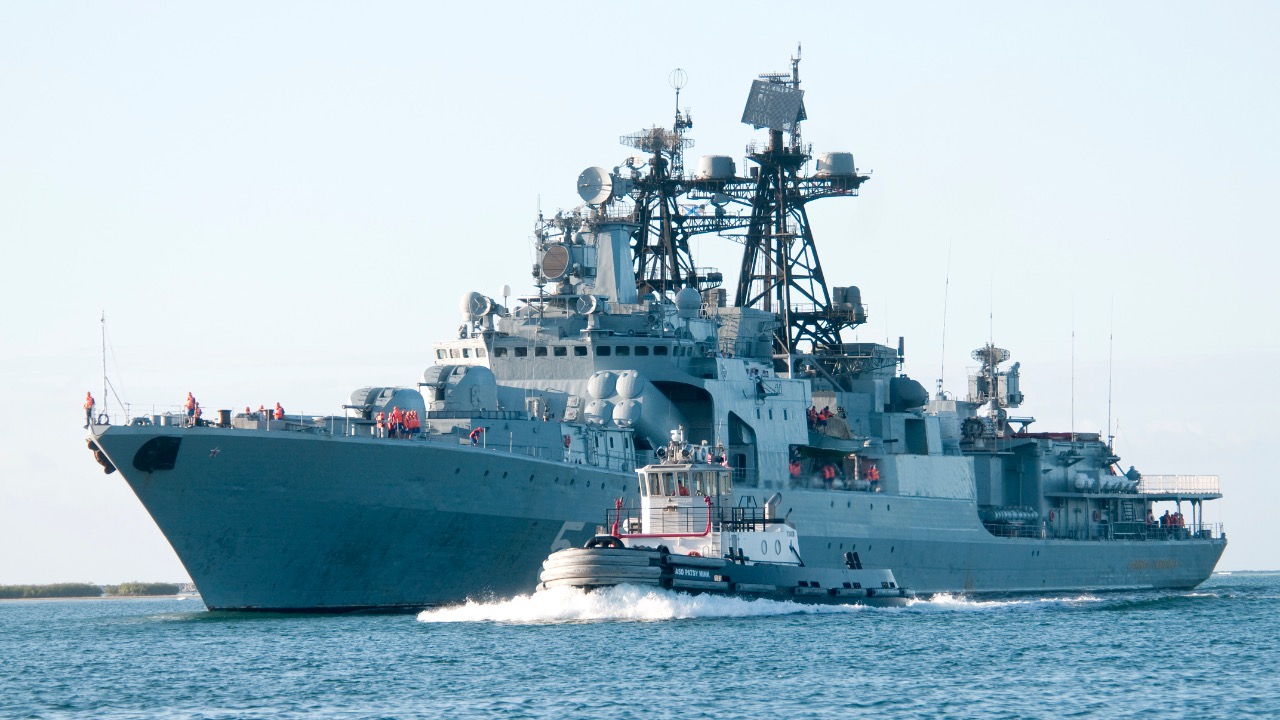
Iranian military officials have warned that U.S. Navy warships transiting the Strait of Hormuz would be “targeted within 30 minutes” if they enter waters that Tehran claims as its own. According to regional reporting, the warning was framed as a direct response to the possible passage of a U.S. destroyer through the strait, with Iranian commanders insisting they would not allow what they describe as hostile vessels to move unchallenged through the narrow channel that links the Persian Gulf to the Gulf of Oman and the Arabian Sea. The threat was reported as a clear, time-bound ultimatum aimed at any U.S. destroyer approaching the area.
The public warning followed a broader declaration that any U.S. Navy ship attempting to enter or cross the strait would be treated as a legitimate target. Iranian officials portrayed the U.S. presence as a violation of their security interests and accused Washington of escalating the situation by sending additional naval forces toward the region. They argued that foreign warships, and especially U.S. destroyers, increase the risk of miscalculation in the congested waterway and therefore would face immediate retaliation if they moved into what Tehran views as a red zone.
U.S. military officials, for their part, have described stepped-up activity around the Strait of Hormuz as part of a broader effort to secure commercial shipping and respond to reports of mines or other hazards in the sea lanes. Regional coverage has noted that U.S. forces have begun what has been described as mine clearance operations near the strait, with American vessels reportedly working to ensure that tankers and cargo ships can pass through the corridor safely. Iranian authorities have disputed some U.S. accounts of these operations and of the presence of a specific destroyer, arguing that Washington is overstating its activities in the area.
The confrontation is unfolding against a wider backdrop of U.S. and Iranian maneuvering across the Middle East. Reporting from the region has described how Iranian-backed groups, Israeli forces, and U.S. assets have been engaged in overlapping conflicts, with maritime incidents near the Strait of Hormuz viewed by many governments as a potential trigger for a broader clash. The current dispute over a U.S. destroyer and the 30-minute threat fits into that pattern of pressure and counterpressure.
Iranian leaders have also used diplomatic channels to frame their position. Parliamentary speaker Mohammad Bagher Ghalibaf and U.S. officials, including Senator J. D. Vance, have featured in accounts of recent contacts and statements around the crisis, with each side accusing the other of destabilizing the region. Pakistani intermediaries in Islamabad have been mentioned as hosts for conversations that touch on the strait, the U.S. naval posture, and Iran’s security demands, although no breakthrough has been reported. The picture that emerges is one of parallel tracks: harsh military rhetoric in the Gulf and cautious political messaging in regional capitals.
Why it matters
The Strait of Hormuz is one of the most strategically important waterways on the planet, carrying a significant share of the world’s seaborne oil and liquefied natural gas. Any credible threat to attack a U.S. destroyer within 30 minutes of its entry into the strait heightens the risk that a localized incident could spiral into a wider conflict. Energy markets are highly sensitive to disruptions in this corridor, and traders watch Iranian statements and U.S. naval movements there for signals that shipping could be delayed or blocked. Even the hint of an exchange of fire involving a U.S. warship can drive up risk premiums on crude shipments and insurance costs for tankers.
The warning also tests long-standing principles of freedom of navigation. The United States has repeatedly asserted that the Strait of Hormuz is an international waterway where commercial and military vessels of all nations enjoy transit rights under international law. By contrast, Iranian officials often describe parts of the strait as falling under their sovereign control and have used that claim to justify intercepting or harassing foreign ships in the past. The explicit threat toward a U.S. destroyer, tied to a 30-minute response window, challenges Washington’s ability to demonstrate that its vessels can move through the strait without yielding to Iranian pressure.
For U.S. policymakers, the episode intersects with a broader set of regional commitments. American forces are already deployed across the Gulf, the Red Sea, and the eastern Mediterranean, where they have responded to drone and missile attacks from Iran-aligned militias and sought to protect shipping from Houthi strikes. The new threat around the Strait of Hormuz adds another front where U.S. commanders must weigh deterrence against the danger of escalation. Any decision to send a destroyer directly through the strait in the face of an explicit Iranian warning would be interpreted as a deliberate test of Tehran’s resolve and could force both sides into a rapid sequence of military decisions.
Iran’s leadership also faces domestic and regional incentives to project strength. By publicly vowing to strike a U.S. warship within 30 minutes, Iranian commanders present themselves to their own public and to allied militias as defenders of national sovereignty who will not be intimidated by U.S. naval power. At the same time, they risk misreading Washington’s calculus or triggering an incident that could invite a large-scale U.S. response. The history of close encounters between Iranian Revolutionary Guard vessels and U.S. ships in the Gulf suggests that even small misjudgments in range, speed, or intent can have outsized consequences.
Global partners are watching closely. European and Asian importers rely on stable traffic through the Strait of Hormuz to keep energy supplies flowing. Regional states such as the United Arab Emirates, Saudi Arabia, and Qatar depend on the corridor for their own exports and have often urged both Washington and Tehran to avoid steps that could endanger shipping. Any perception that the strait is becoming a no-go zone for U.S. warships would raise questions about the credibility of U.S. security guarantees to Gulf partners and could encourage those states to hedge more visibly between Washington and Tehran.
The dispute also feeds into domestic political narratives in the United States. Former president Donald Trump and his allies have weighed in on U.S. policy toward Iran and the Gulf, arguing over whether Washington should adopt a more confrontational or more restrained approach. Coverage of Iran-related developments has highlighted how debates over sanctions, military deployments, and support for Israel intersect with decisions about naval operations near the Strait of Hormuz. The threat against a U.S. destroyer therefore resonates not only in Gulf waters but also in American political discourse.
What to watch next
The most immediate question is whether a U.S. destroyer or other major warship will attempt to pass directly through the Strait of Hormuz in the near term and, if so, how Iranian forces will respond. U.S. naval planners must decide whether to proceed with visible transits that signal confidence in freedom of navigation or to rely more heavily on patrols and mine clearance operations outside the narrowest part of the strait. Any transit that does occur will likely be closely monitored by Iranian drones, fast boats, and coastal radar, increasing the chance of a tense encounter at short notice.

Leo’s been tracking game and tuning gear since he could stand upright. He’s sharp, driven, and knows how to keep things running when conditions turn.