Scientists Warn That Collapse of Major Atlantic Ocean Current Is Now ‘Almost Inevitable’
You’ve probably heard the phrase tossed around lately—the Atlantic current is “on the verge” or “about to collapse.” That kind of talk gets attention, but the real story is more grounded, and frankly, more useful if you spend time outdoors.
Scientists are watching a system called the Atlantic Meridional Overturning Circulation, or AMOC. It’s a big, slow-moving conveyor belt of ocean water that helps regulate weather, seasons, and water temperatures across a huge stretch of the planet. It’s not flipping off overnight, but there’s growing concern it’s weakening, and that matters if you hunt, fish, or spend time reading the land and water. Here’s how to understand what’s actually going on.
What the Atlantic Current Actually Does
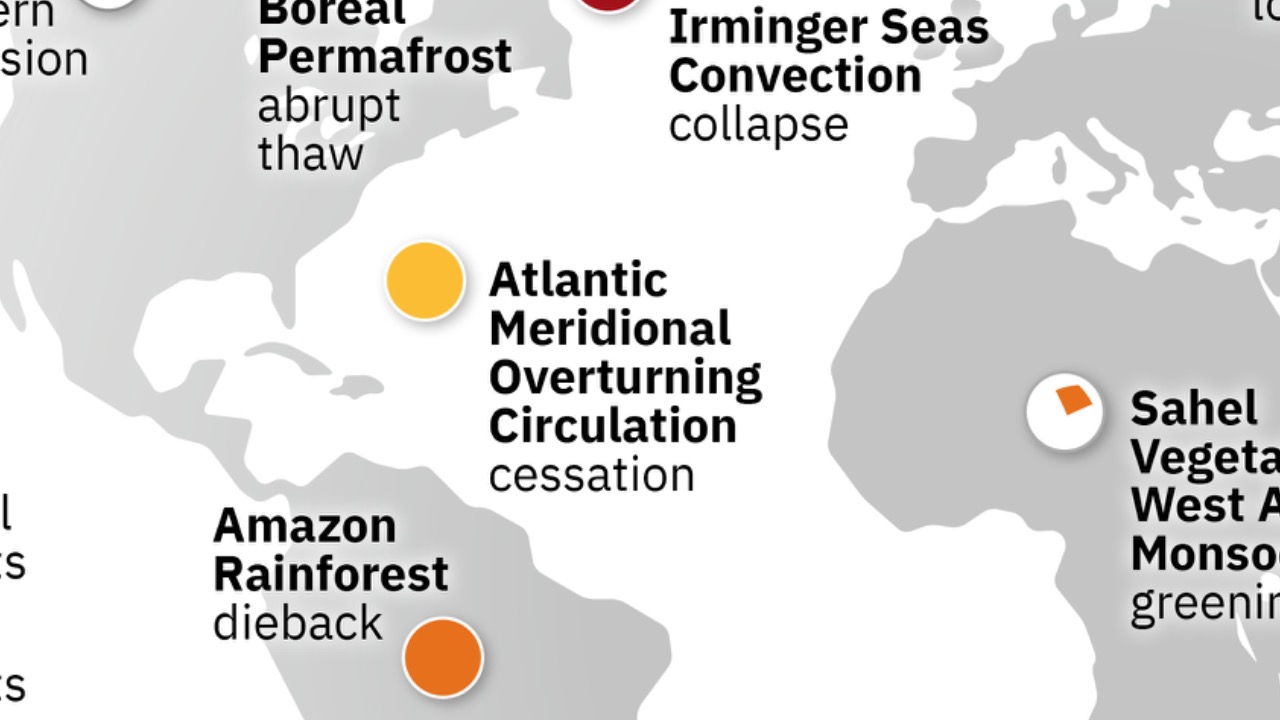
The AMOC moves warm water north along the surface and sends colder, denser water back south at depth. That exchange helps balance temperatures between the tropics and the North Atlantic.
You don’t see it, but you feel it. It plays a role in keeping parts of Europe milder than they otherwise would be and helps shape storm tracks that reach North America. When that system runs strong, weather patterns tend to stay within a familiar range. When it weakens, things can drift—sometimes in ways that show up where you least expect them.
Why Scientists Say It’s Weakening
There’s solid evidence the AMOC has slowed compared to where it stood decades ago. Measurements, ocean data, and climate records all point in that direction, even if the exact pace is still debated.
A big driver is freshwater entering the North Atlantic. Melting ice from Greenland and increased rainfall dilute salt levels, and that matters because saltier water sinks more easily. When that sinking slows, the whole circulation loses momentum. It’s not a switch getting flipped—it’s more like a heavy wheel turning slower over time.
“Collapse” Doesn’t Mean What You Think
When you hear “collapse,” it sounds like a sudden shutdown. That’s not how this works. Scientists use that word to describe a major weakening that could shift the system into a different state.
You’re looking at a process that would likely play out over decades, not days. There’s still uncertainty around timing, and not every study agrees on how close things are to that threshold. What is clear is that the system has tipping points, and once crossed, it doesn’t easily snap back. That’s where the concern comes from.
What It Could Mean for North American Weather
If the AMOC weakens further, you could see changes in how weather sets up across the eastern United States. That includes shifts in rainfall patterns, stronger temperature swings, and altered storm paths.
For someone who spends time outside, that shows up in practical ways. Seasons may feel less predictable. You might see wetter springs, drier late summers, or cold snaps that don’t follow the old patterns. It doesn’t hit every region the same way, but the ripple effects can stretch far inland.
Impacts on Fish, Game, and Habitat
Water temperature drives a lot of what fish do, especially along the Atlantic coast. If ocean patterns shift, species follow. Some move north, others drop off in areas where they used to be common.
On land, changes in rainfall and temperature affect habitat quality. That can influence migration timing, breeding success, and food availability. You’re not looking at species disappearing overnight, but you may notice ranges shifting and patterns changing. If you’ve hunted or fished the same ground for years, those changes stand out.
Why the Timeline Is Still Uncertain
Scientists aren’t working with a perfect record. Direct measurements of the AMOC only go back a couple decades, so a lot of the long-term picture comes from indirect data.
That leaves room for debate. Some models suggest a higher risk of major weakening this century, while others show a more gradual trend. When you see strong headlines, they’re often based on specific studies, not a universal agreement. The takeaway is that risk is increasing, even if the exact timing isn’t locked in.
You’re Already Seeing Early Signals
Even without a full shift, there are signs the system isn’t as steady as it once was. Parts of the North Atlantic have cooled relative to global trends, which lines up with a slowdown in heat transport.
Weather variability has also picked up in certain regions. That doesn’t all trace back to one cause, but the AMOC is part of the picture scientists are watching closely. You’re not waiting for some future event—some of the changes are already in motion, even if they’re subtle.
This Is a Long Game, Not a One-Season Problem
If the AMOC continues to weaken, the effects won’t show up all at once. You’ll see gradual shifts that build over time, season by season.
That matters because it gives you time to adjust. Hunters and anglers are used to adapting—changing patterns, scouting new ground, paying attention to conditions. This is another version of that, only on a larger scale. The guys who pay attention to trends instead of relying on old assumptions will stay ahead of it.
You don’t need to buy into panic to take this seriously. The Atlantic current isn’t gone, but it’s under pressure, and that pressure is building. If you spend enough time outdoors, you’ll likely notice the changes before anyone needs to point them out.

Asher was raised in the woods and on the water, and it shows. He’s logged more hours behind a rifle and under a heavy pack than most men twice his age.