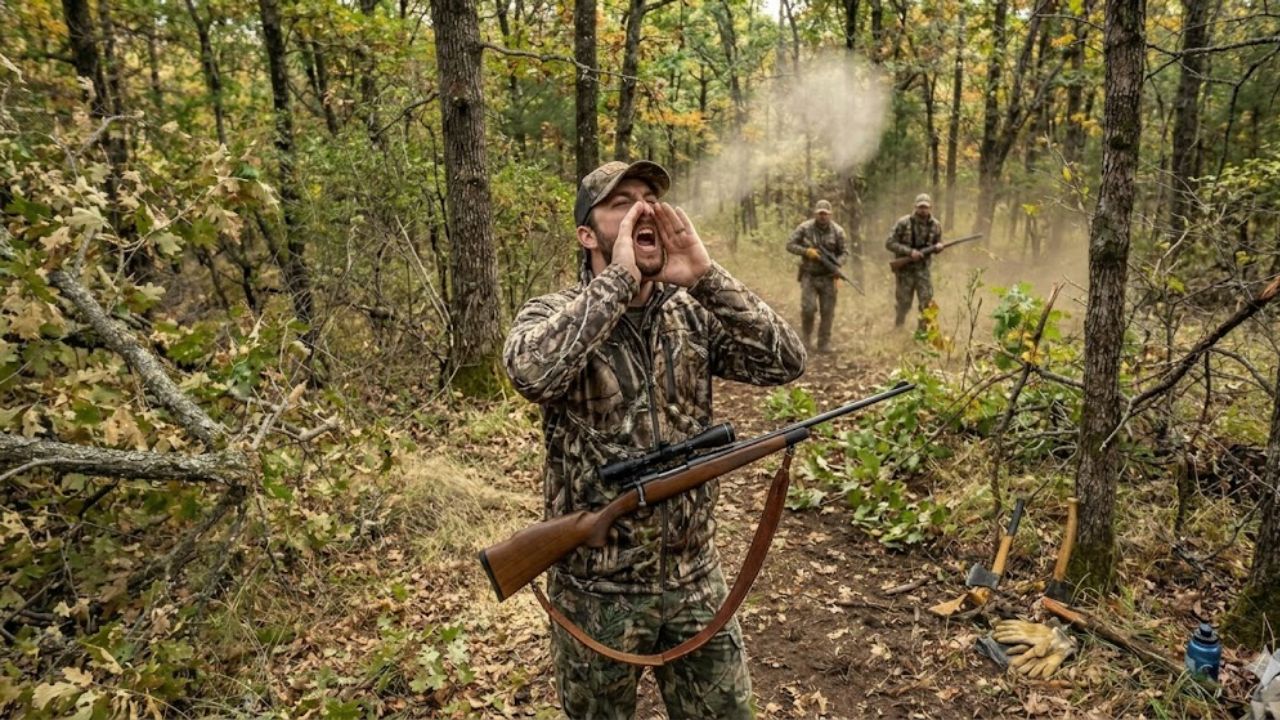
Hunter says someone kept calling loudly in his area and spooked everything
A hunter has reported that another person in the area was making loud calls during a hunt, which he says ended up scaring off game and disrupting the outing. In hunting environments, sound discipline often matters just as much as movement control, since animals can react quickly to unfamiliar or repeated noises.
According to the account, the calling wasn’t brief or accidental but continued in a way that affected the surrounding area. That kind of disturbance can push animals out of range or make them change direction, which can ruin hours of tracking or waiting.
How noise affects hunting success
Wild game is extremely sensitive to sound, especially in areas where pressure from hunters is common. Loud or repetitive calling can travel farther than expected depending on wind, terrain, and vegetation, making it easy to alert animals before they’re seen.
Experienced hunters often try to match calling techniques to conditions, using controlled volume and timing. When someone ignores that and calls too loudly or too often, it can override any careful setup and cause animals to avoid the area entirely.
Frustration and group coordination in the field
Situations like this often come down to communication between people in the field. Hunting groups usually rely on shared expectations about when and how calls are used so they don’t interfere with each other’s setups.
When one person acts independently without coordinating, it can create tension quickly. Even if the intent is to attract game, poor timing or excessive noise can have the opposite effect, impacting not just one hunter but everyone nearby.
Why discipline matters in shared hunting areas
In shared hunting environments, small mistakes can have a big impact. Noise control, spacing, and timing are usually discussed before a hunt starts for this exact reason. Once animals are spooked, they often don’t return quickly, especially in pressured areas.
That’s why many hunters emphasize restraint over constant calling. The goal is usually to let the environment stay as natural as possible so game behavior isn’t disrupted by human interference.

Leo’s been tracking game and tuning gear since he could stand upright. He’s sharp, driven, and knows how to keep things running when conditions turn.