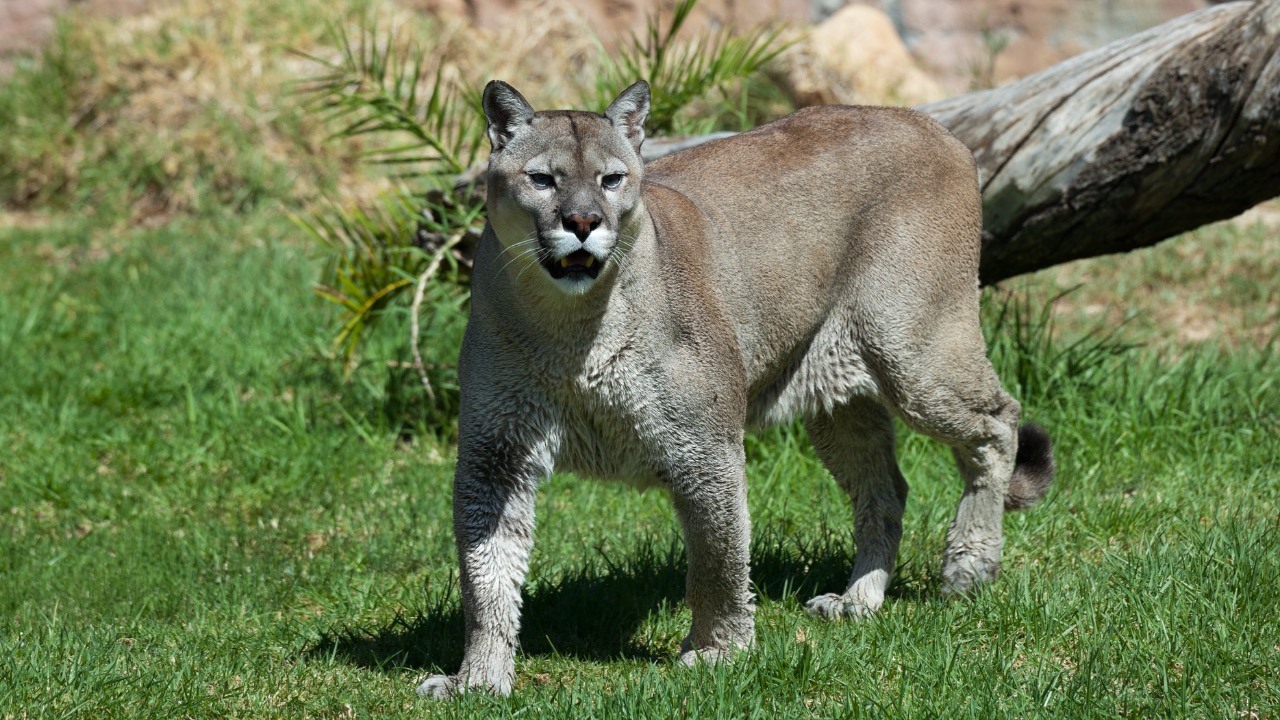
Are big cats reclaiming territory across the American West?
Across the American West, sightings of mountain lions, jaguars and Canada lynx are forcing communities to rethink where the wild actually begins. Once driven out of much of their historic range, these predators are now testing old boundaries and, in some places, quietly reoccupying ground they lost more than a century ago. The question is not only whether big cats are returning, but whether modern infrastructure and politics will let them stay.
Biologists tracking these animals see a patchwork recovery shaped as much by highways, border walls and climate change as by biology itself. Mountain lions are spreading east from strongholds in the Rockies, jaguars are edging back into the borderlands, and Canada lynx are holding on in northern forests with the help of new protections. Their comeback is fragile, yet it is already reshaping debates over how much room the West is willing to give its top predators.
Ghost cats on the move: the new geography of big predators
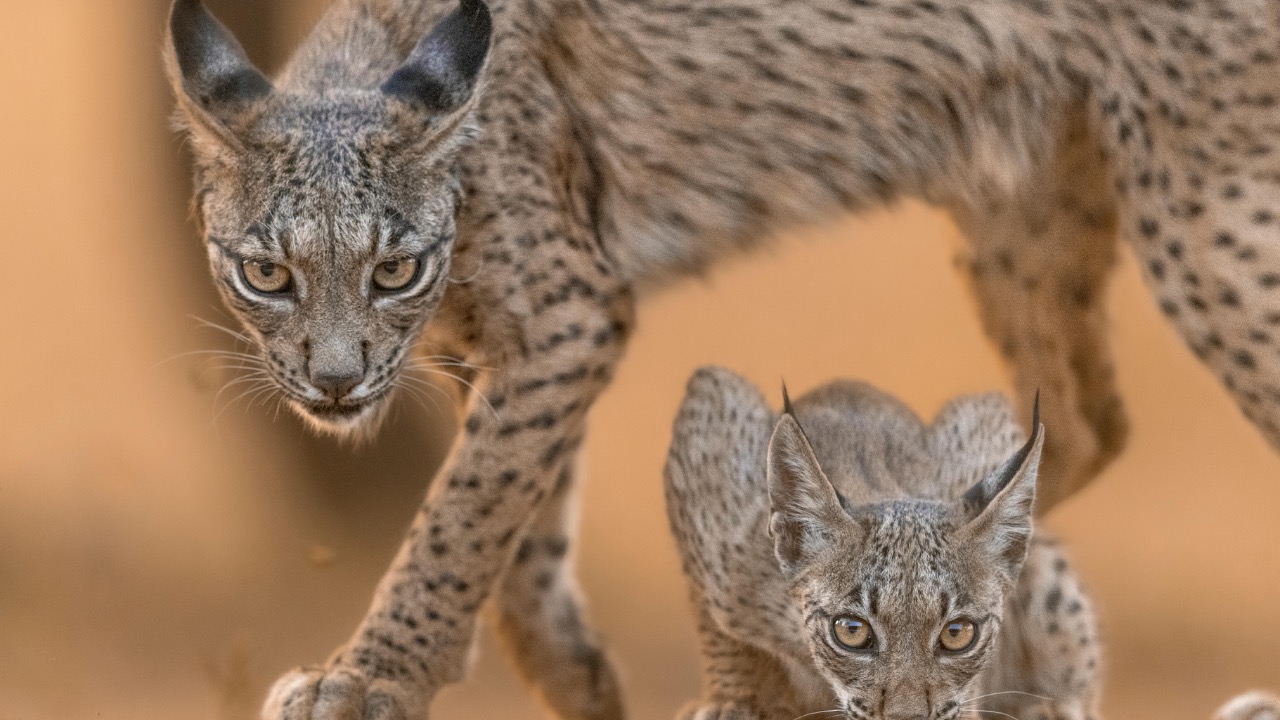
For most of the twentieth century, the story of North America’s largest felines was one of retreat. Cougars, jaguars and lynx were poisoned, trapped and shot until they survived mainly in remote mountains and northern forests. Now, researchers tracking these big cats describe a more complicated map, with strongholds in the West seeding exploratory journeys into the Great Plains, the Midwest and the desert borderlands.
Mountain lions, also known as cougars or pumas, once ranged from South America north to Canada’s Northwest Territories, a span highlighted in a conservation EDITOR, NOTE, Populations essay that contrasts global declines in big cats with relatively stable or growing mountain lion numbers in parts of the West. At the same time, jaguars, the only member of the genus Panthera native to the Americas, are again being photographed in the United States Southwest after decades of absence, and Canada lynx are the focus of new federal recovery planning. Taken together, these trends suggest that the West’s predator map is not fixed, but in flux.
Mountain lions: from Rocky Mountain strongholds to Midwestern surprises
Mountain lions remain the most widespread large feline in the region, yet even they lost huge swaths of territory as settlement advanced across the United States. A profile of the species notes that, despite the adaptability of these cats, mountain lion ranges in the United States have significantly diminished, with only a small remnant population in Florida east of the Mississippi according to the Despite the overview. Western states such as Montana, along with neighboring regions, now act as source populations for young lions that disperse hundreds of miles in search of unclaimed territory.
Researchers following the mountain lion expansion estimate that lions will have established populations all the way to the eastern seaboard within the next several decades if they can navigate human barriers, according to one group of Scientists. Earlier modeling work that combined observational data, land cover maps and traffic information reached a similar conclusion, but warned that highways prevent pumas from reclaiming much of their eastern range and that efforts to reconnect habitat would be needed, as summarized in a Highways prevent pumas discussion.
Cougars in corn country: Oklahoma and Michigan as test cases
As young males push out from western strongholds, some of the most striking stories are coming from states that long considered cougars extirpated. In Oklahoma, a feature on Return of the Ghost Cats describes how mountain lions may be reclaiming Oklahoma after being largely absent for generations, with the piece noting that to the average person a cougar sighting still seems almost mythical and that the state still needs comprehensive research to understand how many cats are present, as detailed in Return of the. A separate search summary confirms that Oklahoma officials acknowledge mountain lions as native but rare, which aligns with the broader Oklahoma context.
Farther north, Michigan is experiencing its own version of this return. A report on Ghosts of the North describes how cougars, once widespread across North America before being eliminated from the Upper Midwest, are now being confirmed again through trail cameras and tracks, with the narrative emphasizing that they are not just passing through, they are planting roots, as highlighted in Back, Cougars. A search summary for Michigan reflects that the state wildlife agency continues to log verified cougar reports every year, although it still does not recognize a breeding population. Together, Oklahoma and Michigan show how a handful of animals can change public perception long before a full recovery is underway.
Suburbs meet stealth: Texas, Nebraska and the new edge of wild
The line between wild country and suburbia is also blurring in parts of the southern and central plains. In Texas, a local television segment captured public reaction after a mountain lion was spotted in the Dallas suburb of Rowlett, with a resident exclaiming that with a big cat on a backyard security camera, “It’s National Geographic in here.” The report noted that there were sightings in Grayson and Erath counties in 2018 and 2014 and that mountain lions are native to Texas but mostly confined to the western part of the state, context provided in the There, Grayson and coverage.
Similar stories are emerging in the central plains. A search summary for Nebraska highlights that the state now has confirmed mountain lion populations in the Pine Ridge and Niobrara regions, with dispersing males occasionally turning up far from rugged habitat. Agricultural outlets have tried to explain these animals to rural readers, describing how adult cougars are about the height of a German shepherd at the shoulders, weigh from 70 to 150 pounds and can grow to 8 feet long, with some individuals ranging over half the state, as reported in a About the farm life feature. Those dimensions help explain why even a single cat can capture so much attention when it wanders close to town.
Jaguars at the border: a cautious return to the Southwest
While mountain lions are reclaiming parts of their former range, jaguars are attempting something even more precarious. The jaguar, Panthera onca, is a large cat species and the only living member of the genus Panthera that is native to the Americas, as summarized in a Panthera overview. Historical accounts and recent analyses indicate that jaguars historically ranged in the southwest from Texas to California, with most cats extirpated from the United States by the mid 1900s, according to a Jaguars discussion that also notes their predisposition for South America.
In recent years, camera traps have recorded solitary male jaguars crossing north from Mexico into the borderlands of Arizona and New Mexico. One audio report on big cats in the borderlands explains that a federal recovery plan identifies New Mexico and Arizona south of Interstate 10 as potential jaguar habitat and estimates the carrying capacity of that area at as many as 150 adult jaguars, with those figures cited in the Dec, New Mexico segment. A separate analysis argues that jaguars could return to the United States Southwest if they have pathways to move north, presenting a map that shows current and potential distribution and stressing that connectivity with core populations in Mexico is essential, as outlined in the Jaguars could return discussion.
Walls, politics and the jaguar’s bottleneck
The borderlands are not only an ecological crossroads, but also a political one. Conservation biologist Chris Bugbee, who works with Conservation CATalyst in Arizona, described how his team is trying to preserve habitat for this cat and warned that people often assume jaguars do not need the same corridors as other wide ranging species, but they do, a point made in the Chris Bugbee profile. That concern is sharpened by the presence of border fencing that cuts across mountain passes and desert washes used by both jaguars and mountain lions.
Wildlife advocates have warned that a continuous border wall would block the jaguar’s comeback by severing the last remaining link between breeding populations in Mexico and potential habitat in southern Arizona. One report on this conflict notes that the Jaguar is making a comeback to southern Arizona, but that its progress is being blocked by segments of the border wall, as described in the Jaguar coverage. Another analysis asks whether technology could offer ecologically sound alternatives to a solid barrier, pointing out that a glimpse of the elusive cats, who move across wide territorial ranges, provides hope for the return of jaguars to the American So borderlands after decades of absence, as framed in the American So piece. The debate over border infrastructure has therefore become a proxy for a deeper question about whether the United States will make room for jaguars again.
Canada lynx: climate, courts and the northern frontier
In the colder forests of the northern Rockies and upper Great Lakes, Canada lynx are following a different recovery script. The Canadian lynx, or Canada lynx (Lynx canadensis), is a medium sized cat that inhabits North America and is known for being highly specialized for snowy environments and having several distinctive physical features such as oversized paws and ear tufts, as described in The Canadian guide. These cats depend heavily on snowshoe hares and deep snow that hinders competitors like bobcats and coyotes, which makes them particularly vulnerable to warming winters.
Earlier this year, the United States Fish and Wildlife Service finalized a Canada lynx recovery plan that lays out steps to restore the species across its American range, a milestone highlighted in a Canada Lynx Update that notes the purpose of the plan. Conservation groups celebrated another big win for Canada lynx when a court settlement required the Fish and Wildlife Service to keep the species protected under the Endangered Species Act and to chart a path toward full recovery across their range, as described in a statement that opens with Thousands of supporters and credits Guardians and allies for securing this outcome, in the linked Thousands of and Another passages. The same statement warns that Canada lynx are endangered by climate change and habitat fragmentation, underscoring how their future hinges on both emissions trajectories and land management decisions.
Rewilding debates: predators, prey and people
The return of large cats has revived arguments about rewilding, the idea of restoring missing species and natural processes to human altered ecosystems. A rewilding primer from Britain describes the carnivore herbivore balance and explains that, in addition to the lynx, the wildcat is recovering from the brink in an imagined future and is modifying some predator and prey dynamics to shape the landscape, as discussed in carnivore herbivore balance. That European example has echoes in North America, where advocates argue that mountain lions and jaguars can help control deer and elk numbers, reduce overbrowsing and even lower vehicle collisions by altering prey behavior.
Rural residents, however, worry about livestock losses and personal safety. An explainer on wild cats in the United States notes that editors changed the headline from “6 Big Cats Still Found in the U.S.” to “6 Wild Cats Still Found Roaming the U.S.” and clarifies that only a subset of the continent’s felines fit the colloquial idea of big cats, while others such as bobcats are smaller but still significant predators, as mentioned in the Aug, Editor note. Those distinctions matter when managers weigh hunting quotas, livestock compensation programs and public education campaigns designed to help people coexist with predators that are powerful but rarely seen.
Western states as laboratories: California, Arizona, Colorado and Utah
Western states with established big cat populations have become test beds for different management philosophies. In California, where mountain lions are protected from sport hunting, conflicts tend to center on individual problem animals that prey on pets or livestock near the wildland urban interface. Neighboring states that allow hunting use quotas to try to balance public tolerance with ecological roles, with some biologists arguing that excessive removals can disrupt social structures and lead to more conflicts as younger, inexperienced males move into vacated territories.

Leo’s been tracking game and tuning gear since he could stand upright. He’s sharp, driven, and knows how to keep things running when conditions turn.