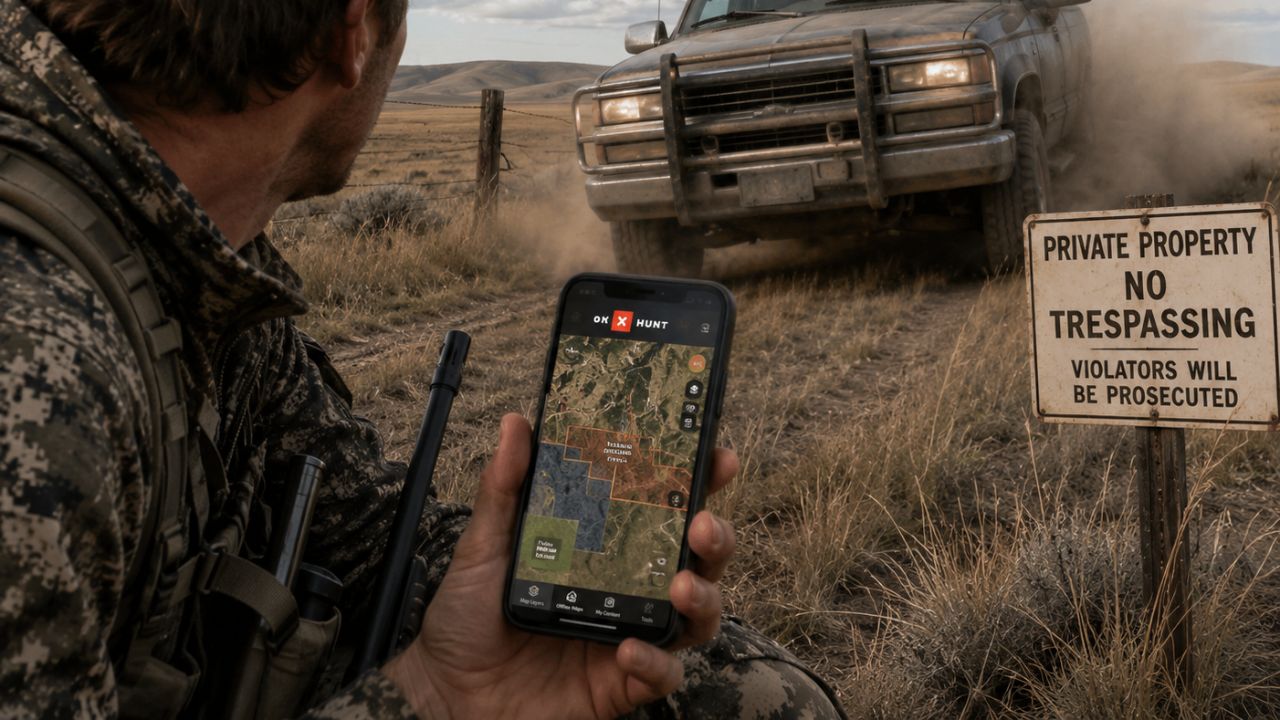
Hunter using OnX app for pronghorn hunt is confronted by rancher speeding across prairie in rage
A hunter using the onX Hunt during a pronghorn hunt says he was aggressively confronted by a rancher who believed he was trespassing. According to the account, the rancher reportedly drove at high speed across the prairie to intercept the hunter, leading to a tense argument in the middle of the hunt.
The situation highlights a growing issue in western hunting states where digital mapping apps, public land access, and private property boundaries sometimes collide. While apps like onX are widely used to help hunters stay legal, disagreements can still happen when landowners and hunters interpret boundaries differently.
Why hunters rely heavily on mapping apps
Modern hunting apps have changed how many people navigate public and private land. Instead of relying only on paper maps or physical markers, hunters now use GPS-based tools that show land ownership boundaries in real time.
For many hunters, these apps are meant to prevent accidental trespassing, not encourage it. Public land can be surrounded by private property, especially in western states, and boundaries are not always clearly marked on the ground. That’s why many hunters trust digital maps to avoid conflicts before they happen.
Property disputes can escalate quickly in rural areas
Land access disputes are nothing new in hunting country, but emotions can run high when property owners believe someone has crossed onto private land. Ranchers often deal with damaged fences, litter, and illegal access, which can make some of them highly protective of their land.
At the same time, hunters who believe they are following legal boundaries may feel unfairly accused when confronted aggressively. In remote areas where there are few witnesses and limited cell service, these encounters can become tense very quickly.
Public land access remains a major issue
One reason situations like this get so much attention is because access to public land has become a larger debate across the western United States. In some areas, public land exists but is difficult to reach without crossing near or around private property.
This has led to ongoing arguments over access routes, corner crossing laws, and how digital mapping technology should be treated in disputes. Hunters often argue that accurate mapping helps keep them compliant, while some landowners remain skeptical of app accuracy and user interpretation.
The role technology now plays in hunting culture
Apps like onX have become almost standard equipment for many hunters, especially younger ones who rely heavily on digital navigation. Supporters say these tools improve safety, reduce accidental trespassing, and help hunters make informed decisions in unfamiliar areas.
Critics, however, argue that technology has changed the culture of hunting by increasing pressure on previously isolated areas. Some ranchers feel that easier navigation has led to more traffic near private land, even if hunters technically remain within legal boundaries.
Why these encounters often spark larger debates
Stories like this usually spread quickly online because they touch on several sensitive issues at once — land rights, hunting access, and rural tensions between locals and out-of-state hunters. People tend to strongly identify with one side or the other depending on their experience.
While the exact details of each confrontation can vary, the broader issue remains the same: as technology makes navigation easier, disagreements over who belongs where are becoming more visible. In many western states, those tensions are unlikely to disappear anytime soon.

Leo’s been tracking game and tuning gear since he could stand upright. He’s sharp, driven, and knows how to keep things running when conditions turn.