The largest lion ever recorded and what made it extraordinary
The story of the largest lion ever recorded is not just a tale of a single oversized cat, it is a window into how far the species can push the limits of muscle, bone, and biology. From record‑breaking individuals in captivity to outsized hunters in the wild and even extinct giants that once dominated prehistoric plains, the extremes of lion size reveal how environment, genetics, and human influence can reshape an apex predator. To understand what made the biggest lions extraordinary, I need to trace their measurements, their lives, and the myths that grew up around them.
Across zoos, hunting records, and fossil beds, a handful of lions stand out as statistical outliers that dwarf the average big cat. Their stories, backed by measurements in kilograms, pounds, and meters, show how rare it is for a lion to approach or exceed 300 kilograms in body mass or stretch close to 3.6 m in length. Set against typical lions that already command fear and fascination, these giants help explain why the species has become such a powerful symbol of strength in human culture.
The record holder in captivity: Simba’s staggering size
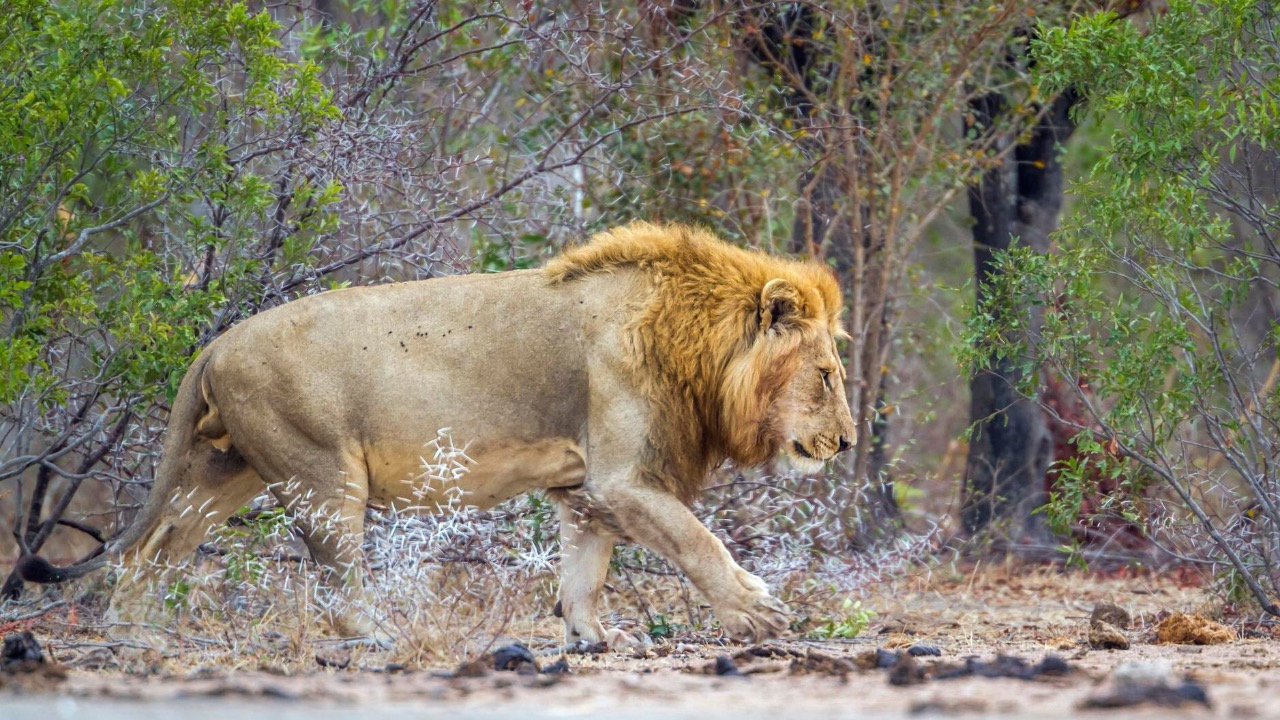
When people talk about the largest lion ever reliably measured, they are usually talking about a captive animal, where keepers can weigh and measure a cat with some precision. The standout case is a black‑maned male named Simba, recognized as the largest lion in captivity, whose measurements have become a benchmark for the species. Records describe Simba with a shoulder height of 1.11 m, a figure that already places him well above the typical adult male, and his overall mass and bulk were enough to secure formal recognition as the Largest lion in captivity ever.
What made Simba extraordinary was not only his height but the way captivity amplified his natural potential. In a controlled environment, a lion like Simba has consistent access to food, veterinary care, and protection from the injuries and starvation that limit size in the wild. The same record that lists his 1.11 m shoulder height also notes that he was formally logged as the Largest lion in captivity, a reminder that his dimensions were exceptional even by zoo standards. His case shows how, under human care, a lion’s growth curve can extend beyond what most wild individuals ever reach.
Dublin’s giant: the largest lion ever kept in a zoo
Long before modern record‑keeping became routine, visitors to Ireland could see another outsized cat that pushed the limits of what a lion could be. Around 1959, a male housed in Dublin Zoo was described as the largest lion ever kept in a zoo, a claim that rested on his extraordinary weight rather than just his height. Accounts of this animal, often cited in discussions of zoo history, emphasize that he was found in Ireland and kept on public display, where his bulk became a local legend and a point of pride for the institution that housed him.
Reports on this Dublin giant describe a body mass that approached half a ton, with one account noting that he weighed hundreds of pounds more than a typical adult male and framing him as Largest Lion Ever in a Zoo. The key detail is not just the number on the scale but the context: a lion in mid‑twentieth‑century captivity, likely overfed by modern standards and spared the energy costs of hunting, could accumulate a level of fat and muscle that would be unsustainable in the wild. His story illustrates how zoo conditions can produce extreme outliers, and why scientists are careful to distinguish between captive and wild records when they talk about the upper limits of lion size.
Giants in the wild: the 690‑pound South African lion
If captive lions like Simba and the Dublin male show what happens when nature meets abundant food and veterinary care, the largest wild lions reveal how rarely those conditions align in an unfenced landscape. One of the most striking cases is a male taken in South Africa in 1936, often cited as the largest wild lion on record. Accounts describe this animal as a fully mature male that had reached a mass of 690 pounds, a figure that is roughly double the typical maximum weight given for wild males in many field guides.
Further analysis of that same South African lion puts his weight at 313 kg, or 690 pounds, and notes that he was shot after preying on livestock. The report frames him as Largest Wild Lion, underscoring how far he sat above the usual range. That combination of size and conflict with humans is telling: to reach 313 kg, a wild lion likely needed access to large, calorie‑rich prey, including cattle, and the same behavior that fueled his growth also brought him into direct collision with farmers.
How today’s lions measure up: extant subspecies and modern heavyweights
To appreciate how extreme a 313 kg or 690 pound lion really is, I have to set it against the size of lions that roam Africa and Asia today. Modern taxonomies recognize two main extant groupings, sometimes called northern and southern lions, with the northern lion, Panthera leo leo, including Asiatic lions in India and several populations in North and West Africa. These northern populations, including the Asiatic lions of the Gir Forest, tend to be smaller and lighter than their southern African counterparts, which means they are even further from the record‑breaking giants of the past.
Even within Africa, the lions that conservationists describe as the Largest Extant Lion rarely approach the numbers associated with the South African giant or the heaviest captive cats. Typical adult males in strong populations might weigh between 180 and 225 kilograms, with only a few individuals pushing beyond that. When a modern lion is singled out as the Largest Extant Lion, it is usually because it sits at the top end of that range, not because it rivals the 313 kg record. That gap highlights how unusual the historic giants were and why they remain outliers even in a species already known for impressive size.
Beyond individuals: the American lion and the biggest subspecies ever
The story of lion size does not end with living animals. Fossil evidence points to an extinct giant that makes even Simba and the South African record holder look modest. The largest‑ever lion subspecies is identified as the American lion, Panthera leo atrox, a big cat that once inhabited large parts of North America during the Pleistocene. Reconstructions based on bones suggest that this American form was significantly larger than modern African lions, with a more robust frame and longer limbs that would have made it a dominant predator of its time.
Formal recognition of this extinct giant describes the Largest ever lion subspecies as the American lion, Panthera leo atrox, and notes that it has been the subject of debate over its exact classification. Some researchers have argued that it might deserve full species status rather than being treated as a subspecies of Panthera leo, but the key point for size is clear: skeletal measurements indicate a cat that could outweigh and outlength any modern lion. In that sense, the American lion sets the absolute upper bound for what a lion‑like animal can be, while modern records like Simba’s show how close living cats can come to that prehistoric benchmark.
Length, height, and the physics of a giant cat
Weight is only one way to measure a lion’s enormity. Length and shoulder height tell their own story about how a big cat moves and hunts. One of the most striking length records comes from a black‑maned male shot near Mucsso in southern Angola, described as the longest known lion at nearly 3.6 m in total length. That figure, which includes the tail, suggests an animal with an exceptionally long body and tail, and it is no coincidence that this lion also had a dark mane, a trait often associated with older, well‑fed males in prime condition.
When I set that 3.6 m length alongside Simba’s 1.11 m shoulder height, a picture emerges of what a truly massive lion looks like in three dimensions. A cat that is both very tall at the shoulder and very long from nose to tail has more surface area to dissipate heat and more bone and muscle to support. That is part of why such individuals are rare: the physics of scaling mean that as an animal grows, its weight increases faster than the strength of its bones, so only a few lions can safely carry that much mass. The Mucsso lion in Angola and Simba in captivity represent different paths to gigantism, one shaped by wild conditions and the other by human care, but both show how far the species can stretch its frame.
Heaviest on record: 375 kilograms and the upper limits of mass
While the South African lion at 313 kg is often cited as the largest wild individual, some sources point to an even heavier lion when all records, including captivity, are considered. Conservation material on African lions notes that the heaviest lion on record weighed an amazing 375 kilograms, a figure that pushes the species close to the size of a small car. That number, which likely refers to a captive individual, underscores how much extra mass a lion can accumulate when it does not have to chase down every meal.
Additional material on lion weights reinforces that upper limit, noting that the heaviest lion ever recorded weighed 826 pounds, or 375 kilograms, and framing this animal as a massive outlier. The same document, introduced with the word Here, explains that such weights are only possible when lions have access to abundant food and limited need to expend energy. Taken together, the 375 kilogram figure and the 313 kg wild record suggest that, in practical terms, the species’ upper mass limit sits somewhere in the mid‑300 kilogram range, with anything beyond that likely to be either an error or an exaggeration.
Manes, myths, and the cultural weight of giant lions
The physical size of lions has always fed into their symbolic size in human culture. Large males with dark, full manes are often seen as the embodiment of courage and royalty, and that perception has shaped everything from medieval heraldry to modern sports logos. Historical figures such as Henry the Lion of Saxony and Richard the Lionheart drew on that association, using the lion as a metaphor for bravery and leadership. Their names, which explicitly reference the animal, show how deeply the image of a powerful male lion has penetrated political and cultural language.
Modern cultural depictions continue that tradition, with films, literature, and national emblems leaning on the lion’s reputation as king of beasts. The same source that lists Henry the Lion of Saxony and Richard the Lionheart also notes Arabic honorifics such as “Lion of the Desert,” underscoring how widespread the metaphor has become across languages and regions. By the time a record‑breaking lion like Simba or the South African giant enters public awareness, it is already stepping into a long‑established role as a symbol of strength, which helps explain why stories about the largest lion ever recorded capture so much attention. The cultural weight of the lion amplifies the fascination with any individual that pushes the species to its physical limits, as documented in the entry on cultural depictions.
What makes a lion enormous: food, genetics, and human influence
When I compare all these records, from Simba’s 1.11 m shoulder height to the 3.6 m Mucsso lion and the 375 kilogram heavyweight, a pattern emerges about what it takes to produce an enormous lion. Genetics set the baseline, with some lineages predisposed to larger frames and darker manes, but environment decides whether that potential is realized. Lions that have access to abundant prey, whether wild ungulates or livestock, and that avoid debilitating injuries are the ones that can keep adding muscle and fat year after year. In captivity, where food is delivered and medical care is available, those conditions are amplified, which is why the largest lions in zoos and records often outmass their wild counterparts.

Leo’s been tracking game and tuning gear since he could stand upright. He’s sharp, driven, and knows how to keep things running when conditions turn.