Ukraine’s Zelenskiy confirms US announcement of ceasefire and prisoner exchange
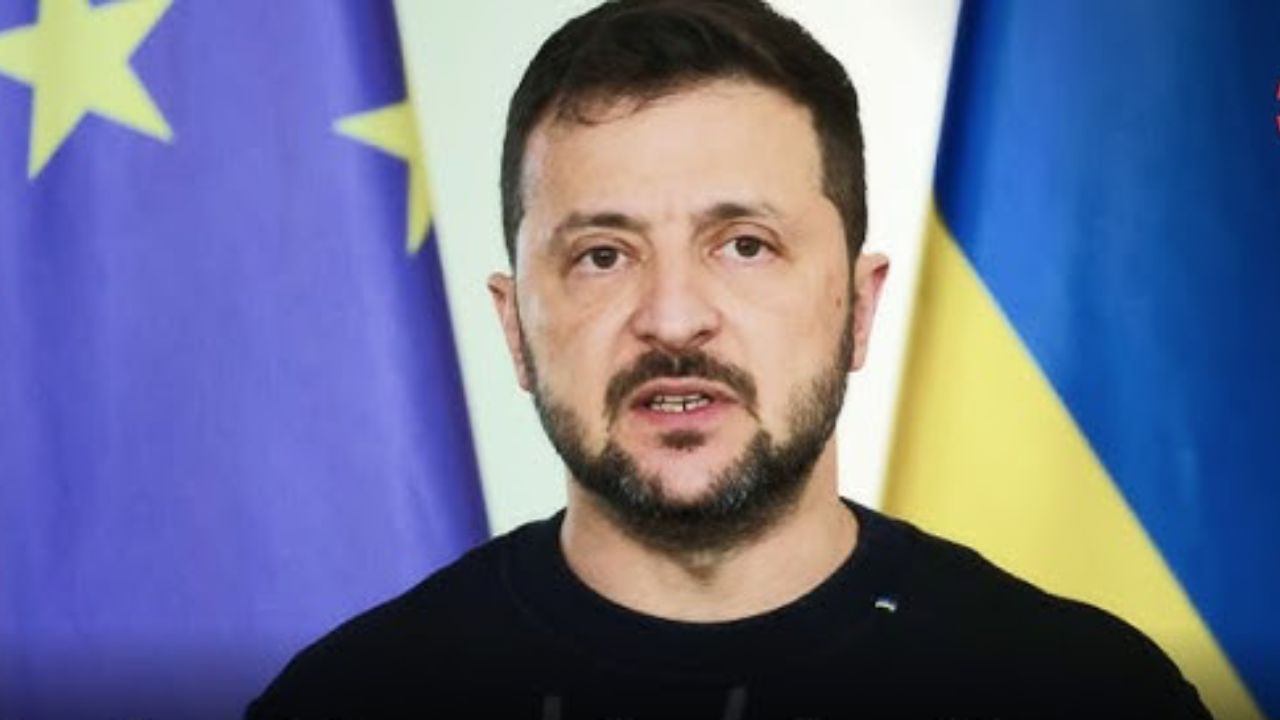
Ukraine’s President Volodymyr Zelenskiy has publicly confirmed a United States announcement that Russia and Ukraine have agreed to a temporary ceasefire and a large-scale prisoner exchange. Framed as a three-day truce, the move could mark the most significant pause in front-line fighting in months and opens a narrow diplomatic window after a long period of stalemate.
The arrangement links a halt in offensive operations to the release of around 1,000 captives on each side, tying humanitarian relief to a test of political will in Kyiv, Moscow and Washington. How those three days unfold will help determine whether this is a one-off gesture or the first step toward something more durable.
What happened
Zelenskiy confirmed that Ukraine had accepted a proposal, announced earlier by the United States, for a limited ceasefire with Russia combined with a major exchange of prisoners of war. According to Ukrainian officials cited in international reporting, the arrangement covers a three-day pause in offensive operations along agreed sectors of the front, synchronized with the release of Ukrainian and Russian captives.
The ceasefire is scheduled to run from 9 to 11 May, a period loaded with symbolism in both countries because of Victory Day commemorations of the Second World War. Multiple accounts describe a plan for roughly 1,000 Ukrainian prisoners of war to be exchanged for about 1,000 Russian detainees, with the lists negotiated in advance and transfers expected to take place in several stages. One detailed breakdown from Indian media describes the exchange as balanced in numbers, with both sides committing to return wounded personnel and some civilian detainees.
Reporting on the negotiations credits a direct role for former United States President Donald Trump, who has publicly presented the arrangement as a diplomatic breakthrough. According to accounts collated in regional coverage, Trump promoted the three-day pause as part of a broader effort to show that Washington can still shape outcomes in the conflict. The Kremlin, for its part, signaled that it had agreed to the proposal after consultations with its military leadership and security services.
Ukrainian sources quoted in Indian commentary describe a tightly framed deal. The ceasefire is limited in time and geography, focused on stabilizing key front-line sectors while prisoner transfers occur through pre-agreed corridors. Both militaries are expected to keep defensive positions and surveillance in place, but suspend artillery barrages and offensive ground assaults for the duration of the truce.
The political sensitivity of the timing is heightened by Moscow’s plans for Victory Day events. A Ukrainian outlet reports that Zelenskiy acknowledged that the ceasefire would coincide with commemorations in Russia and did not seek to block a military parade in Moscow that would take place during the pause. That outlet, citing Ukrainian officials, notes that he effectively “allowed the parade in Moscow” by accepting the truce window, while confirming the prisoner exchange and three-day ceasefire in public remarks to domestic media.
Additional European coverage, including summaries of statements from Kyiv and Moscow, indicates that both sides have notified front-line commanders of the terms and have begun logistical preparations for the swaps. Trains, buses and medical teams are being readied to move released prisoners from exchange points to hospitals and reception centers once the ceasefire takes effect.
Why it matters
The immediate impact of the agreement is humanitarian. Thousands of families in Ukraine and Russia have spent months with no news of captured relatives. A synchronized exchange of around 2,000 people offers a rare moment of relief in a war that has produced mass casualties and long-term detention for soldiers and civilians alike. For Ukraine, bringing home 1,000 prisoners of war has deep political resonance, since the fate of captured troops has become a central concern for society and the military.
The timing also carries strategic implications. A three-day pause may sound modest, but on a front that stretches hundreds of kilometers, even a short halt in large-scale assaults can allow both armies to rotate units, repair equipment and evacuate wounded personnel. Analysts cited in international analysis suggest that commanders on both sides will use the lull to consolidate positions rather than stand down entirely. That creates an uneasy balance: humanitarian activity on one hand, and quiet preparation for the resumption of hostilities on the other.
Politically, Zelenskiy’s confirmation of a United States-brokered plan signals that Kyiv is still prepared to engage in tightly circumscribed deals with Moscow when they bring concrete gains. Ukrainian leaders have repeatedly rejected any broader settlement that would freeze current front lines or cede territory, but they have supported targeted arrangements on grain exports, prisoner exchanges and civilian evacuations. The current truce fits that pattern: narrow in scope, high in symbolic value, and explicitly temporary.
For Russia, agreeing to the ceasefire and prisoner swap allows the Kremlin to present itself as open to dialogue while preserving its military objectives. Russian officials quoted in European and Indian outlets characterize the deal as a humanitarian gesture that aligns with Victory Day themes of sacrifice and remembrance. At the same time, there is no indication in the reporting that Moscow is reconsidering its broader campaign or its claims over occupied Ukrainian territory. The ceasefire is framed as a tactical pause, not a shift in war aims.
The United States dimension adds another layer. The fact that Washington announced the arrangement before Zelenskiy’s confirmation reflects the central role of American diplomacy and security guarantees in Ukraine’s war effort. It also injects domestic U.S. politics into the narrative, given Trump’s public effort to claim credit for the initiative. European coverage, including regional summaries, highlights how the Kremlin’s agreement to a U.S.-framed proposal, even for three days, shows that Washington remains an indispensable actor in any future negotiation.
Symbolically, the ceasefire window from 9 to 11 May touches some of the most emotionally charged dates in the post-Soviet space. Russia has invested heavily in Victory Day as a pillar of national identity, with the annual military parade on Red Square used to showcase its armed forces and to draw a direct line from the defeat of Nazi Germany to current policies. Ukraine, which has reoriented its commemoration toward closer alignment with European remembrance, now faces the optics of a battlefield pause that coincides with Russian ceremonies. The report that Zelenskiy did not oppose the Moscow parade during the truce, as noted in Ukrainian coverage, will likely spark debate inside Ukraine about symbolism versus practical gains.
The deal also serves as a test of trust, or at least of basic reliability, between two militaries that have accused each other of repeated violations of previous local ceasefires. If both sides adhere to the terms, it could slightly lower the temperature and make future humanitarian arrangements more plausible. If shelling or sabotage continues despite the agreement, it will reinforce the perception in Kyiv and Moscow that the other side cannot be trusted even for limited, time-bound commitments.
What to watch next
The first question is whether the guns actually fall silent along the agreed sectors once the ceasefire clock starts. Observers will be tracking reports from front-line towns to see if artillery fire, drone strikes or ground assaults continue despite the formal pause. Any significant violation, especially if it leads to casualties among prisoners in transit or civilians near exchange corridors, would quickly undermine the deal.
The logistics of the prisoner exchange will be another key indicator. According to detailed accounts in Indian reporting, the plan envisions several handover points and multiple convoys each day, with international observers expected to monitor at least some of the transfers. Smooth, on-time exchanges would suggest that coordination between the two sides is functioning at a basic level. Delays, last-minute changes to lists, or disputes over specific detainees could point to deeper mistrust.

Leo’s been tracking game and tuning gear since he could stand upright. He’s sharp, driven, and knows how to keep things running when conditions turn.