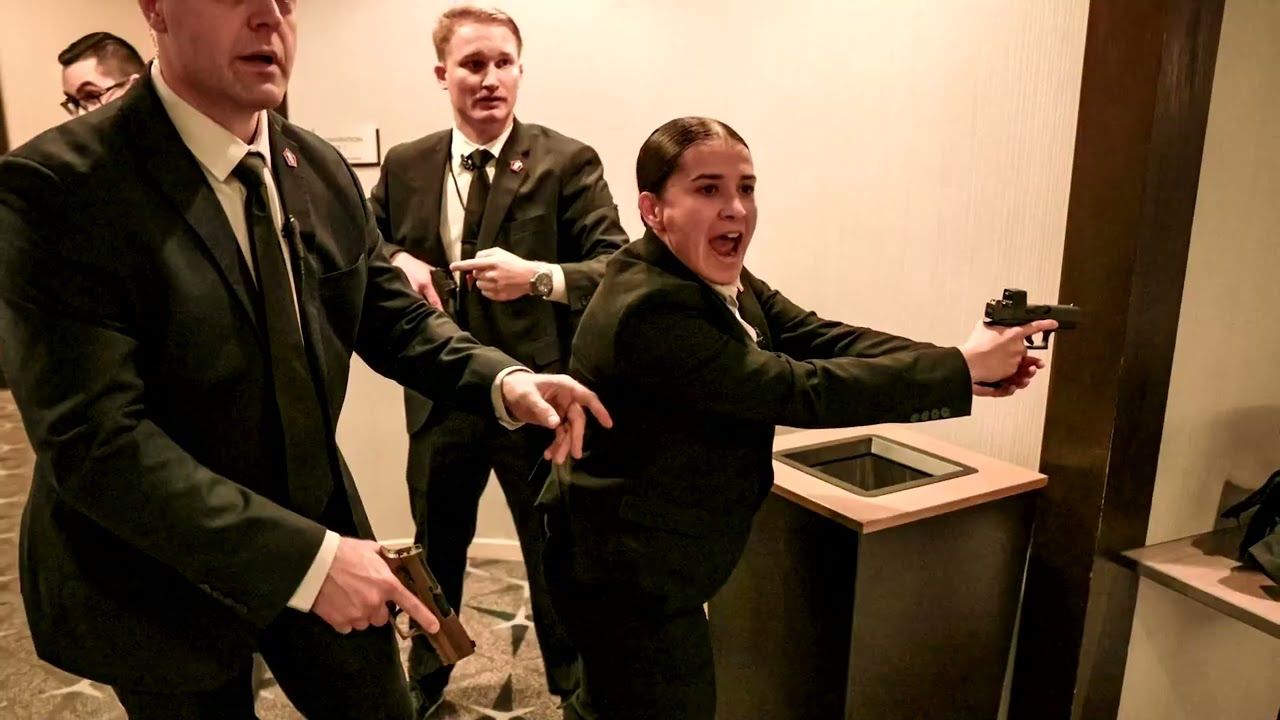
Secret Service agents face scrutiny after multiple assassination attempts on President Trump
Multiple attempts on President Donald Trump’s life within a short span have pushed the United States Secret Service into one of the most intense periods of scrutiny in its modern history. A series of security failures, some in tightly controlled environments, has raised urgent questions about how the agency assesses threats, manages crowded venues, and responds in the first critical seconds of an attack.
What had long been treated as hypothetical worst-case scenarios are now real incidents with detailed timelines, named suspects, and visible lapses. The debate has shifted from whether the president is adequately protected to how quickly the protection system can be rebuilt while the threats remain elevated.
What happened
Recent reporting describes at least three significant attempts or near-attempts targeting Trump during his current tenure, each exposing different weaknesses in the protective net. According to one account, Trump has faced a pattern of repeated threats that range from online plots to operational attacks in public venues, with law enforcement forced to distinguish serious plans from background noise.
The most alarming incident occurred at the White House Correspondents’ Dinner, held at the Washington Hilton, when a gunman opened fire near the event while Trump was present. Witnesses described a chaotic scene as Secret Service agents rushed to move the president and first lady to safety while local police and federal officers confronted the shooter. Early investigations suggest the attacker was able to approach the perimeter with a firearm despite multiple layers of security and magnetometers, a failure that has become the focus of several internal reviews.
Coverage of the dinner attack has highlighted how the shooter, identified as Cole Allen, exploited gaps in venue control and screening at the Hilton. Analysts have noted that the event combined journalists, political figures, and celebrities in a confined space, creating a complex security footprint. Detailed reconstructions of the shooting, including how Allen moved through the area and when he was first spotted, have become central to the Secret Service’s after-action review and to congressional oversight.
Earlier in the year, Trump survived another assassination attempt at a separate event where a would-be attacker managed to get within firing range before being neutralized. In that case, investigators found that the suspect had scoped the venue in advance, raising questions about pre-event site surveys and intelligence sharing. A later report described how agents had flagged some online chatter about the suspect but did not elevate it to a full threat assessment, which critics now cite as a missed opportunity.
There have also been personnel consequences. In one incident at Trump’s property in Butler, Pennsylvania, a Secret Service agent was suspended after questions arose about how an armed individual breached the outer perimeter. Reporting on the Butler suspension describes an internal investigation into whether protocols were ignored or whether the guidance itself was inadequate for the size of the crowd and the terrain around the site.
Each case has generated its own set of investigative threads, from ballistics to venue contracts, yet together they paint a portrait of an agency struggling to keep pace with a threat environment that is both highly personalized around Trump and amplified by online radicalization.
Why it matters
The scrutiny on the Secret Service is not just about individual mistakes. It is about whether the agency’s structure and culture can handle a president who attracts intense support and equally intense hostility. A detailed Reuters account on Trump’s security notes that criticism has come from both parties, with lawmakers asking how a gunman could get close to a ballroom full of political leaders and media figures.
Members of the House Oversight Committee have already signaled plans to examine the dinner attack, with some Republicans arguing that Trump has been treated as a routine protectee rather than a uniquely high-risk target. Coverage of the committee’s response quotes Representative James Comer and others pressing for answers on why venue security at the Washington Hilton appeared to rely heavily on hotel staff and local police instead of a fully locked-down federal perimeter.
Outside Congress, media commentators and former agents have questioned whether Secret Service leadership has been too slow to adapt to Trump’s particular risk profile. An analysis by CNN on the dinner attack describes internal tensions over staffing levels, training hours, and the balance between traditional close protection and emerging threats like drone-based attacks or coordinated online plots.
The agency’s director, Kim Cheatle, has already faced tough questioning on Capitol Hill about the earlier Butler incident and about broader patterns of security lapses. In a high-profile hearing, lawmakers challenged Cheatle on why agents in the field reported feeling overextended, and why some protective details were operating with vacancies unfilled. Reporting on the Cheatle hearing describes members accusing the agency of systemic failure, not just isolated errors.
Critics also point to the agency’s planning for large hotel events, which have long been part of the protective routine. A detailed reconstruction of Hilton security found that multiple agencies shared responsibility for screening entrances and monitoring exterior approaches, creating seams that the attacker exploited. One analysis of Hilton security argues that the hotel’s layout and multiple public access points made it inherently vulnerable, and that federal planners underestimated how quickly a determined shooter could reach a firing position.
Beyond the tactical questions, the stakes are constitutional. The Secret Service is tasked with preserving the continuity of government and protecting the democratic process from violent disruption. A successful attack on a sitting president or leading candidate would not only be a personal tragedy but a national crisis with global repercussions. That reality is why even near-misses, like the shots fired near the Hilton, trigger wide-ranging reviews and political fallout.
The reputational damage to the Secret Service also matters. The agency relies on deterrence as much as physical barriers, projecting an image of near-invulnerability that can discourage would-be attackers. Repeated public failures, dissected in real time on television and social media, risk encouraging copycats who see the protective shield as penetrable.
What to watch next
In the near term, the key arena will be Congress, where House Republicans have already signaled plans for aggressive oversight. Coverage of the reaction to the dinner shooting notes that Representative James Comer has invited commentators like Jeanine Pirro to speak about the attack and about perceived double standards in how threats to Trump are handled. A report from Fox Baltimore on House Oversight describes how the committee is preparing subpoenas for internal Secret Service documents, including threat assessments and staffing logs from the Hilton detail.
Investigators are also examining whether any agents or supervisors failed to follow established protocols. An article in the National Enquirer, focused on agents in the, reports that several members of Trump’s protective detail have been interviewed about their pre-event briefings, radio communications, and decisions to allow certain access points to remain open. While no criminal charges are suggested at this stage, administrative sanctions or reassignments are possible.
Internally, the Secret Service is conducting its own after-action reviews, which will likely lead to changes in how it secures hotel ballrooms, outdoor rallies, and motorcade routes. A Cyprus Mail account of renewed scrutiny notes that planners are considering more aggressive use of hardened perimeters, expanded no-go zones around venues, and additional sniper overwatch positions, even at events that have traditionally been treated as semi-social.
One open question is whether Trump’s schedule will be scaled back or reshaped to reduce exposure. So far, he has signaled a desire to continue holding large rallies and high-profile appearances. That choice will force the Secret Service to adapt quickly, with more intensive pre-screening of attendees, closer coordination with local law enforcement, and perhaps a greater reliance on technology like facial recognition and drone detection systems. Any such changes will raise their own debates over privacy and civil liberties.

Leo’s been tracking game and tuning gear since he could stand upright. He’s sharp, driven, and knows how to keep things running when conditions turn.