US defence secretary calls for national prayer gathering to honour ‘a nation worth fighting for’
The United States secretary of defense has called for a national gathering of prayer, describing the country as “a nation worth fighting for” and urging citizens to seek unity and moral clarity amid deep political and cultural division. Delivered in explicitly spiritual language, the appeal puts questions of faith, patriotism, and public life at the center of the national security conversation.
By tying military service and sacrifice to a shared spiritual purpose, the Pentagon’s civilian leader is asking Americans to view the country’s security challenges not only as strategic problems but as tests of national character. The move is already prompting debate over the role of religion in public institutions and how spiritual language is used to rally support for contested policies.
What happened
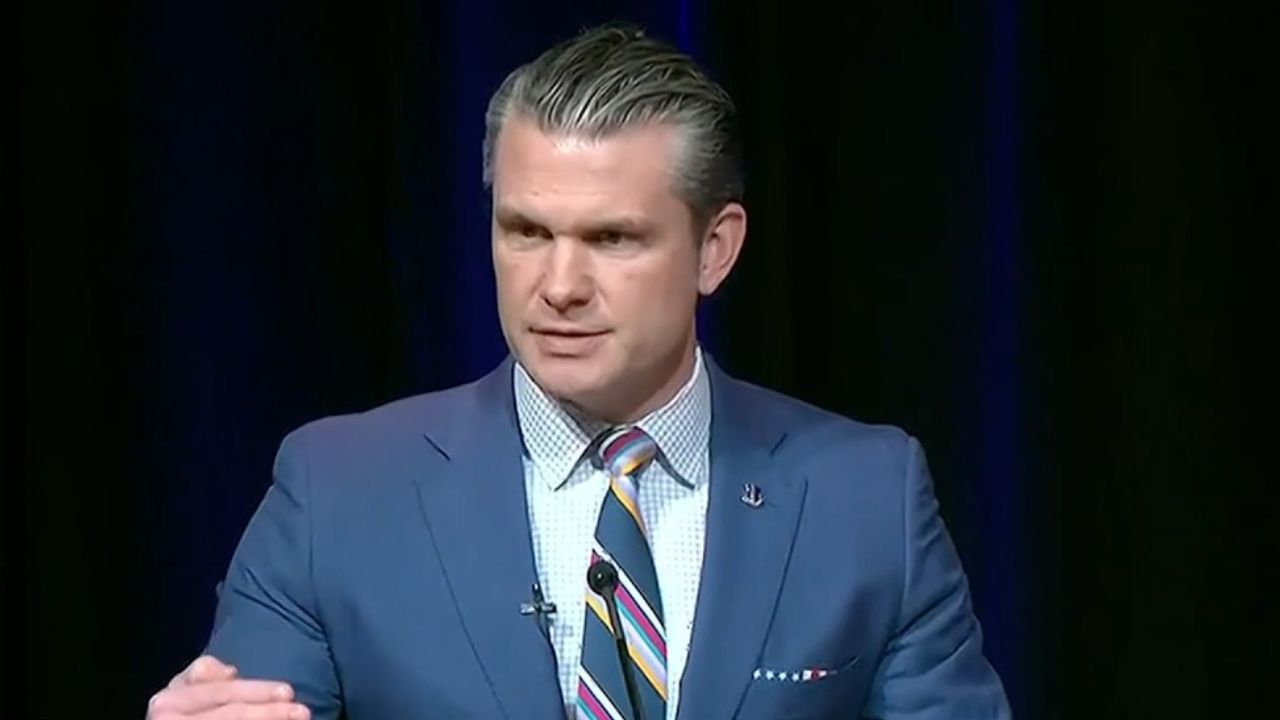
The defense secretary used a prominent faith-themed event in Washington to call for a national season of prayer focused on the United States, its leaders, and its armed forces. Addressing an audience that included lawmakers, military officers, and religious leaders, the secretary described the United States as “a nation worth fighting for” and urged listeners to seek divine guidance for a country facing war, political anger, and social fragmentation.
The remarks echoed themes that have surfaced at recent high-profile religious and political gatherings. At a national prayer breakfast, commentator Pete Hegseth urged attendees to embrace a more assertive Christian identity in public life, linking spiritual renewal to the country’s survival and calling for Americans to see themselves as stewards of a providential experiment in liberty. His comments, captured in detail by one report, framed the United States as a nation under spiritual attack that requires both prayer and political resolve.
Within that broader backdrop, the defense secretary’s appeal for a nationwide prayer gathering fits into a wider pattern in which influential figures in and around government use religious language to describe national challenges. The speech presented prayer not as a private act but as a civic practice that can bind the country together, particularly in support of those who serve in uniform.
According to attendees, the secretary spoke of service members deployed abroad, veterans carrying visible and invisible wounds, and families who shoulder repeated separations. By asking the public to pray for them, the Pentagon chief framed the military community as a moral touchstone for the nation, suggesting that their sacrifices reflect values that deserve renewed public commitment.
The call for prayer also carried an implied diagnosis of national anxiety. The secretary referenced global conflicts that involve U.S. forces, domestic political hostility, and a sense of cultural drift. In that setting, the appeal cast prayer as a way to seek humility and perspective, not only for individuals but for the institutions that wield power. The language invited listeners to imagine a country that pauses its arguments long enough to ask what kind of nation it wants to be, and what it is willing to defend.
Although the secretary did not announce a formal policy initiative or a government-sponsored religious program, the speech encouraged faith communities across the country to organize their own observances. Pastors, chaplains, and lay leaders were urged to set aside services or gatherings that lift up national leaders, military personnel, and the broader public, with an emphasis on gratitude, repentance, and a renewed sense of shared responsibility.
Why it matters
The defense secretary’s appeal matters in part because it blurs some of the traditional lines between national security rhetoric and explicitly spiritual language. The United States has a long history of presidents and military leaders invoking God in times of war or crisis, but a call for a coordinated national prayer gathering from the head of the Pentagon carries particular symbolic weight. It suggests that, in the secretary’s view, the country’s strategic challenges are inseparable from questions of moral purpose.
That framing will resonate strongly with some religious communities. Many congregations already pray weekly for troops, veterans, and elected officials, and some see military service as a direct expression of faith-driven duty. For these groups, a cabinet-level official who speaks of the nation as “worth fighting for” in spiritual terms may feel like an affirmation of beliefs they already hold. It can also energize chaplaincy programs, faith-based support networks for military families, and advocacy groups that lobby for religious accommodations in the armed forces.
Yet the appeal also raises familiar constitutional questions. Civil liberties advocates often argue that when senior officials use their public office to promote specific religious practices, even in broad terms, it can blur the separation of church and state. The defense secretary did not endorse a particular denomination or doctrine, yet the call for a national prayer gathering, rather than a more neutral moment of reflection, will likely draw scrutiny from those who worry about religious minorities or nonreligious service members feeling sidelined.
The speech also lands in a global context where religious rhetoric and national identity are tightly intertwined. In Pakistan, for example, former prime minister Imran Khan has repeatedly framed political mobilization as a moral and almost sacred duty. During a rally in Peshawar that he billed as a “rally for nation’s freedom,” he urged a mass turnout and described the struggle against what he called imported rule as a fight for the soul of the country. According to one detailed account of that event, Khan cast participation itself as a patriotic obligation, tying spiritual language to his call for a mass turnout.
Although the United States and Pakistan have very different political systems and legal frameworks, both examples show how leaders use faith-inflected language to rally citizens around contested political projects. In the American case, the defense secretary’s focus is national unity and support for the armed forces. In Pakistan, Imran Khan has used similar vocabulary of destiny and sacrifice to challenge existing power structures. In both settings, religious rhetoric can deepen loyalty among supporters while heightening suspicion among critics who see it as a tool for political consolidation.
For the U.S. military, the secretary’s words may have practical implications. Chaplains and commanders are often on the front line of balancing religious freedom with unit cohesion. A high-profile call for prayer can encourage more open expressions of faith in some units, which many service members welcome, but it can also complicate efforts to ensure that atheists, agnostics, and religious minorities feel fully included. The Pentagon has faced previous legal challenges over perceived favoritism toward particular religious groups, and any suggestion that patriotism requires participation in prayer could revive those concerns.
The appeal also intersects with debates over how the United States tells its own story. Describing the country as “a nation worth fighting for” is not a neutral phrase. It signals a belief that despite deep flaws, the American project retains a core goodness that justifies sacrifice. Critics who focus on systemic racism, economic inequality, or controversial foreign interventions may argue that such language risks glossing over hard truths. Supporters counter that honest critique and deep love of country can coexist, and that a shared narrative of worthiness is essential if citizens are to accept the burdens of defense.
In political terms, the secretary’s call could influence how different factions talk about patriotism. Some conservative leaders have already embraced religiously inflected patriotism, arguing that the United States is rooted in biblical principles and that its survival depends on returning to those roots. Others, including many progressives and religious minorities, prefer a civic language grounded in constitutional values and human rights rather than explicit appeals to God. The defense secretary’s choice of words will likely be read through that partisan lens, even if the intent was to rise above it.
Timing adds another layer. The United States is navigating a crowded agenda of security challenges, from great power competition to cyber threats and ongoing conflicts that involve U.S. advisers or forces. At the same time, domestic politics are intensely polarized, with questions about the legitimacy of elections, the role of the courts, and the boundaries of protest. A national prayer gathering, if it gains traction, could become a rare cross-partisan event that brings together people who disagree on policy but share a desire for peace and justice. Or it could become one more flashpoint in the culture wars, especially if specific organizers or speakers are seen as aligned with one side.
What to watch next
The most immediate question is how faith communities respond. Large evangelical churches, Catholic dioceses, historically Black congregations, Jewish synagogues, Muslim mosques, and other religious bodies will decide whether to echo the defense secretary’s call, adapt it, or ignore it. Their choices will determine whether the idea of a national prayer gathering remains largely symbolic or becomes a visible event that fills sanctuaries and public squares across the country.
Observers will also watch how the Pentagon itself navigates the line between encouraging spiritual support and maintaining institutional neutrality. Official chaplaincy programs are designed to serve service members of all faiths and none, and they operate under detailed regulations that guard against proselytizing. If the department promotes the secretary’s remarks through internal channels, it will need to emphasize that participation in any related observances is voluntary and that nonreligious expressions of support for troops are equally valid.
Legal and advocacy groups may test those boundaries. Organizations that defend religious freedom sometimes welcome public calls to prayer as affirmations of the rights of believers. Others, particularly those that focus on church-state separation, may scrutinize any suggestion that government offices sponsor or coordinate religious events. If federal facilities host large prayer gatherings in response to the secretary’s appeal, or if commanders appear to pressure subordinates to attend, litigation could follow.
Another key variable is how political leaders frame the invitation. Members of Congress, governors, and presidential candidates may choose to attend or endorse related events, turning them into platforms for their own messages. If the gatherings remain focused on intercession for the nation and its military, they could function as rare moments of shared ritual. If they become venues for partisan speeches, the original intent of seeking unity through prayer could be overshadowed by campaign-style rhetoric.
Internationally, allies and adversaries alike will read the secretary’s language as a signal of how the United States understands its role in the world. Some partners may welcome a vision of American power that is tempered by humility and a stated reliance on divine guidance. Others may worry that faith-inflected language about being “worth fighting for” hints at a more ideological posture in foreign policy. In regions where U.S. actions are already viewed through a religious lens, any suggestion that American military power is tied to a particular spiritual narrative can complicate diplomacy.
Inside the United States, the long-term impact may depend on whether the call for prayer leads to concrete changes in how the country treats its veterans and active-duty personnel. Faith communities that take the secretary’s words seriously might expand programs that provide counseling, housing support, and job training to those who have served. They might also press lawmakers to address issues such as military suicide, access to mental health care, and the strain of repeated deployments on families. If that happens, the prayer gathering could be remembered not only as a symbolic moment but as the spark for sustained action.

Leo’s been tracking game and tuning gear since he could stand upright. He’s sharp, driven, and knows how to keep things running when conditions turn.