Palmetto State Armory revives historic heavy-barrel AR-15 model after 60 years of collector lore
Palmetto State Armory, through its Harrington & Richardson brand, is releasing a faithful reproduction of the Model 606 heavy-barrel AR-15 on May 15. This marks the first time most shooters will have a chance to own a version of the rifle that appeared briefly in the mid-1960s as an experimental squad automatic weapon. Built around a full-length heavy barrel and a bipod, it was Colt’s early attempt to turn the AR platform into something that could lay down sustained fire without overheating. For six decades the original stayed out of reach, known mainly through faded photographs and secondhand stories passed among collectors.
The timing feels right. Retro AR builds have grown more popular, and H&R’s decision to revive the 606 taps directly into that interest. You get a piece of firearms development that never entered full production but still influenced later heavy-barrel designs. The new rifle arrives at a moment when many enthusiasts want rifles that feel connected to the platform’s military roots rather than just another modern carbine.
Roots in the 1960s military push
Military planners in the mid-1960s wanted more firepower at the squad level once the 5.56 cartridge proved effective in Vietnam. Colt engineers took the basic M16A1 and fitted it with a straight-profile heavy barrel measuring a full 20 inches. They added an M14-style bipod pinned near the muzzle through a special adapter. The result was the Model 606, an early prototype aimed at filling the squad automatic role before the M249 existed.
Only a small number left the factory. Most stayed stateside for testing or went to a handful of units for evaluation. The design never moved beyond those limited runs, yet it showed what the AR platform could handle when asked to sustain longer bursts.
What made originals nearly impossible to find
Production stayed tiny because the military ultimately chose different paths for its automatic weapons. A few 606 rifles reached civilian collectors through surplus channels or early sample programs, but the total count remained in the low dozens. Over time they scattered into private hands, surfacing only at major gun shows or in detailed forum threads.
Stories about the rifle took on a life of their own. Shooters traded grainy photos and measurements, debating barrel contour and bipod mounting. By the 2000s the 606 had become the kind of unobtainable reference that serious collectors mentioned with a mix of respect and frustration.
How the new version stays true to the original
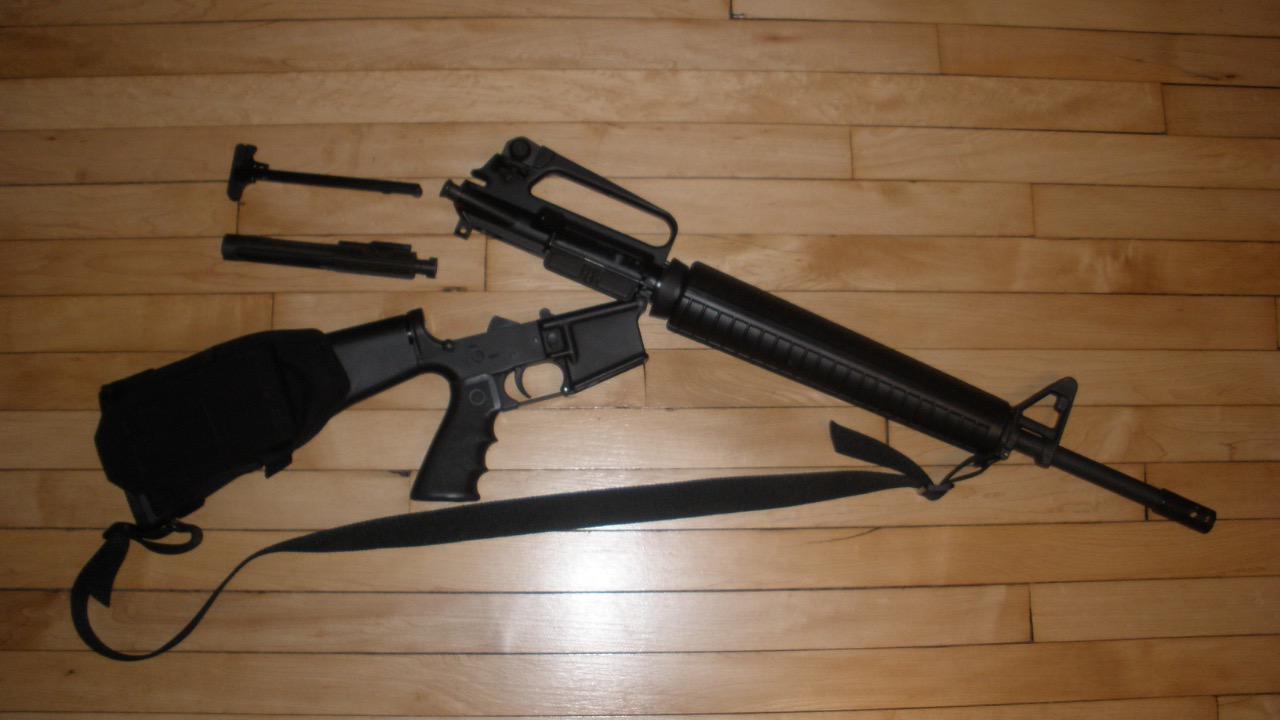
H&R’s recreation uses a 20-inch heavy barrel made from 4150 chrome-moly vanadium steel in the classic straight profile. It comes with the three-prong flash hider and a chrome bolt carrier group that matches period details. The M2-style bipod attaches exactly where the originals did, giving the rifle the same balanced weight distribution that made it feel planted during automatic fire.
Modern touches appear where they count for reliability. The barrel is properly chambered in 5.56 NATO and finished to current standards without changing the outward appearance. You end up with a rifle that looks and handles like the prototype but will run reliably on today’s ranges.
The practical side of owning the revived 606
At just under ten pounds with the bipod mounted, the rifle sits heavier than a standard carbine but lighter than many dedicated squad support weapons. The heavy barrel keeps groups tight even after extended strings of fire, and the bipod makes prone or bench work stable. You can run it as a semi-auto plinker or open it up on a range day without worrying about heat soak the way lighter barrels do.
Availability changes everything. Instead of hunting auctions or hoping for a rare transfer, you can order one through normal channels. That accessibility brings the historical footnote into regular use for anyone who appreciates the AR’s development story.
Why this release matters beyond nostalgia
The 606 represents a fork in the road that the military explored but did not take. Seeing it produced again lets you hold that alternate history and compare it directly to what came later. It also shows how a company like Palmetto State Armory can use its ownership of the H&R name to fill gaps that collectors have talked about for decades.
For many, the rifle will sit alongside other retro builds and serve as a conversation starter at the range. Others will simply enjoy shooting a heavy-barreled AR that feels planted and capable. Either way, the 606 moves from collector myth to something you can actually shoulder and run.

Asher was raised in the woods and on the water, and it shows. He’s logged more hours behind a rifle and under a heavy pack than most men twice his age.