Virginia labels assault rifle too dangerous for civilians – yet same model remains standard issue in state police patrol cars
Debate over firearm policy in Virginia is growing after critics pointed out that rifles described by some lawmakers as too dangerous for civilian ownership are still commonly carried by law enforcement officers across the state. The issue has fueled another round of arguments over whether restrictions are based more on public safety concerns or on who is allowed to possess certain firearms.
Supporters of stricter gun laws argue that police officers receive specialized training and operate under professional standards that civilians are not held to. Opponents respond that the contradiction raises obvious questions, especially when the same firearm platform considered unacceptable for ordinary ownership is treated as necessary equipment for patrol vehicles.
Why the debate keeps resurfacing
The argument isn’t new, but it tends to return whenever assault weapon legislation is proposed or expanded. Critics often focus on the language used in political debates, saying firearms are sometimes described in extreme terms when discussing civilian ownership, then presented as practical tools when used by law enforcement.
That difference in messaging has become a major talking point among gun rights groups. Many argue that if a firearm is considered reliable and effective enough for police officers responding to emergencies, it becomes harder to explain why responsible civilians should automatically be excluded from owning similar models.
How Virginia lawmakers frame the issue
Lawmakers supporting restrictions usually focus on reducing the potential damage that can occur during mass shootings or high-profile violent incidents. In those discussions, rifles commonly labeled as “assault weapons” are often singled out because of magazine capacity, customization options, or firing characteristics.
Supporters of these measures say law enforcement use is different because officers operate within structured departments, receive recurring training, and are accountable to official procedures. They argue that civilian ownership and police use serve completely different purposes, even when the firearms themselves are nearly identical.
Police departments continue relying on the platform
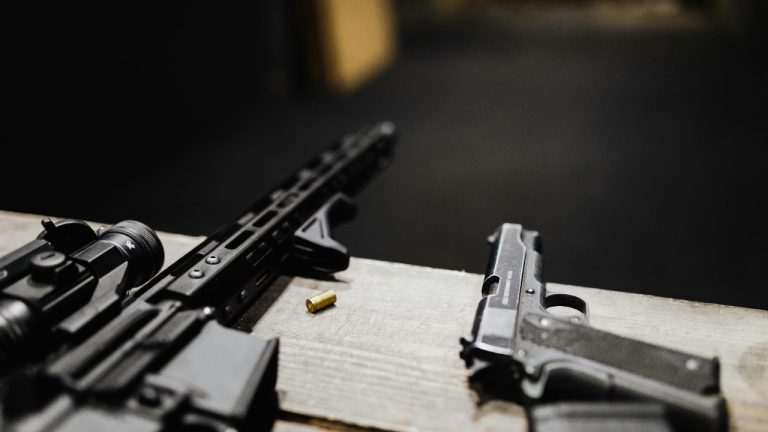
Despite political efforts aimed at restricting civilian access, many police departments across the country — including in Virginia — continue to use AR-style rifles in patrol vehicles. Agencies often cite accuracy, controllability, and adaptability as reasons the platform remains widely used.
Over time, patrol rifles became more common after law enforcement agencies shifted away from relying almost entirely on pistols or shotguns. Departments argue that officers may face situations where greater accuracy at distance is important, especially during active threat responses.
Critics say the contradiction weakens public messaging
Gun rights advocates argue the issue creates a messaging problem for lawmakers trying to justify bans or restrictions. If officials publicly describe a firearm as unusually dangerous while government agencies continue issuing it routinely, critics say the argument can start sounding inconsistent.
Some also believe the debate reflects a deeper divide over trust. Supporters of gun rights often frame the issue around whether ordinary citizens should have access to tools similar to those carried by law enforcement, while supporters of restrictions tend to emphasize differences in responsibility and oversight.
The debate is unlikely to disappear soon
As firearm legislation continues evolving across different states, arguments like this are expected to remain part of the political conversation. Virginia has become one of several states where clashes over assault weapon laws continue to divide lawmakers, advocacy groups, and voters.
For now, both sides remain dug in. One side sees police use of these rifles as proof they are practical defensive tools, while the other sees civilian restrictions as necessary despite continued law enforcement use. That disagreement is likely to keep shaping future gun policy debates in the state.

Leo’s been tracking game and tuning gear since he could stand upright. He’s sharp, driven, and knows how to keep things running when conditions turn.