US Forces Kill Senior ISIS Leader in Nigeria in Operation Backed by Trump Administration
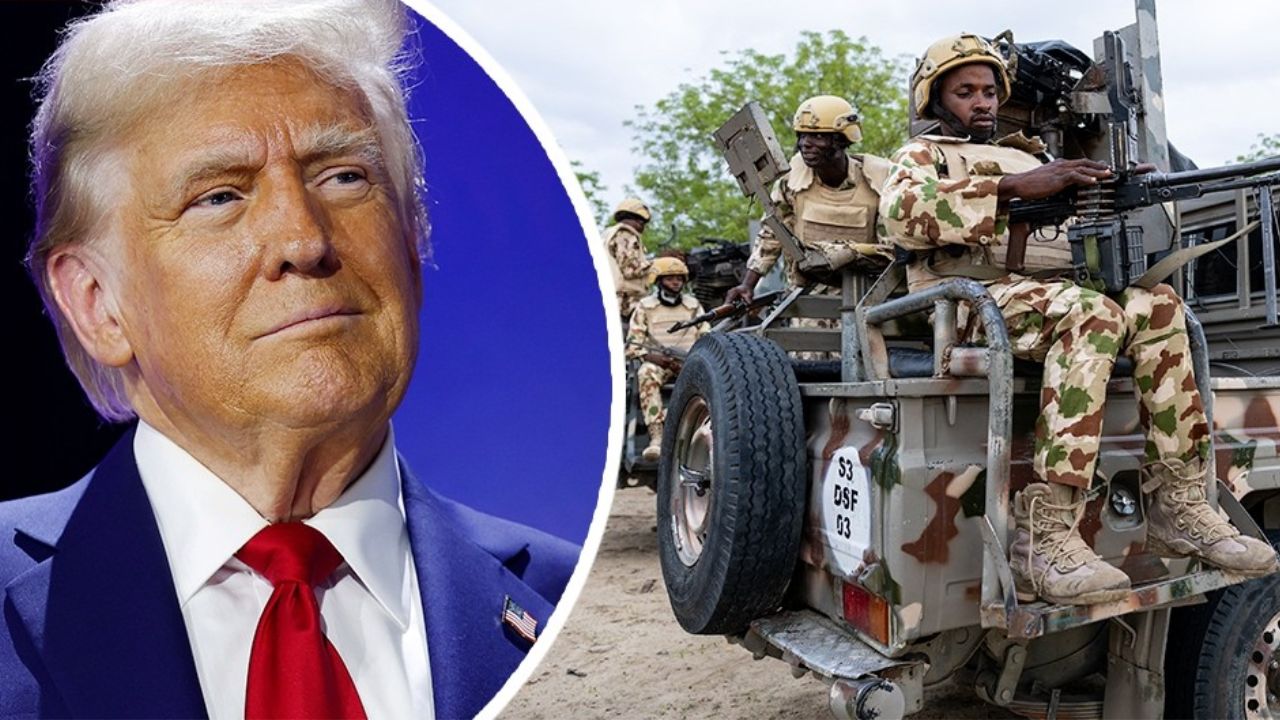
American special operations forces working with Nigerian troops have killed Abu Bilal al-Minuki, a senior Islamic State commander described as a key architect of the group’s global attacks. The joint raid in northern Nigeria, publicly celebrated by Donald Trump, marks one of the most high-profile Islamic State leadership losses outside the group’s traditional Middle Eastern strongholds. It also underscores how the Trump administration is leaning on counterterrorism partnerships in Africa to claim progress against the Islamic State network.
What happened
According to U.S. and Nigerian officials, Abu Bilal al-Minuki was tracked to a compound in northern Nigeria that served as a regional hub for Islamic State operations. American special operations forces worked alongside Nigerian security units to surround the site, then moved in with air and ground assets to target the commander and his close aides. Officials described al-Minuki as a senior Islamic State figure responsible for coordinating attacks and logistics across Africa and beyond, and said he was killed along with several associates during the raid.
Former president Donald Trump quickly claimed political credit, saying that U.S. and Nigerian forces had eliminated a senior Islamic State commander in Africa with his authorization. He portrayed the operation as proof that his administration’s aggressive counterterrorism posture remained intact and that he was willing to use force far from traditional battlefields. Trump’s statement aligned with U.S. military accounts that described a carefully planned mission, although some operational details remain classified and full casualty figures have not been independently verified.
Initial reporting from U.S. officials framed al-Minuki as a global operations chief for the Islamic State network, a description that elevated the significance of the mission beyond a local counterinsurgency success. Nigerian authorities later confirmed that a senior Islamic State leader had been killed on their territory and said the joint mission reflected deepening security cooperation with Washington. The description of al-Minuki as a central planner for foreign attacks was echoed in several briefings, which stressed his role in linking cells in West Africa with operatives in the Middle East and Europe.
Accounts of the raid indicate that U.S. forces provided much of the intelligence, surveillance and reconnaissance support, as well as precision strike capabilities, while Nigerian units handled parts of the ground cordon and follow-on exploitation of the site. U.S. officials described the target as a hardened compound used to store weapons and communications gear. They said the assault was timed to catch al-Minuki during a meeting with lieutenants, which they argued reduced the risk of civilian casualties while maximizing the impact on the Islamic State command structure.
Reporting on the mission has stressed that the joint raid in Nigeria fits into a broader American counterterrorism campaign in Africa that has included airstrikes, intelligence sharing and support for local forces. The Pentagon has pointed to a series of operations against Islamic State affiliates in the Sahel and Lake Chad Basin as evidence that the group’s leadership is under sustained pressure. In this case, officials said the intelligence picture on al-Minuki had been built over months, with signals intercepts and human sources converging on his presence in northern Nigeria.
Trump’s public comments also tied the operation to his long-running narrative of having taken down Islamic State leaders. He cited the killing of previous high-profile figures and presented al-Minuki’s death as another example of targeted action against the group’s hierarchy. While the White House did not release full imagery or video of the raid, officials emphasized that the mission was conducted with Nigerian consent and that both governments viewed it as a joint success against a common enemy.
Why it matters
The killing of Abu Bilal al-Minuki matters on several levels. Operationally, U.S. and Nigerian officials say he served as a central planner for Islamic State activities in Africa and as a conduit between regional branches and the group’s remaining leadership in the Middle East. Removing a figure described as a senior commander disrupts communications, funding flows and the coordination of attacks, at least in the short term. It also sends a signal to other Islamic State leaders that they can be targeted even when they seek refuge in areas far from Syria or Iraq.
Strategically, the raid highlights how the Islamic State brand has taken root in West Africa and the Sahel, where affiliates have exploited local grievances, porous borders and weak governance. The United States has increasingly treated these African branches as part of a single global network rather than isolated insurgencies. By striking a figure like al-Minuki in Nigeria, American planners are trying to show that they can reach into that network and remove key nodes before they orchestrate attacks outside the continent.
The mission also underscores the growing importance of security partnerships with African governments. Nigerian officials have long sought more advanced surveillance and targeting support against jihadist groups in the north and northeast. The joint operation against al-Minuki illustrates the model Washington prefers: local forces on the ground, backed by U.S. intelligence and specialized units, rather than large American deployments. For Abuja, cooperating on such a high-profile raid bolsters its claim that it is regaining the initiative against militants that have plagued the country for years.
Politically, Trump’s decision to publicly tout the operation reflects how counterterrorism successes remain a valuable currency in U.S. domestic debate. Presenting the death of a senior Islamic State leader as a direct result of his leadership allows him to reinforce an image as a commander in chief who prioritizes aggressive action against jihadist groups. Critics, however, may question the transparency of the operation, the legal framework for such missions in Africa, and the long-term effectiveness of leadership decapitation strategies.
The raid also feeds into a wider discussion about the future of the Islamic State organization. The group has lost territory and many top figures over the past decade, yet it continues to inspire and sometimes direct attacks through regional affiliates. Killing a senior planner like al-Minuki may temporarily slow coordination, but analysts note that the Islamic State has often proved able to replace leaders and adapt. The long-term impact will depend on whether local conditions in Nigeria and neighboring states improve enough to reduce the group’s recruiting base.
For Nigeria, the operation carries both security and political implications. Demonstrating that its forces can work effectively with U.S. counterparts may strengthen the government’s standing at home and with international partners. At the same time, reliance on foreign support could fuel domestic criticism that Abuja is outsourcing core security responsibilities. The government will face pressure to show that the raid is part of a broader strategy that includes governance reforms and economic support in areas where Islamic State affiliates recruit.
What to watch next
In the near term, analysts will be watching for signs of retaliation or fragmentation among Islamic State aligned groups in West Africa. Leadership strikes can trigger revenge attacks, but they can also spark infighting as mid-level commanders compete for influence. Intelligence agencies will look for changes in communications patterns, shifts in attack tempo and any new propaganda that references al-Minuki’s death. If the group quickly names a successor and resumes complex operations, that would suggest a resilient command structure.
Another key question is how the United States and Nigeria build on the operation. U.S. officials have signaled that they see the mission as part of a sustained campaign, not a one-off raid. Future steps could include additional joint strikes, expanded intelligence sharing and more training for Nigerian special units. Washington will also weigh the risks of deeper involvement in a region where political instability, coups and shifting alliances have complicated previous security efforts.
Observers will track how other African governments respond. Success against a high-profile Islamic State leader in Nigeria may encourage states in the Sahel and Lake Chad Basin to seek similar partnerships with U.S. forces. That could lead to a patchwork of bilateral arrangements, each with its own political sensitivities and legal constraints. Human rights groups are likely to press for transparency about civilian harm and for assurances that local partners adhere to international law during joint missions.

Leo’s been tracking game and tuning gear since he could stand upright. He’s sharp, driven, and knows how to keep things running when conditions turn.