Jack Lucas enlisted in the Marines at 14 and earned the Medal of Honor at 17 — but it came at a cost
You don’t expect a story like this to be real. A kid who wasn’t old enough to drive, who still should’ve been worrying about school and chores, managed to find his way into the U.S. military and onto one of the bloodiest battlefields of World War II. By 17, he would earn the nation’s highest award for valor.
But if you only focus on the medal, you miss the weight of it. The story of Jack Lucas isn’t about glory. It’s about what war takes from someone who hasn’t even finished growing up. And the cost didn’t stop when the shooting did.
He Lied About His Age and Meant It

You have to understand the time. After Pearl Harbor, a lot of young men felt the pull to serve. Lucas was 14 when he forged his mother’s signature and joined the Marine Corps Reserve. He wasn’t playing at being a soldier. He was determined to be one.
When his real age was discovered, he was discharged. Most kids would have taken that as a sign. He didn’t. He enlisted again under a different name and managed to stay in long enough to ship out. That kind of determination sounds admirable on paper. In reality, it put a child in the middle of a global war.
He Fought at Iwo Jima Before He Was Old Enough to Vote
By early 1945, Lucas found himself on the black sands of Iwo Jima. You’ve seen the photos. You know the terrain—volcanic ash, fortified positions, nowhere to hide. He was still 17 years old.
Assigned as a rifleman, he had already seen combat before reaching the island. But Iwo Jima was different. Casualties were staggering. Every yard gained cost blood. For a teenager, there’s no gradual adjustment to that kind of violence. You either function, or you don’t. Lucas functioned.
The Moment That Changed Everything
On February 20, 1945, during an assault on a heavily defended position, two Japanese grenades landed in the small space where Lucas and three other Marines were taking cover. There wasn’t time to think through options.
You know the rest in broad strokes. He threw himself onto one grenade and pulled the other beneath him, absorbing the blast with his body. The explosion left him torn apart by shrapnel, but it saved the lives of the Marines around him. That split-second decision would define his legacy, and it nearly ended his life.
He Survived What Should Have Killed Him
Doctors didn’t expect him to live. More than 200 pieces of shrapnel tore through his body. His right arm was severely damaged. His lungs were punctured. Infection was a constant threat.
You read those details and think survival sounds like victory. It wasn’t that clean. Lucas endured dozens of surgeries and a long, painful recovery. He carried fragments of metal in his body for the rest of his life. Every movement, every cold morning, was a reminder of what happened on that ridge.
He Became the Youngest Marine to Receive the Medal
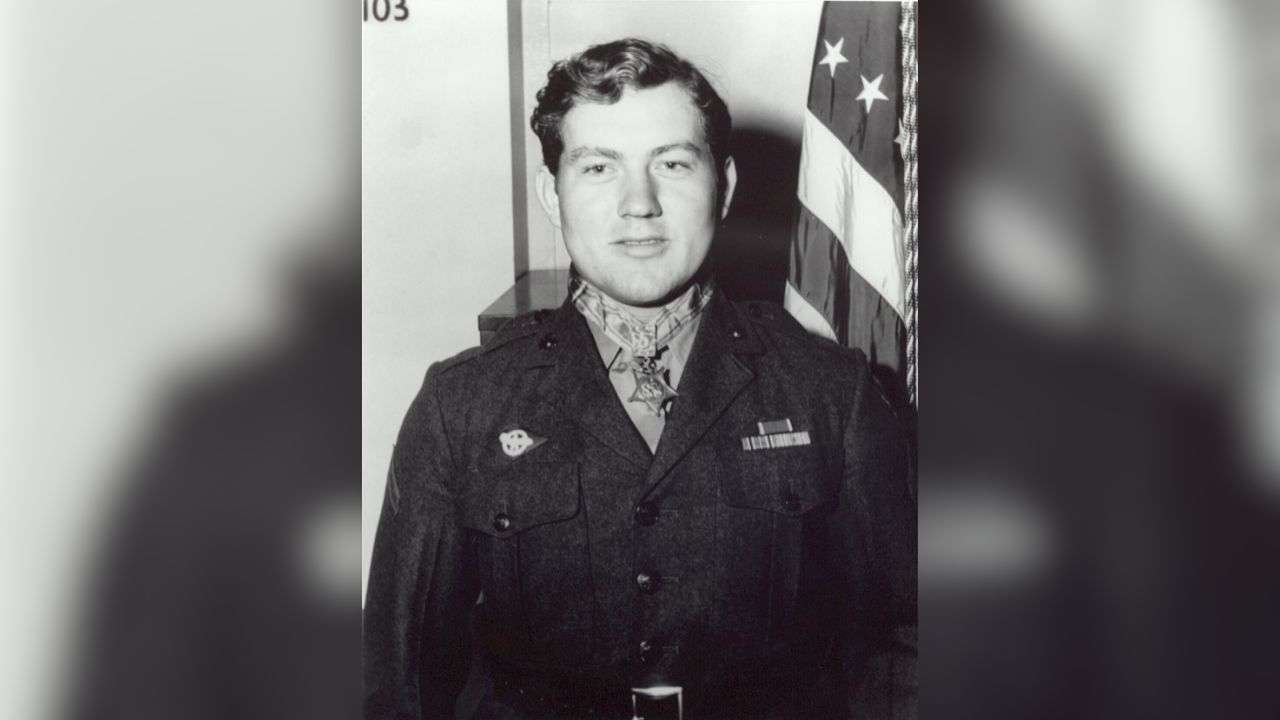
In October 1945, Harry S. Truman presented Lucas with the Medal of Honor at the White House. At 17, he was the youngest Marine and one of the youngest service members ever to receive it.
Imagine standing there in dress blues, still a teenager, while the country calls you a hero. That kind of recognition sounds like a lifetime achievement. For Lucas, it was the beginning of a different burden. The medal is heavy. Not physically, but in expectation. People see the ribbon before they see the man.
The War Followed Him Home
You don’t leave something like Iwo Jima behind. After the war, Lucas struggled. He dealt with what we now recognize as post-traumatic stress, long before the term was common. He also battled alcohol and had brushes with the law.
That part of the story doesn’t fit neatly beside the medal citation, but it’s real. Many combat veterans from World War II carried invisible wounds. Lucas was no exception. Being labeled a hero didn’t shield him from the fallout. In some ways, it may have made it harder to admit he was hurting.
He Kept Serving in His Own Way
Despite the struggles, Lucas didn’t disappear. He returned to military service later, joining the Army’s 82nd Airborne Division. He also spoke publicly about his experiences and remained connected to fellow veterans.
You see a pattern there. Service wasn’t a single act for him. It was part of who he believed he was, even when it cost him. Over time, he worked to steady his life, building a family and finding a measure of peace. The medal never defined the total of him, even if it shaped the way the world saw him.
The Cost Wasn’t Measured in Medals
When Lucas died in 2008, he left behind a legacy tied tightly to one battlefield and one decision. But if you look closer, the real story is broader. It’s about what happens when a boy becomes a warrior before he’s ready.
You can admire the courage without romanticizing the path that led there. Lucas did something extraordinary. He also paid for it with pain, scars, and years of private struggle. The Medal of Honor marks a moment of bravery. The rest of his life shows you what bravery costs when it comes too early.

Asher was raised in the woods and on the water, and it shows. He’s logged more hours behind a rifle and under a heavy pack than most men twice his age.