Why Certain Guns Feel Better the More You Shoot Them
Some firearms feel awkward or even punishing on the first magazine, then strangely natural by the hundredth round. Recoil seems to soften, sights track more predictably, and the shooter’s confidence grows. That change is not magic in the metal, but a mix of ergonomics, ballistics, psychology, and sheer repetition that can make certain guns feel better the more they are fired.
Understanding why some platforms reward practice while others stay stubbornly unpleasant helps explain everything from concealed carry trends to why specific digital guns dominate competitive shooters’ loadouts.
What happened
Across both real and virtual ranges, shooters keep gravitating to a familiar pattern: guns that balance soft recoil, intuitive controls, and forgiving accuracy become favorites over time. Competitive players in titles like Call of Duty favor rifles that combine controllable recoil with predictable damage curves, then refine those choices with attachments until the weapon feels like an extension of the hand. Guidance for top Warzone loadouts highlights assault rifles and submachine guns that reward sustained practice with repeatable recoil patterns and quick follow-up shots.
On physical ranges, a similar story plays out. Reviews of current handguns show that concealed carriers are increasingly choosing pistols that trade a bit of size or capacity for shootability. Evaluations of the best concealed carry emphasize controllable recoil, grip shape, and trigger quality as much as raw power or magazine size, because those traits determine whether a gun becomes a trusted companion or a safe queen.
First-time shooters often arrive at the range with anxiety or outright opposition to gun ownership. One writer who opposes private gun ownership described learning to shoot anyway, documenting how repeated sessions transformed a frightening, alien object into something familiar and physically manageable. That account of learning to shoot tracks a psychological arc that instructors see constantly: exposure, instruction, and repetition take the edge off fear and amplify subtle design differences between firearms.
At the same time, broad explainers on firearm mechanics show how much engineering goes into making a gun that feels “right” under recoil. A technical guide to guns breaks down how operating systems, calibers, and ergonomics interact, from gas systems in rifles to grip angles in pistols. Those details shape whether a platform rewards high round counts with comfort and confidence or punishes the shooter with fatigue.
Why it matters
The way a gun feels over time has real consequences for safety, training, and policy debates. Guns that are pleasant to shoot tend to see more range time. More range time, when paired with good instruction, generally produces better muzzle discipline, more consistent trigger control, and faster problem recognition when something goes wrong. A pistol that a new owner dreads firing is more likely to be carried without real proficiency.
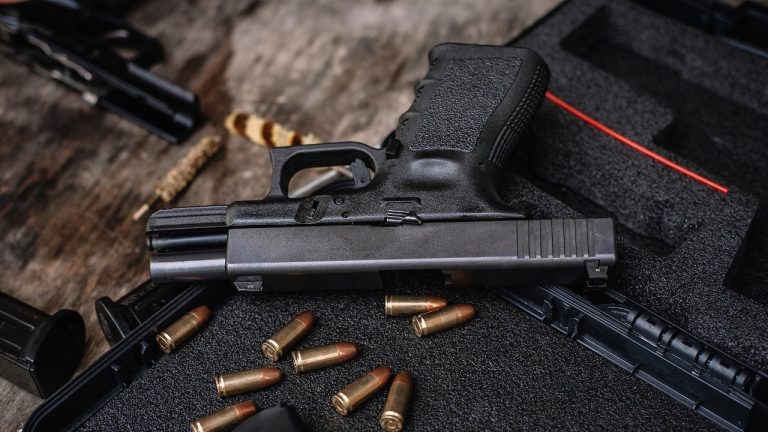
Ergonomics sit at the center of this feedback loop. Grip angle, backstrap contour, and texture determine how recoil travels through the shooter’s hands and arms. Modern polymer pistols that allow interchangeable backstraps and undercut trigger guards often feel harsh on the first outing, then settle into a natural point of aim as the shooter learns exactly where to place support-hand pressure. As a shooter practices with a frame that fits, the gun increasingly seems to “shoot itself,” even though nothing has changed mechanically.
Recoil impulse and caliber choice are just as important. A compact 9 mm with a well-tuned recoil spring and low bore axis can feel softer than a smaller, lighter .380 that snaps sharply with every shot. That is why so many recommended carry guns cluster around mid-size 9 mm designs. They offer enough weight and barrel length to tame recoil while staying concealable. Over hundreds of rounds, shooters adapt to the rhythm of that impulse, and the pistol feels less like a compromise and more like a natural tool.
Trigger characteristics also drive long-term comfort. A clean, predictable break with a short, tactile reset lets the shooter build consistent muscle memory. Striker-fired pistols with moderate pull weights often feel unremarkable at first, then become trusted because the trigger behaves the same way every time. In contrast, a heavy, gritty double-action pull can remain a barrier even after extensive practice, which is why some otherwise reliable designs never achieve the same devoted following.
Psychology amplifies these mechanical factors. For someone who arrives at the range fearful of guns, the early shots are dominated by noise, blast, and worry about doing something wrong. As instruction and repetition build familiarity, the brain has more bandwidth to notice subtler differences between platforms. A pistol with a forgiving grip and mild recoil becomes a source of small, repeatable successes, which reinforces confidence. That positive loop is clear in personal accounts from reluctant shooters who gradually recognize that some guns feel safer and more controllable than others precisely because they are easier to handle over time.
Video games provide a surprisingly useful parallel. Competitive players invest dozens or hundreds of hours into a single virtual rifle or submachine gun. They learn recoil patterns, damage ranges, and handling quirks until the weapon feels predictable. Guides that rank the best digital loadouts focus heavily on how controllable a gun becomes after practice, not just how hard it hits on paper. The same principle applies on real ranges: controllability that improves with repetition matters more than raw power that never feels tamed.
There is also a policy dimension. Public debates often focus on caliber or magazine capacity, but the guns that ordinary people actually carry and train with are often those that feel manageable. That reality shapes which models dominate the concealed carry market and which designs instructors choose as teaching tools for new shooters, including those who are skeptical of gun culture but seek competency for self-defense or professional reasons.
What to watch next
As manufacturers compete for concealed carry and recreational shooters, design trends are likely to push even further toward guns that reward high round counts with comfort. Expect more pistols with modular grips, improved texturing that balances control with skin comfort, and optics-ready slides that help shooters maintain a consistent sight picture as they practice. The success of current mid-sized 9 mm platforms suggests that future models will keep chasing that balance between shootability and concealment.
Training culture is shifting in parallel. Instructors increasingly emphasize low-recoil, ergonomic setups for first-time students, then encourage gradual progression rather than throwing beginners straight into snappy micro-compacts or magnum revolvers. As more reluctant or politically skeptical shooters seek basic competence, especially those who share the perspective of learning to shoot while opposing private ownership, demand will grow for classes and rental fleets built around guns that feel approachable on the first outing and better with each session.
Digital spaces will continue to shape expectations. Competitive shooters in online games already think in terms of recoil control, time to kill, and handling characteristics. As those players transition to real ranges, they will look for firearms that mirror the traits of their favorite virtual rifles and pistols: predictable recoil, quick follow-up capability, and ergonomics that support long practice sessions. Manufacturers are likely to lean into that crossover, marketing guns that promise “flat” shooting and gamer-friendly control under rapid fire.
On the policy and cultural front, the divide between people who love guns and those who fear them will remain sharp, but the middle ground of reluctant learners is growing. For that group, the difference between a gun that feels better with practice and one that never becomes comfortable may determine whether they pursue ongoing training or stop after a single class. That choice affects not only individual safety but also how informed public conversations about firearms become.
Finally, expect more attention to data on real-world performance. As researchers and advocacy groups examine defensive gun uses and accidental shootings, they may find correlations between firearm type, training frequency, and outcomes. If guns that are pleasant to shoot truly correlate with more practice and fewer negligent incidents, that evidence could influence which designs are promoted by instructors, insurers, and policymakers.

Leo’s been tracking game and tuning gear since he could stand upright. He’s sharp, driven, and knows how to keep things running when conditions turn.