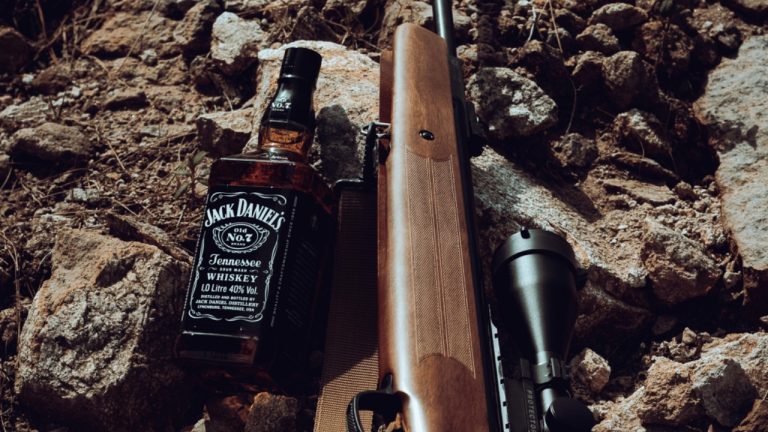
Firearms worth considering before collector prices spike
Firearms that were once basic tools or surplus stock are now turning into five-figure collectibles, and the shift is speeding up. Classic military rifles, early semi-automatic designs, and short-run sporting arms are seeing tighter supply and more aggressive bidding, while newer special editions are being positioned as the next blue-chip pieces. For anyone who cares about both history and long term value, some models stand out as smart buys before the next price jump.
Three forces are working together here: shrinking supply, growing nostalgia, and a broader hunt for hard assets that hold value better than cash. Auction data, collector guides, and even mainstream investing commentary all point in the same direction, from Garands and Enfields to AK variants and high grade shotguns. The following categories highlight firearms that combine strong collector interest with clear reasons their prices could climb further.
Why gun safes are starting to look like IRAs

Firearms are moving from simple sporting goods into a hybrid role as both hobby items and financial assets. One recent analysis framed this shift with a vivid image, describing how a friend’s gun safe seemed to be working harder than his IRA, and then naming Jan as the moment that comparison really hit home, as values on classic pieces kept rising faster than many traditional holdings. That same commentary listed eight specific guns that were said to be gaining value faster than gold, underscoring the idea that select models now behave like alternative investments rather than simple consumer products, a point that lines up with broader auction trends.
The collector market is also widening beyond specialists. A guide to ten standout guns for enthusiasts, published in Feb and introduced with the phrase “Let’s explore,” treated well known designs as core holdings in any serious collection, not fringe curiosities. Meanwhile, a separate overview of antique firearms described a “Rising Interest in Antique Firearms: A Lucrative Niche for Collectors Firearms,” arguing that older guns have become a Lucrative Niche for Collectors Firearms because of limited supply and strong demand at auction. Taken together, those perspectives explain why more owners now think about timing, provenance and model selection with the same care they once reserved for stocks.
Military surplus: where price growth has been fastest
Among all categories, classic service rifles and pistols have seen some of the sharpest price gains. A major auction house review of recent sales concluded that it is hard to argue that any segment has grown faster than classic military arms, highlighting how M1 Garands and similar rifles have all seen their values rise dramatically. That same analysis described Garands, K98s and other iconic models as standouts in recent auctions, with bidding that reflects both historical importance and limited supply. For new collectors, this means that even average grade examples may not stay affordable for long once a particular pattern becomes fashionable.
Guides aimed at beginners now treat surplus rifles as a logical starting point, but they also warn that condition and mechanical safety matter. One overview of six key surplus guns stressed that The Enfield rifles, like all military surplus firearms, should be examined by a qualified gunsmith before use, and that it only takes one issue to turn a bargain into a problem, so it should always be given ample consideration, a point anchored in a detailed look at The Enfield. A companion piece on the same site, accessible through a separate link, grouped those Enfields with other surplus staples and treated them as six guns worth knowing about, reinforcing the idea that surplus is no longer a backwater corner of the market but a core collecting lane.
M1 Garand: a classic already on the move
Few rifles capture the current mix of nostalgia and scarcity as clearly as the M1 Garand rifle. A detailed history notes that Today, the M1 Garand ( M1 Garand rifle ) is highly sought after by collectors and historians, and that Original models in good condition can command high prices not only for their wartime role but also for their craftsmanship and shooting experience. That combination of mechanical quality, historical weight and shootability is rare, and it explains why Garands have become a bellwether for the broader military surplus sector. When their prices move, other service rifles often follow.
Collectors on discussion boards now routinely list Garands among the best “investment guns.” One widely shared thread on r/guns, dated Sep and focused on what people saw as the best investment guns, put Semi automatic sporting arms in the spotlight and named AKs, nicer ARs and M1 Garands alongside Smaller run stuff like Sig SWAT rifles or B&T and H&K models. That kind of peer advice is not formal financial guidance, but it does show how often the Garand now appears in conversations about value, not just nostalgia. For buyers, the message is simple: the longer you wait, the more likely you are to chase the market rather than get ahead of it.
Walther P38 and other historic sidearms
Handguns with wartime lineage are also moving from “interesting” to “expensive.” The Walther P38, for example, bridges early double action engineering with a long service history, and it is now treated as both a shooter and a collector piece. A detailed guide on this model answers the question “Is Walther P38 a Good Gun? Yes,” and goes on to say that the Walther is Known for reliability and historical significance, which makes it a favorite among collectors and shooting enthusiasts, a view echoed in a broader Is Walther overview. That mix of technical innovation and service use is exactly what tends to drive long term demand.
More general buyer guides on the P38 reinforce this picture, describing how the pistol’s specifications, performance and price all intersect with collector interest. One such review explains that the P38 is a highly reliable and historically significant firearm, and that those traits have helped keep it on shortlists for anyone who wants a classic sidearm with a story, a point backed up by a separate Walther review that covers its specifications and market position. For investors, the key takeaway is that historically important pistols with distinctive engineering often move up the price ladder once casual shooters are priced out, and the P38 appears to be on that path.
Winchester Model 70 and 94: blue chips in the sporting world
On the sporting side, two Winchester lines stand out as long term anchors. The Winchester Model 70 has been marketed for decades as the “Rifleman’s Rifle,” and a feature on its modern production stated that Once known as the “Rifleman’s Rifle,” Winchester’s Model 70 ( Winchester Model 70 ) is back, highlighting how the company has leaned into that legacy to attract both hunters and collectors, as shown in a detailed look at Once. Another analysis went further, saying that The Winchester Model 70 remains one of America’s most popular rifles and that pre-1964 examples are so good it is called “The rifleman’s rifle,” a phrase that underlines their status as a benchmark for quality, as detailed in a piece on The Winchester Model. Scarcity of those early production runs, combined with their reputation, is already reflected in rising prices.
The Winchester Model 94, another mainstay, has its own value drivers. A dedicated value guide explains that Models with historical significance, such as those with a specific serial number range or those that were produced during a particular era, tend to be more valuable, and that Models with a documented history can be especially valuable, especially when they tie into notable events or owners, as the Models guide puts it. That framework mirrors how collectors treat vintage cars: provenance, production era and originality all matter. For someone building a portfolio, clean pre-1964 Model 70 rifles and documented Model 94 carbines sit near the top of the sporting category.
AK variants and the import squeeze
Modern semi automatic rifles are not immune to collector dynamics, especially when imports are restricted. A detailed review of the Century Arms C39v2, for example, notes that That trend (we hope) will continue and increase as the import of overseas parts and entire rifles become subject to increasing restrictions, and ties that outlook to recent legislation forbidding its importation, as described in a close look at the Century Arms C39v2 review. Once a specific pattern can no longer be brought in, existing inventory starts to look a lot more finite, which tends to push values higher over time.
At the same time, several U.S. based manufacturers have begun building their own AK variants since there are fewer imported rifles, and one guide notes that these companies are producing a wide range of AK pattern rifles using primarily American made components to meet demand, as explained in a survey of AK variants. On collector forums, AKs and nicer ARs are often grouped together as semi automatic sporting arms with upside, and one r/guns thread that began in Sep specifically called out Semi automatic sporting arms, AKs and nicer ARs as well as Smaller run stuff like Sig SWAT rifles as likely to appreciate, a view captured in a Semi discussion and a companion link focused on Smaller production runs. For investors, the lesson is that when lawmakers or supply chains choke off imports, both foreign originals and high quality domestic stand ins can see long term support.
Obscure bolt guns and the Carcano example
Not every promising collectible is a household name. Some of the strongest percentage gains can appear in once overlooked bolt action rifles that carry a specific historical association. The Carcano rifle is a case in point. A detailed history of that gun notes that in the era before the Gun Control Act of 1968, milsurp rifles were affordable, plentiful and available for delivery right to your door by mail order, a level of access that kept prices low for decades, as described in a feature on the Gun Control Act. That world is gone, and as supply dried up, collectors began to reevaluate rifles like the Carcano, especially given its infamous role in U.S. history.
More broadly, a guide to military surplus collecting for beginners lists six guns worth knowing about and treats them as a starting map for anyone who wants to understand how obscure rifles can move from bargain bins to auction catalogs, as seen in the linked overview of military surplus. Once a rifle gains a story, whether tied to a conflict, a famous owner or a political event, it often starts to attract a different kind of buyer. For someone looking ahead, the key is to identify which “cheap” surplus pieces carry that kind of narrative weight before a movie, documentary or anniversary pushes them into the spotlight.
Modern classics: SIG P226 Legion and its evolution
Not all future collectibles are old. Some are current production pistols that blend proven designs with premium finishes and limited runs. The SIG P226 Legion series is a good example. A detailed owner’s review calls it a depth look at a pistol that takes the classic double stack service gun and adds upgraded ergonomics, finishes and extras aimed at serious shooters, as described in a close look at the LEGION P226. Limited configurations and a strong brand following set the stage for long term interest once production shifts to newer models.
The next iteration, the SIG P226X LEGION, has already been introduced as a modernized, modular evolution of one of the most iconic double stack pistols. A video segment shows James checking out the all new SIG P226X LEGION at SIG NEXT 2025 and describes how it brings the design into the modern era with enhanced ergonomics, optics readiness and modular grip options, as detailed in coverage of James at SIG NEXT. For collectors, early runs of both the original Legion and the P226X variant may become the “pre upgrade” or “first year” examples that command premiums decades from now, much like early production runs of classic cars.

Leo’s been tracking game and tuning gear since he could stand upright. He’s sharp, driven, and knows how to keep things running when conditions turn.