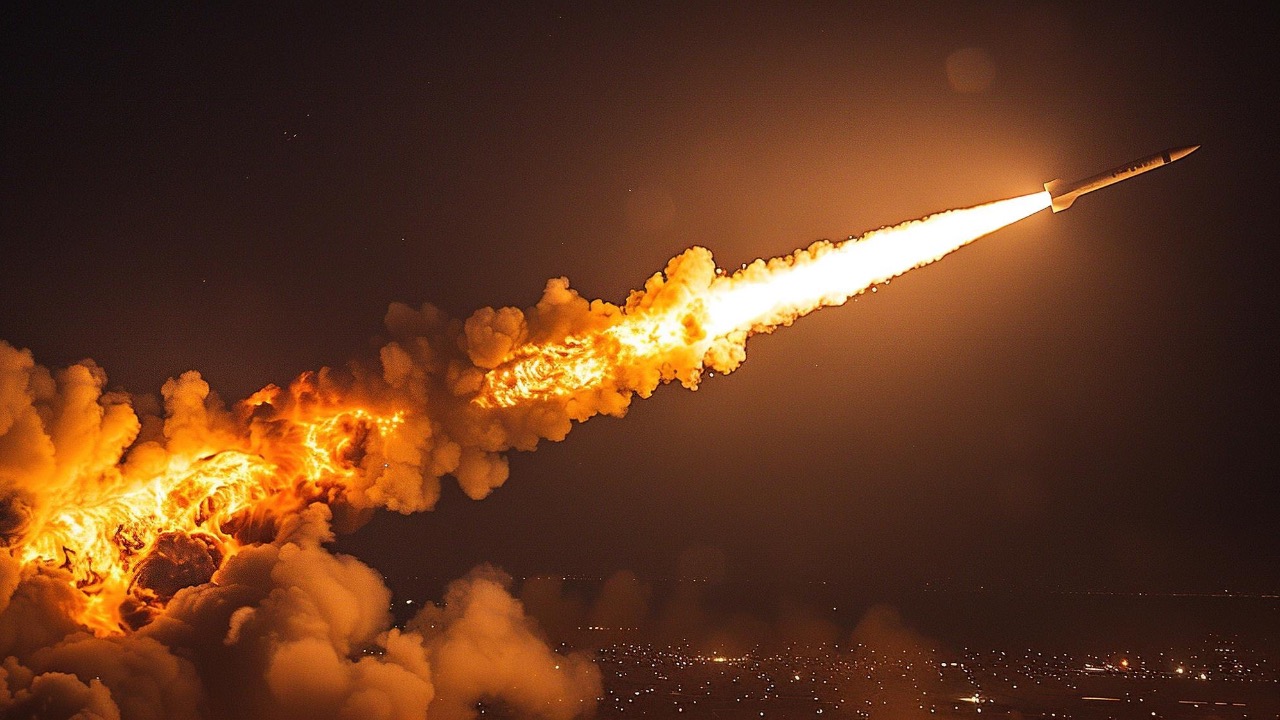
Iran Prepares Missile in Defiant Response to Perceived US Aggression and Support for Israel
Iran’s leadership is signaling a readiness to escalate its confrontation with the United States and Israel, preparing missile forces as it casts recent American actions and support for Israel as direct aggression. The moves come amid a fast-widening conflict stretching from Gaza and southern Lebanon to the Persian Gulf, with Tehran seeking to turn perceived victimhood into strategic leverage.
By positioning missiles and issuing fiery rhetoric, Iran is trying to deter further strikes on its territory while reassuring its domestic audience that it can respond in kind. That calculation is unfolding under intense regional pressure, rising global concern about energy supplies, and an uncertain U.S. response.
What happened
Iran’s missile preparations follow a series of blows that its leaders describe as a coordinated campaign by the United States and Israel. Iranian officials have tied their posture to what they call an American green light for Israeli operations, including strikes on targets that shattered the assumption that the confrontation would remain limited to proxy battlefields. Those strikes hit sensitive sites around Tehran and other locations, prompting an angry response from Supreme Leader Ayatollah Ali Khamenei and senior commanders of the Islamic Revolutionary Guard Corps.
At the same time, the conflict between Israel and Iran-linked groups has intensified across the region. Israeli forces have expanded operations beyond Gaza and southern Lebanon, targeting infrastructure and personnel connected to Iran’s security apparatus. Reporting from the region describes Israeli attacks near that coincided with the Persian New Year, a symbolic moment that Tehran has used to rally public anger and frame the confrontation as an assault on the Iranian nation itself.
Iran’s leadership has responded by placing ballistic and cruise missile units on heightened alert and publicizing some of those deployments. Statements from military officials describe a posture designed to “punish” any further aggression, with particular emphasis on U.S. bases in the region and Israeli cities. According to regional reporting on the widening conflict, Iranian-aligned militias in Iraq, Syria, and Yemen have also stepped up rocket and drone activity, which Tehran portrays as part of a unified front against U.S.-Israeli pressure.
Meanwhile, U.S. forces have reinforced air and missile defenses around key installations in the Gulf and eastern Mediterranean. American officials have framed their actions as defensive, aimed at protecting U.S. personnel and deterring Iranian retaliation, while insisting that Washington does not seek a full-scale war with Iran. The deployment of additional U.S. naval assets and airpower has nonetheless fed Tehran’s narrative that it is confronting a direct American military threat alongside Israel.
Inside Iran, authorities have used state media to highlight both the damage from recent attacks and the country’s missile capabilities. Footage of launchers, underground bases, and named systems such as the Shahab and Sejjil families has been broadcast repeatedly. Analysts describe this as a calibrated message: Iran wants adversaries to believe it is ready to fire, but also wants to manage domestic expectations so that any eventual response can be portrayed as measured and strategic rather than purely emotional.
Why it matters
The preparation of Iranian missile forces matters on several levels: strategic deterrence, domestic politics, regional stability, and global economic risk. Strategically, Iran has long treated its missile arsenal as the backbone of its conventional deterrent, compensating for a relatively weak air force. By visibly readying those systems after major attacks on, Tehran is trying to restore a sense of balance and signal that future strikes will not go unanswered.
For the United States and Israel, that posture complicates operational planning. Any additional airstrikes on Iranian soil now carry a higher risk of triggering salvos against U.S. bases in Qatar, Bahrain, Kuwait, or Iraq, as well as against Israeli population centers and infrastructure. Military planners must assume that Iran could respond not only through proxies but with direct missile launches, crossing a threshold that both sides have generally tried to avoid.
Domestically, the crisis intersects with Iran’s internal political pressures. The leadership faces public frustration over economic hardship, corruption, and repression. A narrative of resistance to foreign aggression has long served as a unifying tool, and the current confrontation offers the government an opportunity to rally support. By showcasing missile readiness, Tehran presents itself as a guardian of national dignity in the face of what it calls and Israeli aggression, even as it tightens control over dissent at home.
Across the region, the risk is that a miscalculation could transform a contained exchange into a broader war. The same missile units that Iran uses for deterrence could, if fired in large numbers, overwhelm defenses in Israel or Gulf states and cause significant civilian casualties. That, in turn, would invite massive retaliation and drag neighboring countries deeper into the conflict. The ongoing involvement of Hezbollah, Iraqi militias, and Yemen’s Houthi movement already shows how quickly local fronts can link together.
The economic stakes are equally significant. Iran’s missile deployments and the possibility of further clashes near the Strait of Hormuz have rattled energy markets. Traders are watching for any sign that Tehran might target shipping or energy infrastructure in response to future strikes. Even the perception of heightened risk has contributed to volatility in oil prices, as reports on energy market jitters make clear.
For Washington, the situation tests the balance between supporting Israel and avoiding a direct regional war. U.S. officials insist that their goal is to contain the conflict while preserving deterrence. Yet Iran’s framing of American support for Israel as direct aggression means that even limited U.S. actions, such as intercepting Iranian missiles or sharing targeting intelligence, can be used by Tehran to justify further escalation. The missile preparations therefore increase the risk that a single misinterpreted move could trigger a chain of retaliatory strikes.
What to watch next
The next phase of this crisis will hinge on whether Iran’s missile posture remains a deterrent signal or becomes a prelude to action. Several indicators will help clarify that trajectory. First, any movement of launchers toward border areas or coastal regions, especially near the Strait of Hormuz, would suggest preparation for operational use rather than symbolic display. Satellite imagery and regional reporting will be key to assessing whether Iran is dispersing its forces to reduce vulnerability to preemptive strikes.
Second, the tone and content of public statements from Ayatollah Ali Khamenei and senior Revolutionary Guard commanders will matter. A shift from general warnings to specific threats against named targets, such as particular U.S. bases or Israeli cities, would signal a higher likelihood of missile launches. Conversely, references to proportional or “calculated” responses could indicate that Tehran is looking for limited options that avoid a full-scale exchange while still satisfying domestic demands for retaliation after the recent strikes inside.
Third, the behavior of Iran’s regional allies will provide early clues. Increased rocket or drone fire from Hezbollah into northern Israel, more frequent attacks by Iraqi militias on U.S. positions, or renewed Houthi threats to Red Sea shipping would all suggest that Tehran is testing red lines through proxies before deciding whether to use its own missiles directly. Monitoring the tempo of such attacks, as chronicled in coverage of the widening conflict, will help gauge how close the region is to a broader confrontation.
On the diplomatic front, attention will focus on whether external actors can create off-ramps. European governments, Gulf states, and regional intermediaries such as Qatar and Oman have historically played back-channel roles between Washington and Tehran. Any sign of renewed shuttle diplomacy, or of messages passed through third parties, would suggest that both sides are at least exploring ways to cap the escalation even as they maintain tough public lines.
Energy markets will continue to react to every signal from the Gulf. Traders will watch for disruptions to shipping, cyberattacks on energy infrastructure, or new threats from Iranian officials regarding the flow of oil. If Iran were to hint that its missile forces might target tankers or export terminals in response to further strikes, prices could spike sharply, amplifying the global economic impact of a conflict that already stretches from Gaza to Iranian territory.

Leo’s been tracking game and tuning gear since he could stand upright. He’s sharp, driven, and knows how to keep things running when conditions turn.