9 Ammo myths that lead to poor buying decisions
Ammo myths cost people money every day, whether they are new gun owners or folks who should know better. When you buy based on rumor instead of data, you end up with the wrong load, the wrong case material, or expectations that your gear simply cannot meet. I want to walk through nine specific myths that keep showing up at gun counters and ranges and show how they lead straight to poor buying decisions.
1. Myth: Hollow Points Are Illegal for Civilians
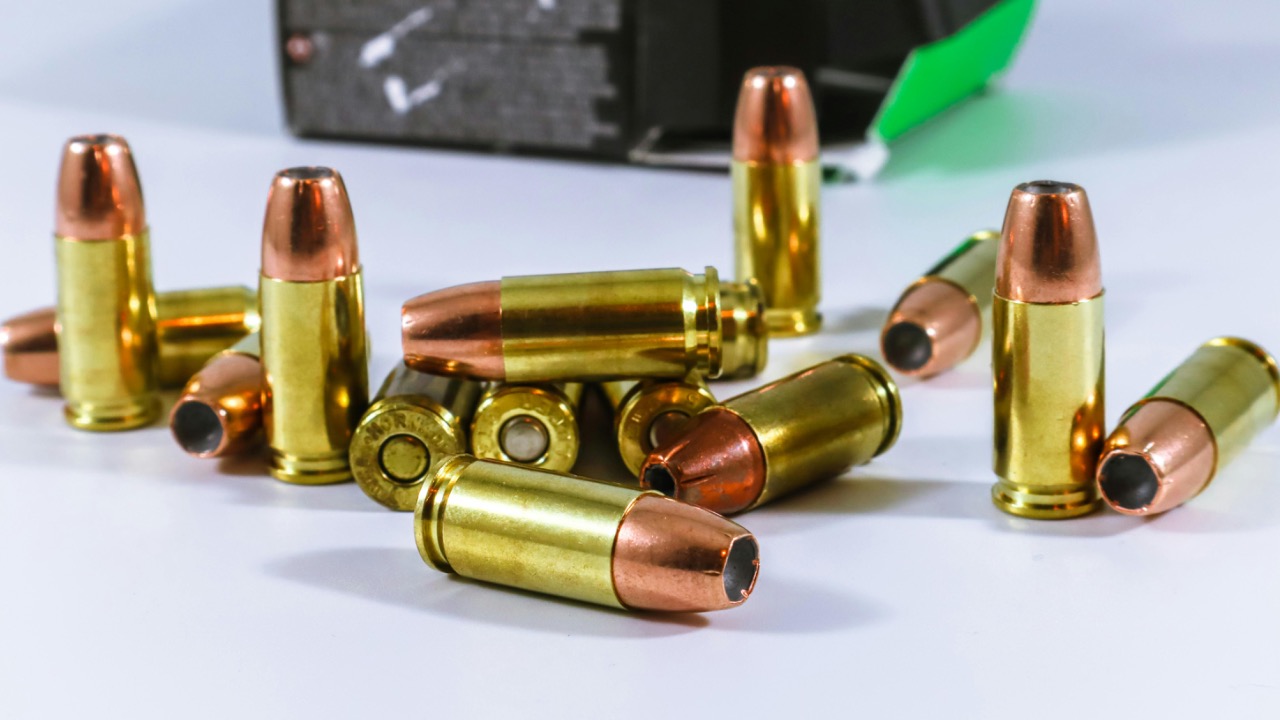
Myth: Hollow Points Are Illegal for Civilians sounds dramatic, but it is flatly wrong. The ATF’s 2022 Firearms Guide states that “Hollow-point ammunition is not inherently more dangerous or illegal for civilian purchase in the U.S., despite urban legends claiming it’s banned under international law like the Hague Convention, which applies only to wartime use.” That means the Hague rules do not control what you carry in your concealed pistol or keep in a nightstand gun.
When people believe hollow points are off-limits, they either avoid buying defensive ammo altogether or grab cheap Full Metal Jacket loads that are more likely to overpenetrate in a house. That is not safer for you or anyone on the other side of a drywall wall. Understanding that quality hollow points are legal lets you spend money on rounds that are actually designed to stop a threat efficiently instead of punching through it and continuing on.
2. Myth: Brass-Cased Ammo Is Always Superior to Steel
Myth: Brass-Cased Ammo Is Always Superior to Steel keeps a lot of shooters from saving money on practice. A 2021 Hornady Ballistics Study reports that “Brass-cased ammo does not always outperform steel-cased ammo in reliability; tests on 5.56mm NATO rounds showed steel cases feeding 98% as reliably as brass in AR-15 platforms when properly lubricated.” That is a tiny difference for range work, especially when you are burning through bulk cases.
There is a related rumor that Steel, Cased Ammo Ruins Your Gun, repeated so often that some shooters refuse to run TulAmmo at all, even though There is a pervasive myth that this damage is inevitable. In reality, the bigger risk is buying the cheapest brass you can find and assuming it must be better. If you understand that decent steel-case can run at 98% of brass reliability, you can stretch your training budget without babying your rifle.
3. Myth: FMJ Bullets Are Military-Only
Myth: FMJ Bullets Are Military-Only pops up whenever someone sees “mil-spec” on a box and assumes it is off-limits. The NRA’s 2023 Ammo Buyer’s Report explains that “Full Metal Jacket (FMJ) bullets are not restricted to military use only; civilians can legally buy them for target practice, countering the myth that they’re ‘military-exclusive’ per 18 U.S.C. § 921.” That statute does not carve FMJ out as some special government-only projectile.
When shooters think FMJ is forbidden, they either overpay for premium defensive loads just to punch paper or avoid buying bulk training ammo entirely. FMJ is exactly what you want for high-volume drills, carbine classes, and zeroing optics. The smart move is to buy affordable FMJ for practice, then a smaller stash of purpose-built defensive ammo for carry, instead of letting a misunderstanding of 18 U.S.C. § 921 dictate your whole ammo shelf.
4. Myth: Listed Muzzle Velocities Hold True at Range
Myth: Listed Muzzle Velocities Hold True at Range leads people to overestimate what their rifles can do. The U.S. Army Research Laboratory’s 2020 Velocity Report notes that “Ammo velocity claims on packaging are measured under SAAMI standards at 50 feet from the muzzle, not at the target; a .223 Remington round listed at 3,240 fps actually drops to 2,800 fps at 100 yards.” That is a meaningful loss in both speed and energy.
If you buy a box labeled 3,240 fps and assume that number holds at 200 yards, you will misjudge drop, wind drift, and terminal performance. Hunters who ignore that 2,800 fps figure at 100 yards may push light .223 Remington loads beyond where they expand reliably on game. Understanding how SAAMI test distances work keeps you from choosing a cartridge on marketing numbers instead of real downrange behavior.
5. Myth: All Hollow Points Expand Perfectly
Myth: All Hollow Points Expand Perfectly encourages people to grab the cheapest “HP” box and call it good. Lucky Gunner Labs’ 2022 Gel Test Analysis found that “Handgun hollow points do not always expand reliably in all calibers; 9mm Federal HST expanded in 92% of tests, but cheaper alternatives like Winchester White Box failed in 35% due to overpenetration, not superior design.” That 35% failure rate is a big deal if you are betting your life on it.
Buying any hollow point with a pretty picture on the box and assuming it behaves like 9mm Federal HST is a mistake. Loads that fail to expand and overpenetrate behave more like FMJ, which can be a liability in crowded environments. The smart buyer looks at real gel data, picks proven designs, and accepts that “hollow point” is a category, not a guarantee, so price and performance both matter.
6. Myth: +P Ammo Boosts Power Without Risks
Myth: +P Ammo Boosts Power Without Risks is one of the quickest ways to shorten a pistol’s life. The SAAMI’s 2021 Pressure Standards Update clarifies that “+P ammunition is not universally ‘hotter’ or more powerful; it operates at 1.38x standard pressure (e.g., 38,500 psi for 9mm +P vs. 35,000 psi standard), but requires a pistol rated for it to avoid damage, as per Glock’s 2022 manual warning.” That extra 3,500 psi is nothing to ignore.
Some buyers load every magazine with +P thinking they are getting free performance, then run it through compact pistols that are not rated for that pressure. Over time, that can accelerate wear, batter locking surfaces, and increase recoil to the point that follow-up shots suffer. The better approach is to confirm your gun is rated, test a small amount of +P for function, and then decide if the modest gain is worth the extra cost and stress on the platform.
7. Myth: Foreign Ammo Is Always Cheaper and Better
Myth: Foreign Ammo Is Always Cheaper and Better used to sound true when pallets of 7.62x39mm were stacked in every shop. A Forbes 2023 Ammo Market Analysis notes that “Import bans on Russian ammo post-2022 Ukraine invasion led to a 40% price surge in 7.62x39mm, from $0.25/round to $0.35/round, but domestic alternatives like Tula steel-case match quality at lower cost without performance loss.” That 40% jump erased much of the old bargain advantage.
Clinging to the idea that foreign equals cheaper leads buyers to hoard imported cases at inflated prices while ignoring domestic or non-Russian options that now compete on both cost and quality. If Tula steel-case can match quality without performance loss, it makes more sense to compare current per-round prices and reliability than to chase the memory of 25-cent surplus. Market shifts matter more than country-of-origin stickers.
8. Myth: Berdan Primers Make Ammo Unreloadable
Myth: Berdan Primers Make Ammo Unreloadable keeps a lot of useful brass in the trash. The NSSF’s 2020 Shooting Safety Survey reports that “Berdan-primed ammo is not inferior to Boxer-primed; both are reloadable with proper tools, and Berdan cases from Eastern European surplus have a 95% success rate in Dillon Precision reloaders.” That 95% success rate shows the problem is tooling and technique, not primer style.
When reloaders assume Berdan is worthless, they pass up cheap Eastern European surplus or shoot it once and toss it, even though Dillon Precision equipment can handle it effectively. For high-volume shooters, that is money left on the table. Learning how to identify and process Berdan cases lets you turn what others discard into usable reloads, especially in calibers where Boxer brass is scarce or expensive.
9. Myth: Subsonic Ammo Guarantees Whisper-Quiet Shooting
Myth: Subsonic Ammo Guarantees Whisper-Quiet Shooting is fueled by movie silencers and marketing copy. The Buffalo Bore 2022 Penetration Study states that “Subsonic ammo for suppressed rifles is not always quieter; .300 Blackout subsonic at 1,000 fps with a 220-grain bullet reduces noise by only 20-25 dB over supersonic, depending on suppressor length, per SilencerCo tests.” A 20 to 25 dB cut is helpful, but it is not Hollywood quiet.
Buyers who expect “whisper” levels often skip ear protection or spend heavily on subsonic loads that do not fit their actual use. Real-world suppressed .300 Blackout is still loud enough to damage hearing indoors, and subsonic rounds trade velocity and trajectory for that modest noise reduction. As with Myth, Ballistic, Fingerprints, Are Foolproof, where Poor-quality ammo complicates identification, expectations need to match physics, not TV scripts.

Asher was raised in the woods and on the water, and it shows. He’s logged more hours behind a rifle and under a heavy pack than most men twice his age.