10 Caliber choices that don’t make sense for whitetail hunters
Whitetail hunters love to argue about calibers, but some choices simply do not make sense once you look at real-world performance. The smart play is to stay close to the proven midrange cartridges that dominate expert lists of top deer rounds. Here are 10 calibers that fall outside those proven lanes and create more problems than they solve for whitetail hunters.
1. .22 Long Rifle
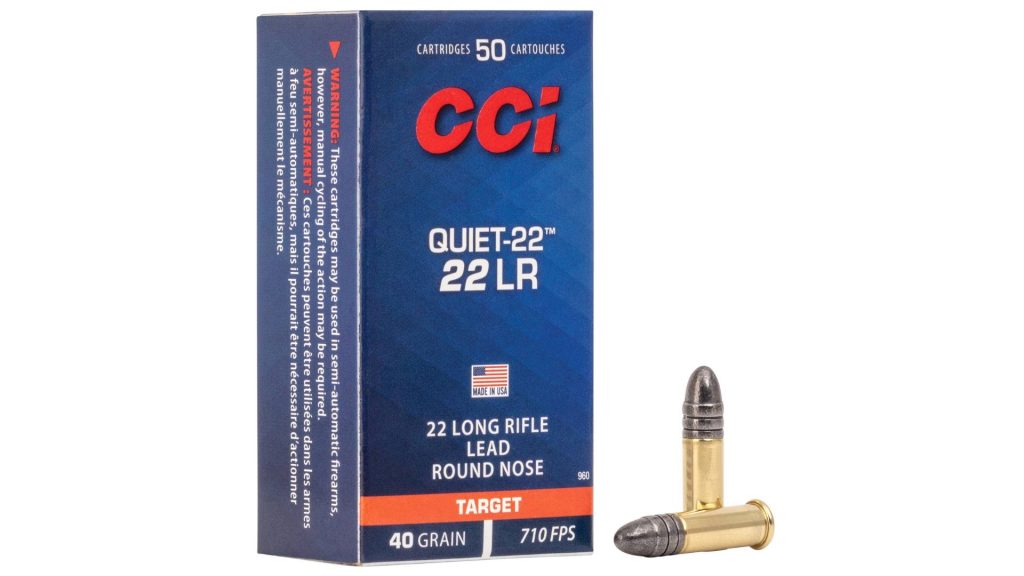
The .22 Long Rifle is a fantastic small‑game and plinking round, but it is badly underpowered for whitetails. It is not included among the top deer cartridges in the widely cited list of 11 best, which is built around centerfire options with far more energy. Rimfire bullets in this class struggle to penetrate vitals consistently, especially on quartering shots or bigger-bodied northern deer.
Using .22 Long Rifle on deer often leads to long tracking jobs, lost animals, and a higher chance of wounding rather than cleanly killing. Ethical hunting means choosing a cartridge that carries enough velocity and bullet weight to break shoulders or punch through ribs at realistic woods ranges. I see .22 LR as a training tool for new hunters, not a primary whitetail option.
2. .17 HMR
The .17 HMR is another rimfire that looks attractive because it is flat shooting and accurate, but it lacks the energy needed for reliable penetration on deer-sized game. It is also absent from the same group of proven whitetail cartridges that highlight midrange centerfires with solid terminal performance. Lightweight .17 bullets tend to fragment quickly, which is great on varmints but a liability on a big-bodied buck.
On whitetails, that fast fragmentation can mean shallow wounds that do not reach lungs or heart, especially if bone is hit first. Hunters who try to stretch .17 HMR into deer duty are taking on unnecessary risk when better options are widely available. I keep .17 HMR in the truck for coyotes and groundhogs, not for filling a deer tag.
3. .223 Remington
The .223 Remington sits in a gray area for whitetails. Some detailed discussions of winners and losers in deer cartridges note that several popular rounds offer affordable pricing and plentiful availability but lack effective energy transfer, and .223 often lands in that debate on the margin of acceptable performance. Even when specific loads like 60 g partitions or 62-grain controlled-expansion bullets are praised, they are usually framed as careful, limited-use options.
Other resources aimed at new hunters, including guides that say “Discover the” pros and cons of 223, 270, 300 for deer, treat .223 as the lightest end of the spectrum and emphasize its narrow window of ethical use. I have seen it work on smaller-bodied Deer with premium bullets, but compared with classic 308 or 6.5 Creedmoor loads highlighted in complete guides, it gives up too much margin for error for most whitetail hunters.
4. 9mm Parabellum
The 9mm Parabellum is built as a defensive pistol round, not a primary hunting cartridge. It does not appear in curated lists of serious whitetail rounds, which focus on rifle cartridges that carry far more energy and better sectional density. Even from a carbine, typical 9mm loads lack the velocity and bullet construction needed to drive deep through shoulders or on steep quartering angles.
At bow ranges, a 9mm might kill a deer with perfect placement, but the margin is razor thin and bullet performance is inconsistent. For most hunters, that means a higher risk of wounded animals and poor blood trails. I view 9mm carbines as fun range guns or defensive tools, not something to bring into a deer camp that has access to proper rifles.
5. .44 Magnum
The .44 Magnum has a long history in revolvers and short carbines, but it is still a handgun cartridge at heart. It is not listed among the top rifle choices for whitetails, which lean heavily on bottleneck centerfires that shoot flatter and carry more energy at distance. Heavy .44 bullets drop quickly, making precise holds tricky beyond typical bowhunting ranges.
In thick timber, a skilled shooter with a .44 Magnum lever gun can certainly kill deer, yet the recoil and arcing trajectory make it harder to place shots cleanly than with a mild 270 or 308. When newer straight-walled rifle rounds are praised for being flatter and “not anywhere near as squirrely,” they highlight exactly where .44 Magnum starts to feel dated for serious deer work.
6. .50 BMG
The .50 BMG is the opposite problem, a massive long-range machine-gun cartridge that is extreme overkill on whitetails. It is nowhere to be found in serious whitetail cartridge rundowns, which focus on practical hunting rifles instead of 50-pound bench guns. Video of an “Unbelievable” whitetail doe hunt with a 50 BMG shows the raw power involved, but also how wildly mismatched that power is to a 150-pound animal.
Recoil, blast, and rifle weight make .50 BMG miserable to carry and shoot in real deer country. Meat damage can be severe, and the risk of overpenetration is huge on crowded properties. I see it as a stunt round for Deer on private ranges, not a sensible choice for anyone who cares about efficient, repeatable kills in normal whitetail seasons.
7. .338 Lapua Magnum
The .338 Lapua Magnum was designed for military snipers engaging targets at extreme distances, not for still-hunting whitetails in the hardwoods. It is absent from mainstream deer cartridge shortlists that emphasize manageable recoil and practical field accuracy. In most whitetail terrain, realistic shots fall well inside the ranges where a 30-06 or 6.5 Creedmoor already performs flawlessly.
Dragging a heavy .338 Lapua into a tree stand adds recoil, muzzle blast, and ammo cost without delivering any real benefit on 100-yard shots. For the average hunter, that extra punishment encourages flinching and poorer marksmanship. I would rather see someone shoot a mild 223 or 270 well than fight a magnum built for work far beyond normal deer distances.
8. .17 Remington Fireball
The .17 Remington Fireball is a niche varmint round that pushes tiny bullets at high speed, and it is too light for consistent whitetail takedowns. It does not appear in any serious whitetail cartridge rankings, which instead highlight mid-caliber centerfires with enough bullet weight to hold together through bone. Like other .17s, it is optimized for explosive hits on small predators, not deep penetration.
On deer, that design shows up as shallow wounds and unpredictable terminal performance, especially if the shot is not perfectly broadside. Hunters who stretch .17 Remington Fireball into deer duty are gambling with ethics and recovery odds. I keep it in the same category as .17 HMR, a specialist tool for varmints that has no real business in a whitetail blind.
9. .45-70 Government
The .45-70 Government has a cult following, but in modern high-pressure loads it brings heavy recoil that many whitetail hunters do not handle well. It is not included in the influential list of top 11 deer cartridges, which leans toward more balanced options. In the woods, that recoil can turn quick shot opportunities into flinched misses or gut hits.
Big, slow bullets also arc significantly, making precise holds past 150 yards more challenging than with modern 300 or 6.5 loads. While I respect the history and close-range punch of .45-70, most whitetail hunters are better served by flatter, softer-kicking rounds that let them practice more and shoot cleaner when it counts.
10. .300 AAC Blackout
The .300 AAC Blackout was built around suppressed, short-barreled rifles, and its subsonic performance is the main selling point. That same trait limits its effective deer range, since slow, heavy bullets do not expand reliably at distance. It is not part of the core whitetail calibers highlighted when experts say “Discover the” best options from 223 to 300 Win Mag in detailed caliber breakdowns and videos like Deer debates.
Supersonic .300 Blackout loads can work on close-range whitetails, but trajectory and energy fall off quickly compared with classic 30-06 or 308 choices. For most hunters, that means a much tighter envelope for ethical shots and more homework on specific loads. I see .300 Blackout as a specialized tool for suppressed hog or coyote work, not a primary whitetail caliber when better all-around options are easy to find.
Supporting sources: 5 Best Deer.

Asher was raised in the woods and on the water, and it shows. He’s logged more hours behind a rifle and under a heavy pack than most men twice his age.