9 Firearms that demanded skill before forgiveness
Some guns will cover for sloppy handling. Others punish every mistake. The nine firearms here all demanded real skill before they offered any forgiveness, whether you were a redcoat on a muddy field or a paratrooper dropping into a hot landing zone.
1. The Unforgiving Brown Bess Musket
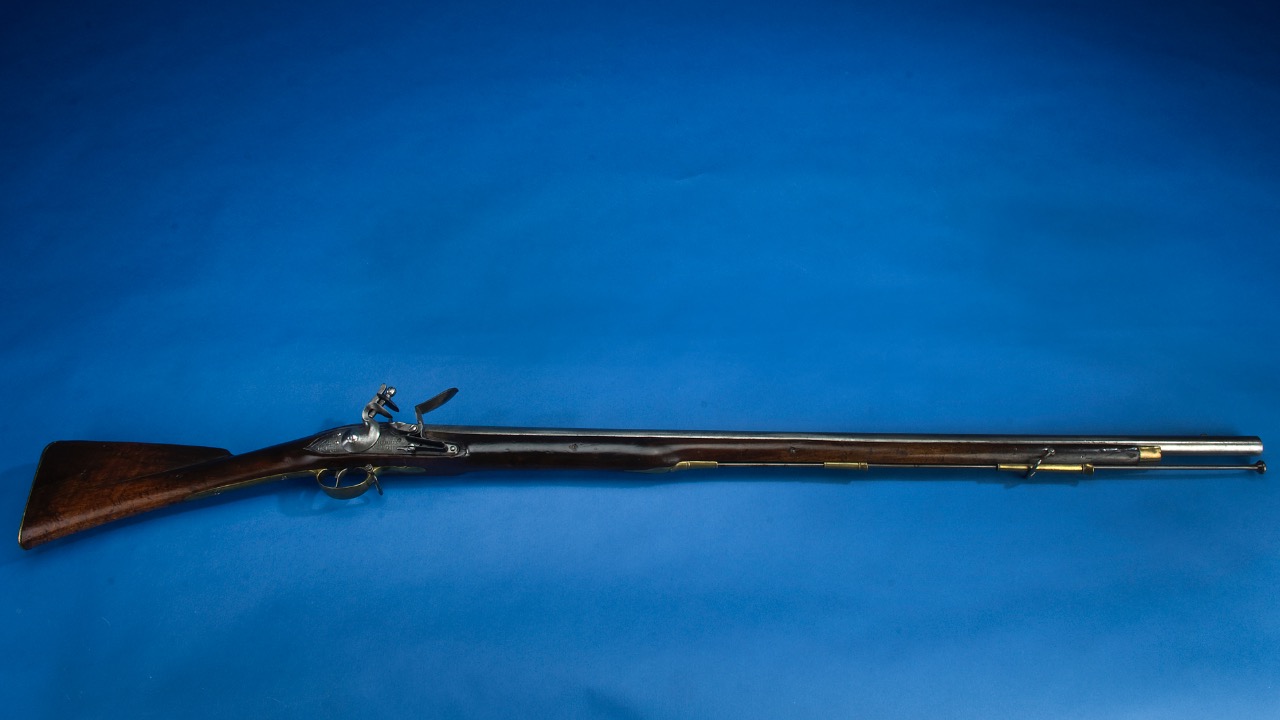
The Brown Bess was the British Army’s muzzle-loading smoothbore Land Pattern Musket, in service from 1722 to 1838. Each shot meant measuring powder, pouring it, seating the ball, and then ramming everything home with a ramrod. Contemporary accounts put that whole dance at up to 20 seconds per shot under ideal conditions.
If you rushed the sequence or short-stroked the ramrod, you invited misfires, hangfires, or a ball lodged halfway down the barrel. On a battlefield built around volleys, the soldier who could keep that rhythm under stress had a real edge, while the clumsy loader became dead weight in the line.
2. Colt Paterson’s Perilous Cylinder Loading
The Colt Paterson revolver, introduced in 1836 by Samuel Colt, looked like a huge leap forward but came with strings attached. Each of its five cylinders had to be loaded individually with powder, ball, and cap, then carefully reassembled. There was no safety mechanism, so any slip in that process could leave caps mis-seated or chambers unevenly charged.
HistoryNet’s reporting notes that misfires were common for anyone who lacked the patience and touch to prep the gun correctly. In a saddle holster or a coat pocket, an inattentive user risked a dead trigger when it mattered or, worse, an unintended discharge if a cap got bumped at the wrong moment.
3. Dreyse Needle Gun’s Moisture Vulnerability
The Dreyse needle gun, adopted by Prussia in 1841, fired paper cartridges pierced by a long, needle-like firing pin. That clever idea allowed faster loading from the breech, but it came with a nasty tradeoff. The breech mechanism and the needle itself were highly vulnerable to moisture and fouling.
Military History Quarterly describes how wet conditions quickly turned the action sluggish, then useless, unless a soldier knew how to strip, dry, and maintain the internals in the field. In a rain-soaked campaign, the men who mastered that upkeep kept firing while less careful units fought their rifles as much as the enemy.
4. LeMat Revolver’s Dual-Barrel Complexity
The LeMat revolver, patented in 1856 by French physician Jean Alexandre LeMat, was an overachiever on paper. It packed nine revolver chambers around a central shotgun barrel, originally a 20-gauge, with separate triggers and hammers to manage both. A related museum piece records a nine-shot .40 caliber cylinder paired with a 16-gauge tube developed by the French Jean Alexandre, an in-law of Confederate Beauregard.
American Rifleman’s coverage notes that under recoil those parts often shifted just enough to misalign. A shooter had to manage grip, trigger choice, and recoil recovery with real finesse to keep the gun running. In untrained hands, the LeMat’s complexity turned from advantage into a slow, awkward liability.
5. Krag-Jørgensen’s Tedious Side-Loading
The Krag-Jørgensen rifle, standard U.S. issue from 1892 to 1903, used a distinctive side-loading magazine. On paper, that gate let a soldier top off the rifle without opening the bolt. In practice, the design allowed only one round at a time unless the user had drilled the motion until it was second nature.
The Army Historical Foundation points out that this slowed reloads compared with rival rifles that accepted chargers or clips. In a fight where volume of fire mattered, the Krag rewarded the man who had practiced feeding that side gate smoothly and punished anyone who fumbled cartridges under pressure.
6. Ross Rifle’s Hazardous Hot Brass Ejection
The Ross rifle, issued to Canadian forces starting in 1914, used a straight-pull bolt that looked fast on the parade ground. In the trenches, its quirks turned dangerous. The Canadian War Museum notes that if the bolt was not cycled in a smooth, controlled stroke, the action could eject hot brass alarmingly close to the shooter’s face.
That meant a tired or panicked soldier could literally injure himself with his own rifle. Combined with mud-sensitive tolerances, the Ross demanded a level of cleanliness and bolt discipline that was hard to maintain in front-line conditions, which is why so many Canadians swapped it for more forgiving Lee-Enfields when they could.
7. Pedersen Rifle’s Dirt-Prone Toggle Lock
The Pedersen rifle, a 1918 U.S. experimental semi-auto, relied on a toggle-lock system instead of a rotating bolt. Forgotten Weapons’ analysis explains that this mechanism ran well in clean conditions but began to bind with dirt and fouling after roughly 100 rounds. Once grit worked into the joints, the action slowed, then seized.
Keeping it running meant meticulous cleaning and lubrication that few infantrymen could spare time for in the field. The rifle effectively favored the armorer or meticulous marksman over the average grunt, which helped doom it in trials against designs that tolerated mud and neglect far better.
8. FG 42’s Overheating Gas System
The FG 42 paratrooper rifle, introduced by Nazi Germany in 1942, tried to give airborne troops rifle power in a compact package. Its gas system, however, overheated after about 20 shots, and the rifle was notoriously recoil-sensitive. Osprey’s research notes that sustained fire quickly pushed the mechanism toward jams and parts wear.
To keep the FG 42 alive in combat, a paratrooper needed disciplined trigger control, short bursts, and careful maintenance. Treated like a light machine gun, it cooked itself. Treated like a precision rifle, it rewarded a skilled shooter with fast follow-ups, but there was very little margin for sloppy handling.
9. Gyrojet Pistol’s Arcing Trajectory Challenge
The Gyrojet pistol, developed by Merton Gage in 1965, fired rocket-propelled bullets instead of conventional cartridges. Those projectiles started at low velocity and accelerated as they burned, which meant the round followed a noticeable arc at close range. Guns & Ammo’s coverage notes that early shots often missed high or low if the shooter aimed like he would with a normal handgun.
To use a Gyrojet effectively, you had to understand that odd trajectory and time-on-target, then adjust your point of aim accordingly. Inexperienced users could be wildly off at a few yards, while a trained hand who knew the arc could place shots more reliably at distances where the rocket had fully spun up.

Asher was raised in the woods and on the water, and it shows. He’s logged more hours behind a rifle and under a heavy pack than most men twice his age.