The Conversation Happening Around Campfires This Year
Across backyards, church camps, corporate retreats and wildfire briefings, the glow of a campfire has become a stage for some of the most urgent conversations of the year. People are gathering in its light to talk about faith, mental health, parenting, climate risk and even fundraising strategy, treating the circle of chairs as a rare space for honesty. I see those flames reflecting a deeper shift, as communities rediscover how much can change when we sit still, look up from our screens and listen to one another.
The ancient pull of the fire circle
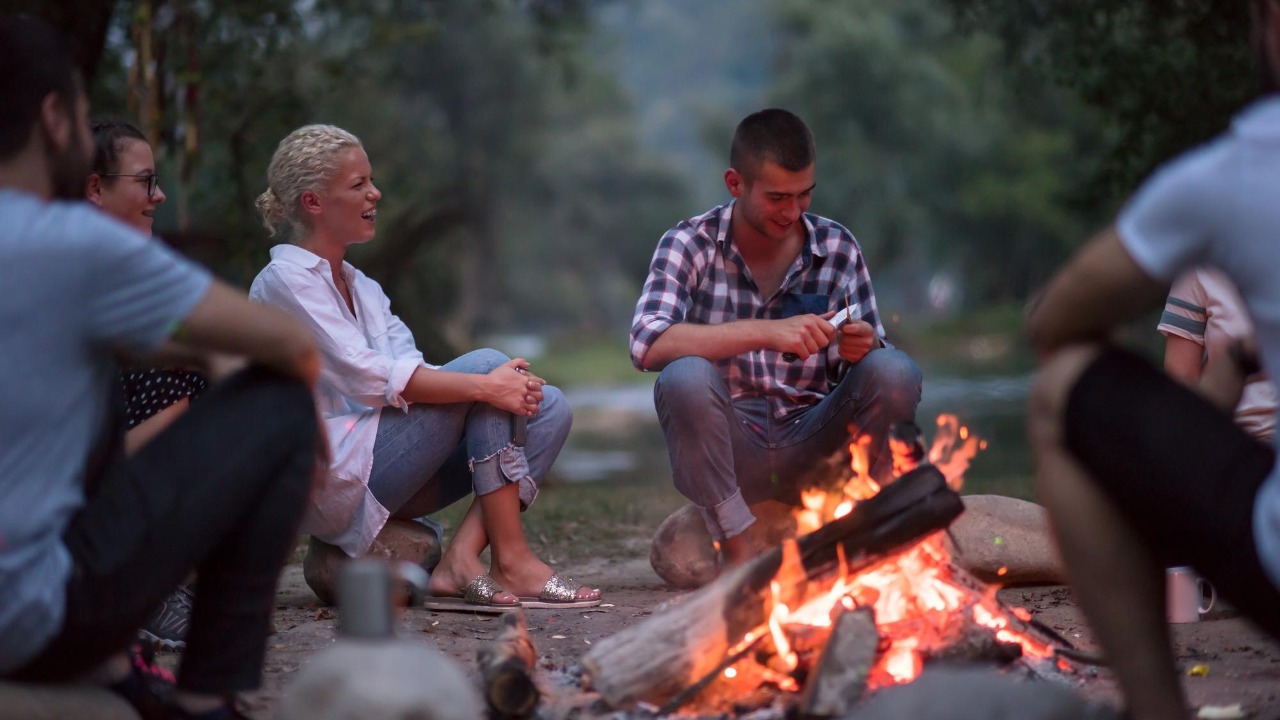
Long before anyone called it “screen time,” people understood that stories land differently when they are told in the half light of a fire. Educators who design outdoor learning spaces describe how “Campfires There is a sacred quality to storytelling” and how important it is to gather people “around the fire or under a tree” when the goal is to be heard rather than just informed, a reminder that the format of a conversation can matter as much as its content Campfires There. That instinct is resurfacing in modern settings, from rural retreats to suburban cul-de-sacs, as people look for ways to step outside the churn of notifications and talk like their grandparents once did.
In practice, the campfire has become a kind of analog counterweight to the digital feed, a place where the algorithm is replaced by whoever happens to pull up a chair. When I listen to people describe their best nights outdoors, they rarely mention the view and almost always mention the conversation, the way a simple circle of logs or folding chairs can turn strangers into confidants. That is the conversation happening around campfires this year, and it is less about nostalgia than about rebuilding habits of attention that many of us quietly fear we have lost.
Faith, discipleship and “no small talk”
In religious communities, the fire ring has become an unofficial sanctuary. One ministry leader framed it bluntly in a post titled “Campfire Conversations Change Lives,” arguing that “Some of the deepest discipleship doesn’t happen behind a pulpit, it happens around a fire,” and tying that conviction to a broader “CampfireRevival” and “FaithInTheWild” movement that treats the outdoors as a classroom for belief Campfire Conversations Change. The claim is not that sermons no longer matter, but that the follow up questions, the doubts and the personal stories often surface only when the microphone is gone and the sparks are the only spotlight.
That same hunger for depth is reshaping secular circles. In one community built around what its organizer simply calls “One” intentional conversation, the rule at the table or around the fire is stark: “No small talk. No side conversations. No overlapping voices,” just a single question and one person answering at a time, a deliberate push against the fragmented chatter that fills most group gatherings One. I find it telling that people are willing to embrace that kind of discomfort in the glow of a fire, where silence feels like part of the ritual rather than a social failure.
Teenagers, phones and the fight for attention
Parents, meanwhile, are discovering that a fire pit can do what a dozen family meetings cannot. One viral clip aimed squarely at exhausted caregivers insists that “If you want your teenagers to actually talk to you… build this,” arguing that “Indoors, we stare at screens. We are distracted. But outdoors, around a fire, human behavior changes,” because “memories happen around the fire” rather than on the couch Indoors. The pitch is not subtle, but it resonates with families who have watched dinner conversations dissolve into parallel scrolling.
Camps are formalizing that instinct into policy. At one canyon program, leaders describe how, “Since the policy change, campers have grown used to the idea of ‘no phones,’ and parents are thrilled,” with one parent reporting that their child “didn’t even miss having a phone for the best two weeks” of the summer Since the. Around the campfire, that absence of devices is not framed as deprivation but as a chance to stare at the flames instead of a feed, and to let the conversation wander in ways that no group chat can quite replicate.
Mental health, therapy and the science of staring at flames
Therapists are paying attention to what happens when people sit in that circle. Practitioners of what they call “Campfire therapy” describe a simple model, using “the fire ring’s healing and soothing benefits to help people open up while navigating stress,” and pointing to evidence that time around a controlled flame can “reduce anxiety, promote relaxation, and improve social interactions” when it is paired with skilled facilitation Campfire. I have heard clinicians describe the way the repetitive motion of the flames gives anxious hands and eyes somewhere to rest, making it easier to say the hard thing without locking eyes across a sterile office.
At the same time, health experts are warning that the romance of smoke has limits. In one widely shared post, a parent quotes epidemiologist Scott Weichenthal of McGill University saying, “A campfire is like a small, man-made forest fire that you are inhaling. We know that has health impacts … cardiovascular and respiratory effects. That is settled science,” a warning that underpins a lawsuit by a Montreal family seeking 4.2 million dollars after exposure to campfire smoke at Mont-Tremblant Park My family. The same post links everyday fire pits to the broader risk of wildfires in “our vulnerable forests,” a reminder that the mental health benefits of gathering around flames have to be balanced with the physical costs of breathing them.
Who gets heard around the fire
For all its intimacy, the campfire is not automatically inclusive. In a Deaf and hard of hearing community group, one member admits, “I have not done this. It sounds like it’s mediated and peaceful,” only to be met by Joanne B Snow, who replies, “oh im hooked. Its SO addicting,” before others jump in to describe how difficult it can be to follow conversations when they “can’t see lips well” in the dark and how “The struggle is very real” in large groups Joanne. That thread reads like a quiet corrective to the assumption that everyone experiences the fire circle as comforting.
Facilitators who work with teams are trying to design around those gaps. One consultant writes that “Some teams need a little support in setting it up,” and explains that in their retreats they “never ask people to be ‘vulnerable’” or force disclosures, instead focusing on structure and safety so that “Some” participants who are quieter or more cautious still feel able to speak in the glow of the flames Some. I have seen that same logic applied in youth camps that position staff between the fire and the group, not as gatekeepers but as human captioners, repeating key points for those who might have missed them in the crackle and cross talk.
From backyard chats to branded “Campfire Conversations”
The language of the fire circle is spilling into professional life. A Christian camping network is promoting a virtual “Campfire Conversations” webinar, billing it with a leafy “Happening TOMORROW” banner and inviting people to “Join” speaker Ron Frey for a discussion of stewardship, unity and the hashtags “BetterTogether,” “StrongerTogether” and “UnityInCommunity,” even though the event itself takes place on screens rather than around actual logs Happening TOMORROW. A companion post on another platform promotes the “Now Available” “Campfire Conversations Recording” of “Successful Fundraising in Seven Simple Ideas” with Ron Frey, hosted on a YouTube channel for people who want to revisit the session Now Available. The metaphor is doing a lot of work here, promising that even a webinar can feel like a circle of trust.
Elsewhere, the campfire is a literal workplace brand. The profile of one remote-first company explains that its leaders ask, “How do you support your team to grow and improve?” and answer by saying they want “Campfire Labs” to be a place where every employee has “the opportunity to grow personally and professionally,” treating development conversations as a core part of the job rather than an annual formality How. In the camp world itself, “Campfire Talk Season 5 Episode 3” on YouTube opens with a host saying “so let’s go ahead. and um and get started i’m just going to give a little intro. here um our topic today is camp evolution change,” using the language of a casual fireside chat to frame a serious discussion of how camps adapt Feb.
Podcasts, retreats and the “sh*t we never say”
Audio creators are leaning into the same imagery. On one podcast feed titled “Campfire Conversation,” the “Episodes” list includes a segment called “The First Full (time) Year,” in which host Samantha Thomson reflects on “six summers and 15-months of ‘full time’ camp work” and what it meant to spend “two summers at camp” in a role that blurred the line between job and calling Episodes. The show’s format, longform and reflective, mirrors the way people talk when the embers are low and nobody is watching the clock.
Psychologist Dr. Jody Carrington has gone further, naming a series “Campfire Conversations, The Sh*t We Never Say There,” and describing how “There’s something sacred about firelight. It softens us. Slows us. It holds space for no judgment, just presence,” a manifesto for why some of the hardest truths are easier to voice when the only light is orange and flickering Campfire Conversations. I hear echoes of that in leadership retreats where facilitators talk about “What happens around the campfire? Shifts,” and note again that “Some teams need a little support in setting it up,” because the goal is not forced confession but the kind of incremental honesty that can change how a group works together Some teams.
Wildfire risk, neighborliness and the ethics of a match
All of this intimacy is unfolding in a year when fire itself is under scrutiny. In Los Angeles, at least 31 people died in recent blazes, and researchers estimate that smoke and stress likely contributed to hundreds more deaths, a toll that has forced residents to rethink everything from evacuation plans to how they check on older neighbors Dec. One analysis argues that “neighborliness matters for wildfire safety,” pointing to stories of residents who helped elderly and disabled people evacuate and calling for education that “starts in the schools” so that the next generation sees fire not just as ambiance but as a shared responsibility LA fires.
On the ground, the warnings are blunt. One hiking group shared a photo of a smoldering ring with the caption, “Please remember while camping that we are in a HIGH RISK fire warning. Today while enjoying a hike we found two campers who not only left their site a mess but also left their campfire smoldering,” a situation they reported to forest rangers Please. U.S. forest officials are sounding similar alarms, describing an “increase in trash & illegal campfires” that has them worried about both litter and ignition sources in already stressed landscapes U.S. forest officials. In Southern Colorado, the Forest Service has gone so far as to label abandoned campfires a “dangerous trend,” underscoring how a single careless circle of stones can undo the work of entire fire seasons Forest Service.

Leo’s been tracking game and tuning gear since he could stand upright. He’s sharp, driven, and knows how to keep things running when conditions turn.