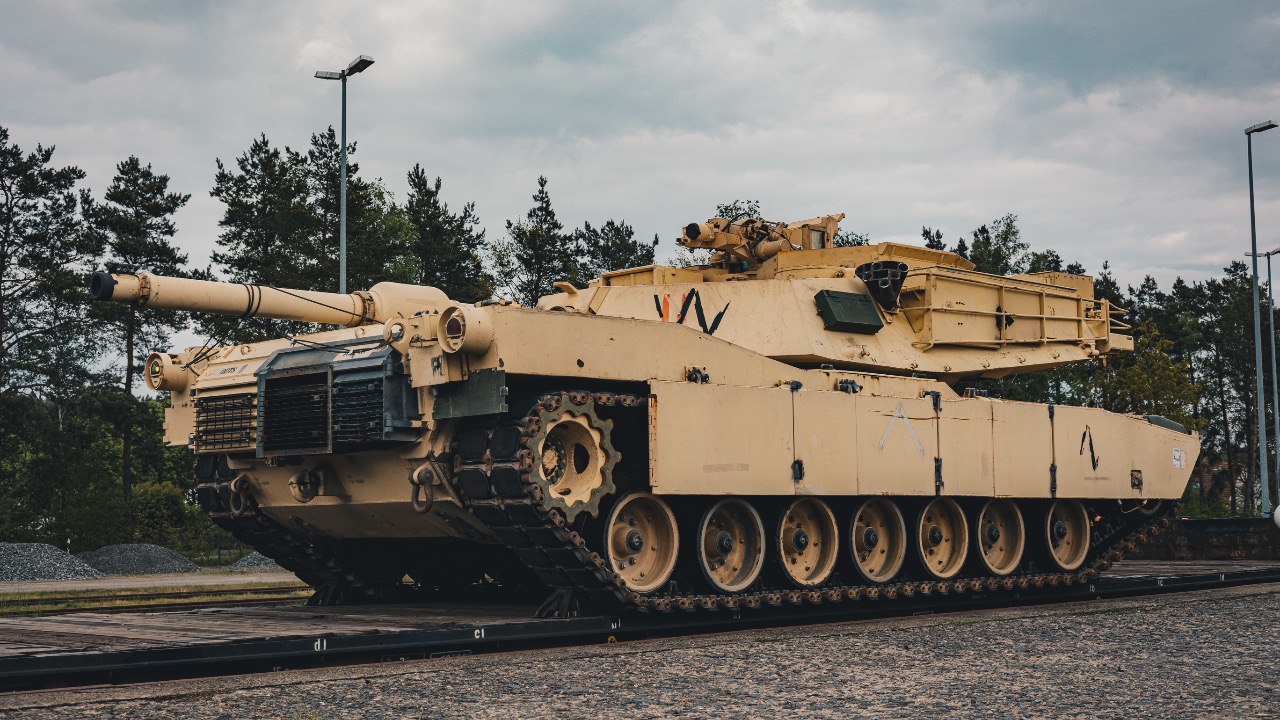
A Ukrainian M1 tank led a mission many believed was a one-way trip
The Ukrainian counteroffensive around Pokrovsk has produced some of the war’s most intense armored battles, and one mission in particular has already entered frontline legend. A single M-1 Abrams tank, sent forward as the lead vehicle of an assault group along a route soldiers had long called a road of death, was tasked with a job that many in the unit quietly assumed would cost the crew their lives. Instead, the operation became a case study in how Western armor, Ukrainian improvisation and raw nerve can shift the balance on a battlefield ruled by drones.
The story of that mission is not only about one crew and one machine. It also captures how the Ukrainian 425th Assault “Rock” Regiment, newly equipped with American armor, is trying to claw back ground in a sector that Russian forces had turned into a meat grinder, and how both sides are learning, sometimes brutally, what it means to fight under what soldiers call total drone dominance.
The regiment that chose the hardest road
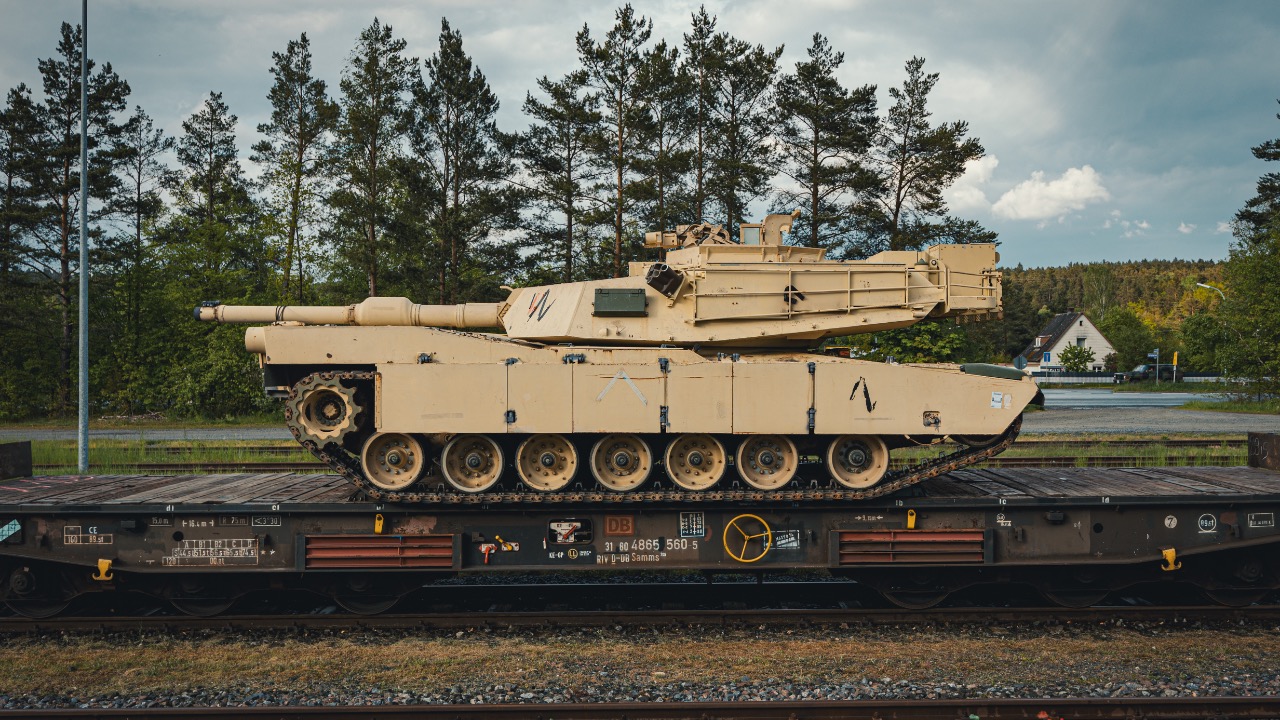
The unit at the center of the mission, the Ukrainian 425th Assault “Rock” Regiment, had already earned a reputation for taking on some of the toughest assignments on the Pokrovsk axis. According to accounts of the battle, the regiment mustered an assault group built around a single M-1 tank and ordered it to move along a notorious road of death that cut through Russian-occupied territory toward key Ukrainian positions that had been under constant pressure. Ukrainian observers had described this stretch of ground as a place where vehicles went forward and simply did not come back.
Commanders understood that any armored column on that route would be exposed to layered Russian defenses. The road was within range of artillery, covered by anti-tank teams and saturated with first-person-view drones that Russian operators had been using to pick off vehicles one by one. Even so, the regiment’s leadership decided to send the assault group, with the Abrams in front, because holding the line near Pokrovsk meant keeping that corridor open. As one detailed account of the operation on the road of death makes clear, the choice reflected both desperation and confidence in what the new tank could survive.
A mission framed as a suicide run
Within the Ukrainian military community, the plan was quickly described as a Suicide Mission. Soldiers had watched Russian units repeatedly drive columns into the same killing zones and had mocked that pattern for months. “We often laugh at the enemy when he sends his troops in columns to storm our positions,” wrote fundraiser and advisor Serhii Sternenko, who helps support frontline units and highlighted the Pokrovsk operation in his commentary on the fighting. Yet the 425th Assault Regiment objected to the idea that only Russian commanders could be reckless, and chose to risk its own column in similar fashion in order to break a stalemate.
That tension between ridicule and necessity ran through discussions of the mission. The regiment understood that under conditions of total drone dominance, any vehicle that lingered in the open would be hunted. Ukrainian observers had already been calling this sector a meat combine for over a year, a place where armored assaults were chewed up by artillery and drones in minutes. Still, the 425th Assault “Rock” Regiment accepted the risk and put the Abrams at the point of the spear, trusting both the crew’s skill and the tank’s design to give them at least some chance of surviving a task that looked like a one-way trip.
How the assault unfolded on the road of death
The assault group formed up in column, with the M-1 in the lead and a mix of infantry fighting vehicles and support armor behind it. The plan called for the Abrams to act as both shield and hammer, drawing fire and clearing the way for the vehicles that followed. The road itself cut through low, exposed ground with limited cover, which meant that once the column crossed a certain line, it would be visible to Russian spotters and vulnerable to artillery and drones almost immediately.
As the column advanced, Russian forces responded with a combination of artillery strikes and drone attacks. The Abrams absorbed multiple hits, including from drones that slammed into its anti-drone cage and reactive armor, while the vehicles behind it began to take damage. Ukrainian reports described several of those following vehicles being disabled by direct strikes and shrapnel. The M-1 crew pushed forward long enough to deliver supporting fire against Russian positions that had been harassing Ukrainian infantry for months, then shifted focus to protecting the rest of the column as it tried to extract.
In the chaos that followed, the assault group suffered heavy losses in equipment. Yet the most striking detail from the regiment’s own account was not the damage to metal but what happened to the people inside. “All vehicle crews were evacuated by the fifth combat vehicle in the column, which returned intact,” the 425th Assault Regiment stated, insisting that every crew member made it out alive despite the destruction of several vehicles on the road of death. That claim, reported from the same frontline narrative that described the evacuation by the, has been met with skepticism by some observers, who argue that the idea that no Ukrainians died is almost certainly a lie given the intensity of the fire.
Drone dominance and the meat combine
What happened on the road of death cannot be understood without looking at the role of drones. Both sides in the Pokrovsk sector have deployed large numbers of FPV drones, loitering munitions and reconnaissance quadcopters. Ukrainian soldiers refer to the area as a meat combine because any movement in the open is quickly spotted and targeted. “Our losses in the battle on March by drone strikes,” one Ukrainian observer named Thorkill explained, had been severe enough that troops had described the area as a meat combine for over a year, a phrase that captured how relentless and mechanical the killing felt to those on the ground.
The 425th Assault “Rock” Regiment went into the mission knowing that the enemy would use drones to track and attack the column. Russian operators had grown adept at steering FPV drones into weak points on vehicles, while artillery units adjusted fire in real time based on drone feeds. The Abrams and its supporting vehicles were fitted with anti-drone cages and reactive armor, but no amount of metal could fully offset the advantage that constant aerial surveillance gave to defenders. The decision to send the column anyway reflected a calculation that the potential payoff of breaking Russian lines outweighed the near certainty of losing vehicles to what Ukrainian troops had already labeled a meat combine.
Turning a war crime site into a road of death
The geography of the Pokrovsk fighting carries its own grim history. The road of death used in the assault runs through an area that had previously been the site of a documented war crime, where Russian troops had been accused of killing civilians early in the invasion. Ukrainian Marines And Paratroopers Backed By M-1 Tanks Have Turned The Site Of That War Crime Into What They Now Call A Road Of Death For Russian Troops, using repeated armored thrusts and artillery strikes to punish any Russian unit that tries to move along that corridor. The symbolism is not lost on Ukrainian soldiers, who see the transformation of a massacre site into a killing ground for Russian forces as a form of battlefield justice.
That history also explains why the 425th Assault “Rock” Regiment was willing to risk a column on the same ground. Holding and exploiting the road of death allows Ukrainian forces to threaten Russian logistics and to support Marines and paratroopers who are still pushing in nearby sectors. The decision to send an M-1 forward there was as much about messaging as it was about tactics. It signaled that Ukrainian units were prepared to commit some of their most valuable Western-supplied armor in order to keep pressure on an enemy that had once used the area to commit atrocities.
How Ukraine has reshaped the Abrams
The mission also highlighted how Ukraine has adapted the Abrams to a battlefield saturated with drones. When Ukraine received M-1 Abrams tanks from the United States and Australia, few outside observers expected how radically Ukrainian crews would modify them. Video analysis has shown that Ukrainian teams added heavy anti-drone cages over the turret and hull, layered on explosive reactive armor and mounted additional sensors in order to turn the Abrams into what some soldiers now call a turtle tank. These changes were aimed at making the tank more resistant to top-attack drones and guided munitions that had already destroyed large numbers of older vehicles.
Those modifications are part of a broader pattern in which Ukrainian crews have transformed the Abrams into a drone-resistant platform without sacrificing its main gun and fire control advantages. New anti-drone cages, reactive armor and battlefield innovation have allowed the tank to operate in areas where unmodified vehicles would be quickly destroyed. Analysts who have studied footage of the Pokrovsk fighting point to the turtle tank setup as one reason the lead M-1 was able to keep moving despite multiple hits during the assault. The evolution of these protections has been tracked in detail in a video report that begins with the line, “When Ukraine received M-1 Abrams tanks from the United States and Australia, few expected what would follow,” and goes on to explain how Ukrainian crews combined anti-drone cages, reactive armor and battlefield innovation to harden the tank against aerial threats, as seen in frontline footage.
Another segment of that same analysis shows how Ukrainian crews transformed the Abrams into a drone-resistant turtle tank while preserving full firepower. The report describes how Ukrainian teams installed new anti-drone cages, reactive armor and other battlefield upgrades so that the tank could survive repeated FPV strikes without catastrophic damage. These adaptations, documented in the section that details how “Ukrainian crews transformed the Abrams into a drone-resistant ‘turtle tank,’ combining heavy protection with full firepower. New anti-drone cages, reactive armor, and battlefield,” underline how much of the Abrams story in Ukraine is about local ingenuity rather than factory specifications, as illustrated by the turtle tank upgrades.
Inside the Abrams: why crews have a chance to live
The survival of the M-1 crew on the road of death also reflects the tank’s internal design. Ukrainian tankers who have operated both Soviet-designed T series tanks and the Abrams have repeatedly emphasized one key difference. In an interview about early combat experience, a Ukrainian M1 Abrams commander explained that “Thanks to the fact that the ammo is completely separated from the crew, the crew has a chance to survive (unlike in the T series tanks),” a reference to the blowout panels and armored ammunition compartment that are standard in the American design. In T series tanks, ammunition is stored inside the crew compartment, which has led to many instances of turrets being blown off when the ammo cooks off.

Leo’s been tracking game and tuning gear since he could stand upright. He’s sharp, driven, and knows how to keep things running when conditions turn.