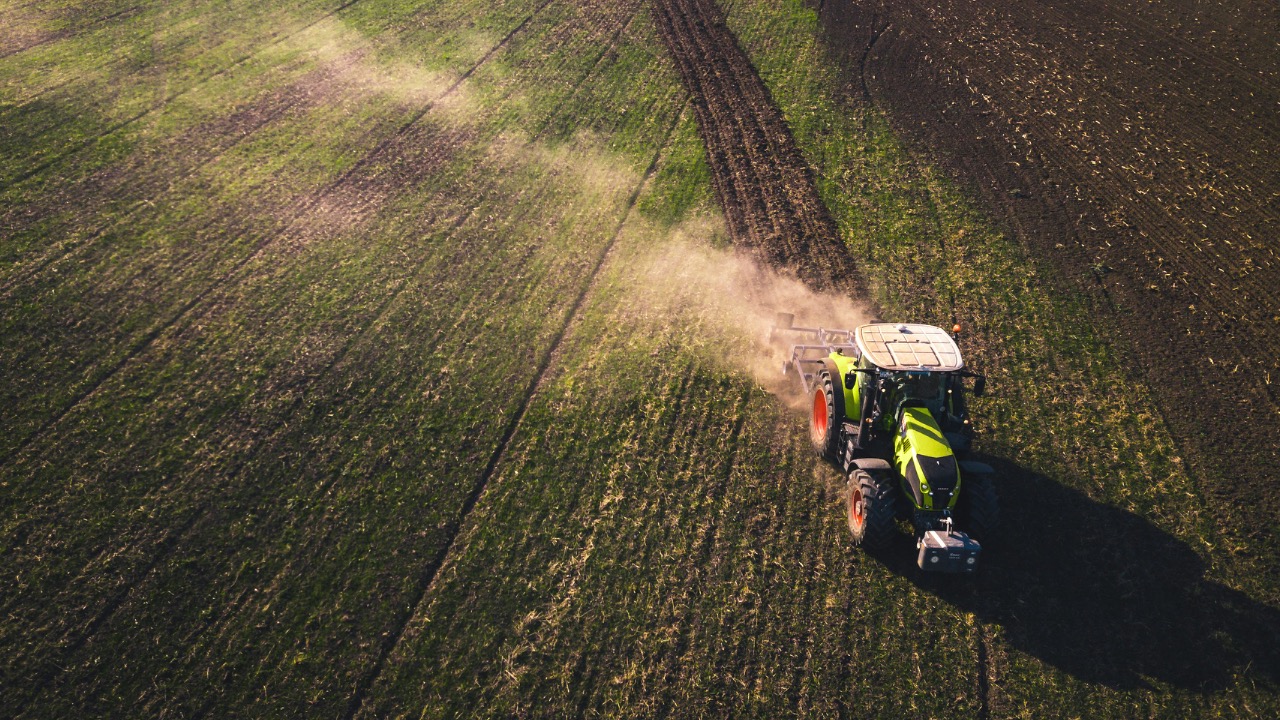
Farmers warn crop disease could have major economic consequences
Farmers across the United States are warning that a surge in crop diseases is colliding with an already fragile farm economy, raising the risk of deep losses that ripple far beyond rural counties. From rusts in corn and soybeans to head blight in wheat and barley, more pathogens are reaching more fields just as producers say they have little financial cushion left. The concern is not only about lower yields, but about whether another shock to farm income could spill over into food prices, local businesses and even broader economic stability.
Growers describe a sense of déjà vu as they watch disease pressure climb while balance sheets weaken, recalling earlier eras when falling commodity prices and rising costs pushed farms to the brink. They argue that if policymakers treat crop disease as a narrow agronomy problem rather than an economic threat, the country could be caught off guard by a downturn that starts in the fields and ends in the wider economy.
The economic warning lights already flashing

Even before new disease outbreaks are fully accounted for, surveys show producers are operating on thinner margins than they have seen in years. A New survey of the farm economy found that nearly half, or 46%, of producers expect to operate at or below break-even margins in the coming months, a stark indicator of how little room they have for further shocks. Another report on confidence in the ag sector found that high input costs remain the dominant hurdle, with 67% of producers naming them as the main barrier. Together, those numbers show that any disease that trims yields or forces extra fungicide passes can quickly turn a slim profit into a loss.
Growers are already describing the situation as a kind of perfect storm. The National Corn Growers Association has highlighted how producers are facing low commodity prices, steep fertilizer and fuel bills and rising interest expenses at the same time, with one analysis of farmer sentiment summarizing the mood as a grim economic outlook. NCGA President Kenneth Hartman Jr., who farms corn, soybeans and wheat in southern Illinois, captured the anxiety by calling the current mix of pressures “like the perfect storm” for growers in his region. When operators are already leaning on operating loans to cover basics, a disease event that shaves even a small percentage off expected production can be the difference between paying down debt and rolling it forward.
Crop diseases moving faster than available tools
Farmers are used to battling pests and pathogens, but researchers warn that the threat profile is changing faster than many management playbooks. A recent analysis of emerging hazards identified a group of high impact pests and pathogens dubbed the “Mean Sixteen,” and found that most of the crop pests and diseases on this list do not currently have fully effective treatments in place. The study, which drew on grower experiences and expert modeling, concluded that Most of the and diseases flagged have the potential to cause major losses for row crop farmers if they spread unchecked.
Producers on the ground are already confronting some of these threats. One Iowa grower who is watching both current and future risks described how he is battling present day pests while eyeing tomorrow’s “Mean Sixteen,” including Asian Soybean Rust. That fungal disease was first detected in the U.S. in Louisiana and has since moved into southern states like Geor, a reminder that once a pathogen gains a foothold, it can travel quickly across regions. Plant health specialists warn that climate trends are helping that spread, with one synthesis noting that “Warmer and drier conditions favor disturbances by insects, whereas warmer and wetter conditions favor disturbances from pathogens,” a pattern that increases the odds that new diseases will find hospitable conditions.
On-the-ground losses from Iowa to Texas
The economic impact of these diseases is already visible in specific states. In Iowa, corn growers who had been hoping for record yields saw that optimism cut back after Southern rust moved into fields. Agronomist Mark Lehman explained that it is difficult to quantify how much of Iowa’s corn crop was affected by Southern rust because damage varied widely from field to field, but he noted that the disease clearly cut into what could have been record yields for some operations. For farmers who had already forward contracted grain on the assumption of strong production, any yield shortfall can force them to buy back bushels at unfavorable prices, magnifying the financial hit.
Further south, Texas officials are sounding alarms about a different pathogen that threatens small grains and corn. In SAN ANTONIO, Texas leaders have warned producers and families about a harmful fungus called Fusarium that can cause head blight in wheat and other cereals, urging growers to monitor their fields closely to avoid finding out only at harvest that their crops are ruined. The Texas alert dovetails with broader research showing that SAN ANTONIO area producers could see both yield and quality losses if head blight is not caught early. Globally, officials in Georgia have also highlighted that Additionally, Fusarium causes head blight in wheat, barley, corn and rice, with estimates that this single disease is responsible for billions in worldwide economic losses each year.
Why disease shocks hit farm finances so hard
Crop pathology experts have long warned that plant diseases are a major threat to food security, but the economic mechanics of how they hit farm businesses can be just as severe. One technical overview on plant health explains that Crop diseases are caused by pathogens that attack leaves, stems, roots and grain, and that they can sharply reduce the quantity and quality of harvestable grain, fruits or seeds produced. Another agronomy summary that ranks Crop Diseases, Top, Economic Importance notes that crop diseases can have a direct impact on farm income by cutting yields, and an indirect impact by lowering the grade of grain, fruits or seeds produced, which then fetch lower prices at the elevator. When a disease like Fusarium head blight infects wheat, for example, it can contaminate kernels with mycotoxins that make them unsuitable for human food or even for feed in some cases.
Those biological hits land on top of an already stressed cost structure. A recent deep look at producer finances reported that When analysts ask what is preventing profitability, high input costs remain the dominant hurdle, with 67% of producers saying they are a hurdle for farmers in 2026. That means growers are paying more for seed, fertilizer, crop protection and fuel, all while facing the possibility that disease will prevent them from fully monetizing those investments. The National Corn Growers Association interactive map, highlighted in an Untitled project, shows just how many counties rely heavily on corn and soybean income, so when diseases reduce those revenues, the shock quickly spreads to equipment dealers, rural banks and local tax bases.
Lessons from history and the stakes for food security
Farm leaders warn that ignoring these warning signs risks repeating painful history. During the Great Depression, historical accounts from Iowa describe how, When prices fell they tried to produce even more to pay their debts, taxes and living expenses, only to see prices drop to just eight or ten cents for some commodities. That vicious cycle of overproduction in the face of low prices deepened the crisis for both farms and cities, as rural distress fed into bank failures and job losses. While the current situation is different in many ways, growers fear that a combination of weak prices, high costs and disease driven yield hits could once again push producers to chase volume, only to find that markets will not support it.

Leo’s been tracking game and tuning gear since he could stand upright. He’s sharp, driven, and knows how to keep things running when conditions turn.