Israeli military action in Gaza leaves at least 30 dead
Israeli airstrikes in Gaza have killed at least 30 people in a single day, turning a fragile ceasefire into a grim reminder that the war never really stopped for civilians. Health officials say the dead include several children, and rescuers are still pulling bodies from collapsed homes and tents. The attacks are part of a broader campaign that has already left tens of thousands of Palestinians dead and entire neighborhoods in ruins.
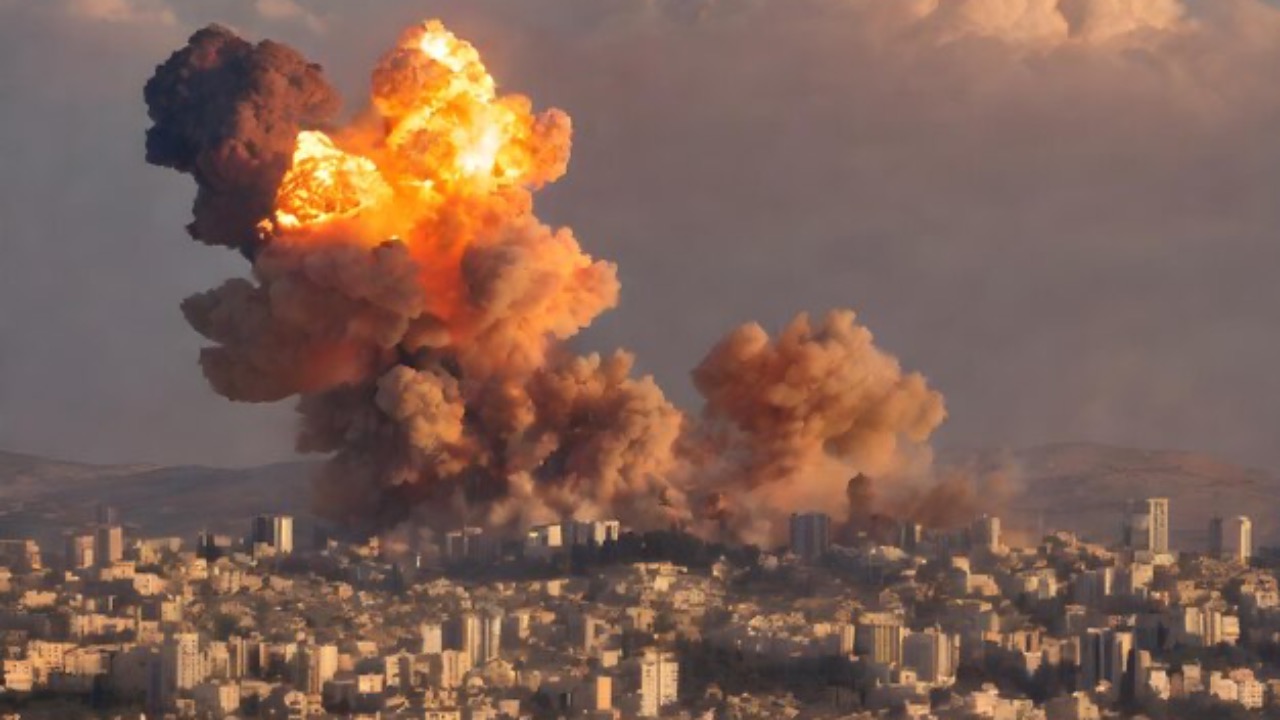
The latest strikes hit crowded districts, apartment blocks, and makeshift camps, catching families where they sleep and where they fled for safety. Even as negotiators talk about shoring up a ceasefire, the pattern on the ground is familiar: jets overhead, explosions in the dark, and survivors digging through rubble with bare hands.
The deadliest day in months

The new wave of bombing stands out even in a war that has normalized mass casualty days. Gaza’s health ministry reported that Israeli strikes killed more than 30 people in a single burst of attacks, making it the deadliest day in months since the current ceasefire framework took hold. Reporting from inside Gaza attributes the figure to a series of coordinated hits on residential areas, with officials stressing that the toll could climb as more bodies are recovered from collapsed buildings and debris, a pattern confirmed in detailed accounts of Israeli strikes.
Local officials say the victims include entire families who had already been displaced multiple times, along with several children whose bodies were carried from the rubble wrapped in blankets. Coverage from Gaza describes how emergency crews and neighbors rushed to the scenes with little more than stretchers and hand tools, trying to reach survivors before dust and suffocation finished what the blast started. The health ministry’s tally of more than 30 dead is treated as a minimum, not a final count, and it sits within a broader pattern of high-casualty incidents that have punctuated the supposed lull in fighting.
Strikes across Gaza’s crowded map
The attacks did not hit a single front line, they landed across the Strip’s already battered map. Officials and witnesses describe strikes on an apartment building in Gaza City and on a tent camp in Khan Younis, where displaced families had pitched canvas and plastic sheeting in what they thought was a safer zone. Health workers say several children were among the dead in these locations, and they emphasize that the sites were packed with civilians who had few options left after earlier evacuations deeper into the Strip, a reality laid out in reports on how the strikes hit locations throughout Gaza.
Rescue officials describe “several” separate impacts across the Strip, including in the south and center, which lines up with accounts of multiple blasts reported in different districts of the Strip. One of the hardest hit areas was the Sheikh Radwan neighborhood of Gaza City, where images show rescuers carrying bodies through streets choked with dust and shattered concrete. That district, known locally as Sheikh Radwan, has been repeatedly bombed since the war began, and residents say each new strike hits people who had already lost homes and relatives in earlier rounds.
Families buried in homes and tent camps
Accounts from medics and survivors sketch out a familiar, brutal pattern: a sudden blast, a building or tent line collapsing, then hours of digging for voices under the rubble. In Gaza City, officials say an apartment block took a direct hit, killing people in their beds and trapping others on the lower floors. At the same time, a tent camp in Khan Younis was struck, with witnesses describing shredded canvas, burned bedding, and bodies scattered among cooking pots and water jugs. Health officials say several children were killed there, and hospital directors report that the wounded arrived with blast injuries, burns, and shrapnel embedded deep in limbs and torsos.
Video and photos from the scene show neighbors and first responders hauling survivors out on doors and blankets, with ambulances overwhelmed and forced to triage in the street. One clip, circulated widely, shows a man screaming the names of his children as he claws at concrete chunks, while others try to calm him and keep him from injuring himself. The sense from the ground is that these were not precision hits on isolated military targets but wide area strikes that ripped through places where civilians had concentrated, which is why the casualty lists filled so quickly with women, elderly people, and kids.
“There’s no ceasefire” on the ground
On paper, the current arrangement between Israel and Palestinian factions is described as a ceasefire, but residents and health workers in Gaza use different language. One eyewitness, speaking after the tent camp strike, said bluntly that “there’s no ceasefire” when jets and drones keep circling and bombs keep falling. That sentiment is echoed in video reports that describe how the latest attacks produced one of the highest death tolls since the October truce framework was announced, with commentators noting that the pattern of strikes on camps and apartments looks very similar to the war’s earlier phases, a point underscored in footage shared under the title “There’s no ceasefire”.
Diplomats talk about a ceasefire “inching forward,” but for people in Gaza the phrase rings hollow when they are still counting fresh graves. Analysts tracking the negotiations say the strikes that killed at least 30 Palestinians risk hardening positions on both sides, making it harder to lock in any durable halt to the fighting. Reports on the political track note that the attacks came as mediators were trying to finalize new terms, even as Israeli strikes were killing 30 Palestinians on the ground.
Hospitals stretched past the breaking point
Every new round of bombing lands on a health system that is already gutted. Gaza’s main hospitals report that they are operating far beyond capacity, with emergency rooms packed and intensive care beds full. Directors describe staff working around the clock with dwindling supplies of fuel, anesthesia, and antibiotics, and they warn that some of the wounded who might have survived earlier in the war are now dying because there are no operating theaters or ventilators left. One widely shared update from Gaza’s health authorities put the cumulative death toll at 71,795, a figure that includes those killed by the latest strikes and earlier phases of the war.
Medical staff say they are now forced to treat patients on floors and in hallways, with relatives fanning the injured to keep them conscious in the heat and dust. The pressure is compounded by the fact that many clinics and smaller hospitals have been damaged or destroyed, pushing more patients into the remaining facilities. Health workers describe a grim calculus where they must decide who gets scarce blood units or the last functioning ventilator, knowing that some of those left aside will not survive the night. In that context, each new mass casualty incident is not just another number, it is a fresh shock to a system that has already been pushed past its limits.
Rafah bottleneck and the wounded who cannot leave
For the gravely wounded, the only real hope of advanced care lies outside Gaza, but that path is largely blocked. At the Rafah crossing, which links the Strip to Egypt, rights groups and health officials say dozens of critically ill and injured Palestinians have been denied exit permits or left waiting for days. Live updates from the border describe how at least three Palestinians were killed over the past day as attacks intensified, even as only a small number of patients were allowed to leave for treatment. The same reporting notes that the overall death toll tied to the war has reached 529 during the period covered by that liveblog, underscoring how the violence continues even during supposed lulls.
Families who make it to the southern edge of Gaza describe a cruel bottleneck at Rafah, where buses and ambulances line up in the hope that a new list of approved names will be posted. Some patients die waiting, according to doctors who say they have watched cancer cases and complex trauma patients deteriorate beyond saving while paperwork stalled. The latest strikes that killed at least 30 people add to that backlog of urgent cases, but there is no sign that the exit regime is loosening in step with the rising need.
Counting the dead: from 70,000 to 71,795
For months, Israeli officials and their supporters questioned the accuracy of Gaza’s health ministry figures, suggesting that the numbers were inflated or manipulated. That line has become harder to sustain. Reporting on internal discussions in Israel describes how senior officials have now broadly accepted that roughly 70,000 Palestinians have been killed in Gaza, aligning closely with the ministry’s tallies. Those same reports note that the figure does not include thousands of people still missing under rubble, which means the true toll is almost certainly higher.
Commentary on this shift points out that once Israel acknowledged the basic accuracy of the numbers, some of its official and unofficial spokespeople moved quickly into damage control. Analysts like Israel watchers argue that the debate has now shifted from whether the figures are real to what they mean for questions of proportionality, responsibility, and potential war crimes. The updated health ministry count of Gaza Death Toll to 71,795 only sharpens those questions, especially when set against single days like the latest strikes that killed more than 30 people at once.
Neighborhoods erased: Sheikh Radwan, Rimal and beyond
Numbers tell part of the story, but the map of Gaza shows the rest. Entire districts that once housed bustling markets, schools, and apartment towers are now fields of broken concrete. In Gaza City, the Sheikh Radwan area has been hit repeatedly, including in the latest wave of strikes where rescuers were photographed carrying bodies through its shattered streets. Nearby, the upscale Rimal neighborhood, once home to embassies, clinics, and cafes, has been flattened in earlier rounds, leaving only skeletal high-rises and cratered roads.
Further south, Khan Younis has become a symbol of how displacement offers no real safety. Families who fled from the north set up tents and makeshift shelters there, only to find themselves under fire again as the latest strikes tore through camps and residential blocks. Social media posts from Gaza, including one that noted the death toll rising to 29 since dawn with more than 30 injured after airstrikes on different locations, capture the sense that every corner of the Strip is now within the blast radius. That update, shared with the tag Gaza, came even before the full scope of the latest 30 deaths had been tallied.
How the latest strikes fit into the wider war
The 30 people killed in the newest attacks are a small fraction of the overall toll, but they matter because of when and how they died. Analysts note that the strikes came during a period when international mediators were trying to lock in a more durable ceasefire, and when many outside observers assumed the intensity of the war had eased. Instead, reports from Gaza describe a pattern of recurring air raids, artillery fire, and targeted operations that keep the population in a constant state of fear. Coverage that tallies how Israeli strikes killed more than 30 Palestinians in Gaza frames the latest attacks as part of a continuing campaign, not an isolated flare up.
Other reports emphasize that the strikes which killed at least 30 Palestinians, including several children, are among the highest daily death tolls since the October ceasefire framework was announced. That detail, highlighted in coverage of how Israeli strikes killed 30 as the ceasefire “inched forward,” undercuts any narrative that the war is winding down in a meaningful way for civilians. Instead, the picture that emerges is of a grinding conflict where even on so called quiet days, people in Gaza live with the risk that a single night of bombing can erase dozens of lives and push the overall death toll into yet another grim milestone.

Asher was raised in the woods and on the water, and it shows. He’s logged more hours behind a rifle and under a heavy pack than most men twice his age.