Five calibers that quietly outperform their reputation in the field
Every hunting camp has its caliber legends, from the .30-06 to the 6.5 Creedmoor, and every gun counter has a few cartridges that gather dust because shooters underestimate what they can do. In practice, some of those “back shelf” rounds carry quietly on, dropping deer, hogs, and coyotes with less recoil, less noise, or better efficiency than their reputations suggest. This piece looks at five such calibers that routinely punch above their public image once they leave the spec sheet and hit real dirt and real animals.
Each of these cartridges has a different niche, from low-recoil mountain rifles to suppressed hog guns, yet they share a pattern: consistent field performance that is better than the chatter on forums or at the range would have many shooters believe.
How underrated calibers end up in the shadows
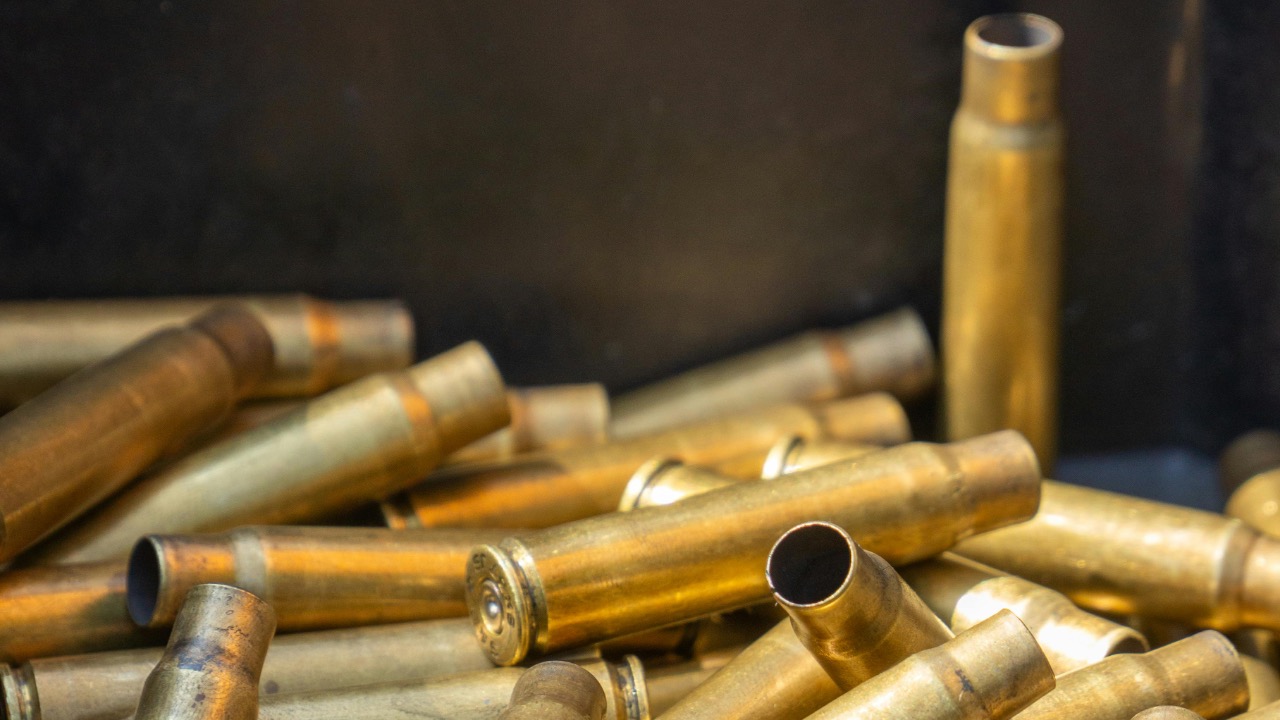
Rifle cartridges rarely live or die purely on performance. They are pulled along by marketing cycles, social media buzz, and the current obsession with extreme-range shooting. A detailed look at modern long-range options shows how much attention flows to a handful of trendy rounds that promise flat trajectories and high ballistic coefficients, while older or quieter performers barely rate a mention. Guides who compare the latest 6.5s and 7mms for the best long-range calibersoften mention only a narrow set of cartridges, even though other rounds with similar external ballistics have been working quietly for decades.
Lists of “underrated hunting cartridges” keep resurfacing, and they tend to follow the same pattern. Older designs lose visibility as new chamberings hit store shelves, and niche performers are overshadowed by more heavily marketed options. One detailed rundown of Underrated Hunting Cartridges points out that cartridges can be pushed aside not because they fail in the field, but because they are not “new” anymore. The result is a kind of herd behavior, where shooters cluster around a few fashionable calibers and ignore others that might fit their needs better.
Recoil also shapes reputation. A detailed breakdown of Top Low Recoil shows that many hunters assume they must absorb heavy punishment to get reliable performance on game, even though modern bullet design and careful cartridge engineering have changed that equation. When a cartridge offers moderate recoil and modest paper ballistics, many shooters assume it is “weak,” even if field reports show consistent penetration and clean kills.
The popularity of semi-automatic platforms has also changed which cartridges get attention. The .223 Remington and 6.5 Creedmoor dominate marketing for AR-style and lightweight bolt rifles, while other mid-size rounds that fit short actions or AR-15 magazines are often treated as curiosities. Yet those same mid-size rounds may deliver exactly the blend of handling, terminal effect, and manageable recoil that many hunters actually need.
.222 Remington: the original precision small-game specialist
The .222 Remington is a classic example of a cartridge that has slipped from the spotlight without losing its edge in the field. Early descriptions of the .222 Remington highlight how it was paired with factory ammunition such as Winchester Super X .222 Rem 50-grain Jacketed Soft Point, a combination that delivered impressive accuracy and controlled expansion on small game and varmints. Modern overviews of Most Underrated Cartridges still single out that .222 Rem 50-grain Jacketed Soft Point pairing as an example of how well the cartridge works when matched with the right bullet.
In practical terms, the .222 Remington offers several advantages that do not show up in social media discussions. It has mild recoil, a soft report compared with larger centerfires, and enough case capacity to push a 50-grain bullet fast enough for flat trajectories out to typical varmint distances. For foxes, bobcats, and groundhogs on small properties where noise and ricochet risk matter, the .222 Rem can be more neighbor friendly than hotter .22 centerfires while still anchoring animals cleanly.
Its reputation suffers mostly by comparison. The .223 Remington and later .22 centerfires overshadow it in marketing, and many new shooters never see .222 rifles on the rack. Yet shooters who own older bolt guns in this chambering keep reporting tight groups and consistent field performance. The cartridge’s relatively long neck and gentle case design also make it forgiving for handloaders, which helps maintain accuracy in older rifles with some throat wear.
Where it shines is in realistic small-game hunting. In wooded Eastern states, for example, a .222 Remington with a 50-grain soft point is more than enough for coyotes at 150 yards and gives a much lighter recoil experience than stepping up to a larger .24 or .25 caliber. For young hunters or recoil-sensitive shooters who want a centerfire without jumping straight to .223, the .222 Remington still fills a useful niche.
6.5×55 Swede: old-world efficiency that keeps working
The 6.5×55 Swede sits at an interesting crossroads. It is at least 130 years old, with development traced to 1891, yet it continues to appear on short lists of underrated rifle calibers. A detailed look at Most Underrated Rifle points out that the 6.5×55 Swede has “fallen out of favo” in some markets despite an excellent track record in the field. That same analysis highlights how, from a drop and retained energy perspective, the 6.5×55 Swede still compares very well with many newer 6.5 offerings.
Ballistically, the 6.5×55 Swede benefits from long, high sectional density bullets that carry energy efficiently and penetrate deeply. In Scandinavian countries it has long been used on moose and wild boar, which speaks to its real-world capability on heavy game. Modern long-range discussions that focus on the latest Creedmoor often mention the 6.5×55 Swede as a kind of spiritual predecessor, yet the older cartridge continues to deliver very similar performance when loaded to modern pressures in strong actions.
Recoil is another part of the story. The 6.5×55 Swede produces a relatively gentle push rather than a sharp snap, which makes it attractive for shooters who want to practice extensively without fatigue. That characteristic aligns with the broader trend identified in low recoil cartridge discussions, where the emphasis is on rounds that allow accurate shooting without punishing the shooter. In practical terms, a hunter who can place a 140-grain 6.5 bullet precisely in the vitals will get better results than someone flinching behind a harder-kicking magnum.
The 6.5×55 Swede’s under-the-radar status comes partly from rifle availability. Many examples are older military conversions or European sporting rifles that do not show up in big-box gun counters. Ammunition can be less common on American shelves than 6.5 Creedmoor or .308 Winchester. Yet for hunters willing to track down a suitable rifle and a reliable supply of ammunition, the payoff is a cartridge that combines flat trajectories, deep penetration, and manageable recoil in a way newer rounds are still trying to match.
In the field, that translates into confidence on medium and large game. A 140-grain soft point or bonded bullet from a 6.5×55 Swede will comfortably handle whitetails, mule deer, and elk at normal hunting distances. For an all-around rifle that does not beat up the shooter, this “old” caliber quietly continues to outperform its muted reputation.
.300 Blackout: subsonic authority beyond the hype
The .300 Blackout, also known as .300 BLK and .300 AAC Blackout, is one of the few cartridges on this list that was born in the era of social media. Early coverage of the .300 Blackout framed it as a specialized round for suppressed AR-15s, optimized for short barrels and subsonic loads. A closer look at Most Underrated Hunting notes that the .300 Blackout is often dismissed as a “range toy” or purely a tactical round, even though it has proven itself on deer and hogs when used inside its effective envelope.
In subsonic form, with heavy bullets at around 1,000 feet per second, .300 BLK is not a long-range hunting cartridge. What it does offer is a combination of quiet report, particularly when suppressed, and heavy-for-caliber projectiles that transfer energy efficiently at close range. That makes it attractive for hog control near structures, for night hunting with thermal optics, and for property owners who need to manage deer or pigs without alarming neighbors. Guides who discuss the best calibers to routinely mention .300 BLK for this reason, often alongside .22LR as the “Legendary Plinker” for quiet practice.
Supersonic .300 AAC Blackout loads change the equation again. With lighter bullets in the 110 to 150 grain range, the cartridge effectively turns an AR-15 into a short-range .30 caliber carbine. It will not match the trajectory of a .223 Remington at 300 yards, but inside 150 yards it delivers a larger frontal area and more mass on target, which many hunters prefer for medium game. The same analysis that tags .300 Blackout as underrated also points out that, within that range band, it performs “double duty on hogs” and deer when paired with expanding bullets designed for its velocities.
The cartridge’s reputation suffers because many shooters expect it to be something it is not. It is not a long-range performer, and it is not designed to compete with full-size .308-class rounds. Instead, it fills a narrow but important niche: quiet, efficient performance from short barrels, with the flexibility to run both subsonic and supersonic loads in the same rifle. For landowners in the Southeast who spend nights shooting feral hogs over feeders, or for hunters in thick timber who rarely see beyond 100 yards, .300 BLK’s real-world record looks far better than its internet reputation.
In that sense, .300 Blackout mirrors the broader pattern seen across underrated calibers. When judged by the wrong standard, it looks unimpressive. When measured against the specific jobs it was built to do, it quietly excels.
7mm-08 Remington: balanced recoil and reach
The 7mm-08 Remington often appears in discussions of overlooked cartridges because it sits in the shadow of more famous rounds on both sides. On one hand, the .308 Winchester dominates the short-action big-game market. On the other, newer 7mm cartridges and the 6.5 Creedmoor soak up attention from long-range shooters. Yet detailed evaluations of underrated cartridges point out that the 7mm-08 produces less recoil than many of its peers while still driving high sectional density bullets with excellent performance on game.
From a design perspective, the 7mm-08 Remington is simply a .308 Winchester case necked down to accept 7mm bullets. That combination yields efficient powder burn in short barrels, good accuracy, and the ability to launch 120 to 150 grain bullets at velocities that keep trajectories relatively flat out to common hunting distances. The 7mm bullet diameter also allows for very sleek profiles with high ballistic coefficients, which helps retain velocity and energy downrange.
Recoil is a major part of its appeal. Reports that compare 7mm-08 to cartridges like the .270 Winchester and .30-06 often note that it feels softer on the shoulder, especially in lightweight mountain rifles. That aligns with the broader trend highlighted in low recoil hunting discussions, where the focus is on rounds that encourage accurate shooting rather than raw energy figures. A hunter who can comfortably fire a 7mm-08 from field positions without flinching is more likely to place shots precisely, which matters more than a small difference in muzzle energy.
In the field, 7mm-08 Remington has built a quiet reputation among guides and experienced hunters as a “do almost everything” cartridge. With 140 grain bonded or monolithic bullets, it has enough penetration for elk at moderate ranges. With lighter 120 or 130 grain bullets, it becomes an excellent deer and antelope round with minimal meat damage. Its efficient case design also makes it a natural fit for compact bolt-action rifles, which are easier to carry in steep terrain or thick brush.
Despite these strengths, 7mm-08 rarely appears in splashy marketing campaigns. It is not new, it is not extreme, and it does not come with a built-in social media fan club. That is precisely why it belongs on a list of calibers that outperform their reputations. For hunters who value a balance of recoil, trajectory, and terminal effect, 7mm-08 Remington quietly delivers.
.338 Federal: big frontal area in a compact package
The .338 Federal is one of the youngest cartridges in this group, yet it already fits the pattern of being underestimated. Detailed rundowns of underrated deer cartridges describe the .338 Federal as “a flexible, hard-hitting cartridge” that works as well on deer as it does on larger game. The same analysis notes that it hits much harder than the parent .308 Winchester, thanks to its larger bullet diameter and heavier projectiles, while still fitting in short-action rifles.
Technically, the .338 Federal is a .308 case necked up to .338 caliber. That change allows it to launch bullets in the 180 to 210 grain range at moderate velocities. The result is a cartridge that gives up some trajectory compared with a .270 Winchester or 7mm-08, but gains a significant increase in frontal area and momentum. At typical woods ranges and in thick brush, where shots rarely stretch beyond 200 yards, that trade makes sense for hunters who prioritize penetration and large wound channels.
Recoil is present but manageable, especially in rifles with sensible weight and stock design. It is stouter than a .308 Winchester, but far less punishing than magnums in the .338 class. For hunters who want more authority on elk, moose, or large black bears without stepping into magnum territory, .338 Federal offers a middle ground. The cartridge’s relatively compact case also means it can be chambered in lightweight, handy rifles that are easier to carry in steep or dense terrain.
Where .338 Federal’s reputation suffers is availability. Factory ammunition options are limited compared with mainstream calibers, and not every manufacturer offers rifles chambered for it. That scarcity can create a self-reinforcing cycle, where shooters avoid the cartridge because they worry about finding ammunition, and manufacturers respond by keeping production small. Yet for those who commit to it, especially handloaders, the performance on game is hard to ignore.
Field reports from guides and experienced hunters echo the description of .338 Federal as a cartridge that “will work as well on deer as it does” on heavier animals. On whitetails, it tends to produce quick, decisive kills with minimal tracking. On elk or moose at moderate ranges, heavy .338 bullets carry enough momentum to break shoulders and still reach vital organs. For hunters who spend most of their time inside 250 yards and want a cartridge that hits above its paper ballistics, .338 Federal is a clear example of a caliber that outperforms its reputation.
Why these five keep outperforming their reputations
Across the .222 Remington, 6.5×55 Swede, .300 Blackout, 7mm-08 Remington, and .338 Federal, a few common themes emerge. First, all five cartridges were designed around realistic use cases rather than marketing slogans. The .222 Remington was built for precision small-game work with bullets like the .222 Rem 50-grain Jacketed Soft Point. The 6.5×55 Swede and 7mm-08 Remington emphasize efficient ballistics and moderate recoil. The .300 BLK and .338 Federal focus on delivering heavy bullets from compact platforms.
Second, each cartridge benefits from modern bullet technology that was not available when some of them were introduced. Bonded cores, monolithic copper designs, and controlled-expansion soft points have extended the practical range and reliability of these rounds. A 140-grain bullet from a 6.5×55 Swede or a 150-grain projectile from a 7mm-08 Remington today behaves very differently on impact than early cup-and-core designs, which helps explain why these older cartridges still appear in lists of Best Long Range when evaluated with modern loads.
Third, shooter comfort plays a larger role than many spec sheets admit. Analyses of Global Reputation for certain deer calibers emphasize that a storied history and proven performance matter, but so does the ability to practice enough to place shots accurately. Low and moderate recoil cartridges like the 6.5×55 Swede and 7mm-08 Remington encourage that kind of practice. Even the .300 Blackout, in its niche, allows shooters to train extensively with subsonic loads that are easy on the ears and shoulders.
Fourth, platform flexibility matters. Guides who walk hunters through rifle choices for whitetails in Texas point out that Additionally, Bolt-action rifles can be chambered in a wide array of calibers, and depending on the shooter’s style, it may make sense to choose a less common chambering that better fits their needs. The .338 Federal and 7mm-08 Remington both take advantage of this flexibility in short-action bolt rifles, while .300 BLK does the same in AR-15 platforms.
Finally, perception often lags behind reality. In workplaces, performance is frequently measured on a Five-point Likert scale, where the Rating Label Behavioural anchor for “5” is “Exceptional/transformativ,” and managers struggle with what that actually means in practice. A detailed breakdown of Five Likert examples highlights how labels like “Exceeds expectations” can hide significant variation in real performance. Something similar happens with rifle cartridges. A few chamberings are labeled “exceptional” and promoted heavily, while others that consistently “exceed expectations” in the field receive little attention.
Social dynamics reinforce this pattern. Enthusiasts share photos and stories on platforms such as Guns and Ammo and Underrated Hunting Cartridges threads, and popular calibers get more likes and comments. Niche rounds like the .222 Remington or .338 Federal rarely go viral, even if they keep filling freezers. Visual platforms such as Guns and Ammoboards tend to highlight eye-catching setups and exotic builds, which again favors a small set of fashionable cartridges.

Leo’s been tracking game and tuning gear since he could stand upright. He’s sharp, driven, and knows how to keep things running when conditions turn.