Forgotten wildlife comebacks that shocked scientists
Every so often, the scientific record is forced to swallow its pride. A creature written off as extinct or relegated to fossils suddenly reappears, alive and stubbornly present. These wildlife returns do more than rewrite field guides; they challenge assumptions about how extinction is tracked and how much wildness still hides in the gaps of human knowledge.
From deep-ocean “living fossils” to spiny mammals that evade detection for generations, some of the most surprising comebacks have unfolded far from public attention. Taken together, they reveal a pattern of resilience, and a warning, that is quietly reshaping conservation science.
The coelacanth, a fish that outlived the dinosaurs
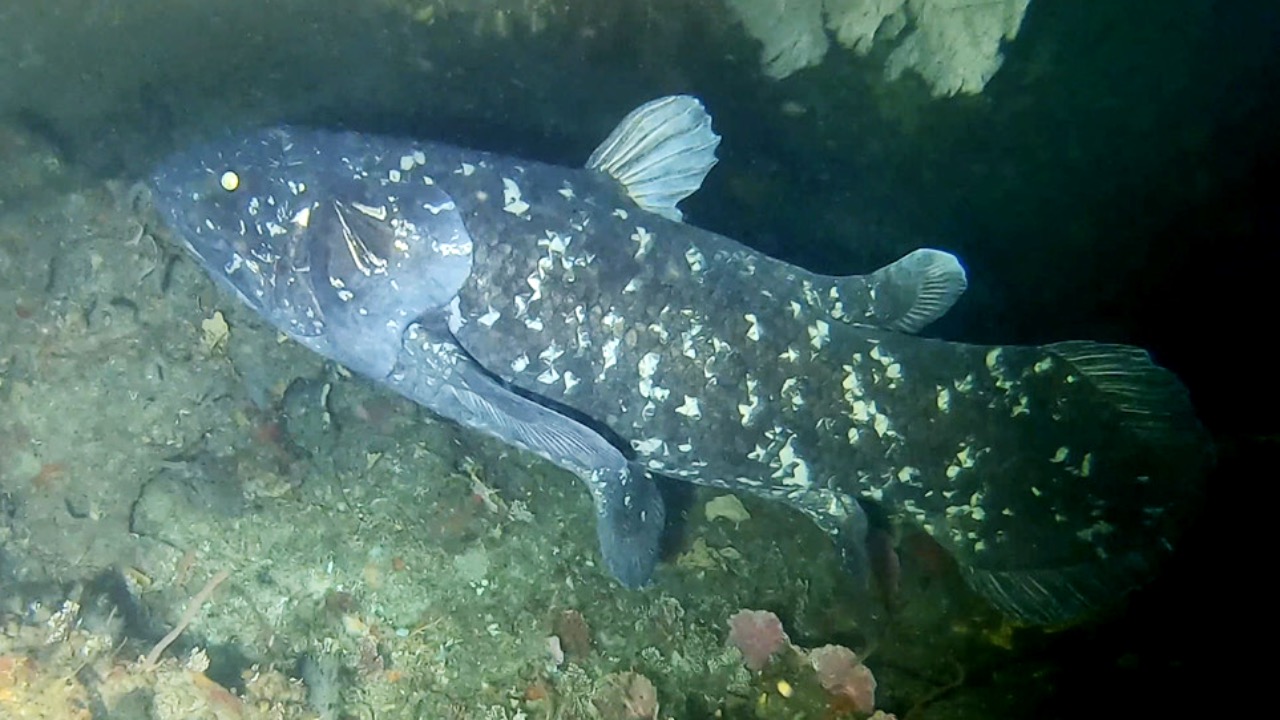
Few animals have embarrassed textbooks quite like the coelacanth. For decades it existed only as a fossil, thought to have vanished roughly 60 million years ago. Then a trawler hauled up a very real, very living specimen and turned a supposed prehistoric relic into a modern conservation headache.
Genetic and anatomical work since that first catch has confirmed that coelacanth populations still persist in deep, rocky waters, where their slow metabolism and late maturity make them especially vulnerable to disturbance. Researchers now treat them as a case study in how easily deep-sea species can escape notice even in an era of satellite tracking.
Recent fieldwork in Indonesian waters, where French divers captured the first photographs of this “living fossil” in that region, underlined how chance encounters can still reshape biology. That expedition, described as a momentous occasion for science, showed that coelacanths occupy a wider range than many experts had assumed, yet remain tightly tied to specific underwater caves and slopes that are hard to survey.
Meanwhile, a separate line of research has focused on another recognized coelacanth species off Africa, where accidental bycatch and habitat pressure from coastal development continue. The fish’s survival across tens of millions of years now depends on how modern fisheries manage a handful of submarine canyons.
Attenborough’s long-beaked echidna and the art of staying hidden
If the coelacanth survived by sinking into the deep, Attenborough’s long-beaked echidna has persisted by vanishing into the soil. Named for David Attenborough, this spiny monotreme is known from New Guinea’s rugged interior and was long feared extinct after decades without a confirmed sighting.
Field teams have spent years navigating steep forested valleys and interviewing local communities to track the animal’s status. The species, formally recognized as Attenborough’s long-beaked echidna, leaves subtle traces: distinctive burrows, characteristic snout marks in soft soil, and stories from hunters who know the terrain better than any visiting biologist.
Those clues have built a picture of a population that is rare, patchy and incredibly hard to detect. Camera traps and environmental DNA surveys have been deployed across its known range, guided by earlier museum records that fixed its identity as a separate echidna species rather than a mislabelled relative. Each scrap of evidence has strengthened the argument that the animal is not a ghost of the past but a living, if precarious, part of New Guinea’s biodiversity.
For conservationists, the echidna’s near-mythic status illustrates a recurring problem. Species that are nocturnal, burrowing or confined to conflict zones can slip through standard survey methods. Declaring them extinct too quickly can erase urgency for protection just when it is most needed.
The Vietnam mouse-deer steps out of the shadows
On Vietnam’s forest floor, another elusive mammal has staged an unlikely return. The Vietnam mouse-deer, also known as the silver-backed chevrotain, is a tiny hoofed animal with delicate legs and a silvery flank that blends almost perfectly with dappled undergrowth. For years it was known only from specimens collected in the last century.
That changed when scientists, working with local communities, set camera traps in areas where hunters still spoke of a small, secretive deer. The resulting images confirmed that the Vietnam mouse-deer was not only alive but moving through a landscape heavily fragmented by agriculture and development.
The rediscovery has had two immediate effects. It pushed authorities and researchers to reassess remaining patches of lowland forest that had been written off as too degraded to matter. It also highlighted how targeted searches, informed by local ecological knowledge, can reveal “lost” species that general surveys miss.
Follow-up work in the same region has begun to map how the silver-backed chevrotain uses corridors between forest fragments, which in turn shapes where new protected areas or community-managed reserves might do the most good. The animal’s survival in such a pressured setting suggests that even small policy shifts could decide whether it becomes a genuine comeback story or slips back into obscurity.
Island rails, tortoises and the power of predator control
Some of the most dramatic returns have unfolded on islands, where introduced predators once wiped out native birds and reptiles with ruthless efficiency. In the Galapagos, conservation programs that removed invasive mammals from several islands have allowed native birds to reclaim ground they had not occupied for generations.
On one island, scientists have watched as native species, freed from rats and other predators, began to explore new nesting sites and feeding strategies. One account described how birds in the Galapagos, “Freed from the threat of invasive predators,” had space to experiment and innovate, a reminder that behavior can shift rapidly once basic safety is restored.
Among these island specialists, the Galápagos rail stands out. This small, secretive bird had been pushed into a few remnant pockets by invasive species and habitat change. After predator control and habitat restoration, rails have begun to spread back across highland wetlands, in some cases returning to sites where they had been absent for roughly 200 years.
Farther afield, the story of the Fernandina Island Galápagos tortoise has followed a similar arc. Long known only from museum shells, it was rediscovered on a remote volcano, a single animal hinting at a lineage that somehow survived eruptions and introduced goats. That find, framed as part of a broader “Lazarus effect” in conservation, has since driven new searches for additional individuals and potential captive breeding plans.
From blue dragons to Iberian lynx, managed recovery in action
Not every comeback hinges on rediscovery. Some depend on painstaking, managed recovery that stretches across decades. In the Caribbean, Grand Cayman’s blue iguanas, affectionately called “blue dragons,” had dwindled to a handful of aging adults at the start of this century. Intensive captive breeding and habitat protection have since turned that near collapse into a guarded success, with wild populations now established and monitored.
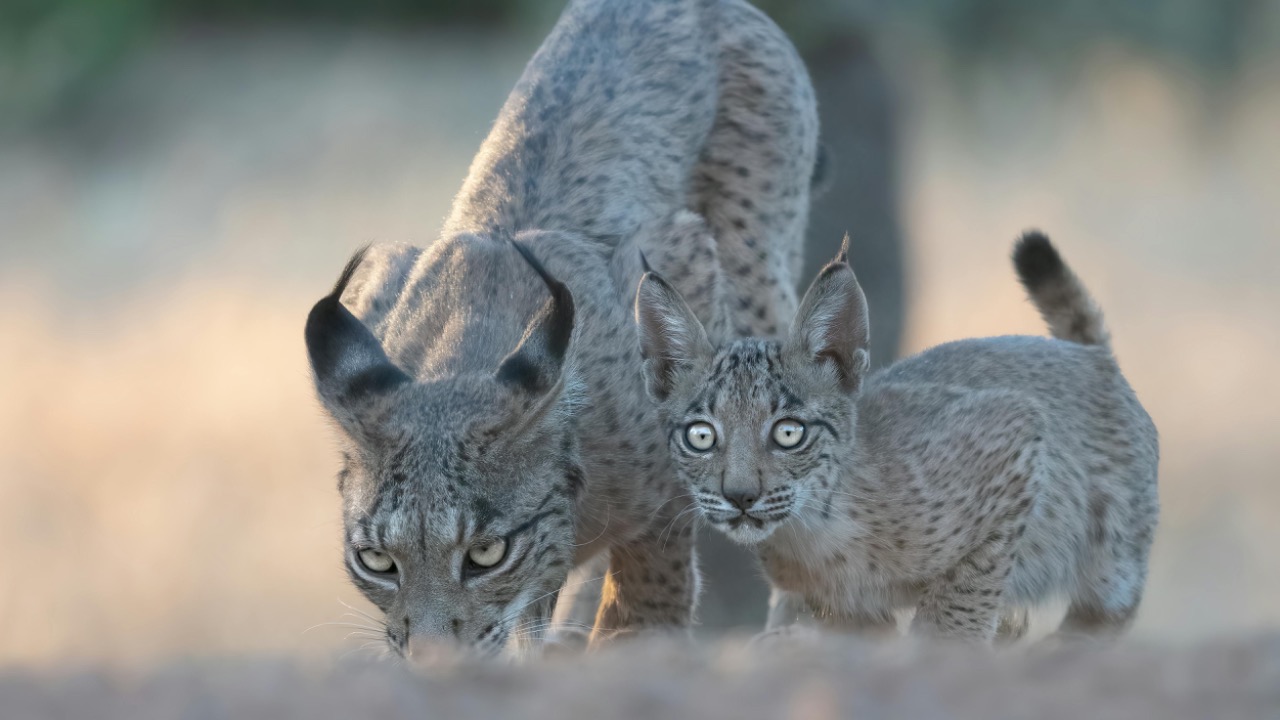
Similar persistence has reshaped the fate of the Iberian lynx. Once regarded as the world’s most endangered cat, the Iberian lynx hovered near extinction as rabbit populations crashed and roads sliced through its last refuges. Coordinated breeding centers, prey recovery programs and wildlife crossings have gradually increased numbers and expanded the cat’s range back into parts of Spain and Portugal where it had disappeared.
On another continent, the scimitar-horned oryx shows how even a species declared extinct in the wild can return to its native desert. By the 1980s, sightings of this antelope had dwindled to almost nothing, and it was later formally listed as extinct in its natural habitat. Captive herds, maintained in zoos and private reserves, became the genetic reservoir for a reintroduction program in North Africa that now supports free-ranging groups once again.
These managed recoveries rely on a mix of science and politics. They require land deals, long-term funding and often the cooperation of local ranchers or farmers who share space with newly returned predators or grazers. They also show that extinction risk is not a fixed sentence if societies are willing to invest in detailed, species-specific plans.
Why “extinct” is not always the end
Behind each of these stories sits a broader shift in how extinction is understood. Conservationists have become more cautious about declaring species gone for good, especially in regions with limited survey coverage or in groups like small mammals, reptiles and invertebrates that attract less funding.

Leo’s been tracking game and tuning gear since he could stand upright. He’s sharp, driven, and knows how to keep things running when conditions turn.